
New business creation
Diversification of market/customer needs and evolution of digital technology are accelerating the irreversible trend of emphasizing value gained from "use" rather than "ownership." The manufacturing industry is also being forced to shift from selling things to selling services, and the emergence of generative AI is further accelerating this shift.
In this environment,
1. Spending time planning and developing services leads to a disconnect from market needs
2. Know-how is not shared and SLAs are not standardized, resulting in inconsistent quality and increasing reputation risk.
3. Even if the number of acquired customers is small, the service cannot be stopped and maintenance costs become fixed
These issues are compounding, eroding both investment capacity and opportunities for new initiatives.
Solution: Agile development achieves high speed, high quality, and low cost simultaneously
There is no such thing as a service that is exactly as intended from the start. The agile method, which is based on the premise of "understanding customers and the market on the fly," releases the minimum viable product (MVP) in short cycles and refines it through actual feedback, increases the probability of success.
Particularly when the manufacturing industry is shifting from a one-time sale business to a data-driven service model, there are many internal and external stakeholders, including sales, customer service, and development, and it can be difficult to reach a consensus through desk-based explanations alone.
That is why a tangible "rough draft" becomes the most powerful common language, powerfully driving both the exploration of customer needs and the formation of internal consensus.
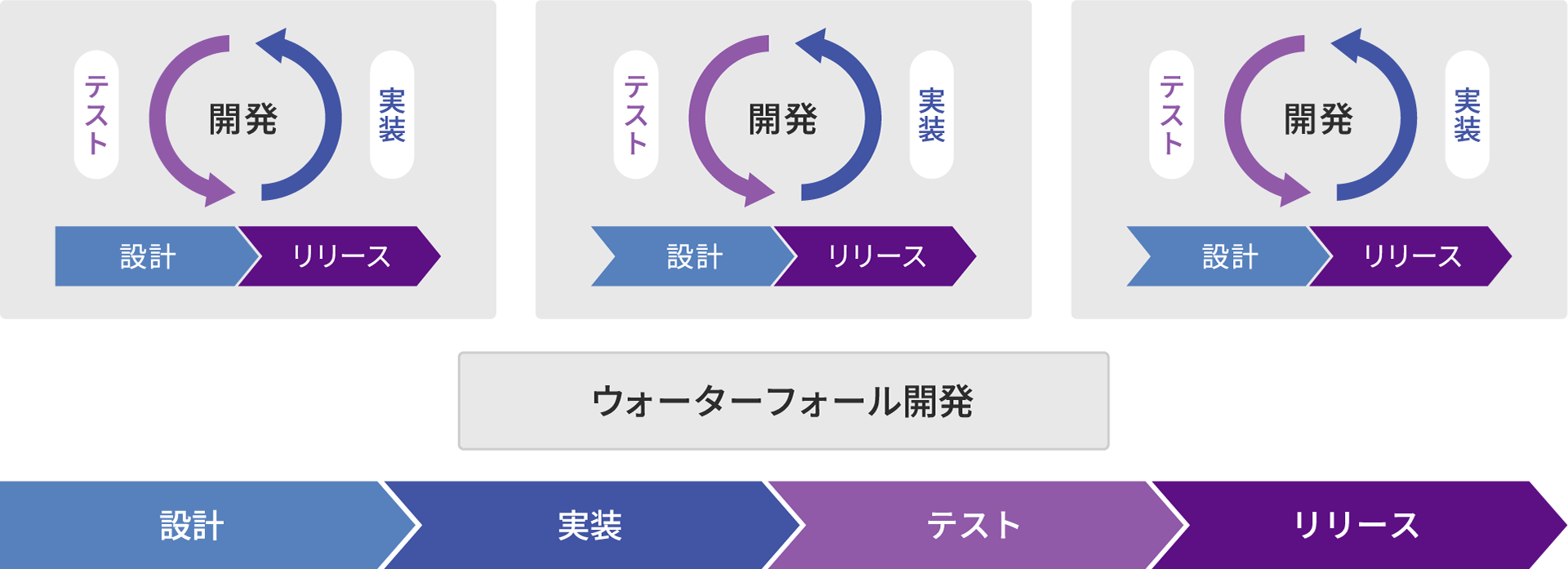
How Agile Rapid Service Development Works
In order for business divisions to focus on "creating customer value," it is essential to have a foundation that combines specialized support such as standardizing SLAs, reusing existing service assets, and providing security and data/infrastructure development, while achieving both rapid releases and efficient operations.
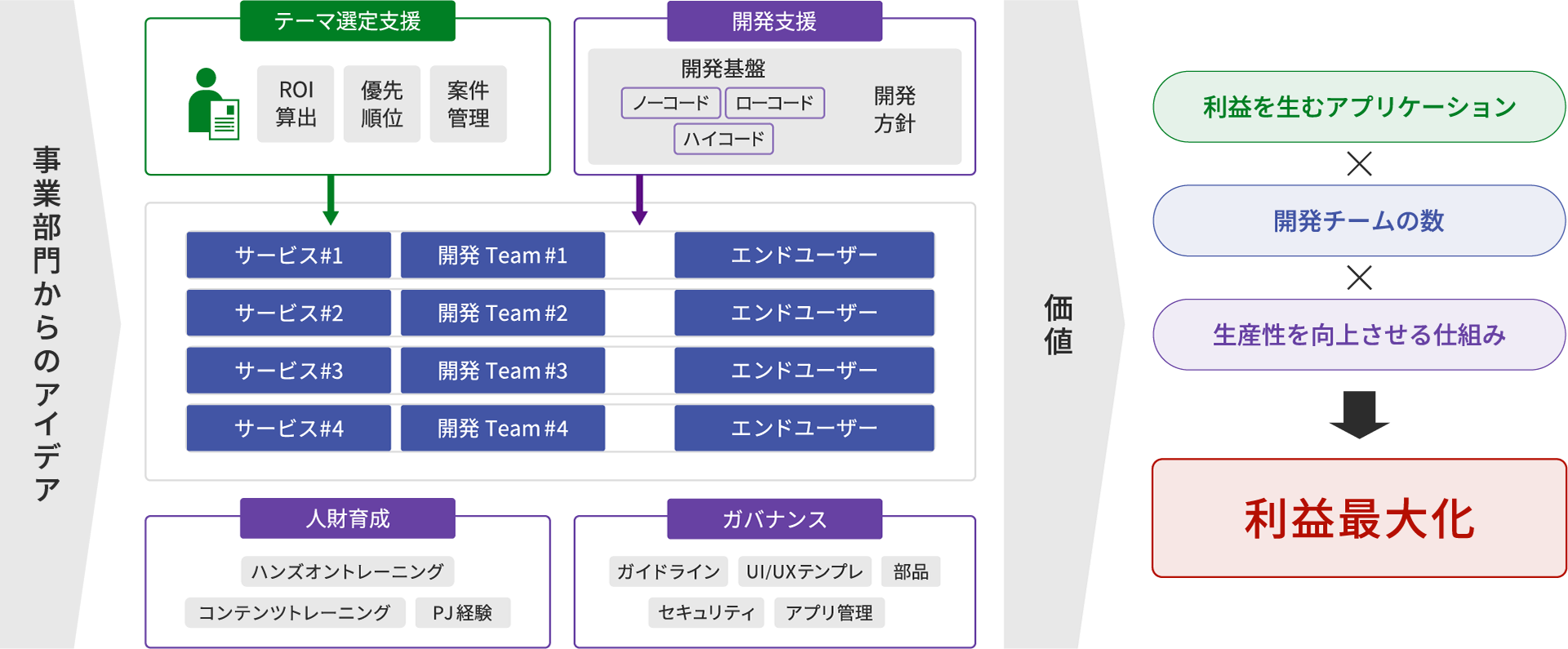
By combining the three elements of the framework above, we will create a "DX factory" that can produce internal and external services quickly, in large quantities, and at low cost.
Organizational structure to realize "DX factory" (framework to realize CoE)
To realize a "DX Factory" and keep it functioning sustainably, it is essential to go beyond simply establishing an app development system; it is also essential to strengthen the governance system that involves the entire company and establish a specialized organization (Center of Excellence) that spans business and IT departments.
By putting the following five organizational functions in place, you can maximize the business and IT impact of digital transformation.
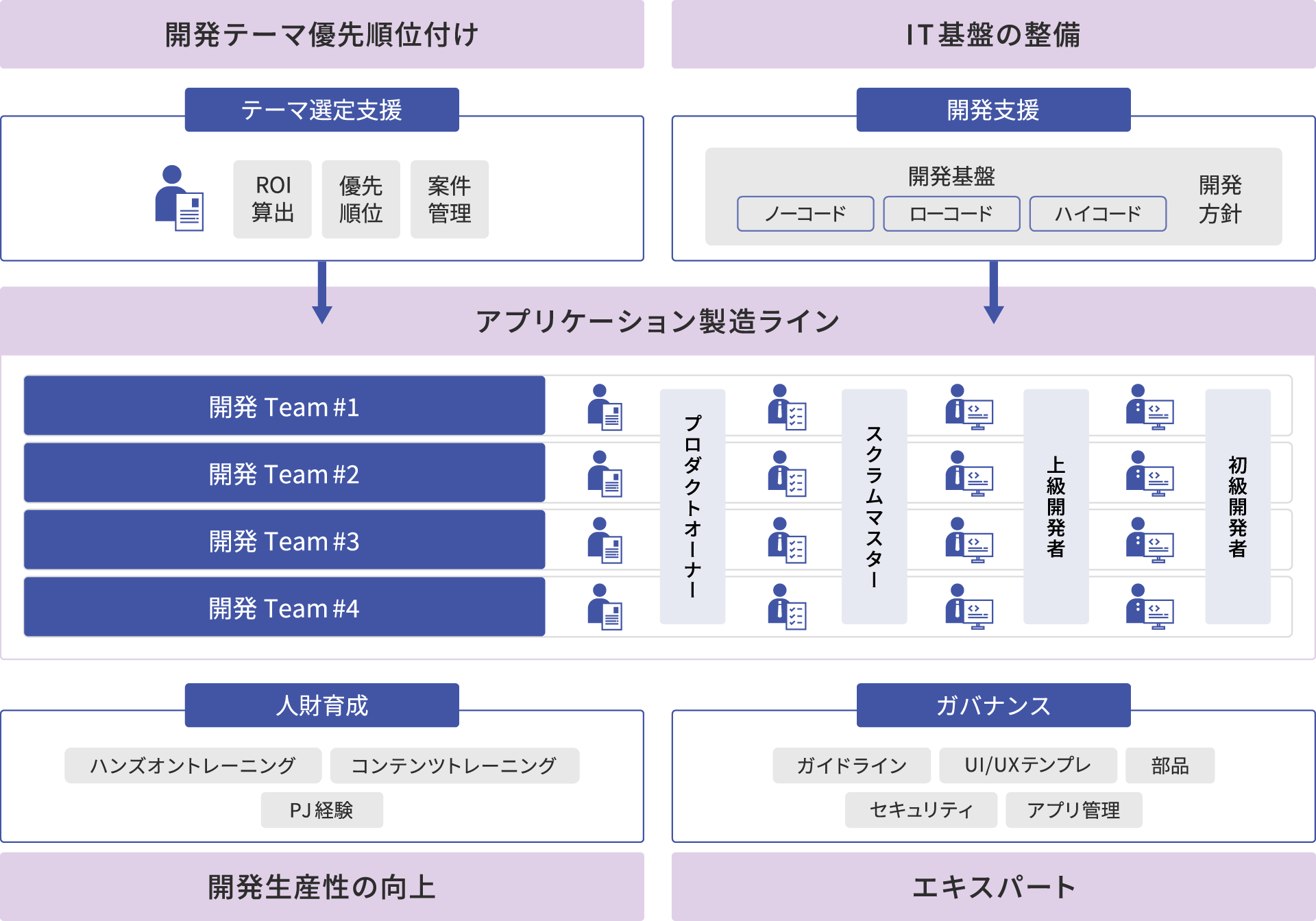
|
organizational function |
detail |
| Development of IT infrastructure | ・Company-wide portfolio management ・Establish a company-wide development platform ・Integration with existing systems |
| Prioritizing development themes | Judging and prioritizing project value based on consistency with company-wide strategies |
| Improved development productivity | Reusable parts Training of development personnel Organizing the development process |
| Expert | Areas that require individual expertise, such as security, are deployed horizontally as professional organizations independent of the execution team. |
| Application Production Line | development |
We support the "core functions" that lead to successful DX, from conception to implementation and human resource development.
Macnica provides consistent support for the CoE from conceptual design to launch and establishment.
In addition, we also offer a training program for specialist talent who can lead the promotion of DX on-site, thereby establishing a "core" for driving transformation within your company.
Inquiry
Please feel free to contact us
Document list
We have materials available for viewing and downloading.