From "sensation" to "data" with "DSF Cyclone"
Realizing Yamabiko-style smart factories
Eliminating waste and increasing competitiveness - YAPS leads to a new step
──Yamabiko Co., Ltd.
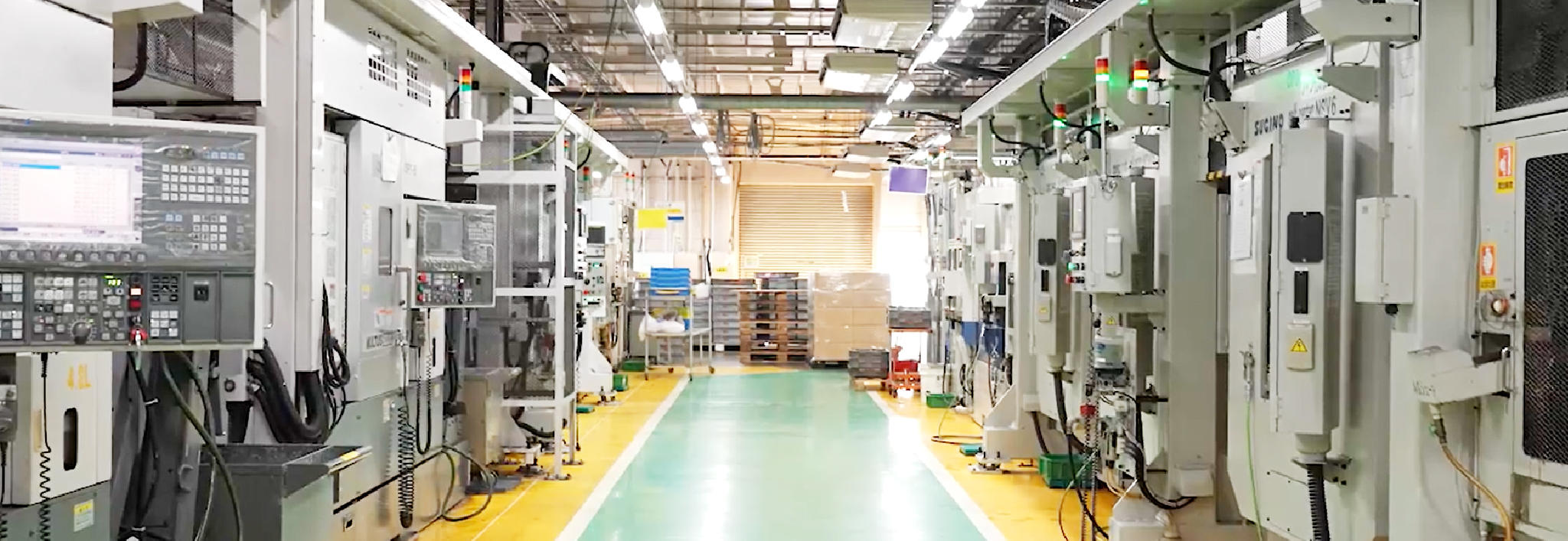
Yamabiko Corporation is a comprehensive manufacturer of outdoor power equipment operating globally. Its lineup of products equipped with two-stroke engines, such as brush cutters and chainsaws, is indispensable in the fields of forestry, agriculture, and green space management. The Yokosuka Works is the "core factory" that handles the core of these engines, and can be said to be the"heart"of the company, handling everything from casting to machining, surface treatment, and assembly.
The ability to complete the entire process from aluminum material to engine assembly in-house is rare even in Japan, and is a strength unique to this plant. Its unique processing technology that complies with exhaust gas regulations and its rare production system that includes in-house casting processes are highly regarded by customers both in Japan and overseas.
A major transformation is currently underway at the Yokosuka Plant. The key word is "YAPS." YAPS (Yamabiko Production System) is Yamabiko's unique company-wide production method, which aims to "improve management efficiency by eliminating waste," and has been a core initiative that has supported the company's improvement culture for many years. This transformation is an attempt to evolve YAPS to the next stage using the power of digital technology.
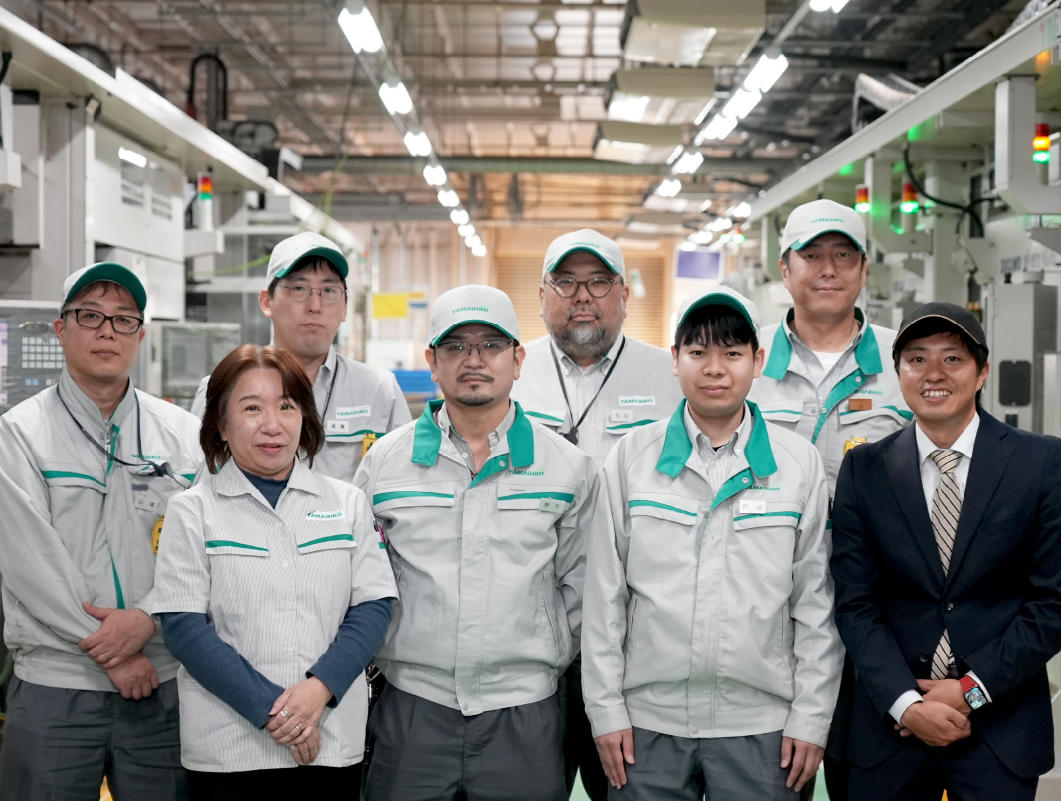
Participating members of this project
Yamabiko Co., Ltd.
- Kenji Sakura, Deputy General Manager, Yokosuka Office, Production Division
- Takakazu Yamaura, Manager of the Production Technology Department, Yokosuka Plant, Production Division
- Mr. Shinichi Nogata, Production Technology Department, Yokosuka Office, Production Headquarters
- Mr. Eiji Iwatani, Section Manager, Machinery Section, Yokosuka Office, Production Division
- Makoto Endo, Team Leader, Machinery Section, Yokosuka Office, Production Division
- Sayuri Ishiwata, Machinery Section, Yokosuka Office, Production Division
- Mr. Shunta Toya, Technical Development Section, Production Technology Department, Production Headquarters
Macnica
- Yuta Kageyama, Section Manager, Professional Services Division 2, Section 3, Digital Industry Business Department
- Task
-
- The limitations of kaizen activities based on on-site judgment that relies on intuition
- Manual data collection is burdensome and inefficient
- Lack of resources and systems that hinder company-wide expansion
- Purpose
-
- Promoting data-based improvement activities that directly lead to cost reduction
- Strengthening a culture of continuous improvement in line with the YAPS philosophy
- Building a digital infrastructure as a common language connecting the workplace and management
- effect
-
- Shift from intuition to data-driven decision-making
- Raising worker awareness and fostering a sense of fulfillment
- Building the foundation for smart factories, with an eye on overseas bases
On-site Kaizen was reaching its limits
Improvement activities that rely on manpower and intuition - the limitations of this system were beginning to become apparent
Toya: The trigger was the announcement of "IT infrastructure development" as a company-wide policy for 2021. In response to this, our Yokosuka office also decided to fully advance digitalization.
Even up until then, efforts to make things more visible had been taking place on the front lines, with daily reports compiled in Excel and setup times measured manually.
However, we didn't have the manpower or knowledge to go beyond that-that is, to thoroughly analyze and utilize the data. Because there were so many lines, there were limits to how much we could expand it. We had created and operated our own tools, but this placed a heavy burden on the field, and we felt that this system would not be sustainable if we continued like this.
The purpose of utilizing IT is to reexamine the source of profits
Facing the fundamental issue of "cost reduction," they chose digital as a tool for improvement
Toya: As we promoted the use of IT, the theme we were most conscious of was "cost reduction." For the manufacturing industry to continue to make profits in Japan, it must face structural issues such as labor shortages and rising costs head-on.
To achieve this, the only way was to combine the power of IT with on-site improvement activities. Rather than simply increasing the efficiency of work, we needed to aim for a more fundamental solution to management issues.
A system highly compatible with YAPS - the deciding factor in its introduction was a "common language"
The company culture and direction were aligned, making the implementation of DSF Cyclone a smooth process.
Toya: At the time, there was ongoing discussion within the company about the compatibility of "YAPS" with digital tools. YAPS stands for "Yamabiko Production System," a company-wide initiative unique to Yamabiko that aims to thoroughly eliminate waste and increase management efficiency.
The philosophy behind YAPS was very similar to the direction of Macnica 's DSF Cyclone, which aims to "self-propel improvements driven by data." Rather than focusing on the specific functions, we had the same"goal."That was a big factor.
It's not just an IT tool, but a system that is compatible with the "improvement culture" that we value as a company. This was the main reason we chose DSF Cyclone.
DSF Cyclone use case introduction video
You can see how Yamabiko is using DSF Cyclone in the video below, divided into three cases, along with actual footage from the site.
CASE 1: Real-time monitoring
In manufacturing, production volume and equipment status are displayed in real time on monitors next to the line, allowing for the immediate detection of abnormalities and prompt improvement.
CASE 2: Production efficiency analysis
In production technology, we analyze the difference between standard time and actual time to identify wasteful processes. We will introduce efficient data-based business improvements and efforts to improve productivity.
CASE3: Reference time analysis
In production management, we compare and analyze the standard time and actual results for each product to visualize production capacity. We will introduce data-based reviews of standard time and efficient improvement activities.
Towards a system where on-site decisions are "backed up by data"
Decision-making that previously relied on intuition now has solid numerical evidence
Yamaura: Previously, we would make on-site judgments based on our intuition, such as "This line is not working properly." Of course, we still compiled data on paper, but it was still analog and lacked decisiveness. Then, with the introduction of data visualized by DSF Cyclone, we were able to confirm our findings by saying, "The numbers really show that." I think this was a major change.
Toya: We are currently using DSF Cyclone on multiple lines at the Yokosuka Plant, which allows us to visualize daily production activities from various perspectives. One of the most notable features is the system that allows us to grasp at a glance the "difference between production plans and actual results" and "equipment stoppage information."
In addition, there is a board that displays production volume per unit time, a screen that displays the real-time operating status of each piece of equipment, and a screen that records and analyzes defects, and the range of uses is steadily expanding.
Realizations and rewards born on the job
Giving meaning to input work and repeated dialogue will change behavior and awareness
Toya: However, it's not that simple to say that just having data will change the situation on-site. I think the important thing is to think about how to utilize the data.
In fact, when we first introduced the system, we struggled to get the data entry process established. Information such as start and finish times for each production order, records of defects, and input of reasons for stoppages is essential for the system, but it is difficult to ask the site to enter all of this information.
That's why, with support from Macnica, we made the screen as simple as possible, allowing users to make selections with a click, and made repeated efforts to reduce the burden of input. At the same time, we steadily continued to hold dialogues, such as "This input led to this kind of improvement" or "Looking at this, we were able to form this hypothesis." In this way, we gradually changed the atmosphere so that users would perceive the data as"useful data"rather than"inputting something they were forced to do."
One time, a worker reported to me with a smile, "We exceeded our target today!" At another site, a leader came forward and made a hypothesis based on the data, saying, "Isn't that process stopping a lot?"
The conversation started with data rather than intuition, and while that change may seem small, I believe it was a huge step forward.
I think the reason behind this change is that the results are now clearly visible. With the introduction of DSF Cyclone, we are now able to record data that can serve as the basis for improvement activities, allowing the field staff and management to share a common perspective. Previously, we thought we were "trying our best," but now we can "see it in the numbers." So, rather than giving up and thinking "nothing will change no matter how hard we try," I feel that a sense of satisfaction has grown in the field, that "the results are only as good as the effort we put in."
Improvements don't produce immediate results, but with the"habit of looking"as a foothold, a"culture of thinking"is gradually taking root.
Macnica 's support transformed the implementation into a "real-world" experience
A support system that supports you from establishment to operation and development, turning implementation into "success"
Toya: When we first introduced the system, our biggest concern was whether the workers on-site would input the data correctly. It's not easy to establish rules and operations. For example, when should the start and end dates be entered, and who should do it at which stage? We had to coordinate with the workers on-site on even the smallest of details, which took a lot of time and effort.
Yamaura: At first, there was a lot of manual input, which I thought was a bit difficult, but when I mentioned it, Macnica quickly changed it to a click-to-select system. The input hurdle was lowered, which made it much easier to continue.
Toya: In addition to that, Macnica also carefully taught us how to"view"and"communicate"the data. It's pointless unless we can properly understand and handle it, so even though we didn't have much knowledge, it was great to have the peace of mind that"if we asked them, they'd be able to help us out."They were easy to ask even about small things, and they always responded politely. I'm more grateful for that relationship than anything else.
Towards the future of Japanese manufacturing: The current state of the smart factory concept
Building a digital infrastructure that connects Japan and the world, with an eye toward labor savings and increased competitiveness
Nakadate: I don't think that a smart factory is something that can be completed at some point. Rather, it will take shape little by little by continuing to work on it without stopping. I feel that we are now at that stage. What we are aiming for is highly efficient manufacturing with reduced manpower. To achieve this, we need to combine the power of digital technology with on-site improvements-this common understanding has finally taken root within the company.
Digitalization isn't just about IT investment. It connects on-site information and enables collaboration with other areas, such as management, sales, and logistics. This speeds up operations across the entire company and changes the quality of decision-making. Our perspective is also expanding overseas. Our products are essential in overseas markets, including North America. Even during the COVID-19 pandemic, supplies continued uninterrupted and our products were treated as social necessities. That's why we believe we have a responsibility to ensure stable delivery. To achieve this, a locally-based, locally-produced, locally-consumed production system is essential, and we need a"visible factory"that allows us to clearly see each location. We believe that visualizing factory data using DSF Cyclone is the first step toward that goal.
We would like Macnica to not only provide us with a system, but also to think together about how Macnica 's technology can contribute to this overall picture. We would be delighted if they would continue to accompany us in this challenge, connecting our domestic factories with our overseas bases.

Yamabiko Co., Ltd.
- Business
- Manufacture and sale of various machinery, including small outdoor power equipment
- Established
- December 1, 2008
- Number of Employees
- 3,070 people (consolidated for December 2024)
- website
- https://www.yamabiko-corp.co.jp/
PRODUCT/SERVICE
Click here for products and services related to this case study

Improving Production Efficiency × Digital Manufacturing “DSF Cyclone”
A service solution that realizes a highly productive factory by connecting manufacturing results and production plans with structured data
DOCUMENT
Recommended reading for readers of this case study:
14 Use Cases for Data Utilization in the Manufacturing Sector
Moving beyond mere visualization
We will introduce a framework and use cases for data utilization in manufacturing sites.
*Application is required for download.
CONTACT
Please feel free to contact us with any inquiries regarding this case study or product implementation.