
A look into the real story behind a cross-departmental digital transformation project that was put into practice with new learnings
The current status of Rohto Pharmaceutical's vigorously promoted initiatives
--Rohto Pharmaceutical Co., Ltd.
Rohto Pharmaceutical Co., Ltd., which operates a wide range of businesses including OTC pharmaceuticals, skincare, functional foods, medical ophthalmology, and regenerative medicine, has set a corporate vision of "Connect for Well-being" to create a well-being world where people around the world can live happy days full of smiles, vibrant in both body and mind, at all stages of life. The company is vigorously promoting DX as a company-wide project.
This time, we asked for details about the DX project, such as "how different departments worked together to achieve internal transformation."
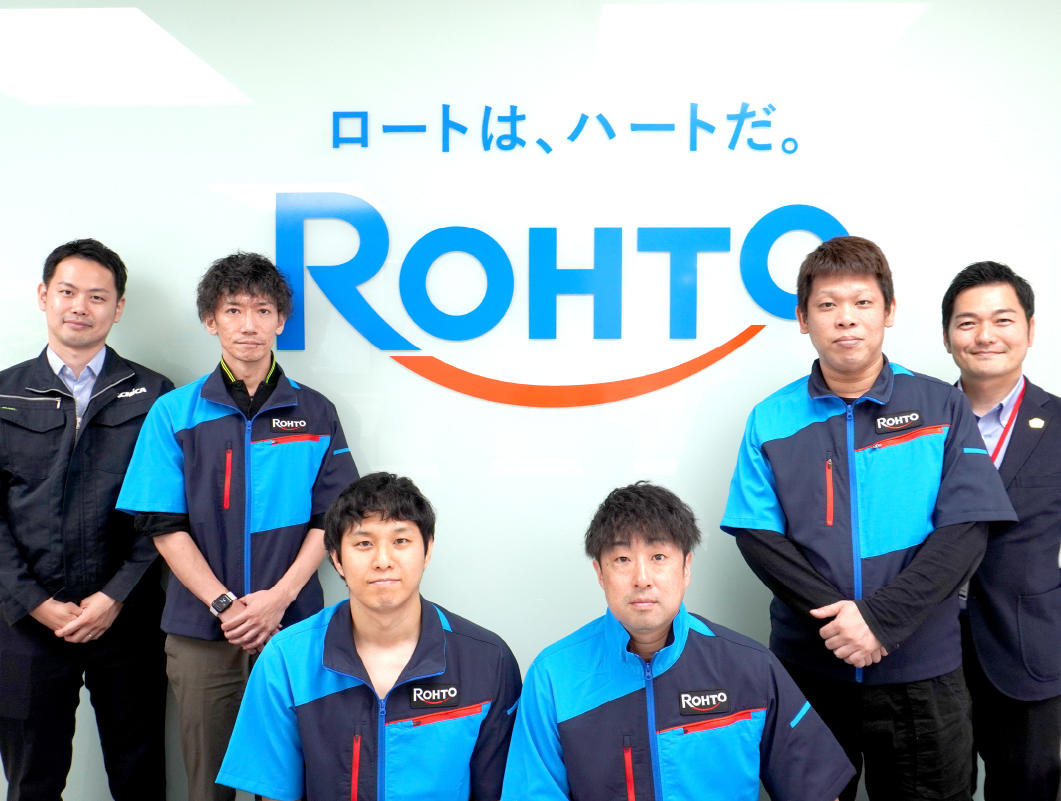
Participating members of this project
Rohto Pharmaceutical Co., Ltd.
- Yohei Nagamitsu, Leader of the Formulation Technology Group, Product and Formulation Technology Department
- Yoshio Nakayama, Engineering Group Leader, Production Technology Department
- Takayuki Kondo, Data Infrastructure Development Group, Production Technology Department
- Masato Hirose, Application Group, Infrastructure Information Systems Department
Macnica
- Kota Abe, Deputy General Manager, Digital Industry Division
- Ryo Nakajima, Professional Services Division 1, 2nd Section, Digital Industry Business Department
- Task
-
- The burden of managing information scattered throughout the company
- Reforming complex business processes where it is difficult to define requirements
- Lack of members who are good at standardizing work
- Purpose
-
- Advancement of business processes
- Developing human resources capable of in-house system development
- Get insights from the people who actually do the work
- effect
-
- Improving project management skills
- Expanding your mindset and perspective
- Successfully establishing the system despite the large number of stakeholders involved
Overview of cross-functional transformation projects
1. Engineering chain reform to visualize and streamline existing business processes
Nagamitsu: Originally, our DX initiative started in 2021 as a project made up of departments involved in production procurement, and I have been involved since its inception. Specifically, the departments related to production procurement that we are involved in have come together, and project members are working on more than 10 initiative themes, including the supply chain, from purchasing to production management, factories, quality control, and production technology departments. With the focus on developing digital human resources centered on production and procurement, about 80 project members, both self-nominated and recommended by others, are participating, and an eight-member management team that summarizes the themes in each area oversees the overall project, creating subcommittees and groups according to themes.
Among these, the theme I was involved in was called the Engineering Chain. We handle a wide range of products, and each has a "manufacturing recipe" as a manufacturing procedure manual, but these were created in Excel sheets for each product. The department that creates these recipes is different from the department that handles them, and other departments refer to the manufacturing recipes to create other documents, so the burden of managing information, including documents, was an issue. We aimed to create an environment to improve and streamline this business process. Although it was not a major theme, the common intention of each theme was basically to reset the way work was done up until now and to significantly reconsider traditional work.
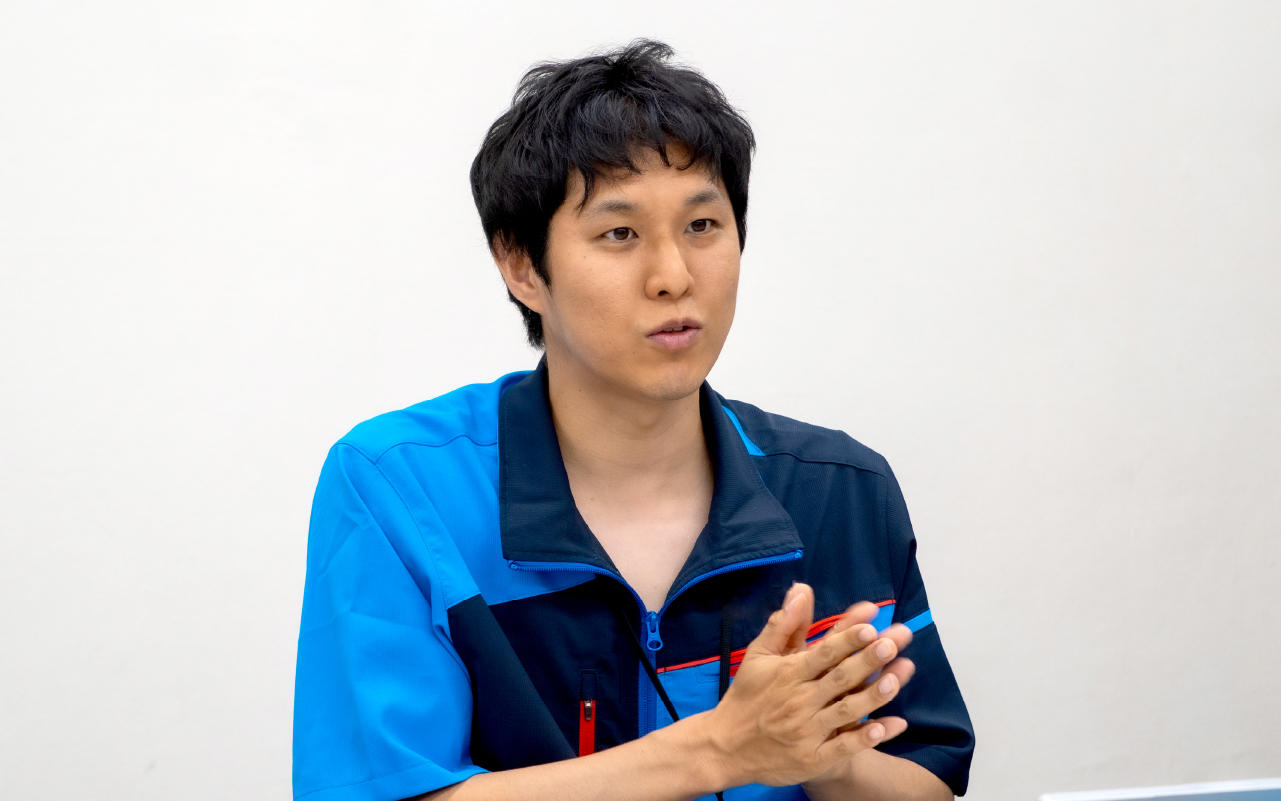
Kondo: I joined this DX project partway through when I returned from an overseas posting, but originally I had been consulting with Macnica separately from the project to set up a management platform for equipment chart information related to equipment maintenance. That's when I came across the low-code development platform "Mendix" and after taking the developer training, I joined the engineering chain where Nagamitsu serves as product owner. During that experience, I realized the important role of low-code tools that allow us to develop in-house.
② Supply chain reform aimed at consolidating information and understanding progress toward new product releases
Nakayama: The issue I felt at the time was that information and progress across departments could only be seen and heard. Generally, when releasing a new product, many departments are involved, and changes are likely to occur, including in the schedule. For example, the production technology department may conduct tests to run the product through a certain process, but among the many cases, there are cases where it does not go well, resulting in deviations from the expected schedule. Until now, the means of visualizing such changes and progress have mainly relied on communication via email and telephone, and information could not be properly consolidated, and it was difficult to utilize it for the next product. Therefore, we raised the theme of supply chain as a way to create an environment where tasks and progress across departments can be visualized.
Hirose: I myself joined the project when the supply chain theme was raised and we were considering creating an environment that would enable progress management of new products using tools. At that time, there were some situations where the requirements definition and specifications had not been broken down, so I thought that if I participated as a development member, I would be able to move things along smoothly, including communication. Of course, it is possible to ask an outside party to create the environment, but to be honest, it is difficult to fully communicate internal operations to an outside party, so there was a strong need for in-house development. In fact, I had previously attended a seminar on "Mendix" and had personally created various apps, so I thought that my experience would be useful.
Contact with Macnica and the importance of in-house production
Nagamitsu: After the project was launched, the members were assigned and we first set the Vision Statements to promote DX. Specifically, we stated that "From a factory where people shine, we deliver high-quality, reliable products and services that customers want in a timely manner along with an experience of surprise and delight. Customers' voices reach us directly on the ground, and the"connection"is seamless. Information and data are made visible by All Rohto, and everyone in the company shares and uses accurate information equally. As a result, our way of working has been innovated, and by 2030, we have achieved twice the productivity of 2020. Machines and systems create time, people create ideas, and we at Rohto continue to grow." In line with that vision, each member set a theme they wanted to implement and decided on the project theme, but when setting the theme, Macnica was involved as an external perspective.
Nakayama: Initially, we were thinking of asking Macnica to develop the app itself. Rohto's way of working may be unique, but the content we wanted to express and the way we usually work were not communicated very well, and if we didn't create it ourselves, time would just pass. Even if we could create a prototype that looked like it, it would be difficult to produce an output that was full of soul and was our own, without repeated trial and error, so we felt that we needed an in-house environment where we could discuss and brush up on the project with our internal members.
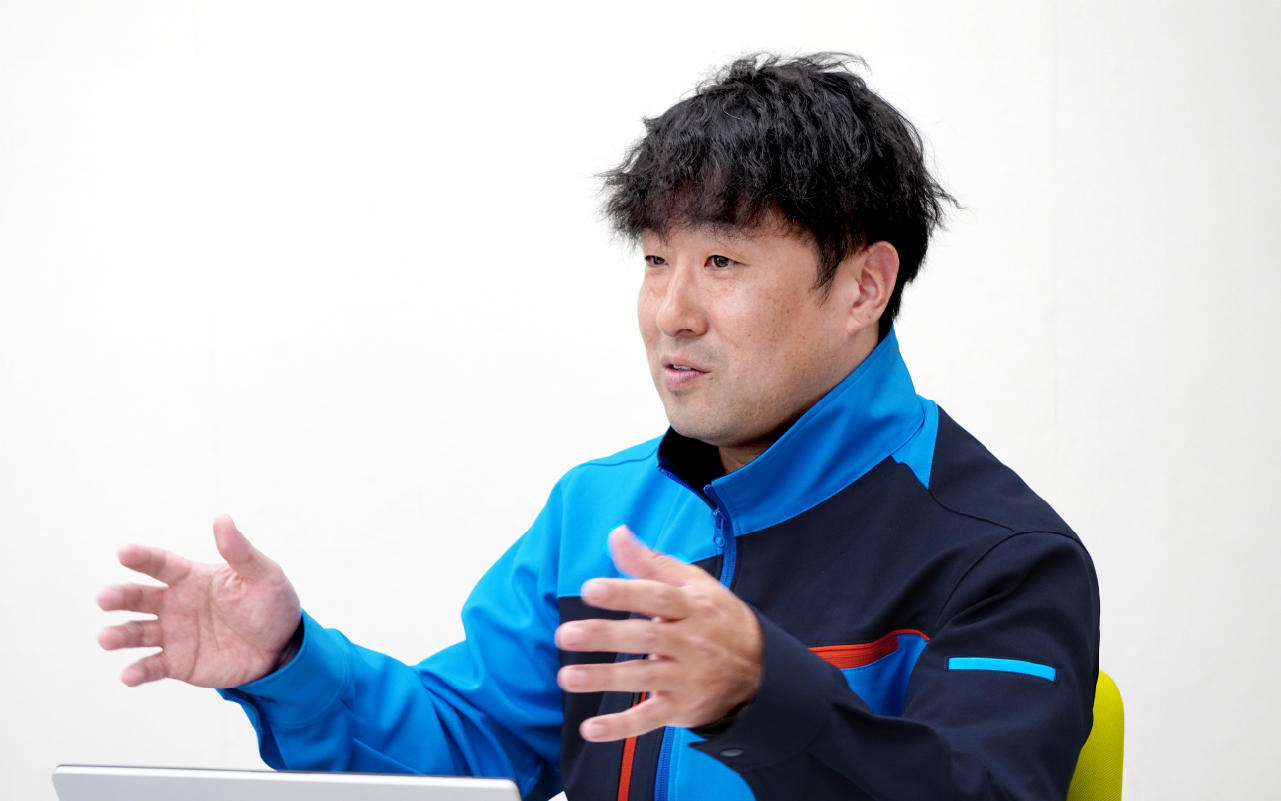
Kondo: Many of the members, including myself, are not professionals in defining requirements, and we are not good at standardizing operations. In that respect, agile development, which involves in-house development to gradually improve rough systems, was probably more suitable for us than a waterfall approach in which specifications are firmly established and then moved forward. In addition, various processes, including pharmaceutical technology, have confidential parts, and we cannot easily disclose them to outside parties, so we were looking for an environment where we could develop them in-house.
Current Project Progress
Achieving advanced business processes and preparing for release as a progress management platform
Nagamitsu: Currently, about 10 people are using the system and developing the app, including the department that creates the manufacturing instructions, the quality department that checks the documents in the instructions, and the manufacturing department that checks the instructions on the factory floor. We have mastered prescription information and production condition information in a database, and are able to output preparation flow diagrams and records.
Nakayama: As for the supply chain, we have started about six months late, assuming that we will utilize low-code development tools, considering that an agile approach is already being adopted in the engineering chain. We will conduct the first PoC from around June 2023, where some departments will try it out and shape the requests, and then we will conduct the second PoC from October 2023 to March 2024, changing the target department and product form and having members try it out. After confirming the flow for multiple items, we plan to officially release it. We plan to have it used as a foundation for progress management, focusing on planning departments and departments involved in production.
Hirose: The functions implemented in the supply chain can be broadly divided into four: a function to create and share kickoff materials, a bulletin board function for all stakeholders to communicate, a progress management function, and a function to manage the budget and actual results for each product. Among these, we developed about 70 to 80 small functions, but I was able to focus on developing the app and had fun developing it.
Difficulties and difficulties in the project
How to get members involved is still difficult
Nagamitsu: One of the things I struggled with was communicating with Macnica, who was supporting us. Initially, we asked Macnica to create a business process, but perhaps because we didn't provide enough information, there were many cases where the process did not reflect the actual work we were doing. I regret that there must have been another way to help them understand the situation. It's still difficult now, but it was very difficult at the time.
Another thing we struggled with was how to get our internal members involved in the activities. Even though we wanted to hear from key members of each department, they all had their own jobs, so there were cases where they were too busy to attend meetings.
It was important to communicate the importance of this initiative to a great extent, and I felt that in order to do that, it was important to have people repeatedly feel a sense of improvement. In fact, by showing the quantitative effect of reducing document creation time by 80% during the PoC, we were able to successfully get the superiors of the departments to which the members belonged interested and to get them involved and to roll out the initiative firmly.
Kondo: In terms of how to get the people on the ground involved, I struggled with how to train a successor who could develop with Mendix. If the value and appeal of Mendix isn't understood by the person himself or herself, then that person won't be able to take the time to leave their day job. That's why it's so important to continue providing value and providing successful experiences.
Also, because I was an outsider to manufacturing technology and other processes, I could only extract superficial information from the on-site interviews I had conducted to create an environmental app using Mendix. I was very worried about how to obtain insights from the people in charge. By participating in various seminars such as design thinking that the company was holding, I was able to get hints for extracting insights and acquire techniques for asking questions, and I was able to learn a lot through this initiative.
The difficulty of establishing a new process
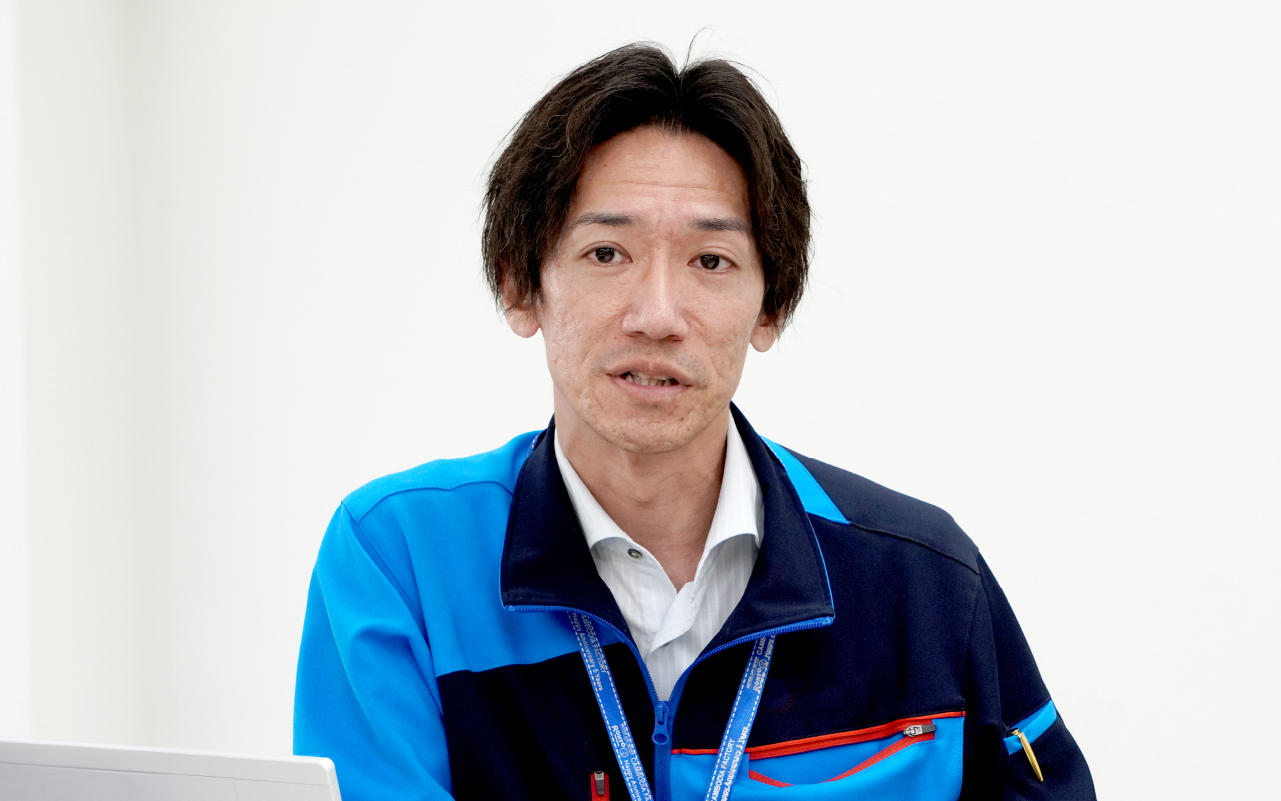
Nakayama: Unlike the engineering chain, which digitizes existing operations, the supply chain is a theme that requires the creation of unprecedented processes. Although the processes will ultimately be run on a single platform, during the transitional period, it is necessary to have people try new processes while continuing the existing operations, which simply increases the workload. In order to still get people involved, we need to convey our enthusiasm clearly, but there are still some aspects that we have not been able to convey, and we are struggling to get everyone involved to think about it more as their own issue and to actively operate and try out this app.
In order to get people as involved as possible, I think it's important to make them realize how convenient it is to use the app. When they actually try out the app at our regular meetings, we get a lot of requests. We quickly make improvements and have them reproduce the app by the next meeting. By repeating this process, we were able to gradually close the gap between the users and the app.
Hirose: We started with what Nakayama had in his head, and then continued to improve it based on his opinions, but it was personally difficult to immediately reflect the requests made during meetings. Sometimes we received dozens of requests in one interview, and in order not to disappoint people, we responded to all of them, which resulted in an overload of features. One thing I regret is that although we thought we had made it easy to use, it ended up being too complicated. We had to consider the conflicting needs of taking the time to think about whether something was really necessary and developing and deploying it quickly, which made us developers cry, but it was also the best part.
In addition, Mendix is the foundation of low-code development, but in order to meet the needs of the field, we had to partially code using JavaScript, which was a personal struggle for me. This would have been difficult without Macnica 's support. I'm grateful that my boss let me focus on this task. Although it was a little off the mark in terms of achieving this with low-code, I felt that there was a lot of potential with Mendix.
Lessons learned through the project
Greatly improved project management skills
Nagamitsu: I feel that my project management skills have improved in particular. When launching a new product, we used to proceed with the work in a project-like format, but now I can get a bird's-eye view of what other departments are doing, including the importance of agile development, the accumulation of small successes, and getting others involved. I think I have more ideas for moving the theme forward now that I can think in terms of overall optimization, rather than partial optimization as in the past.
I also learned how to communicate with Macnica and other external partners and vendors through this activity. I was able to explain things while thinking about what they didn't understand, and I learned a lot from trying various things, such as having them come to the site to help me understand. In a way, I think I've gotten better at applying pressure.
Learning the system changed my mindset and broadened my perspective
Kondo: Simply put, I was able to improve my Mendix development skills, and using the development skills I learned, I am now proactively helping out with other DX projects. I think my way of thinking and mindset have changed, and my perspective has broadened, which I think is also reflected in my actions.
Through this experience, I have become actively involved in the fields of IT and AI, such as obtaining the G-certification and participating in ChatGPT's in-house training. I am now involved in a DX project in the quality assurance department, and even there, I am not just getting my hands dirty, but also taking the stance of training the members. As a pioneer of "Mendix" development within the company, I would like to expand my knowledge and gain experience in various areas.
In fact, other business efficiency apps were being used within the company as development platforms, so we studied those apps and used them appropriately. It's like the difference between a car and a bullet train; even though they are both means of transportation, they have different roles. Those apps are sufficient for tasks that can be performed in Excel, but we are also realizing that it would be difficult to connect tasks over a wide area like a bullet train traveling long distances without "Mendix."
The opportunity to carry out a project involving many members was a valuable asset
Nakayama: First of all, not only was my workload significantly reduced, but I was also able to grow as a person by creating a system with many members involved. This experience was a great learning experience. I also think that this activity has brought me closer to the people involved, making it easier to talk and discuss. I think the part of my growth is that I can now have thorough discussions not only with my members, but also with my superiors and our partner Macnica.
Initially, I raised my hand because I wanted to become a digital talent who could write programs, but once I joined the project, there were many members, and I was chosen as the liaison person, so my main role became project management. In the end, I feel that this was a good move, and although it was different from my initial thoughts, I now believe that this has helped me grow much more.
Being involved in the field and development is important for DX talent
Mr. Hirose: There is no doubt that our development capabilities have simply improved, and the fact that we had more members to listen to has helped us to become closer, making our daily work easier, and it's best to say that we were able to work with a sense of unity. As for communication, it is true that it is difficult to communicate specifications between developers and the POs in charge of products, but I feel that on the other hand, we should increase the number of people who can act as intermediaries between them on the development side.
From the perspective of DX human resources, I think we can make more progress by strengthening that intermediary. I think one of the ways I have grown in the project is that I have come to think that it would be nice to be involved in that. Even if you outsource it, the person in between will become more important.
Evaluation of the project by others
DX projects that change your position
Kondo: When I was posted overseas as a local manager, I was often relied on for a wide range of tasks, such as procurement and QA (Quality Assurance), which I was able to do based on my past experience, but I was frustrated that I couldn't fulfill the system-related needs. That experience was one of the reasons why I joined the DX project. I realized that by using the frustration I felt at the time as a springboard to get involved in the system, I was able to create new value based on my experience.
I think we have yet to receive a concrete evaluation, but I remember that when there were transfers within the department, my previous department told me, "Without you, DX won't progress," and I was honestly happy about that.
Nakayama-san: It's happening gradually, but I think people around me are starting to recognize me as someone they would talk to if they had anything to do with DX. Although I work in the supply chain field, I've also started to receive contact from people in completely different fields. In terms of the recognition I get from others, I feel like I'm starting to have a presence in DX.
Nagamitsu: Actually, the project owner was my direct supervisor at the time, so I think I received a certain amount of recognition. In terms of my future career, I will of course continue to use digital tools as a means, but I would also like to propose more ways of working that will improve the entire company, not just those that are limited to my current department. It's difficult to answer the question of what I do, but I would like to continue working in my field and in a job that makes use of my strengths.
Hirose: The actual release is still to come, so the evaluation may come later. However, when we reviewed the things that we had incorporated requests for through agile development, we often received positive feedback. I am confident that as the initiative spreads throughout the company, we will be able to complete a higher quality program.
Future projects and Macnica 's evaluation
Powerful support is a great help in completing projects
Kondo: In the initial OJT with Macnica 's Mendix developers, we held online meetings two to three times a week, and they really accompanied me as if I was a colleague while training me. In particular, when I presented a specific task I wanted to do, they not only gave me detailed and detailed instructions on how to achieve it, but also gave me a chance to think about it. They continue to support me, and I realized that they are truly reliable people, which made me realize what a true trainer is. I am very grateful.
Moreover, they are knowledgeable not only about systems, but also about the manufacturing industry, such as visualization of business processes and investigation of workloads, so there is no need to take the information home and check it later. I would even suggest that the next time a new member joins us, we should definitely provide Macnica 's support.
Nagamitsu: We had many opportunities to receive their help in terms of human resource development. Rather than focusing on IT or systems, they listened in detail to the non-digital, down-to-earth aspects, and they even reworked our activity procedures and materials countless times. There were certainly some communication challenges, but we've never had a partner that went to such lengths before. We're really grateful for the strong support we received as we worked towards our goal of becoming what we want to be. To be honest, there are times when I think back that I wish we'd made more use of them, but I think being able to think that way is an area where I've grown.
Further accelerating the DX project
Nagamitsu: Going forward, we would like to expand the scope of our work related to the engineering chain. By linking the accumulated data, we will not only be able to obtain accurate information from development to manufacturing when needed, but we will also further promote automation and efficiency in the creation of recipe documents and other tasks. Functions such as progress management and communication are also necessary in the engineering chain, and we believe that they will eventually be integrated into the supply chain.
Nakayama: We are just about to release it, but we are planning to start deployment at the Ueno Factory, one of our major production bases, and then expand to the Osaka Factory and to group companies. We are targeting everything from planning to production, but it is not connected to the development area that Nagamitsu is involved in. We are also considering integrating it with other "Mendix" products in the future.

Rohto Pharmaceutical Co., Ltd.
- Business
- Manufacture and sale of pharmaceuticals, cosmetics, functional foods, etc.
- Established
- September 15, 1949 (Showa 24)
- Number of Employees
- 1,687 employees (single entity), 7,259 employees (consolidated) (as of March 2024)
- website
- https://www.rohto.co.jp/
PRODUCT/SERVICE
Click here for products and services related to this case study

Low-code Application Development Platform
A platform that utilizes existing assets and human resources to accelerate in-house development
CONTACT
Please feel free to contact us with any inquiries regarding this case study or product implementation.