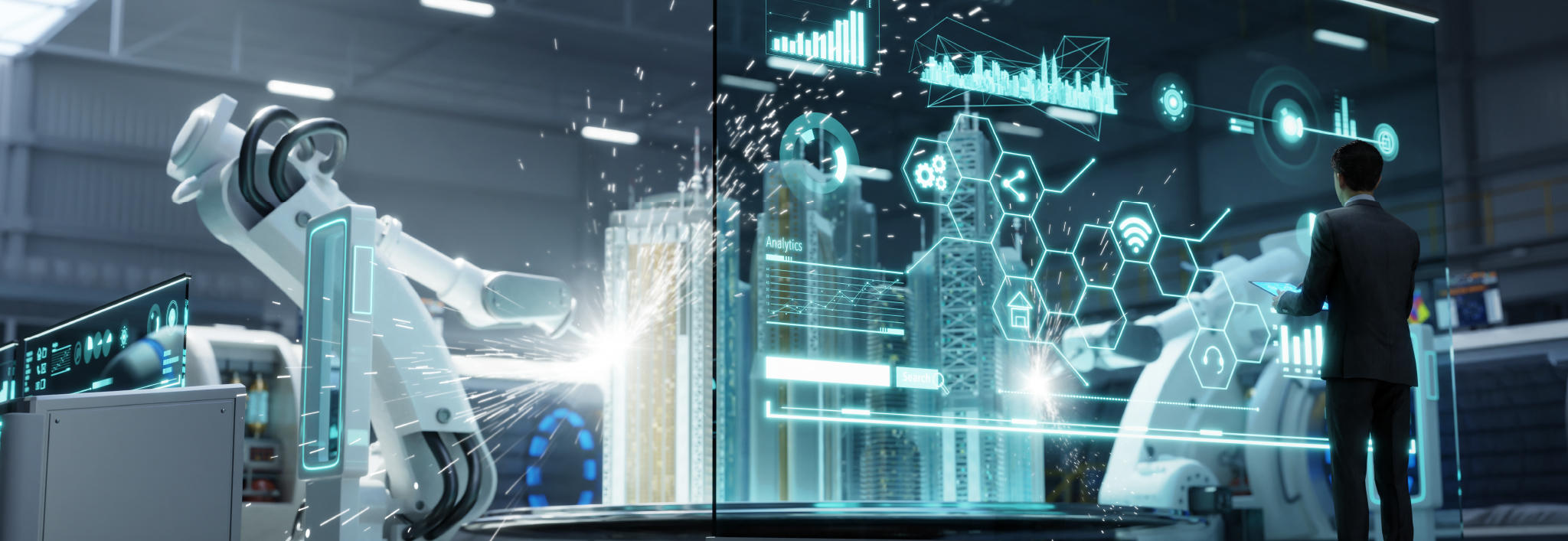
Accelerating CPS initiatives to realize data-driven management
"Plant Simulation" helps to create factory processes that can adapt to environmental changes
--Somic Inc.
Somic Ishikawa Co., Ltd. is an automotive parts manufacturer that specializes in ball joints, which are essential parts for the suspension of automobiles. With the aim of establishing a sustainable management foundation and data-driven management that can flexibly respond to environmental changes, the company is accelerating its efforts in Cyber Physical Systems (CPS), and as part of this, the company has introduced Plant Simulation as a simulation environment that will lead to the creation of a smart factory. We asked them about the background to this decision.
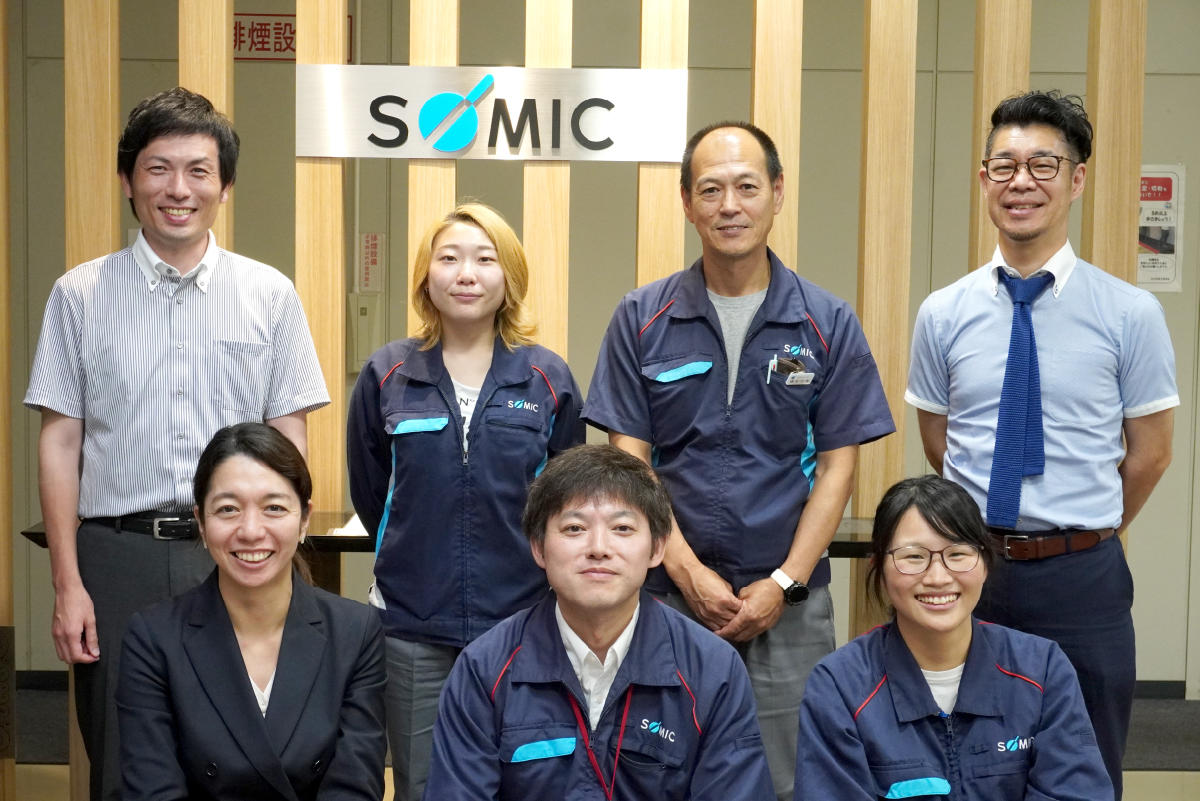
Participating members of this project
The people at Somic Ishikawa Co., Ltd.
- Yoshinori Suzuki, General Manager of the CPS Promotion Office, Production Technology Development Department
- Mitsutaka Isobe, Chief of the CPS Promotion Office, Production Technology Development Department
- Yuki Kobayashi, Chief of the CPS Promotion Office, Production Technology Development Department
- Mr. Setsugetsu Iida, CPS Promotion Office, Production Technology Development Department
Macnica
- Yoshikazu Machida, General Manager, Technology Department, Digital Industry Division
- Tomokazu Inagaki, Section Manager, 1st Section, Technology Department, Digital Industry Division
- Ai Suzuki, Digital Industry Business Division, Professional Services Division 2, 1st Section
- Task
-
- High reproducibility in 3D models is necessary on-site
- Low-code specifications for on-site use
- Support is essential to improve proficiency
- Purpose
-
- Establishing a sustainable management foundation
- Promoting CPS to aim for data-driven management
- Developing digital talent through the use of tools
- effect
-
- Contributing to the study of new process steps and improvements to existing lines
- Contributing to DX talent development through production simulators
- Also useful as a communication tool both inside and outside the company
The start of a new project
A company that solves social issues as a social experiment ground
Suzuki: We are part of the Somic Group, Somic Ishikawa Co., Ltd., which is involved in the development, design, manufacturing, and sales of ball joints and other automotive parts. We are not just a manufacturer, but we are also a "social laboratory" that aims to solve social issues while transforming manufacturing, and we have set the goal of creating a SOMIC SOCIETY as a next-generation society that contributes to local communities. We operate on a global scale, with 10 factories in six countries, including the United States, France, and China, and our domestic share of ball joints is over 50 %, and our global share is about 20 %.
The automotive industry faces many challenges, including carbon neutrality and the shift to EVs, but it is often intricately linked to social issues, and we are actively involved in creating a sustainable society. As society is undergoing major transformation, it is difficult to predict what will happen, but it is necessary to establish a sustainable management foundation by reforming existing businesses and creating new businesses. One approach we are working on is the realization of data-driven management that can flexibly respond to environmental changes, and this is a CPS-related initiative. Specifically, carbon neutral initiatives such as AI-based visual inspections and the development of IoT systems that make it easy to collect energy such as electricity are representative examples of such measures.
The role of production simulators and efforts in DX human resource development
Suzuki: Actually, we have been using IoT to visualize production operation status as part of our digitalization efforts to create smart factories, but there was a trend to use a production simulator to realize a digital twin that uses the acquired information to create the factory itself in a digital space. In essence, this project uses a production simulator to predict production numbers and promotes the creation of an environment that helps automate and streamline the physical space of the factory. The CPS Promotion Office, which we belong to, is working on fusing various digitalization efforts like this.
In addition, while the development of digitally skilled DX personnel is originally within the scope of the human resources department's jurisdiction, it is of course necessary to proceed with the placement of personnel who can master the CPS system that has been introduced in the field. Naturally, there are some areas where the personnel cannot be covered by the company alone, so there is also an aspect of working with the human resources department to consider how to develop DX personnel within the company, while also considering external cooperation. There is no doubt that the activities of the CPS themselves will lead to human resource development, from the perspective of leading DX within the company.
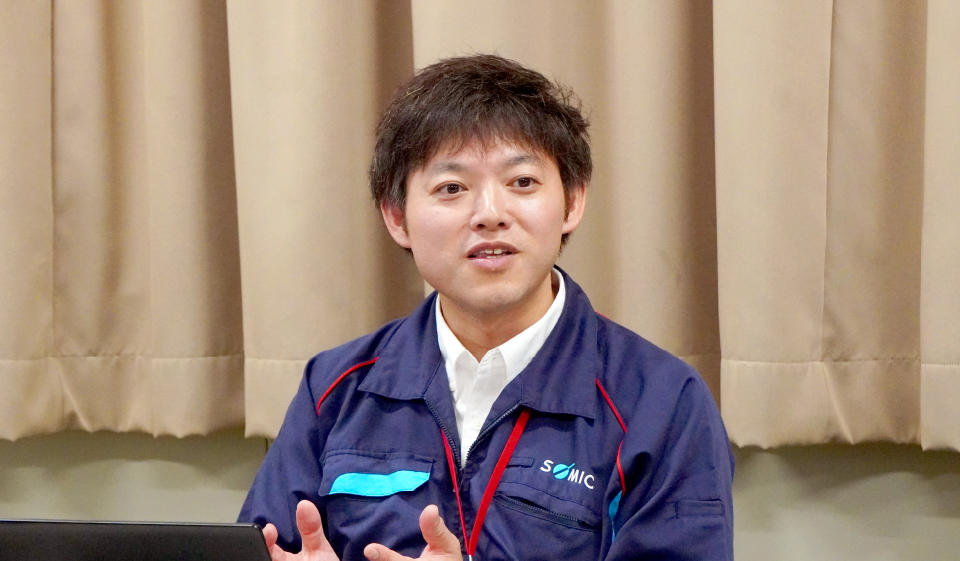
High reproducibility and low-code development capabilities
A long-standing interest in production simulators was realized with the support of management
Suzuki: As a result of our management decision to aim for data-driven management by 2025, we are taking various initiatives with the aim of being a CPS that will lead the way. However, we had been considering using a production simulator even before the management mentioned it specifically. The production simulator not only enables us to estimate the production efficiency of the factory and new capital investments, but also contributes to the development of DX human resources, so we wanted to create an environment where it could be used on-site in the future. In the past, we created spectacular animations in PowerPoint to explain things, and we wanted to do this throughout the entire factory. While we had been harboring these thoughts about the production simulator, the topic of the production simulator came up from the management, and we were able to make arrangements to successfully budget for it.
Highly reproducible "Plant Simulation"
Suzuki: When selecting a production simulator, the most important thing was that it had to be able to simulate with a 3D model, and at that point we narrowed it down to two solutions. That's when we focused on "Plant Simulation" provided by Macnica. Especially in the manufacturing industry, the revolutionary idea of manufacturing called Industry 4.0 was born in Germany, so "Plant Simulation" developed by Siemens, a German manufacturer that is promoting FA including PLCs, seemed intuitively more advanced, and we also appreciated the fact that they are involved in creating many models targeting factories.
Mr. Isobe: When we try to use conventional simulation models, the people on the factory floor inevitably feel that they don't quite get it. We have a wide variety of equipment, so we were hoping for a production simulator with high reproducibility that could be used to approximate the current factory, even for a single automated machine. Compared to other solutions, I feel that "Plant Simulation" has an advantage in terms of high reproducibility, as it allows us to create even the finest details.
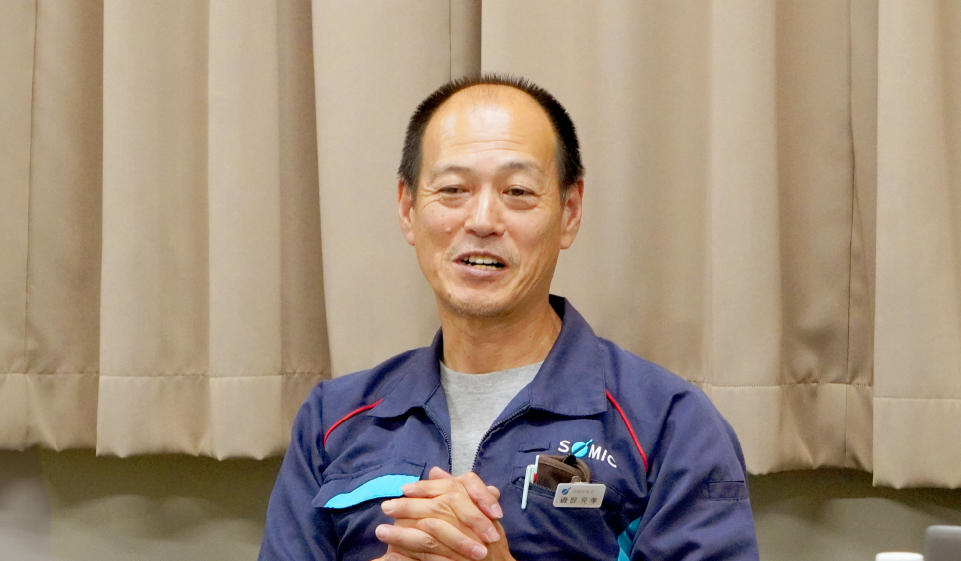
Low-code specifications required for on-site use
Suzuki: To make it usable on-site, we needed a low-code system that would require as little coding as possible. In fact, the other solutions we considered required some coding. I myself have been involved in the company's AI development, so I can use Python to some extent, but not many members can handle code. "Plant Simulation" allowed us to create models without relying on code to a certain extent.
The winner was Macnica provided comprehensive support
Suzuki: To visualize "Plant Simulation," Macnica 's online videos are easy to understand, and we received positive feedback that model creation with "Plant Simulation" is easy to understand even for members who are not familiar with IT. By showing it to others, it is easy to explain specific model creation. Also, it is not something you can use immediately after installation, and naturally there is a period of time to become familiar with it. For that reason, we also considered the extent to which they could provide support, such as services that can accompany you and educational opportunities. After comparing with other integrators that offer "Plant Simulation," Macnica had the most comprehensive content of accompaniment-type support and was also the most cost-effective.
Current situation after introduction of "Plant Simulation"
Useful for process considerations for future plans and improvement activities for existing lines
Suzuki: We are currently familiarizing ourselves with "Plant Simulation" in the CPS Promotion Office, and are creating models with two licenses. We introduced it after a trial period, and have been working on creating models with "Plant Simulation" as a companion support service for about a year, improving our proficiency. In terms of specific usage, we are creating models to consider the overall factory process for young factories that will become mainstream in the future, as we have a future vision for them. We are also considering ways to improve production efficiency through various simulations in order to make improvements to existing production lines.
Kobayashi: For the model to improve the existing line, we create a model using data from the automated equipment and perform a simulation to observe the on-site movements while taking into account the shifts of the workers. In addition to using IoT to obtain the necessary data, we also take videos of the workers' movements with a camera and input the movements of the workers as data.
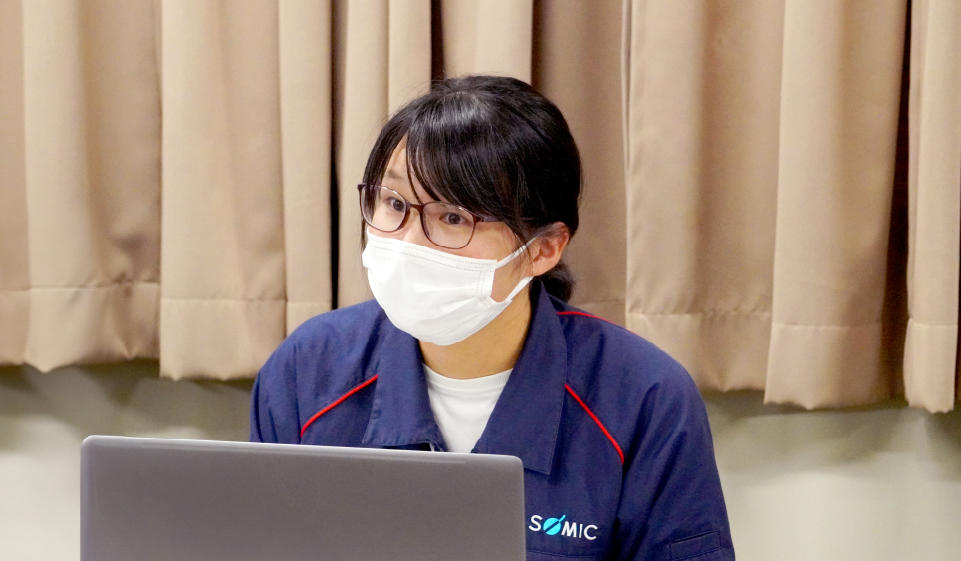
Mr. Isobe: Equipment information is large in size when it is 3D CAD data itself, so we cut it down to some extent and input it into "Plant Simulation". We run simulations such as what happens when the number of workers is reduced, while looking at how the operation changes depending on the number of workers, and have the site actually see the operation. The amount of work in progress also changes, so we receive information from the site and use it in the simulation. At the site, we ultimately want to optimize our human resources.
Prioritizing members who know the manufacturing workplace over IT skills
Suzuki: When it comes to production simulators, it's not just about creating the models, but also about figuring out what kind of data sets to prepare in the first place. For things that haven't been digitized, such as people's movements, it's necessary to go to the site and see the manufacturing process. People with IT skills don't know the manufacturing process on site, so they don't know what data to obtain to use in the simulation. On the other hand, the members of the production site don't have IT skills, so they don't know how to incorporate that into the simulation. In this case, experiencing the manufacturing site would probably require a lot of effort, so when it comes to simulations, we choose to approach training the people on site rather than hiring IT personnel.
Kobayashi: After gaining experience with the accompanying support service, I was probably able to create the model for the existing line in about a month. I'm still working on improving the model, but at first I didn't know any IT terminology, so I created opportunities to learn on my own little by little. The program itself felt similar to Excel, and I've always enjoyed making tables, so I was able to create it somehow.
Of course, it was a big help to have support services available once every two weeks. We were able to discuss the model we wanted to make and receive help, and if there was anything unclear, we could ask questions as needed.
Iida-san: I myself have recently started using "Plant Simulation". I am learning how to operate it and how to create programs based on the educational materials provided by Macnica when I was providing support, and I am also referring to how to create models for "Plant Simulation" on YouTube. I am creating my own models by looking at the samples provided by "Plant Simulation" and the models that Kobayashi created when providing support. I am improving my proficiency by asking Kobayashi for any questions.
Benefits brought about by "Plant Simulation"
In addition to improvement activities, it is also useful as a communication tool both inside and outside the company.
Suzuki: We will actually start using it to make improvements on-site, but we have already heard some expectations from the factory for some simulations, and there is a lot of interest in the production simulator as a way to help with improvements. Unlike the past, we can do trial and error, so we will likely come up with a variety of ideas. Also, up until now it was difficult to consider what would happen if we reduced the number of people from four to three, but now we can do the simulation, which is great.
When we had the procurement department of one of our client automobile manufacturers look at the simulation model, it was much easier for them to understand the improvement process, and it was a huge help in sharing our vision with them. Also, by having external partners look at the simulation, we were able to share the line we had imagined, which made it easier to communicate our intentions for system improvements, such as system integration. The production simulator is functioning effectively as a communication tool.
Production simulator accelerates data utilization toward data-driven management
Mr. Isobe: We are now able to make effective use of data in line with our policy of aiming for data-driven management. There are voices from the field saying they want to be able to see the movement in Gantt charts, etc., and although there are options to use options or create it from scratch, I think that if we can provide it in a more understandable form for the field, the scope of use will be expanded even further.
Kobayashi: In the preliminary trial, we were able to try out various things in a game-like manner, and the accompanying support service was also very helpful, with accurate answers to questions about specific model creation. We received a lot of useful information, such as creating and sending model samples to inquiries by email, and we are grateful for their kind response. At my previous job at a machine tool manufacturer, whenever I tried to try out various things, it would affect the actual machines, so it was difficult to try things that I wanted to try. Thanks to the production simulator, we can try out various things, so it is an ideal environment for expanding our ideas.
Iida-san: Although I still have little experience, it feels good to see what I want to make take shape, and I'm very happy about that. I was also grateful to have an environment where I could look up things I didn't understand by searching Macnica, they made several suggestions that led to a successful solution, and I'm grateful for their generous support.
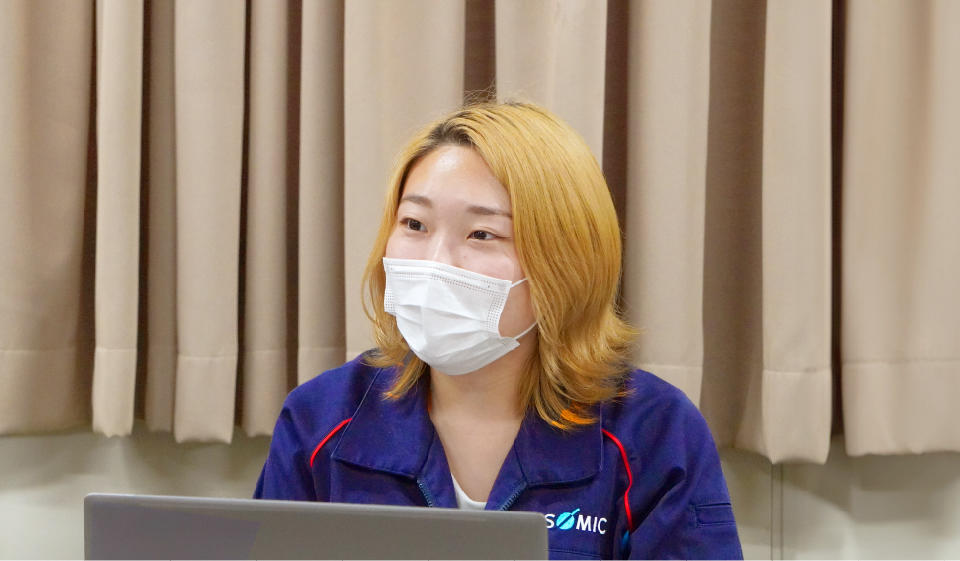
Drawing a vision of the future with "Plant Simulation"
The system will be rolled out to each factory and incorporated into daily business processes.
Suzuki: Currently, it is being used in the CPS Promotion Office, but eventually we would like to create an environment where each factory can use "Plant Simulation" for their own improvement activities. Ideally, it would be possible to perform real-time simulations that would lead to future predictions of what will happen next while looking at data obtained through IoT in real time. We would like to be able to use it to extract issues from yesterday's situation through simulations and immediately link them to measures such as improvements.
When applying to new factories, we plan to use "Plant Simulation" at the production preparation stage, when deciding what equipment to install and what kind of lines to build. In any case, we would like to increase the number of organizations that can use "Plant Simulation" and create an environment where it can be systematically incorporated into daily business processes.
In areas other than "Plant Simulation," we hope to work with Macnica to develop systems that we lack, such as PLM, and we also hope to continue to consult with them on various big issues, such as how DX can be used to solve problems on-site.
We want to further accelerate on-site visualization, including expanding to overseas bases.
Mr. Isobe: In addition to making improvements to create an easy-to-use environment on-site, we also believe that we need to expand the scope of use of "Plant Simulation," which is currently deployed in domestic factories, by eventually deploying it to overseas bases.
If we could wish for everything that our company handles to be included in "Plant Simulation," we would be able to visualize where work is in progress, the current production volume, and so on. If everything can be put into digital form, there would be great benefits in terms of management as well.
Kobayashi: We are currently building a model to match the current production line, but we would like to continue to listen to opinions from the field and create a model that matches their needs so that it can be used for final improvement activities. In addition, we would like to eventually model signboard methods and other things using "Plant Simulation" and use them for optimal simulations.
Iida-san: Currently, Kobayashi is leading the model creation, but I would like to continue working hard to become more adept at using "Plant Simulation" so that I can create even better models than I am now.

Somic Ishikawa, Inc.
- Business
- Development, design, manufacture and sales of automotive parts (ball joints)
- founding
- 1916
- Number of Employees
- 1,805 (as of April 2023)
- website
- https://www.somic.co.jp/
PRODUCT/SERVICE
Click here for products and services related to this case study
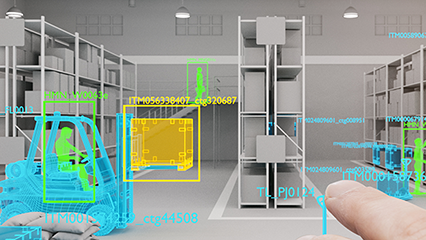
Siemens Tecnomatix "Plant Simulation"
Digital Twin production simulation software
CONTACT
Please feel free to contact us with any inquiries regarding this case study or product implementation.