- Semiconductor BusinessHOME
- Products and Services of Macnica,Inc.
-
technical information

-
Events and Seminars
- Handling Manufacturer
- Support
- Inquiry
- Click here to purchase products
- Semiconductor business e-mail magazine registration
What is I3C? A high-speed, wire-saving interface compatible with I2C
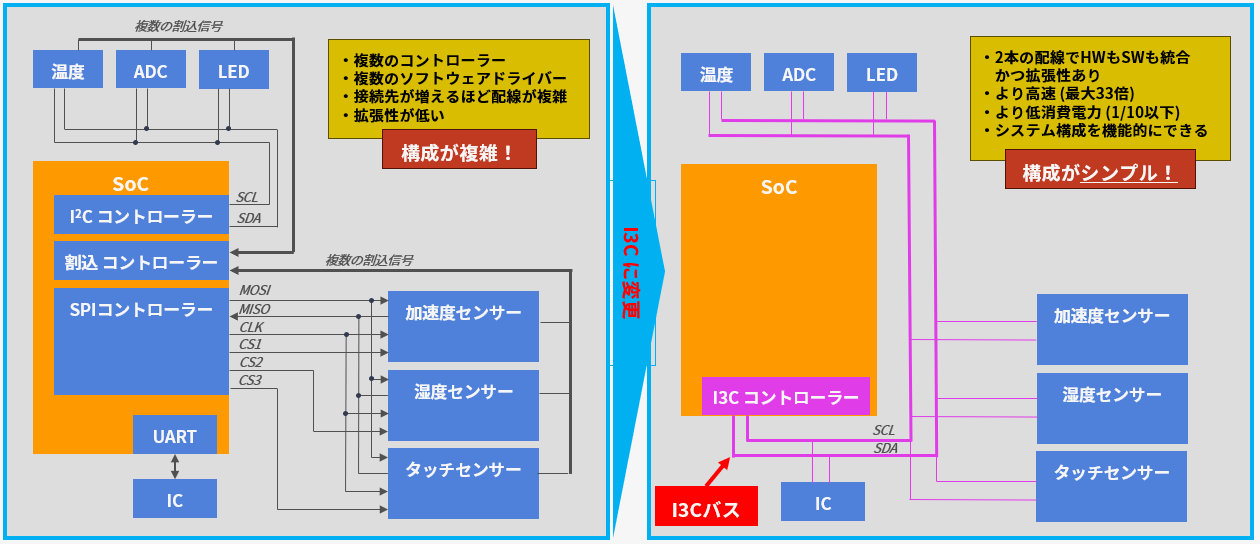
I3C (Improved Inter-Integrated Circuit) is a next-generation serial communication interface that was established by the MIPI Alliance to solve the problems of conventional I2C and SPI. It has features such as high-speed communication, low power consumption, and simplified wiring while maintaining backward compatibility with I2C.
Conventional I2C had limitations in communication speed and power efficiency, but I3C maintains the two-wire configuration of I2C while providing the following improvements:
-High-speed communication: Supports up to 12.5Mbps (SDR mode) and even faster speeds in HDR mode
- Simplified wiring: Two lines for clock and data enable bidirectional communication
-Low power consumption: Push-pull drive system reduces unnecessary current consumption
In-band interrupt (IBI): Notification from the device side possible without a dedicated interrupt line
Dynamic Address Assignment (DAA): Devices automatically obtain addresses when the bus is started
-Hot join function: New devices can be added to an operational bus
-Backward compatibility with I2C: Can coexist with existing I2C devices (pull-up resistors are required when connecting I2C devices)
Due to these features, I3C provides a high-speed, low-power, and flexible means of communication, and is attracting attention as an interface that can efficiently connect a large number of devices even under limited space or power constraints.
Features of NXP's I3C-compatible products
NXP has been involved in the development of the I3C standard from its early stages and is one of the earliest manufacturers in the industry to develop I3C-compatible products.
NXP's I3C products are designed to maximize the advantages of I3C while maintaining compatibility with I2C, and have the following features:
-High-speed communication
Supports up to 12.5 Mbps (SDR mode), allowing data transfers significantly faster than conventional I²C.
・Low power consumption design
Push-pull drive method improves power efficiency compared to open-drain I²C.
-Backwards compatible with I²C
I3C devices can also operate on the I²C bus and can be mixed with existing I²C devices.
- In-band interrupt (IBI) support
No dedicated signal line is required for interrupts, and event notification is possible on the bus.
Dynamic address allocation
Flexible system configuration is possible with the function that automatically assigns addresses when devices are connected.
- Simplifying design by reducing the number of lines
Compared to SPI, it requires fewer signal lines, which helps reduce the number of SoC pins and board wiring.
・Diverse product lineup
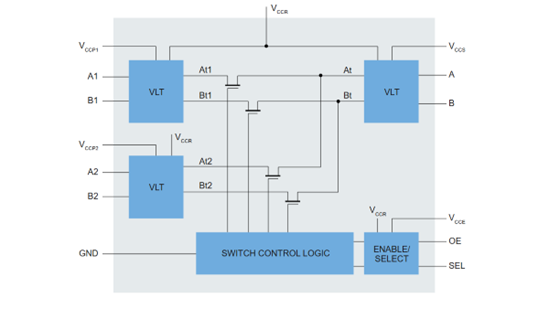
・ P3S0210BQ: Dual bidirectional I3C switch + voltage level translator
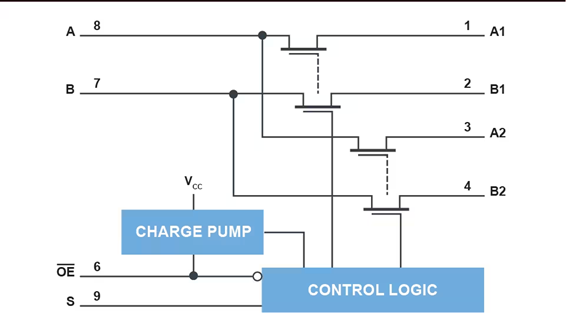
・ P3S0200GM: I²C/I3C multiplexer
・ P3T1035 / P3T1084: I3C compatible temperature sensor
・I3C controllers support general-purpose MCUs and high-end i.MX series
- Also suitable for automotive and industrial applications
Product design suitable for fields that require high reliability and durability.
These features make NXP's I3C products a compelling choice for designers considering adopting I3C in the future.
NXP's I3C compatible product lineup
NXP offers a number of categories of products that support I3C, providing designers who are considering introducing I3C with flexible options for their applications. Here, we will introduce the main products and their features for each representative category.
Switches/Multiplexers
To achieve flexible configuration of the I3C bus, NXP offers I3C-compatible switches and multiplexers, which allow efficient switching between multiple slave devices and flexible design of bus branching configurations.
■Representative products
・P3S0210BQ: 2:1 multiplexer, compatible with both I3C and I2C, low on-resistance design
・P3S0200GM: Bidirectional switch, I3C/I2C compatible, low leakage current
P3S0210BQ
P3S0200GM
Temperature sensor
I3C temperature sensors streamline system thermal management and allow multiple sensors to be aggregated onto a single bus. They are also I2C compatible, making them ideal for incremental installation into existing systems.
■Representative products
・P3T1035: ±0.5°C accuracy, WLCSP4 package
P3T1084: ±0.4°C accuracy, WLCSP6 package, with alert function
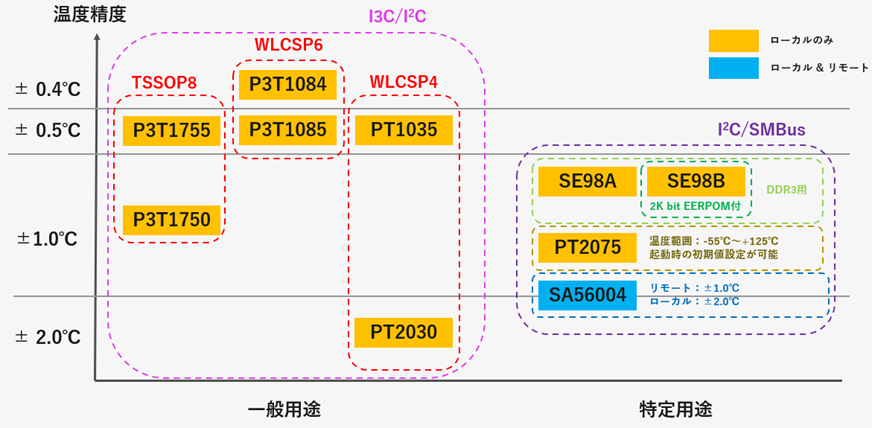
NXP's temperature sensors are mainly divided into general purpose and specific purpose.
For more information, please see the article below.
NXP Semiconductors: Temperature Sensor - NXP Semiconductors -Macnica
Microcontrollers and processors with MIPI I3C
NXP offers many microcontrollers (MCUs) and i.MX series with built-in MIPI I3C. This makes it easy to design systems around I3C and allows for a smooth transition from conventional I²C.
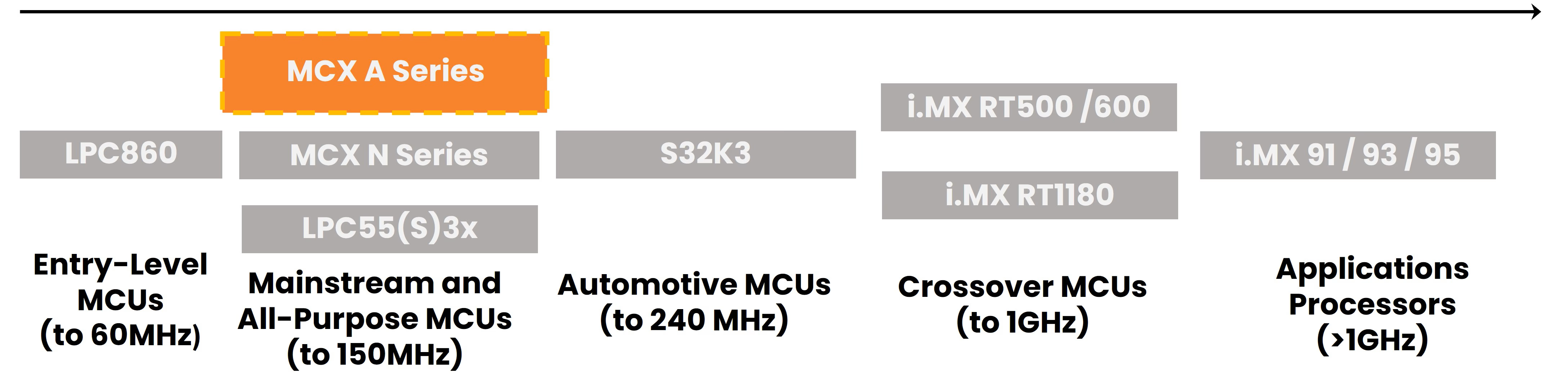
From general-purpose MCUs and i.MX RT crossover MCUs
Supports high-end i.MX application processors
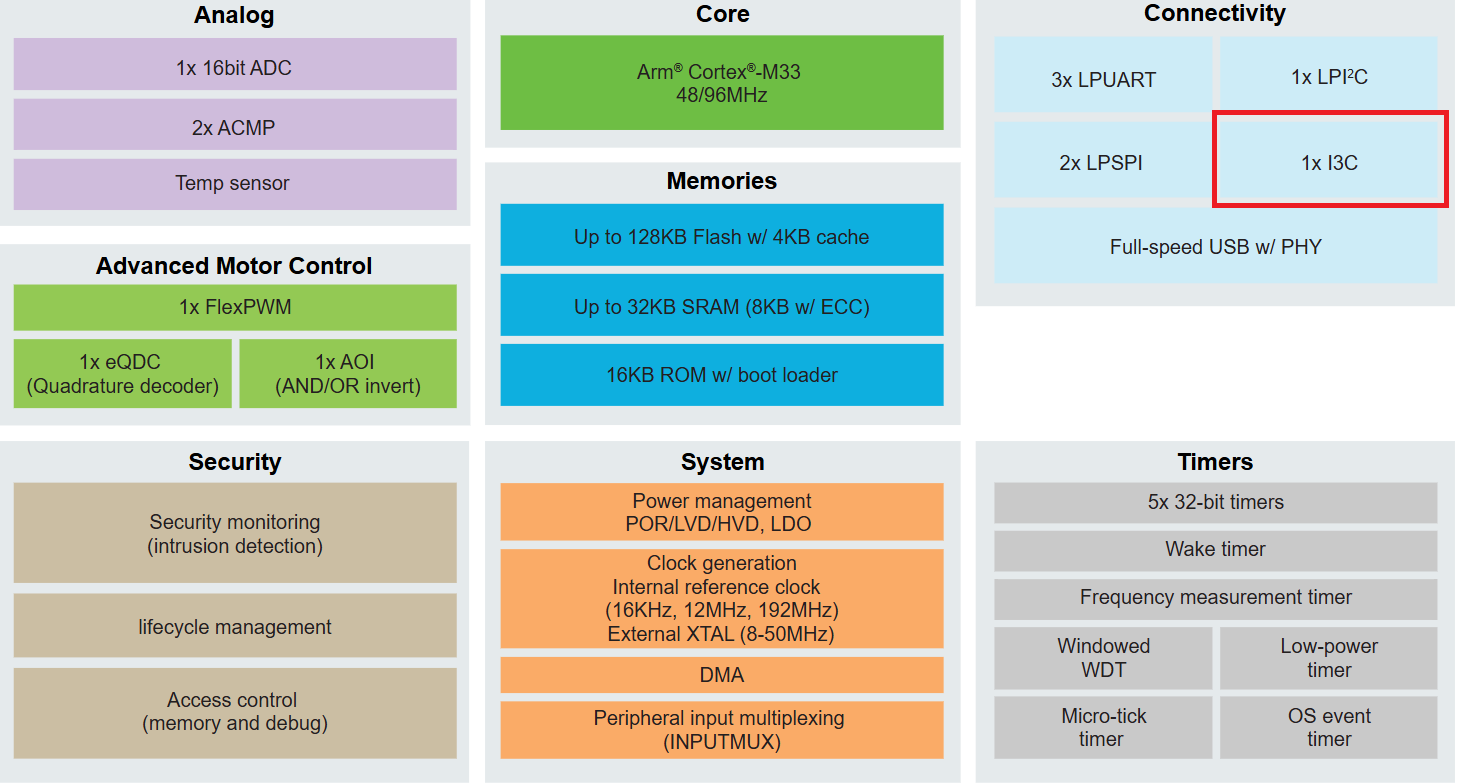
Most of the microcontroller/processor families shown in the left figure have built-in I3C controllers.
This is the block diagram of the MCX A14/A15 family.
Application areas where I3C is useful
I3C is expected to be used in a variety of fields, taking advantage of its features such as high-speed communication, reduced wiring, low power consumption, and I2C compatibility. I3C is particularly effective in systems where there are restrictions on the number of I/Os and power efficiency is required.
Main usage scenarios
・Mobile and wearable devices
There is a need to connect a large number of sensors and peripheral devices within limited space and power constraints.
Example of use: Integrated communication of smartphone accelerometers, gyros, environmental sensors, etc.
IoT devices
Ideal for small, battery-powered devices that require low power consumption and low pin count designs
Examples of use: smart home devices, environmental monitoring sensors, wearable health devices
・Automotive
I3C is effective for integrating sensors in in-vehicle networks that require high reliability and high-speed communication
Examples of use: ADAS (Advanced Driver Assistance System), in-vehicle environment sensor, battery management
・Industrial equipment/FA (Factory Automation)
I3C provides reliable communication in environments where noise immunity and high speed communication are required
Examples of use: Robot sensor clusters, environmental control devices, sensor networks for predictive maintenance
Medical equipment
Suitable for medical devices that require high-precision sensors and low-power communication
Application examples: Portable diagnostic equipment, patient monitoring systems, vital sensors
・Server/Data Center
Need to efficiently connect a large number of sensors and management devices
Usage examples: Temperature, voltage, fan control sensors, communication with BMC (Baseboard Management Controller)
In this way, I3C is expected to become more widespread as a technology that will contribute to optimizing communications in next-generation embedded systems and infrastructure devices.
Evaluation boards/development software
NXP provides an environment that allows you to quickly develop I3C designs.
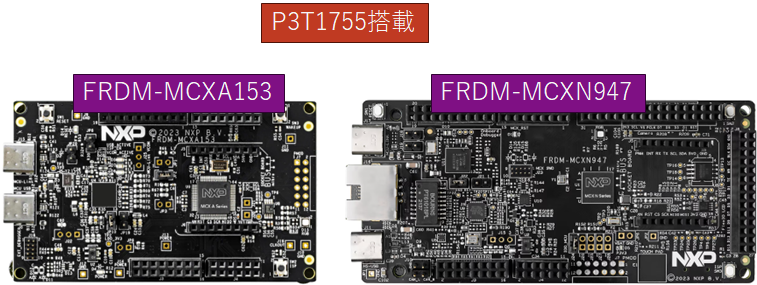
Evaluation Board
◦ FRDM-MCXA153
Evaluation board equipped with a microcontroller and I3C device, so you can start evaluating right away!
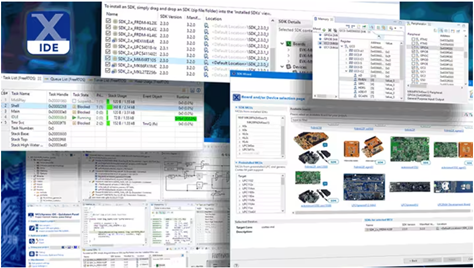
development software
◦ MCUXpresso IDE
(Free development tool, based on Eclipse)
◦ MCUXpresso SDK (sample code, etc.)
-I3C HCI driver for Linux
Inquiry / Quotation
If you have any questions or would like a quote regarding this product, please contact us below.
NXP Semiconductors Manufacturer Information Top
If you want to go back to NXP Semiconductors Manufacturer Information Top, please click below.