- Semiconductor BusinessHOME
- Products and Services of Macnica,Inc.
-
technical information

-
Events and Seminars
- Handling Manufacturer
- Support
- Inquiry
- Click here to purchase products
- Semiconductor business e-mail magazine registration

Product Summary
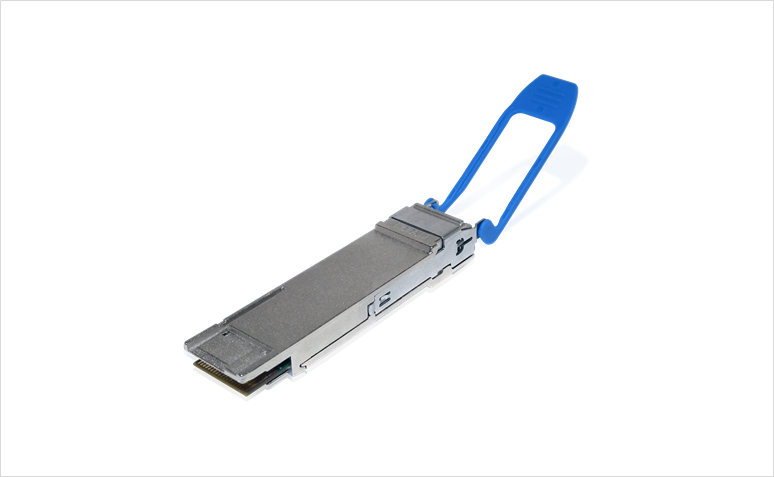
A loopback module is a modular device that internally loops electrical signals back from the transmitting side to the receiving side, achieving the following:
・Pseudo power consumption and temperature tests can be performed by adjusting the internal load and temperature.
・Insertion loss and contents of EEPROM can be customized
Product lineup by form factor
|
product name |
form factor |
data rate |
|
ML4026 |
SFP28/SFP56/SFP112 |
1x28/56/112Gbp |
|
ML4022-LB |
SFP-DD |
2x50Gbps |
|
ML4002 |
QSFP28/56/112 |
4x28/56/112Gbps |
|
ML4062-LB |
QSFP-DD |
8x56/112Gbps |
|
ML4064-LB |
OSFP |
8x56/112Gbps |
Learn more about QSFP-DD loopback modules here

A technical article explains how to solve network problems with measuring instruments

Using a link failure in an actual network device as a theme, we introduce an example of troubleshooting in which a measuring instrument found that the cause was in both the switch and the optical transceiver module.
If you are interested in how the loopback module should be used in practice, please take a look.
This article is also well read

What is an "optical transceiver module"?
"Types of Optical Transceiver Modules" "Interfaces for Accessing Optical Transceiver Modules" "Types of Optical Fibers" "Relationship between Standards and Distances"
It is divided into 4 points and explained.
Contact Us