- Semiconductor BusinessHOME
- Products and Services of Macnica,Inc.
-
technical information

-
Events and Seminars
- Handling Manufacturer
- Support
- Inquiry
- Click here to purchase products
- Semiconductor business e-mail magazine registration


 Narrow down by specifying conditions
現在2236件がヒットしています。check
Introduction
At the end of June 2022, the Ministry of Internal Affairs and Communications announced the "Information and Communication Technology Strategy for Beyond 5G". As the amount of investment in PoC is on the rise in the future, it is expected that the promotion of research and development will further accelerate. As we aim to expand the 5G communication area and speed, improving network security is also a national issue.
In July 2022, Anritsu Corporation and Qualcomm Corporation collaborated to use the Snapdragon™ X70 5G Modem-RF System to successfully test the protocol conformance of private network technology (NPN) in a 5G SA environment for the first time in the industry. There was also an announcement.
This time, we will introduce an example of network configuration for 5G NPN (Non public network), which has been started sequentially from 3GPP Rel. 16-17 and is expected to be used in the IIoT area.
Comparison of NPN (Non public network) configuration examples
NPN is a standard specification established by 3GPP from Rel. 16 on utilizing 5G for non-public networks. Access to the network can be restricted to specific users. Occupy 5G lines and build a private network environment. NPN occupies a network line that is tied to each user, so in addition to improving security, there is less wireless interference from other users, and it is a function that contributes to improving the performance of URLLC and eMBB.
As an assumed 5G NPN configuration, 5G-AICA (an organization that promotes the use of 5G technology for IIoT use cases) is considering a configuration example like the one shown in Figure 1. Configuration examples can be broadly divided into SNPN (Standalone Non Public Network) configured under a local 5G environment and PNI-NPN (Public Network Integrated - Non Public Network). Table 1 shows the characteristics of each configuration example.
*Local 5G: Non-public network networks and network environments are constructed and managed by the user.
*Private 5G: Non-public network networks and network environment construction and management are partially or wholly carried out by the telecommunications carrier.
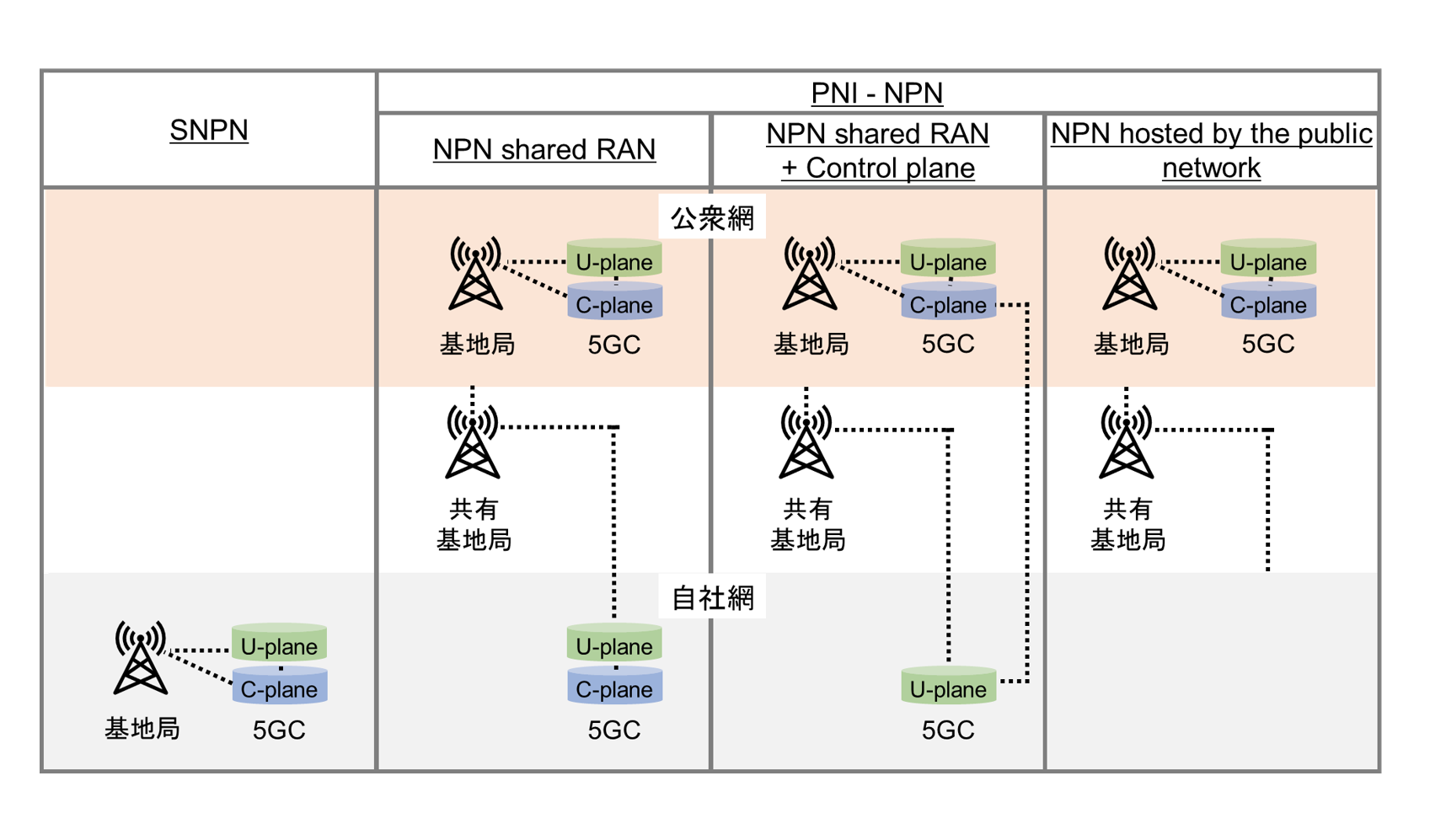
Fig. 1 NPN configuration comparison schematic diagram
○Standalone NPN (SNPN)
SNPN builds NPN in a local 5G environment with its own base station and 5G core (5GC). Since the equipment is completed on the user side, it is the most excellent in network safety and low latency. Also, since it does not go through a public network, it is possible to build a network that is not bound by the carrier's area. Users need to operate and manage all 5G communication facilities, but most data can be managed locally.
○NPN shared RAN (PNI-NPN)
The 5G core will be built in-house, but private 5G will be built in an environment that connects to the network line on the public network side via a shared base station. Compared to SNPN, there is no need to own a base station in-house, and it is possible to outsource the management and operation of NPN to a public network. In terms of performance and cost, it sits between SNPN and NPN shared RAN + Control plane.
○NPN shared RAN + Control plane (PNI-NPN)
In addition to the configuration of NPN shared RAN, it is a configuration in which the operation of the C-plane (Control plane) of the 5G core is entrusted to the public network side. Data on the U-plane (User-plane) side must be managed by the company, but security is high because it can be managed locally. It is possible to implement an NPN environment that maintains high security while keeping total costs down.
○NPN hosted by the public network (PNI-NPN)
It is a configuration in which the operation of two planes, the base station and 5GC, is entrusted to the public network side. NPN is provided by telecommunication carriers through "network slicing".
*Network slicing: A technology that enables the construction of independent networks that do not interfere with each other by slicing (dividing) a network virtually.
Network can be provided according to device features (mMTC, URLLC, eMBB)
Table 1 Summary of characteristics of each NPN configuration example

in conclusion
This time, we introduced each configuration example of NPN. Module vendors are gradually starting to release 5G modules compatible with 3GPP Rel. 16, and expectations are rising for further expansion of 5G application areas. I would like to continue to pay attention to the movement of NPN correspondence in the future.
If you are interested in our latest 5G module products, please feel free to contact us.
Inquiry
For inquiries about Qualcomm products and 5G communication modules, please use the link below.
To Qualcomm manufacturer information Top
To return to the Qualcomm manufacturer information Top page, please click below.