- Semiconductor BusinessHOME
- Products and Services of Macnica,Inc.
-
technical information

-
Events and Seminars
- Handling Manufacturer
- Support
- Inquiry
- Click here to purchase products
- Semiconductor business e-mail magazine registration


 Narrow down by specifying conditions
現在2200件がヒットしています。check

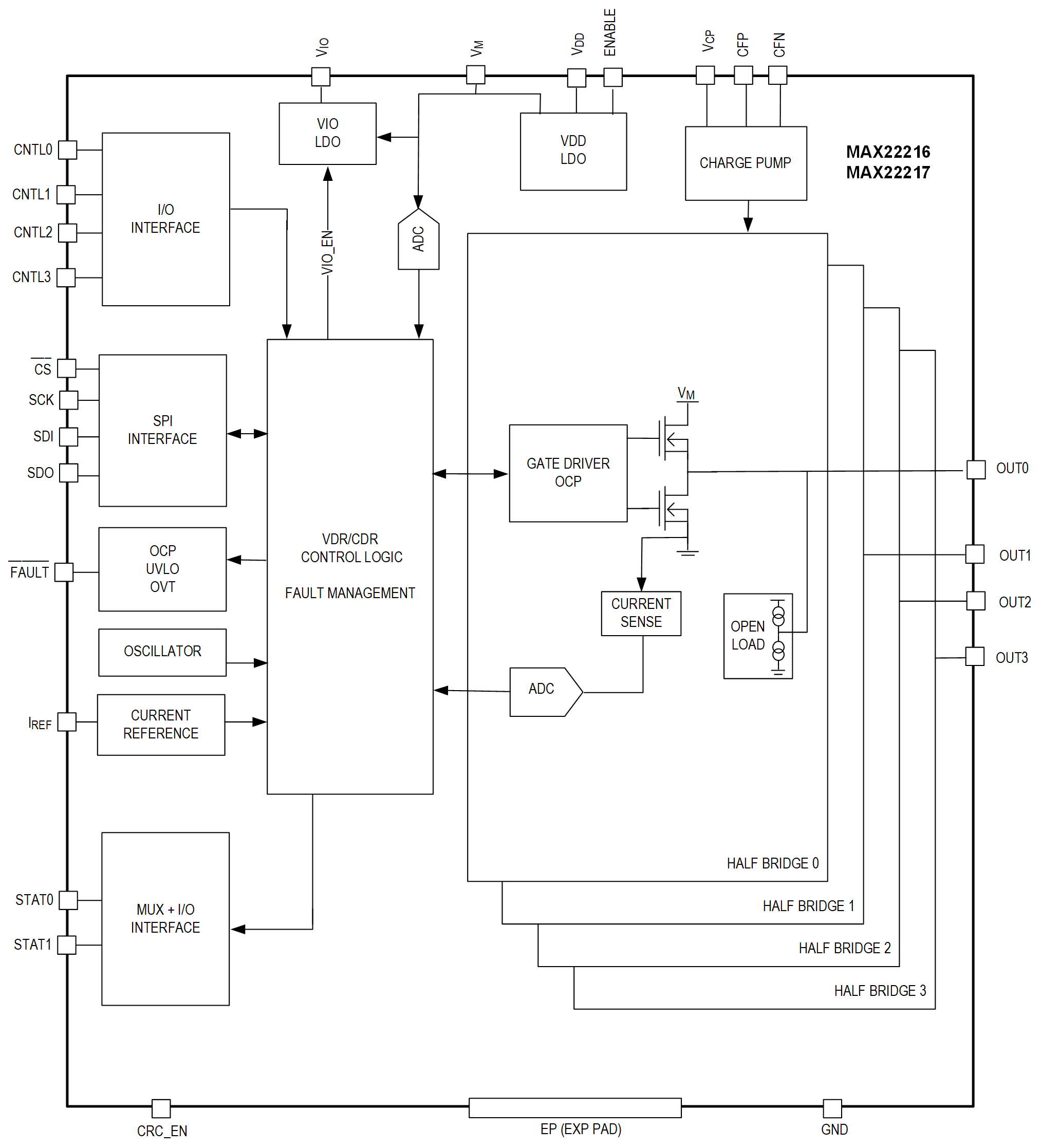
When designing applications that use solenoids, do you face challenges such as "reducing wiring to miniaturize the circuit board," "reducing heat generation and power consumption," or "improving system reliability"?
This time, we'll be looking at the ADI Trinamic™ series solenoid/motor driver, which integrates all the necessary functions for solenoid driving onto a single chip and enables highly reliable systems through advanced diagnostic capabilities.
Introducing the "MAX22216/MAX22217/MAX22216V".
Locations where solenoids are used
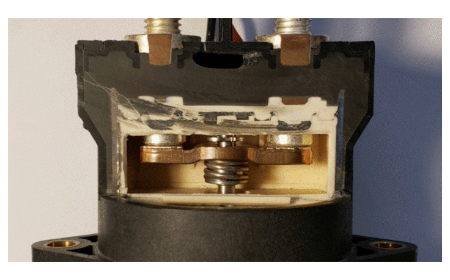
A solenoid is an actuator that converts electrical signals into mechanical linear motion, and is used in a wide range of fields, from industrial equipment to automobiles. By passing an electric current through a coil, it operates a plunger (iron core), which is used to open and close valves, control locking mechanisms, and drive various mechanical movements.
In the industrial equipment sector, it is used for driving pneumatic and hydraulic valves, transporting and positioning workpieces in manufacturing equipment, locking control of automatic doors and electronic locks, and mechanism control of vending machines and ticket machines. Due to its fast response speed and direct on/off control from the control circuit, it is widely adopted as a typical load for PLCs and industrial controllers.
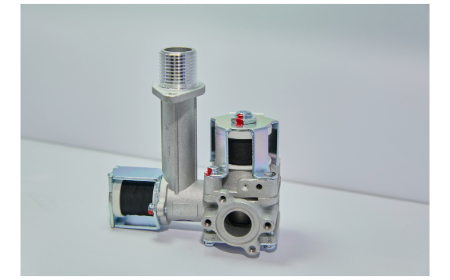
Solenoid valves, used for controlling fluids such as air, liquids, oil, and steam, are a typical example.
In the automotive sector, it plays a crucial role in engines, transmissions, and vehicle control systems. For example, it is used in fuel injectors, hydraulic control valves in automatic transmissions, EGR (exhaust gas recirculation) valves, EVAP (fuel evaporation gas treatment) systems, door lock mechanisms, and electric parking brakes. It is also utilized in valve control for cooling systems and thermal management systems in hybrid and electric vehicles (EVs).
Thus, solenoids are important actuators for achieving reliable mechanical operation using electrical signals, and are key devices that support the automation and high functionality of industrial and automotive equipment.
Application example
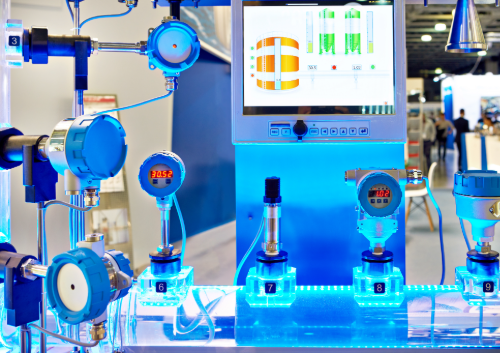
Industrial Automation
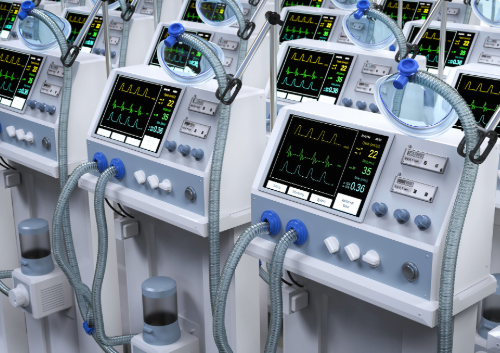
Oxygen concentrator

Pesticide sprayer
MAX22216 / MAX22217 / MAX22216V
A smart solenoid and motor driver with 4-channel serial control and advanced diagnostic capabilities.
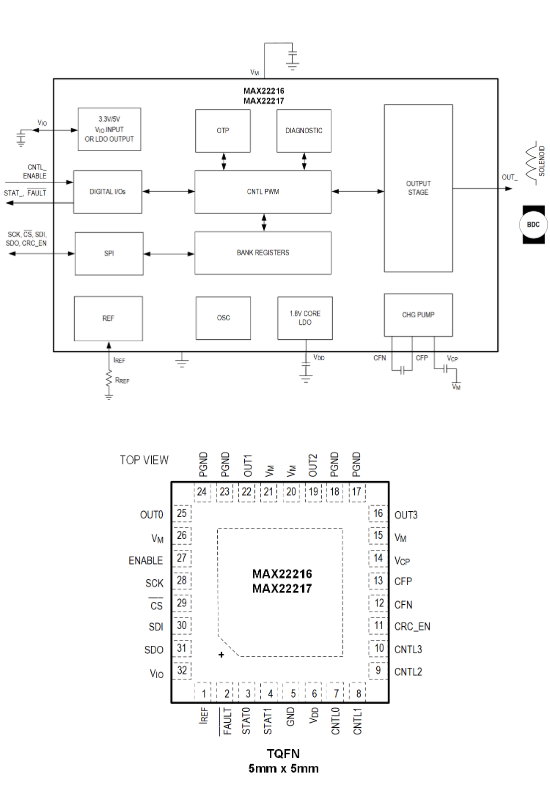
Features
・Serially controlled 4-channel 36V half-bridge
-1.7A DC and 3.2A full scale
- Achieved AEC-Q100 Grade 1 certification for automotive use (MAX22216V)
• Low on-resistance for high efficiency
• High flexibility
- Independent channel settings
- High-side / Low-side / Bridged load / Parallel mode
• Advanced control
- Voltage/current driven
- Current limiter
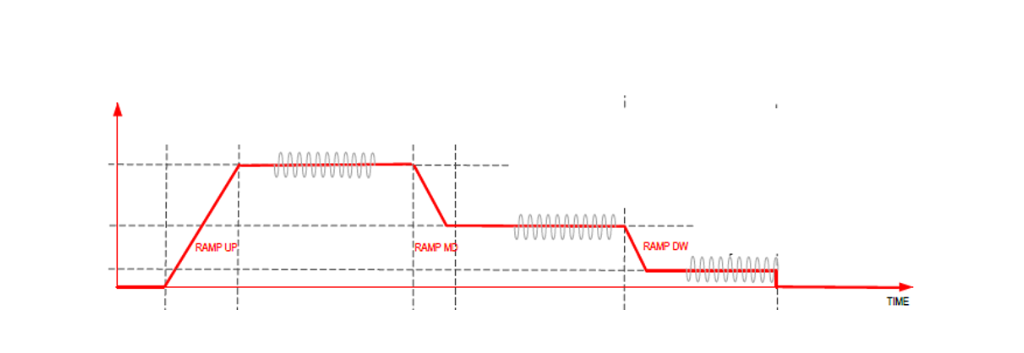
- Dithering function
- Lamp up/down function
- Demagnetization voltage control
- Current detection function
• Diagnostic function
- Measurement of reaction time and operating time
- Detection of plunger movement
- Detection of open load
- Measurement of inductance value
- Digital current detection
• Full set of protection features
-Overcurrent protection
- Overheating protection
- Low voltage lockout
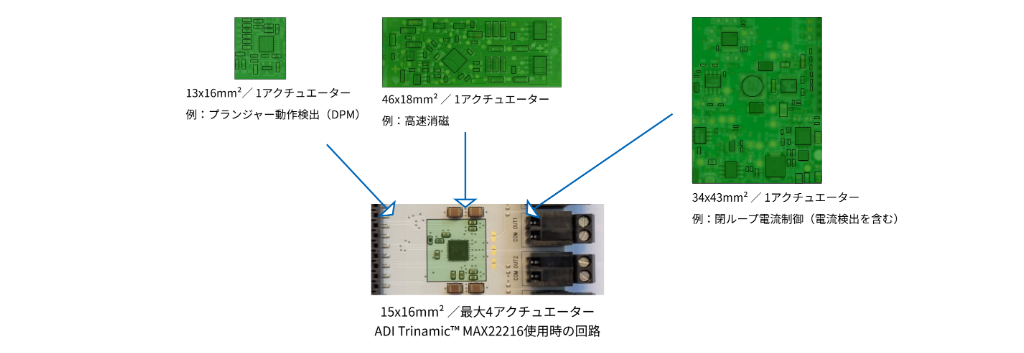
Compared to conventional discrete configurations, it achieves miniaturization.
The MAX22216 / MAX22217 / MAX22216V are integrated driver solutions with built-in advanced diagnostic and current control functions. By integrating functions that would traditionally be handled by multiple discrete components onto a single chip, they contribute to reduced BOM costs and smaller mounting area by reducing the number of components.
Furthermore, because it has a built-in lossless current sensing function, an external current sensing resistor (shunt resistor) is not required. This not only reduces the number of components but also contributes to reducing power loss and heat generation.
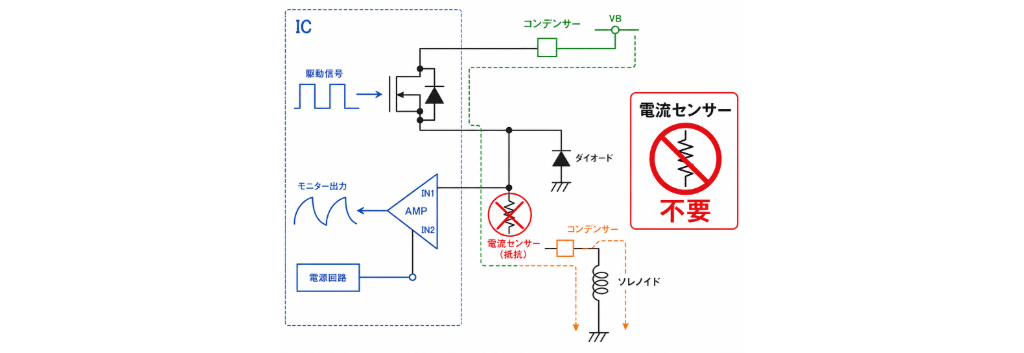
Because the chip has a built-in current sensing function, current control is possible without a sensor.
ADI Trinamic™ Solenoid Driver Features
■ Flexible circuit configuration and drive method
ADI Trinamic™ solenoid drivers support flexible circuit configurations to accommodate a wide range of loads and applications. In addition to single-ended configurations with high-side and low-side drive, they also support bridged load (BTL) configurations, enabling them to drive a broad range of inductive loads, including solenoids, relays, and DC motors.
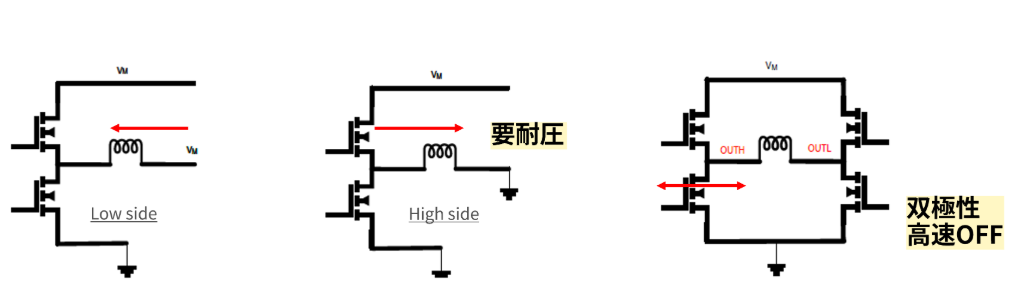
High-side / Low-side / Full-bridge configurations can be freely selected.
Furthermore, the drive system supports voltage control (VDR mode), current control (CDR mode), and a hybrid mode that combines both.
In VDR (Voltage Drive Regulation) mode, the output voltage of the half-bridge is controlled to remain constant. Even if the power supply voltage fluctuates, internal compensation is performed, ensuring stable operation.
On the other hand, in CDR (Current Drive Regulation) mode, the output current of the half-bridge is controlled in a closed loop. By feeding back the internally detected current value, high-precision current control is achieved, contributing to the stable operation of solenoids and proportional valves. Furthermore, since proportional gain (P gain) and integral gain (I gain) can be set, the response speed and steady-state error can be optimized according to the application.
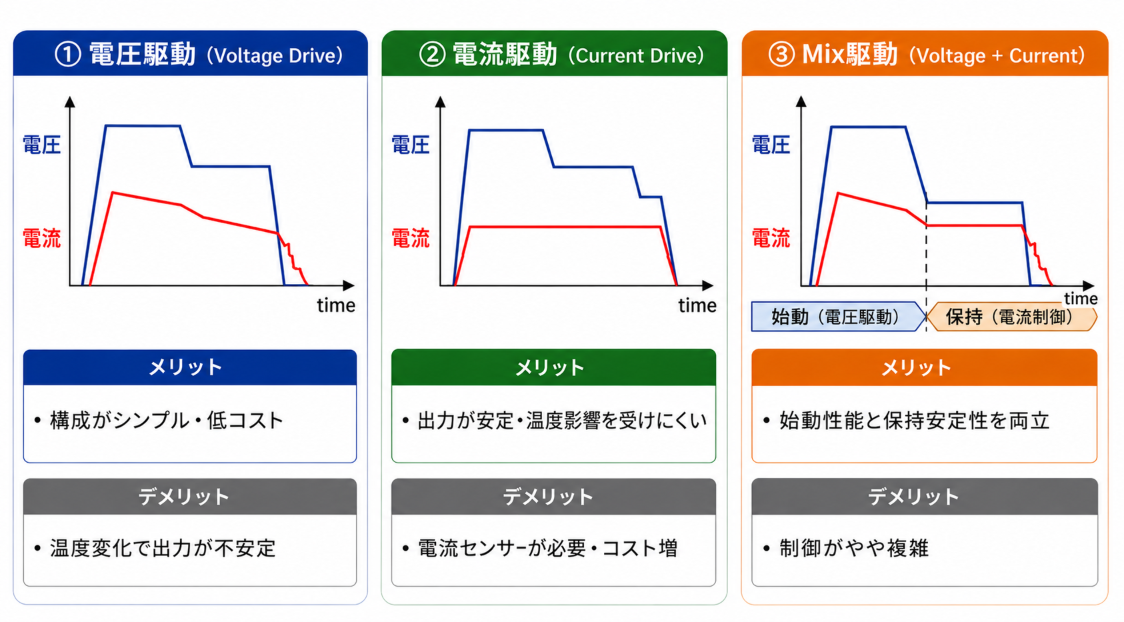
The drive system can be selected according to the user's preference.
■ Supports high-current drive via parallel output
The MAX22216 / MAX22217 / MAX22216V can be used by connecting multiple half-bridge outputs in parallel. This makes it possible to drive high-current solenoids and motors that would be difficult to drive with a single channel.
Furthermore, the channel configuration can be flexibly changed according to the required output current, allowing the system to be configured without adding external drivers or MOSFETs. This contributes to simplifying circuit design and reducing mounting area.
Standard drivers allow one device connection per channel, and there is an output limit per channel.
If the current is insufficient, an external FET is used, and the more channels there are, the more area it takes up.
ADI Trinamic™ drivers can handle high currents by combining output channels.
Example: Changing from a 1.7A x 4ch half-bridge to a 6.8A x 1ch half-bridge.
1.7A x 2ch half-bridge + 1.7A x 1ch full-bridge
■ Coil diagnostic function for position estimation and predictive maintenance
The MAX22216 / MAX22217 / MAX22216V incorporate advanced diagnostic functions, contributing to improved system reliability and the realization of predictive maintenance.
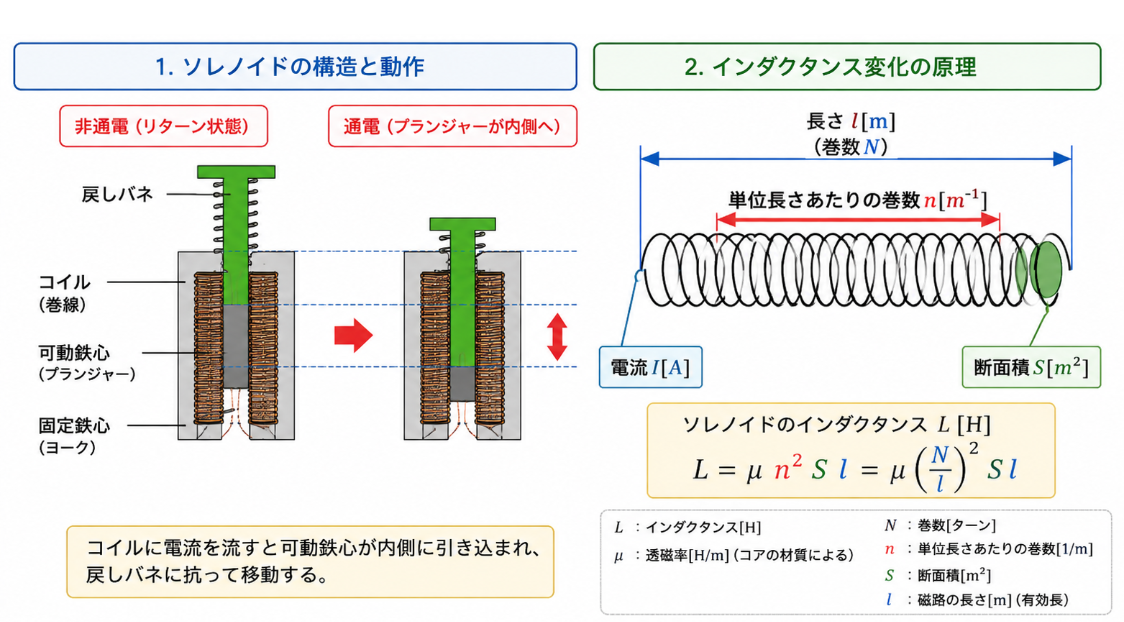
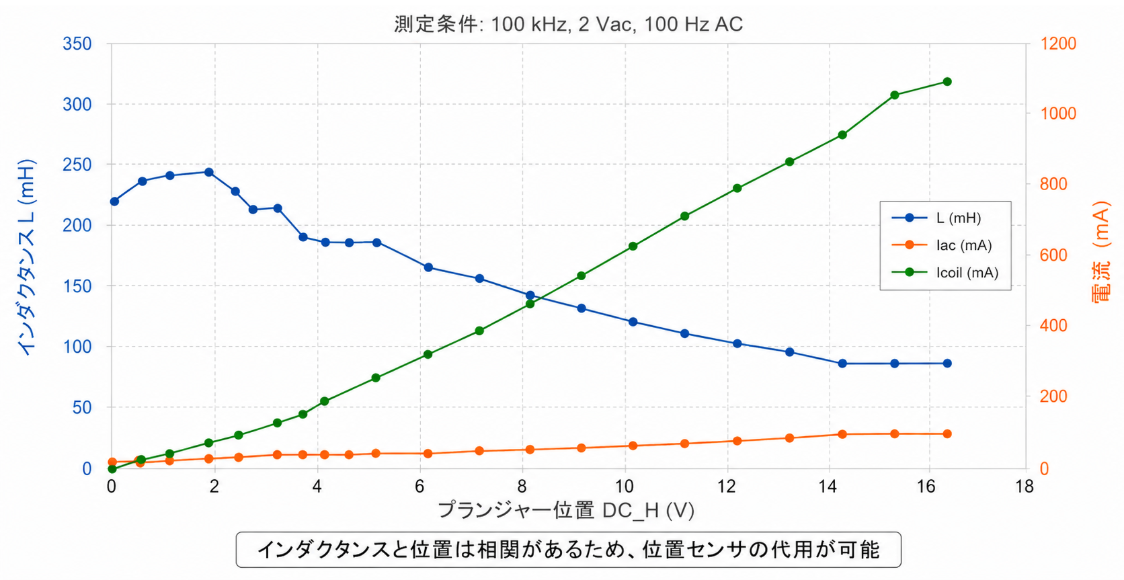
This device can measure the resistance and inductance of a solenoid coil and monitor changes in the coil's state in real time. This makes it possible to detect not only faults such as open circuits and short circuits, but also signs of aging deterioration and mechanical abnormalities.
The R and L values of the solenoid are measured by adding an AC component when power is applied.
Furthermore, since the coil temperature can be estimated from the change in coil resistance, it can be used for detecting overheating and monitoring the condition of the equipment.
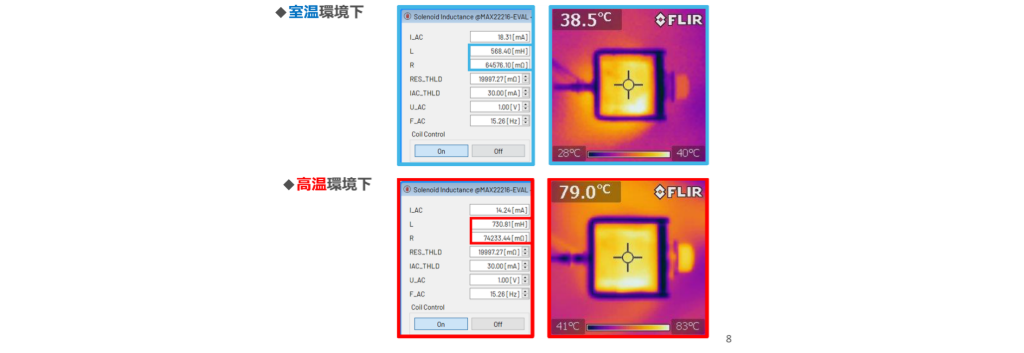
The L and R values of the solenoid are temperature-dependent, and alerts can be triggered by setting thresholds for L and R.
Furthermore, since the plunger position can be estimated from the change in inductance, the operating state of the solenoid can be monitored without using additional position sensors.
■ Plunger motion diagnosis using DPM function
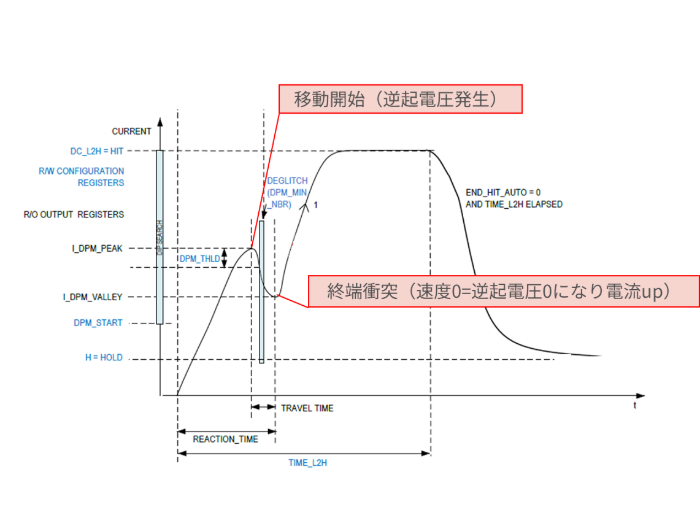
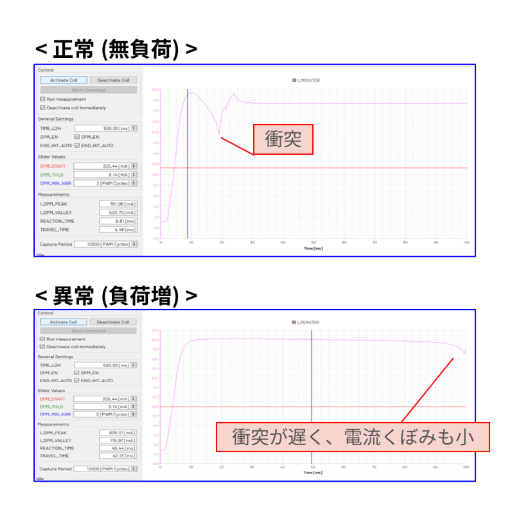
The MAX22216 / MAX22217 / MAX22216V features a DPM (Detect Plunger Movement) function, which can detect not only whether the solenoid is energized, but also whether the plunger has actually moved.
Furthermore, since the plunger's operating time can be measured, it is possible to quantitatively monitor the solenoid's response speed and operating state. Changes in operating time may indicate signs of wear, accumulation of dirt, or increased mechanical resistance, and can be used for predictive maintenance of equipment.
Furthermore, the real-time current monitoring function via the SPI interface allows for constant monitoring of the current state during operation. This enables the detection of abnormal conditions, such as "current is flowing but the plunger is not moving," contributing to improved overall system reliability.
■ After movement is complete, it automatically switches to holding mode to save energy.
The MAX22216 / MAX22217 / MAX22216V incorporates various control functions to optimize solenoid drive.
A key feature is the two-level sequencer function, which supplies a large current when the solenoid starts operating and automatically switches to the minimum current required to hold the plunger after its movement is complete. This significantly reduces power consumption and heat generation.
Furthermore, by combining this with the DPM (Detect Plunger Movement) function, it is possible to switch to the holding current at the moment the plunger movement is detected. Since an unnecessarily high current is not continuously flowed, the temperature rise of the solenoid is suppressed, contributing to energy saving and extended lifespan of the entire system.
It also features ramp control (RAMP) to suppress EMI by gradually changing the drive signal, dither function (DITH) to improve the accuracy of proportional control by reducing the effects of static friction and hysteresis, and high-speed demagnetization function (DC_H2L) to improve response speed by quickly releasing the magnetic energy of the coil.
These features enable energy savings, high-precision control, and fast response simultaneously.
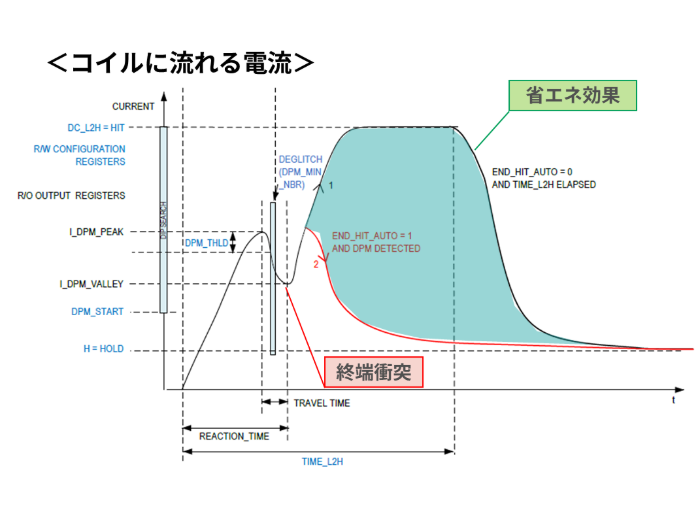
The current used to move the plunger and the current used to hold it are different.
ADI Trinamic™ solenoid drivers automatically switch to holding current for power saving.
■ Improved reliability with channel-specific protection and fault detection functions.
The MAX22216 / MAX22217 / MAX22216V features comprehensive protection and diagnostic capabilities for each channel. These include overcurrent protection (OCP), overtemperature protection (OVT), undervoltage lockout (UVM), open load detection (OL), and plunger motion detection (DPM), protecting loads and devices in the event of an anomaly.
Furthermore, since detected anomalies can be monitored on a channel-by-channel basis, fault locations can be quickly identified even in systems that control multiple solenoids or actuators. When a fault occurs, the fault indicator pin is asserted, and detailed fault information can be obtained via SPI, contributing to improved system status monitoring and maintainability.
This reduces the risk of system downtime due to malfunctions, allowing for reliable use in industrial and automotive equipment where high reliability is required.
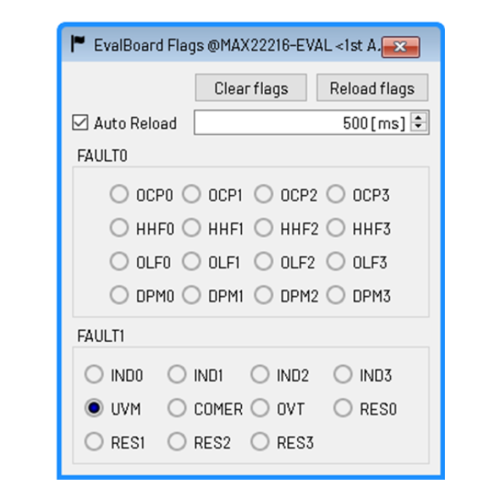
Overall protection features / alerts
• Low Voltage Lockout (UVM)
・Overheat protection (OVT)
• Communication error (COMER)
Channel-specific protection features / alerts
• Load release detection (OL)
・Overcurrent protection (OCP)
- Hit current failure alarm (HHF)
- Plunger malfunction detection (DPM)
• Resistance/Inductance Value Exceeding Alarm (RES/IND)
■ Standalone operation via OTP enables wire elimination and miniaturization.
The MAX22216 / MAX22217 / MAX22216V can store configuration information in one-time programmable (OTP) memory.
Normally, various parameters are set via the SPI interface and can be freely changed even during operation. On the other hand, for applications where setting changes are not required, such as mass production, the settings can be written to an OTP (One-Time Password) and automatically loaded when the power is turned on.
In particular, for applications where solenoids are always used under the same conditions and with the same driving pattern, saving settings to an OTP eliminates the need for initial setup by a microcontroller or SPI communication, enabling standalone operation. This not only reduces the development burden of control software but also contributes to system miniaturization and cost reduction by reducing SPI wiring and peripheral circuits.
Furthermore, because the settings can be stored internally within the device, product-specific setting management becomes easier, which helps prevent setting errors during mass production.
Comparison with previous products
The MAX22216 / MAX22217 / MAX22216V are next-generation solenoid/motor drivers that build upon the previous MAX22200 model, achieving enhanced solenoid control and improved diagnostic capabilities.
In addition to the previously included DPM (Dynamic Programming) function, new features such as inductance measurement, real-time current monitoring, dithering, and ramp control have been added. Furthermore, the current control has evolved from a peak detection method to PI control, enabling more precise current regulation.
Furthermore, improved flexibility in parallel connections and enhanced support for DC motor applications allow for use in a wide range of applications.
| function | MAX22200 | MAX22216 / MAX22216V / MAX22217 |
|---|---|---|
| Number of independent half-bridges | 8 | 4 |
| Current drive capability | 1 A | 1.5 A / 0.75 A |
| Parallel mode | Channel pairing | Supports all combinations |
| Voltage mode | Yes (no VM compensation) | Yes (VM compensation included) |
| Current mode | Yes (Peak detected) | Yes (PI control) |
| DPM | Yes | Yes |
| Lamp generator | No | Yes |
| Inductance measurement | No | Yes |
| Current monitor | No | Yes |
| Compatible with DC motors with current limiters | No | Yes |
| BTL mode—High-speed demag mode | Yes (no zero-crossing detection) | Yes (zero-crossing detection enabled) |
| Dither | No | Yes |
| temperature grade | Industrial use (-40°C to +85°C) | Expanded to include automotive applications (-40°C to +125°C) |
Feature comparison table with MAX22200
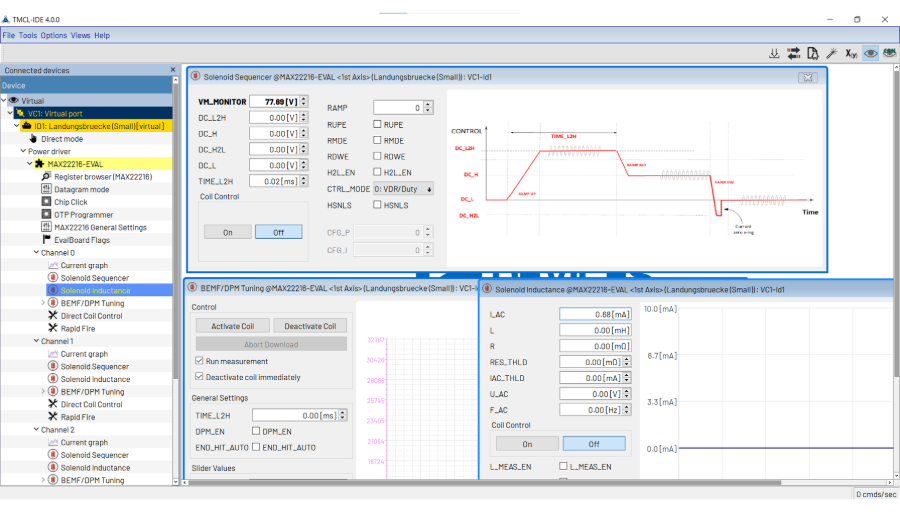
Easy setup via GUI
With ADI Trinamic™, you can easily configure various settings for the MAX22216 / MAX22217 / MAX22216V using the GUI tool "TMCL-IDE". Configuration is completed simply by following the on-screen instructions and entering the operating conditions and drive parameters, eliminating the need to worry about complex register settings.
Furthermore, since parameters can be adjusted while observing the actual operation of solenoids and motors, it is possible to quickly find the optimal driving conditions. Because evaluation can be started with plug-and-play functionality, it contributes to shortening development time and improving the efficiency of prototype evaluation.
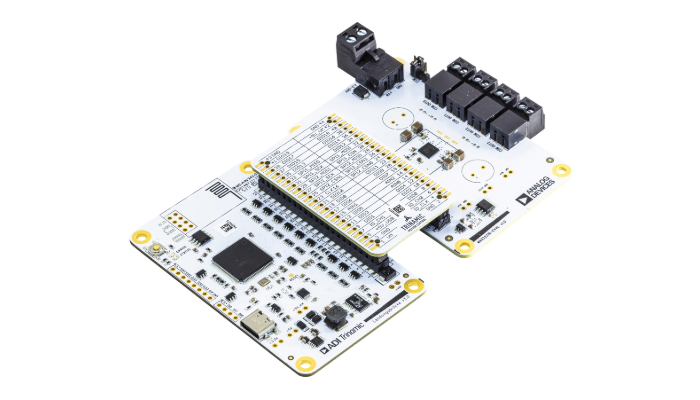
Evaluation Board
The MAX22216 / MAX22217 / MAX22216V models come with an evaluation board that allows you to drive and evaluate the solenoids immediately by connecting them to a PC.
Summary
The MAX22216 / MAX22217 / MAX22216V combine advanced diagnostic capabilities, power-saving control, and high reliability, making them suitable for a wide range of applications using inductive loads such as solenoids, valves, relays, and DC motors.
Industrial automation
- Hydraulics, power, control systems, valve manifolds, DC motor drives, proportional valves, electromechanical brakes, relays/contactors, heat pumps
vending machines
Smart door lock
Healthcare
- Medical equipment, dialysis machines, oxygen concentrators, ventilators
·car
- Suspension system, heating system, fuel pump
This time, we introduced the applications of solenoids and ADI Trinamic™ 's solenoid/motor drivers "MAX22216 / MAX22217 / MAX22216V," which improve system reliability through serial control and advanced diagnostic functions.
This product is an ideal solution for situations where you want to drive solenoids and motors in a compact and energy-efficient manner, or when you want to build a highly reliable system through predictive maintenance and condition monitoring. In addition to flexible control via serial communication, the GUI tool "TMCL-IDE" allows you to conduct evaluation and development in a short period of time while minimizing complex software development.
If you are considering improving the control performance, miniaturization, energy saving, and reliability of solenoids and motors, please consider using MAX22216 / MAX22217 / MAX22216V.
If you think you might be able to use it in your own application, why not start by evaluating it?
Please feel free to contact us.
Click here to purchase products
Click here for manufacturer site/other related links
Inquiry
If you have any questions regarding this article, please contact us below.
Analog Devices Manufacturer Information Top
Analog Devices Manufacturer Information If you would like to return to the top page, please click below.