- Semiconductor BusinessHOME
- Products and Services of Macnica,Inc.
-
technical information

-
Events and Seminars
- Handling Manufacturer
- Support
- Inquiry
- Click here to purchase products
- Semiconductor business e-mail magazine registration

What is Sub-GHz?
Along with Bluetooth® and Wi-Fi, "Sub-GHz" is often considered as a candidate when considering wireless systems.
If you are unfamiliar with the term sub-giga, how about using the terms 920MHz, extra-small (specified low-power radio), and proprietary radio (proprietary)?
In a broad sense, sub-giga refers to frequencies below 1 GHz, but in a narrow sense, it can refer to a specific frequency, and in Japan, it often refers to communications using 920 MHz.
Even such a wireless standard uses subgiga
Some wireless standards use subgiga instead of 2.4GHz because subgiga has advantages over 2.4GHz.
|
Communication standard |
remarks |
|
Wi-Sun |
A communication standard originating in Japan that is used in Japan's electric power smart meters. Japan uses 920MHz. |
|
LoRaWAN, SIGFOX |
A representative of LPWA (Low Power Wide Area) that enables long-distance communication while consuming low power. Japan uses 920MHz. |
|
Z-Wave |
A communication standard used in smart homes. Japan uses 920MHz. |
These wireless standards are not often called sub-giga but are called by their respective designations (Wi-Sun for Wi-Sun).
Therefore, the term "sub-giga" is often used only for communications using proprietary protocols.
Applications that make use of Subgiga
Sub-GHz is often compared to 2.4GHz, but it has both advantages and disadvantages. A thorough understanding of these issues will make it possible to select the optimal wireless method.
Details will be introduced next time, but the advantages and disadvantages of using Subgiga are as follows.
merit
- Resistant to obstacles
- strong outdoors
- good signal environment
Demerit
- Available frequencies vary by country
- Poor connection with display devices
Based on these, we would like to introduce some applications where Subgiga is already used or expected to be used in the future.
[Application 1] Factory sensor network
IoT and smart factories are progressing, but wireless is used for monitoring and remote control of facilities and equipment using sensors.
There are many obstacles in the factory, and it is an application that can take advantage of the features of Sub-Giga, which is strong against going around.
Conventionally, sub-giga (426 MHz band) was used, but the use of 920 MHz band, which has more channels and a better radio wave environment, is progressing.

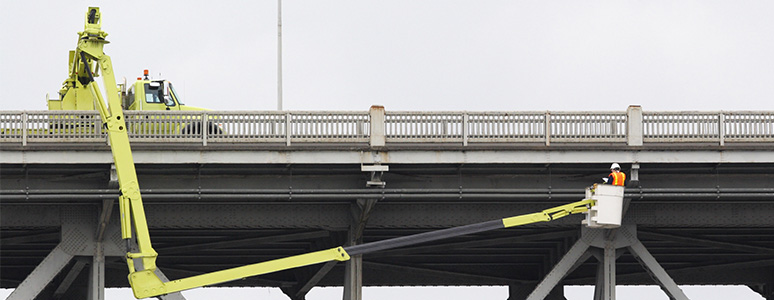
[Application 2] Preventive maintenance of bridges, tunnels, etc.
Transportation infrastructure such as bridges and tunnels is regularly inspected to ensure safety. However, the inspection frequency is not so high.
By placing sensor nodes to detect anomalies at various locations in bridges and tunnels, and using Subgiga to collect and analyze the acquired information, constant monitoring becomes possible.
As a result, safety can be further enhanced, and it is useful for planning efficient inspection plans.
It is also expected to be used for monitoring landslides in mountains.
In such applications, it is often the case that a power supply cannot be secured, so it is necessary to operate with cells/batteries. In addition, it is assumed that sensor nodes will be installed in places where installation or replacement is not easy. (On/under bridges, in tunnels, in mountains, etc.)
Therefore, low power consumption design of the sensor node is required, and sub-giga is the most suitable for low power design compared to 2.4 GHz.
Also, even in environments with obstacles such as trees, it is easier to obtain a communication distance with sub-giga than 2.4GHz, which is one of the reasons why sub-giga is preferred.
[App ③] Drone
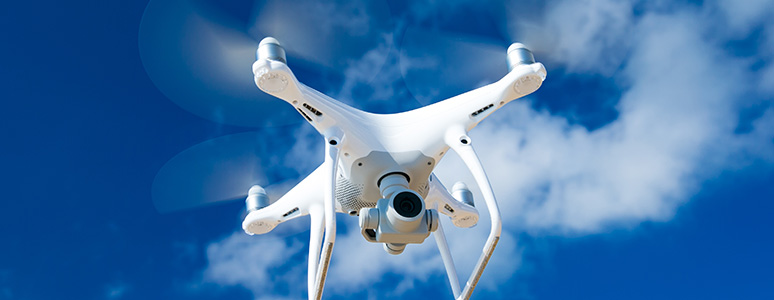
Drones are gradually becoming popular for hobbies and aerial photography, but in the future it is expected to expand to commercial applications such as logistics, agriculture, forestry and fisheries, surveying, and infrastructure management.
Drones are expected to use multiple frequencies, such as sub-giga, which is good at long-distance communication, for operation, and 2.4 GHz, which is good at high-speed data communication, for image transfer.
As sub-giga, in addition to 920MHz, which does not require a radio station license, 169MHz, which requires a license, is expected to be used. 169MHz is a newly opened frequency band, and it has the property that it is easier to obtain communication distance than 920MHz.
Inquiry
For companies that are considering digitizing their products and services and IoT in order to develop new markets and develop new products, we will provide easy-to-understand explanations from optimal product selection to introduction methods. I'll enjoy having this. Please feel free to contact us.