- Semiconductor BusinessHOME
- Products and Services of Macnica,Inc.
-
technical information

-
Events and Seminars
- Handling Manufacturer
- Support
- Inquiry
- Click here to purchase products
- Semiconductor business e-mail magazine registration
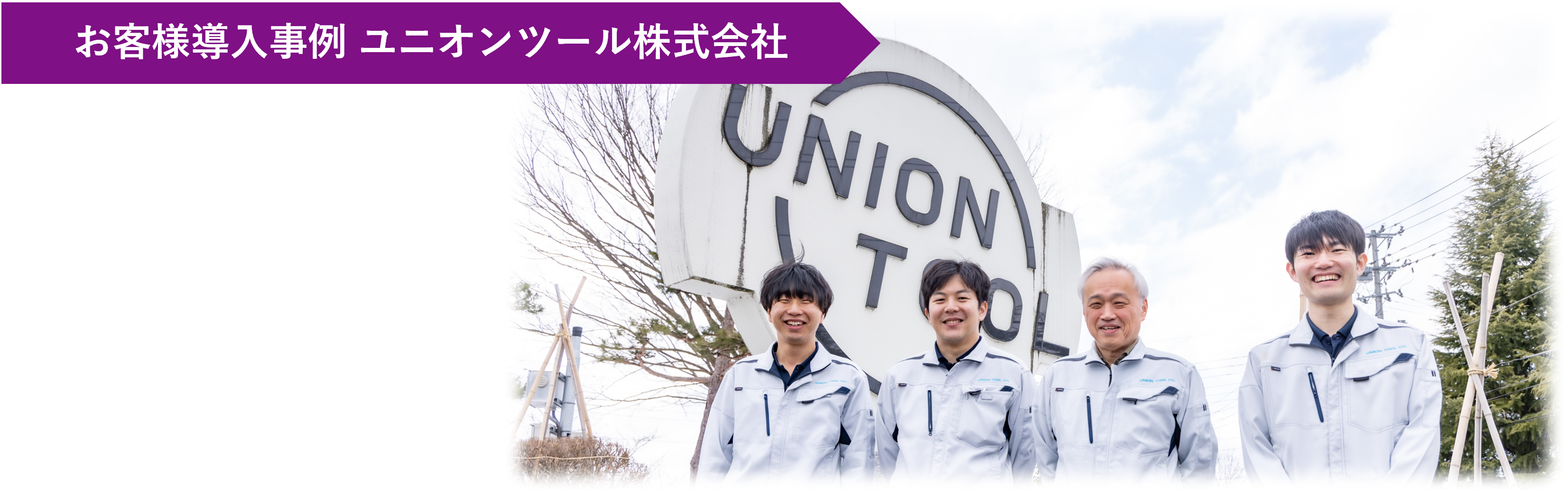
Plans to introduce AI into product image inspection
Union Tool is a manufacturer of carbide drills, end mills, metal processing equipment, etc. They lead the global market share in "PCB drills," which are used to drill minute holes for attaching components to electronic circuit boards and wiring them. The holes that the company's drills make in boards are essential for the operation of the highly integrated CPUs, GPUs, and other components of the world's leading semiconductor manufacturers.
Union Tool's high level of technology is supported by thorough in-house production, including the development of the equipment used to manufacture the products. Akira Shinozaki (Deputy General Manager of the Production Technology Department) of the company says the following:
"the Company has a corporate culture of 'making everything ourselves.' In order to realize the products that our customers, such as printed circuit board (PCB) manufacturers, want, we develop our own manufacturing equipment and manufacture products on a custom-made basis."
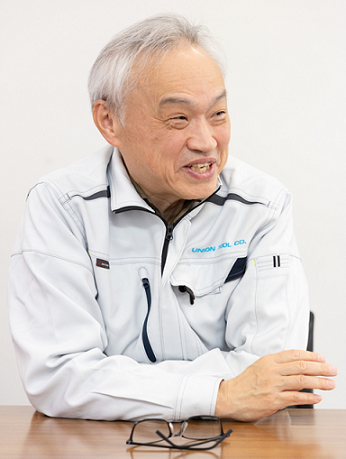
The company manufactures custom products for many customers in China, North America, and elsewhere, including package substrate manufacturers for GPUs and CPUs. It has more than 1,000 different products at any one time, with more than 10,000 prototypes, such as drill bits.
Naturally, inspection plays an important role in the manufacturing process. Product inspection can be 100% inspection or random inspection, but since the tip of a PCB drill is thinner than a hair and difficult to check with the naked eye, workers check it through a microscope.
This work is very burdensome and requires skill. Considering future labor shortages, it will be difficult to maintain an inspection system that relies on human skills. Therefore, the Production Technology Department, to which Shinozaki belongs, began considering image inspection using AI (artificial intelligence) from 2023.
"Products are photographed with a camera to detect defects such as those caused by dirt or stains, but the problem was speed. An experienced worker can visually check multiple drills at once, and can process several drills per second. If we wanted to get a machine to do the same thing, we realized that we needed to use AI to process them at high speed and increase throughput, otherwise it wouldn't be able to keep up," says Shinozaki.
To solve these problems, we decided to develop an AI inspection device that utilizes GPUs.
How AI inspection equipment learns from quality products
The AI inspection device that was developed takes many images of products that have passed inspection in advance, and the AI learns from them. There is a reason why images of good products, rather than defective products, are used.
"The defect rate for drills is extremely low, and there are many different cases for which a condition is deemed defective, so in reality it is difficult to prepare a large number of defective variations. For this reason, we adopted a system that learns from good products and then determines that 'non-good products' are defective," says Shinozaki.
In parallel with learning about good products, the team also developed the imaging device to be used in the inspection. It took about a year of trial and error to perfect the mechanism for taking images while rotating the tip of the fine drill bit.
Introducing "AI-Stack" to efficiently share GPU resources
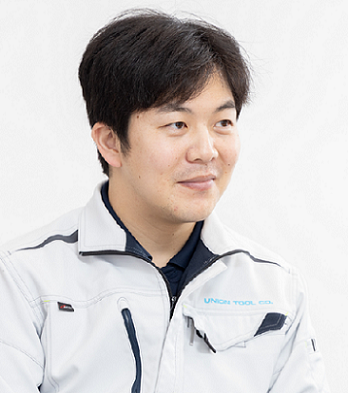
The Production Technology Department's Technical Section 2 is responsible for software development. Shinichiro Hayashi (section chief) and Takaya Shinbo (assistant chief) from the same section were in charge of developing the AI-based image inspection system.
"Initially, we introduced small GPUs that could be built into each person's PC, and started learning with two of them. The actual learning and programming went smoothly, but it took a considerable amount of time to set up the environment to use the GPUs," said Hayashi.
With the development of both software and hardware progressing in parallel, the development of an AI-based product image inspection system is nearing its final stage, with the goal of having it operational by 2025.
Additionally, the Production Technology Department wanted to improve production efficiency using AI, and therefore wanted to introduce a more powerful GPU.
"As development progressed, the number of members in our department increased. It was cost-inefficient to install a standalone GPU for each machine, and configuring the environment for each one was also a burden. We knew that NVIDIA GPUs had a resource division function as standard, so we wondered if we could use the GPU efficiently as a team, but the configuration was complicated and the settings were time-consuming," said Shinozaki.
However, data center GPUs target large-scale resources and were over-specified for the company's requirements.
While seeing potential in GPU partitioning, the company was unsure of a specific method to achieve this. In May 2023, the company received a proposal from Macnica, whom it met at an exhibition.
"Macnica introduced us to a tool called AI-Stack, developed by INFINITIX of Taiwan. It seemed to meet the Company needs, so we decided to test it out first," said Shinozaki.
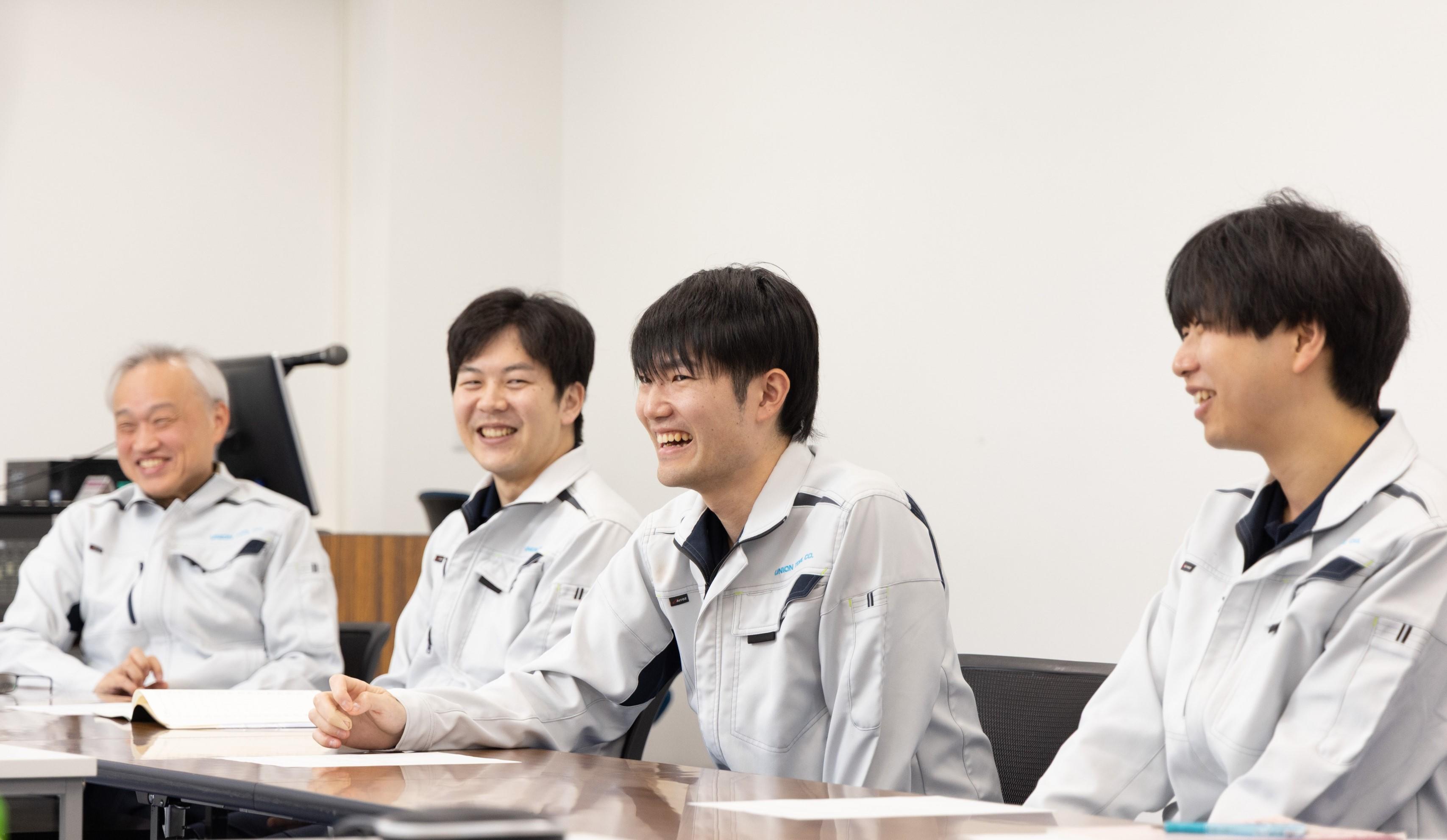
Hayashi and Shimbo immediately connected to the cloud-based product evaluation environment provided by Macnica and tested the functions of AI-Stack. As a result, they decided to introduce it, determining that it would help improve the efficiency of their company's GPU usage.
In fact, AI-Stack is attractive in ways that go beyond "GPU resource division." It can automatically allocate resource pools consisting of single or multiple GPUs to individuals or teams based on policies. Set GPU resources such as minimum and maximum usage for each team. For example, if the GPU resources are not being used at all, one team can monopolize them. If another team starts using them, they will be automatically allocated based on policies, which increases the utilization rate of valuable GPU resources.
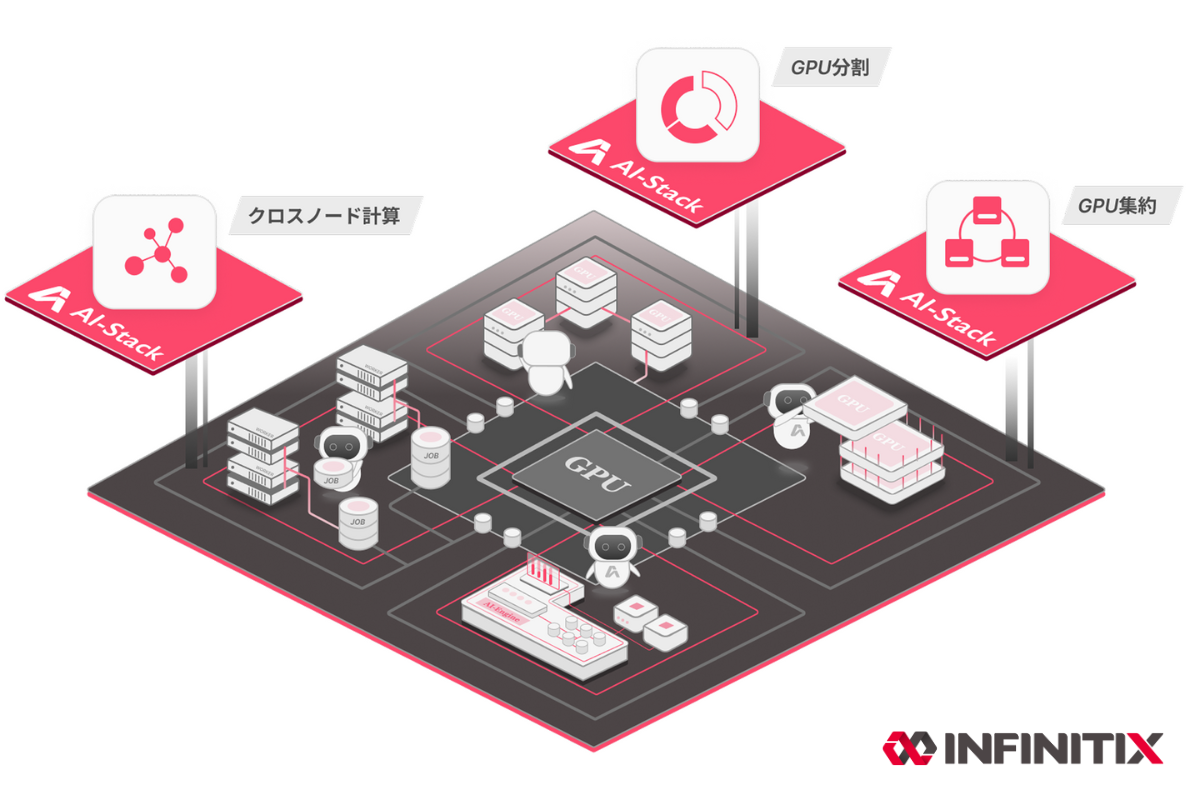
INFINITIX's AI-Stack is the industry's leading AI infrastructure management software that dramatically accelerates the adoption of AI in companies. It integrates GPU division/aggregation, cross-node calculation, heterogeneous cloud management, intuitive GUI, and environment construction functions to maximize the utilization efficiency of GPU computing resources. It also flexibly responds to high-speed AI iterations.
GPUs can run even when humans are resting
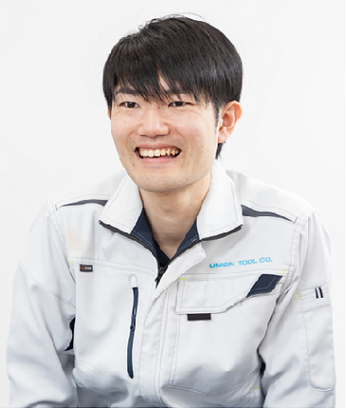
The Production Technology Department believes that the introduction of AI-Stack has made it extremely easy for multiple members to share GPU resources.
"When an AI development project occurs, we start up containers and set up the environment. If the task of dividing and allocating GPU resources were to be done manually, the person in charge would have to operate Kubernetes and configure it each time. This is complicated work and takes a long time. By introducing AI-Stack, this complicated work is no longer necessary, and we can now focus on examining and developing AI learning data," says Shinbo.
Hayashi highly praises the scheduling function of AI-Stack. "AI-Stack can optimally allocate resources when splitting GPUs and using them simultaneously, but another convenient feature is the ability to reserve GPU usage. When training large amounts of data, you can register a queue and line up jobs in order. If you reserve GPU processing for the weekend on Friday and go home, it will be ready by Monday morning. There is no longer a need for someone to come into the office on the weekend to run the GPU, as was the case before."
The company currently operates a GPU server equipped with two NVIDIA GPUs, the NVIDIA RTX A5000, at its Nagaoka Technical Center. The more powerful NVIDIA H100 has been deployed at its Tokyo headquarters. These GPU resources are managed on the AI-Stack common platform, and the company expects that departments other than the Production Technology Department will also use them in the future.
Developing human resources capable of utilizing AI within the company
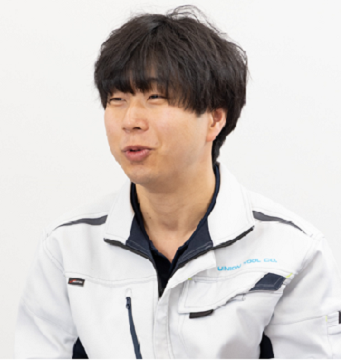
With AI-Stack, the company is now equipped to efficiently divide and utilize GPU resources, but Shinozaki says that the company does not yet have enough personnel capable of utilizing AI.
"There are mountains of work in indirect departments that could benefit from AI to make them more efficient, but to do so, we need to develop human resources in all of our development, manufacturing, and administrative departments who can utilize AI. For that reason, we have brought three people from other departments into the Production Technology Department and are starting a project to consider using AI to reform our operations."
One of the project members is Shunichi Ikezu (First Tool Technology Department, PCB Tool Development Division). Ikezu is a drill designer, but he wants to use AI to make better use of in-house documents.
"We have a lot of technical information scattered around the company in reports and other formats, but until now we haven't been able to utilize that knowledge. These documents contain a lot of confidential information, such as customer-specific specifications, and we can't throw it at an external AI to learn from, so we're considering creating an AI environment in-house and building a local LLM (large-scale language model)," says Ikezu.
Many of the tools the company manufactures are custom-made for each customer. Each customer has different PCB materials and surface processing conditions, and the related documents are a treasure trove of know-how when developing new products. Ikezu envisions making effective use of past knowledge by using methods such as RAG (Search Augmentation Generation), which combines generative AI with a mechanism for searching internal information to improve answer accuracy.
As AI becomes more widely used across multiple departments in the future, the GPU resource division function of AI-Stack will become even more useful.
Appreciating Macnica 's support overseeing the implementation
Shinozaki and others agree that having Macnica as a distributor is a great help in Union Tool's AI-Stack utilization project.
"When we introduced AI-Stack, the Company 's tendency to do everything ourselves backfired. We tried our best to install it with our own in-house staff, but it ended up taking longer than we expected. The Macnica staff was by our side the whole time, respecting our wishes and watching over the introduction. They may have been itching to get started (laughs), but I got the impression that they only supported us with the difficult parts," said Shinozaki.
Union Tool has acquired an environment where it can efficiently manage powerful GPUs with AI-Stack, and aims to improve the efficiency of all company operations through AI, not just in the field of production technology. By combining a thorough in-house manufacturing temperament with the flexibility to proactively use tools that are deemed to be good, the day when they will see results from AI utilization seems to be approaching.
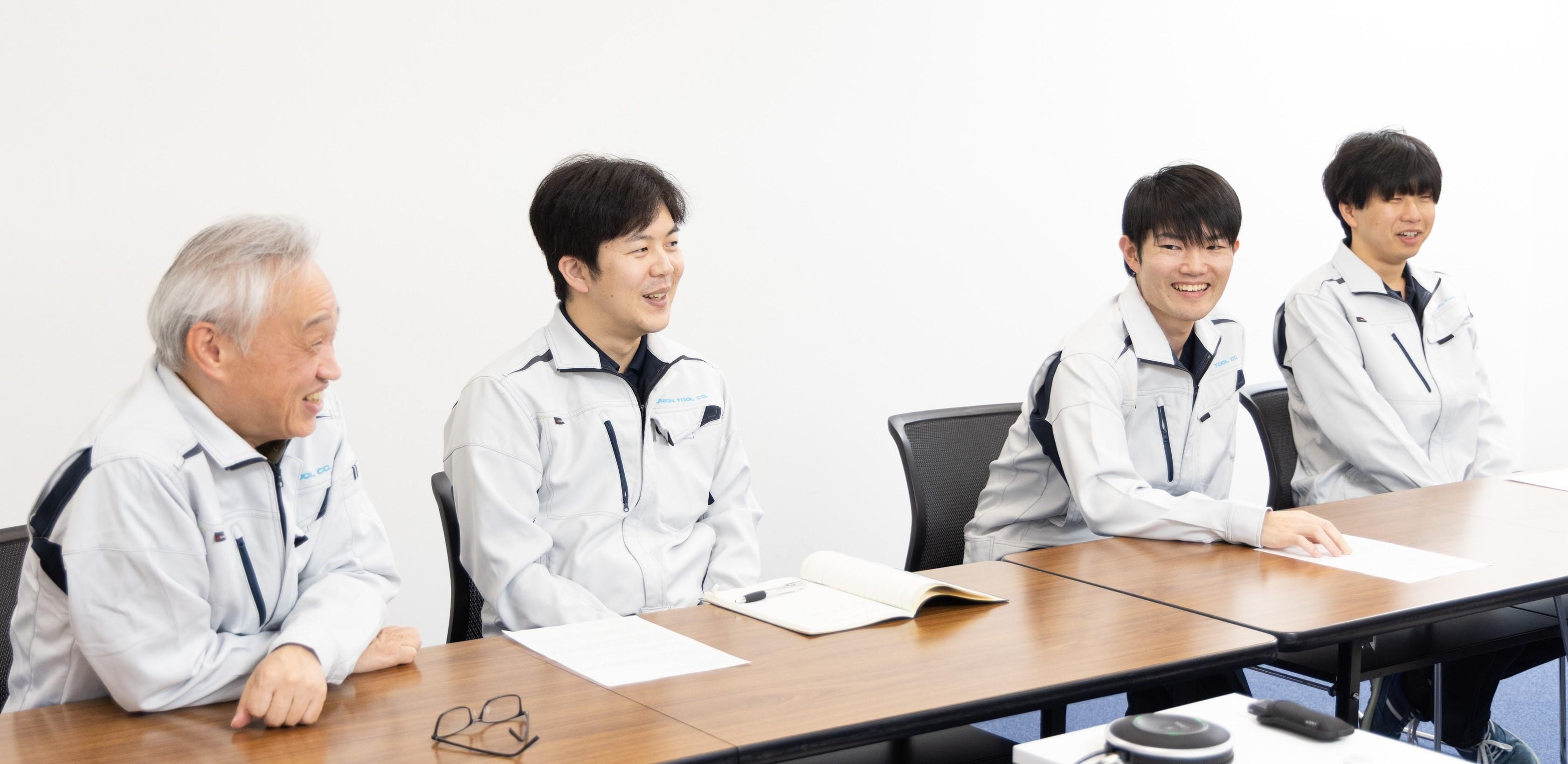
Contact Us