- Semiconductor BusinessHOME
- Products and Services of Macnica,Inc.
-
technical information

-
Events and Seminars
- Handling Manufacturer
- Support
- Inquiry
- Click here to purchase products
- Semiconductor business e-mail magazine registration


 Narrow down by specifying conditions
現在2165件がヒットしています。check
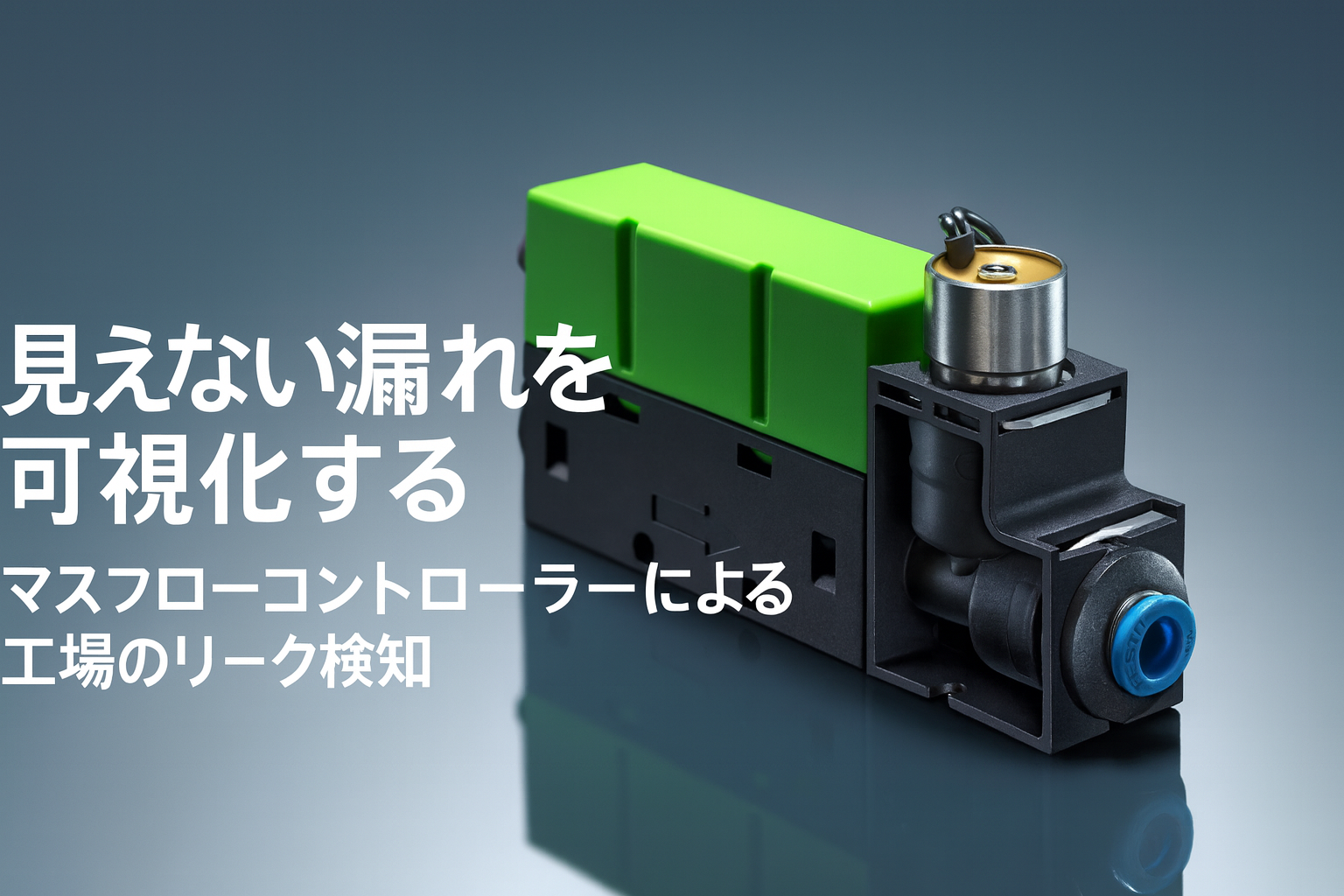
Invisible "Leaks" Cause Losses in Factories
There is always a risk of leakage in factory equipment and piping lines.
Minute leaks in compressed air, gas, and vacuum systems may seem negligible at first glance, but if left unchecked for long periods of time, they can lead to increased energy costs, reduced product quality, and even safety risks.
In recent years, with the increasing demand for carbon neutrality and energy conservation, the question of how early and quantitatively leaks can be detected has become a new issue.
Why use a mass flow sensor to detect leaks?
The mass flow sensor method is ideal for "high-precision inspection within a process" and "automated line monitoring."
In the future, smart factories will need to go beyond simple "leak detection" to quantify and analyze leak amounts in real time and identify abnormal trends.
To achieve this, leak detection centered on mass flow sensors is attracting attention as the next-generation standard technology.
Sensirion's latest mass flow sensor
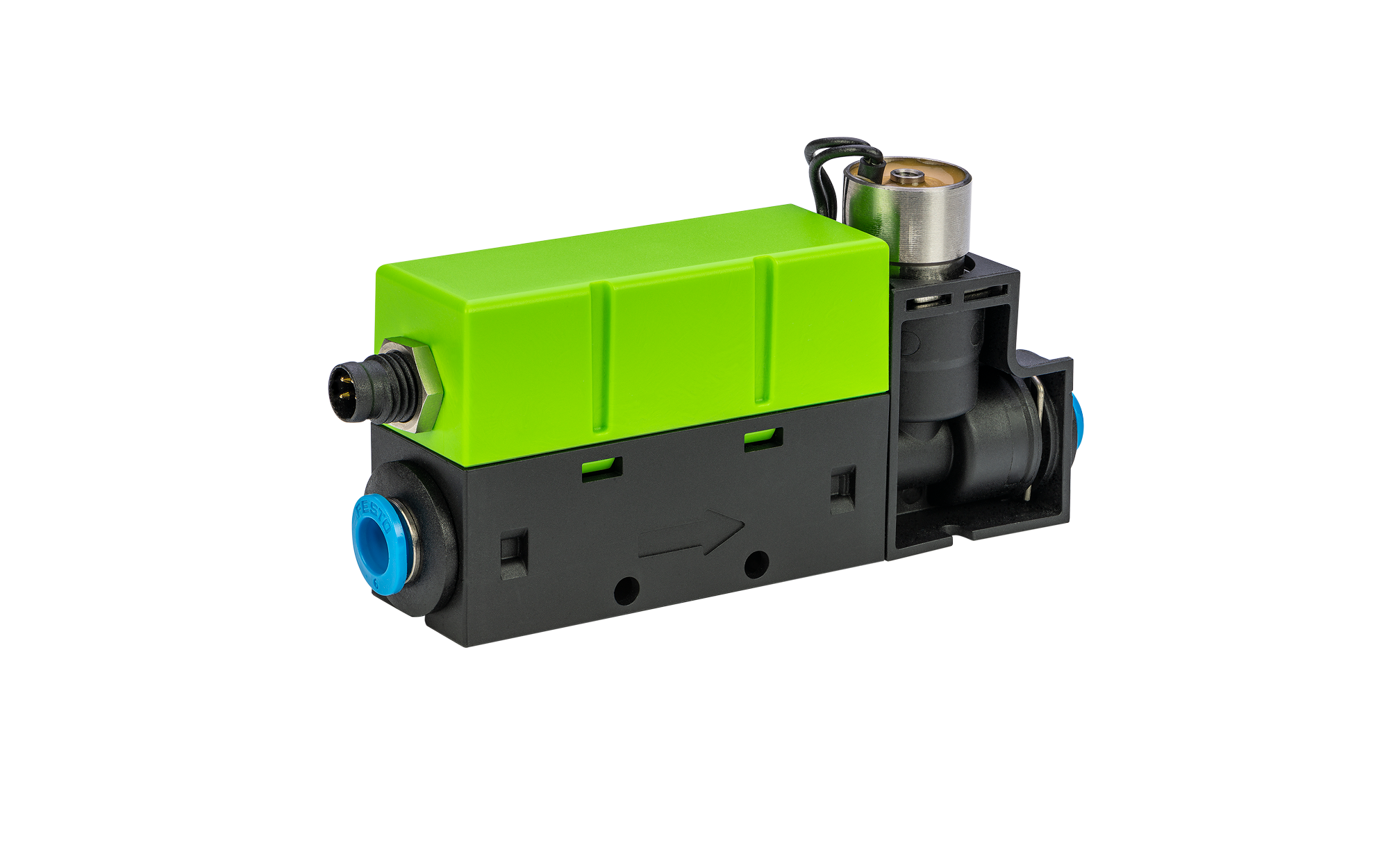
Sensirion's mass flow sensors provide a wide dynamic range, as well as high speed, high accuracy, and efficient measurement of gas flow rates, while also providing high reliability and long-term stability.
It's also very small and light, allowing you to optimize the size and weight of your device.
Furthermore, it offers excellent performance in terms of repeatability, accuracy, control range and speed.
The SFC6000 is highly integrated and uses very few electronic components, making the supply chain robust.
| model number | SFC6000 |
| Flow Rate Range | 5/20/50slm |
| accuracy | 2% set point |
| Repeatability | 0.2% set point |
| Compatible gases | Air,N₂O,Ar,O₂,CO₂,N₂ etc |
| method | Micro Thermal |
| communication | I2C,RS485 |
| size | 20×46×102㎜ |
| weight | 60g |
What is the microthermal method?
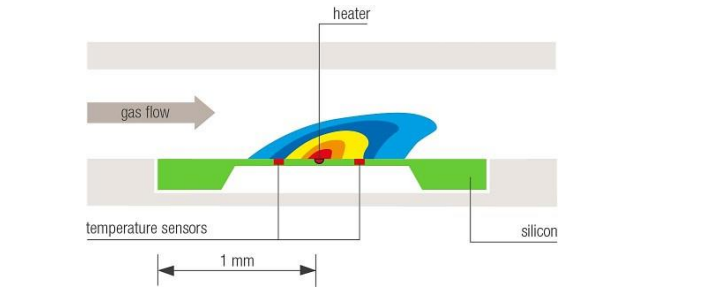
A heater element on a thermally insulated membrane and two thermopiles, one upstream and one downstream, are integrated on a single silicon chip. When gas flows, the upstream and downstream temperature distributions change, and this asymmetry is detected. The measurement section, A/D converter, and signal processing are all implemented on a single chip using standard CMOS processes. The same chip also functions as the microprocessor in a standard mass flow controller and directly controls the valve.
The extremely low thermal mass of the membrane allows the sensor to have an extremely fast response time of 3-4 ms. The entire design, including amplification, A/D conversion, digital linearization, and temperature compensation, is optimized for the sensor's high speed, enabling fully compensated flow measurements to be output in milliseconds. Combined with advanced control algorithms, the SFC6000D achieves significantly shorter settling times than conventional mass flow controllers.
Leak detection: from "control" to "prediction"
Leak detection using mass flow sensors is no longer just an inspection method; it has evolved into a solution that visualizes the health of the entire production line.
This is making "predictive maintenance leak management," which constantly monitors the operating status of equipment and prevents leaks before they occur, a reality.
Leak detection will evolve from an "inspection/quality inspection task" to "value creation," and in the future, the combination of high-precision sensor technology and data analysis technology is expected to lead to even smarter factory operations.
Inquiry/Quote
We can also provide information on other model numbers.
Please feel free to contact us if you have anyinterest/ questions.
Sensirion Manufacturer Information Top
Sensirion Manufacturer Information If you would like to return to the top page, please click below.