- Semiconductor BusinessHOME
- Products and Services of Macnica,Inc.
-
technical information

-
Events and Seminars
- Handling Manufacturer
- Support
- Inquiry
- Click here to purchase products
- Semiconductor business e-mail magazine registration


 Narrow down by specifying conditions
現在2173件がヒットしています。check

Introduction - Why HW-LLC is attracting attention
Power supply design is fraught with challenges such as miniaturization, increased efficiency, and cost reduction. However, developers don't want to compromise on design or mass production. As an option to meet these demands of development teams,"HW-LLC"is currently attracting attention.
* HW (Half Wave: meaning half-wave rectification)
* LLC (a resonant circuit system consisting of two coils and one capacitor)
This may not be a method that everyone has adopted as a matter of course yet. But that's precisely why it's an interesting option. There's room to take the design a step further in areas that are difficult to reach by simply extending existing methods.
Furthermore, HW-LLC is attracting attention not simply because it's a new circuit design.
- Easy to target a wide input/output range
• Easier to reduce parts costs
- It is easier to optimize the way energy flows itself.
- Makes it easier to handle switches and heat.
These features make it easier to create a cohesive product.
Renesas HW-LLC solutions
The main devices offered by Renesas are as follows. Listing the model numbers and IC types makes it easier to see the division of roles within the overall solution.
• "RRW11011": Primary-side digital controller compatible with interleaved PFC + HW-LLC
• "RRW40120": 600V rated half-bridge gate driver
• "RRW43110": Synchronous Rectification (SR) Controller
• "RRW30120": USB PD 3.2 EPR controller
The core component is the RRW11011. When combined with the RRW40120, RRW43110, and RRW30120, a fairly concrete power supply configuration emerges, ranging from 240W class USB PD EPR to 500W class AC-DC power supplies.
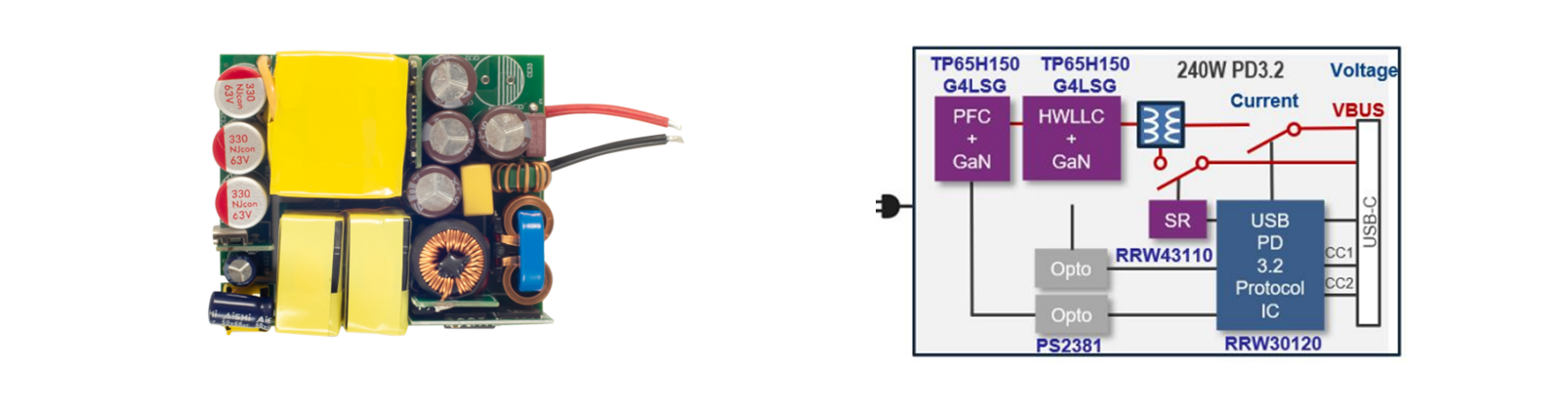
Figure 1 left: 240W USB PD 3.2 EPR evaluation board EBC10293 Figure 1 right: EBC10293 Evaluation Board
Source: https://www.renesas.com/ja/design-resources/boards-kits/ebc10293 Source: EBC10293 Evaluation Board Quick Start Guide P2
This is the EBC10293 evaluation board with a 240W output HW-LLC topology. The EBC10293 employs HW-LLC/PFC combo control centered around the RRW11011 and is a 240W class HW-LLC USB PD 3.2 evaluation board designed for applications ranging from AC input to USB-C Power Delivery output. By combining a GaN-based switching device with a PD 3.2 controller, it supports variable output from 5V to 48V, providing a compact, high-power platform for EPR-class USB-C® evaluation.
Features of HW-LLC
Feature ① Not just high efficiency, but "overall strength"
In power supply design, simply having "high efficiency" is not enough to justify adoption. A truly "robust design" is achieved only when it takes into account factors such as the range of output conditions, how it fits on the circuit board, heat, component count, development effort, EMI, and ease of handling during mass production.
What makes HW-LLC interesting is that it's easy to compete in terms of overall performance. It can easily handle a wide range of input/output conditions, and noise can be easily suppressed through soft switching. Furthermore, because the component configuration can be made lighter, it is easier to balance performance and cost. In other words, it is neither a case of "good performance but difficult to commercialize" nor "few components but insufficient performance," but rather a "well-balanced method" that easily aims for the middle ground.
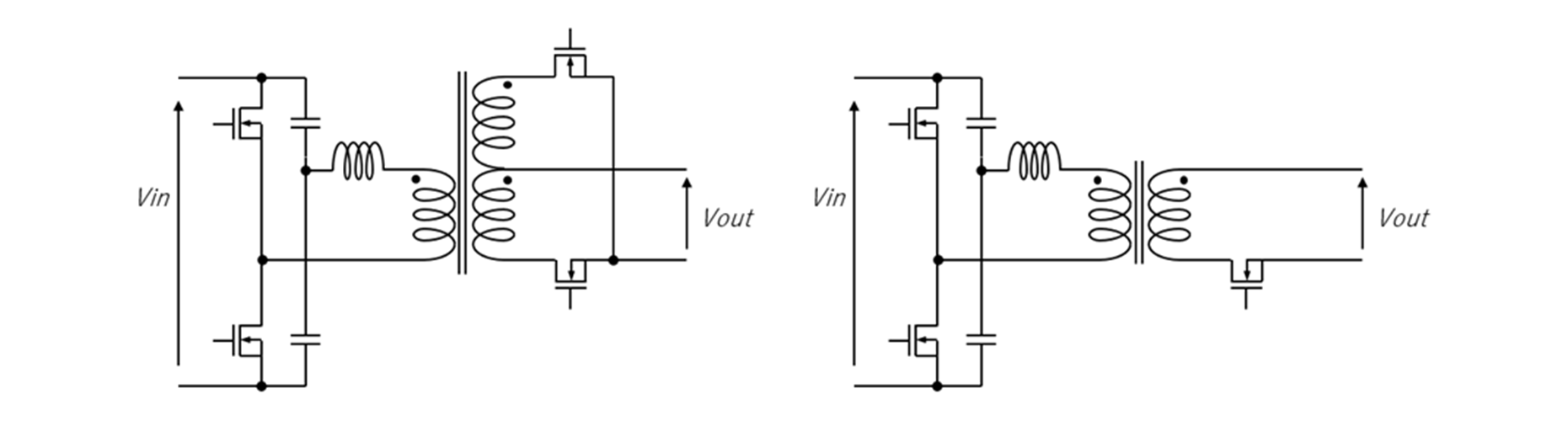
Figure 2: Left: Full-Wave LLC circuit configuration / Right: Half-Wave LLC circuit configuration
This is quite significant for designers, because designs that cause problems in later stages often have their seeds sown at the initial circuit stage. HW-LLC can be seen as a configuration that makes it easier to reduce those seeds.
Feature ② The key to high efficiency is the "way" energy flows.
In short, the value of HW-LLC lies in its efficient energy flow. In power conversion, losses often increase not because of a large amount of energy itself, but because of unnecessary circulation or the flow of excessive peak or effective current. In other words, what's important is not "how much energy is stored," but "how it is flowed."
HW-LLC can be understood as a configuration that easily allows for a section where energy can be transferred relatively directly from input to output. Therefore, instead of simply circulating the stored energy back and forth, it is easier to transfer it to the output side more smoothly at the necessary timing. As a result, it is easier to suppress unnecessary circulation on the primary side and unwanted peak /RMS currents on the secondary side.
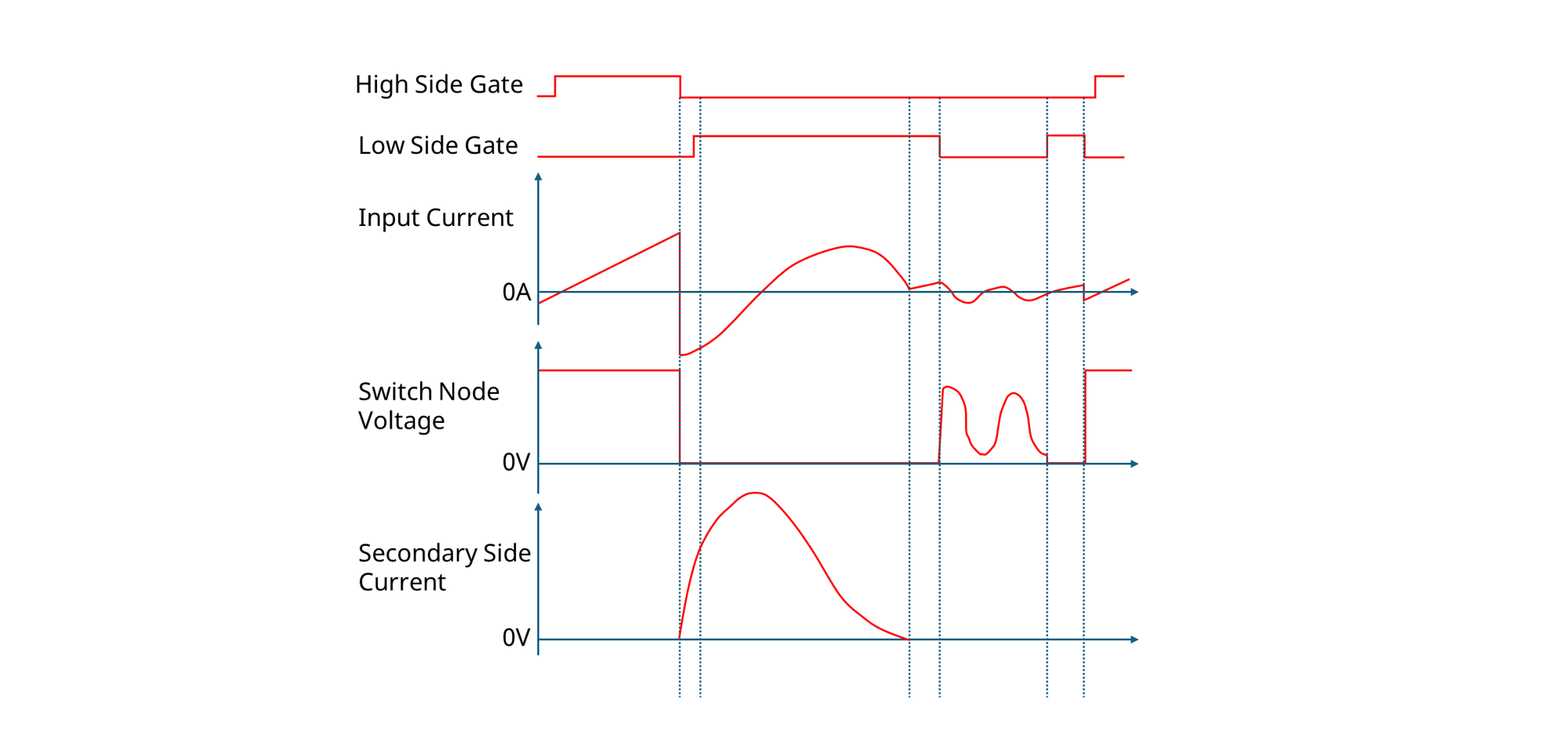
Figure 3: Switching timing and voltage and current of each major node
This way of thinking is very practical for designers. It allows them to redefine the essence of high efficiency not as "making components more high-performance," but as "optimizing the energy pathway itself."
Feature ③ ZVS/ZCS makes design easier
The third feature is that it makes it easier to create a safer waveform. On the primary side, it is easy to aim for zero voltage turn-on (ZVS) with both high-side and low-side switches, and on the secondary side, the synchronous rectification (SR) is configured to easily achieve zero current turn-off (ZCS). This feature not only reduces switching losses, but also makes it easier to optimize the overall picture in terms of heat, noise, and stress.
In fact, when ZVS and ZCS are easily implemented, heat generation becomes easier to control, and EMI becomes easier to manage. Furthermore, device margins become easier to see. In short, it allows you to move closer to a design that is less likely to cause problems later on.
Considering that the half-bridge configuration makes it easier to reduce voltage and current stress on the switches, and also helps to suppress uneven thermal stress, HW-LLC can be seen not only as a highly efficient system, but also as a "system that is easy to organize neatly."
Feature ④ The appeal of HW-LLC becomes clear when you compare them.
AHB-Flyback is a good point of comparison to help you intuitively understand the advantages of HW-LLC.
Flyback designs are simple, easy to understand, and have been used for a long time. On the other hand, they also have limitations that become apparent in situations where there is a strong demand for high output range, efficiency, and miniaturization.
In that respect, HW-LLC
- Easy to achieve efficiency from low load to high load.
- Easier to suppress input current ripple
- Easier to reduce switching stress
It has the following features.
In other words, this method is one where the difference lies not just in the power efficiency of individual components, but in its ability to "cleanly integrate the entire power supply."
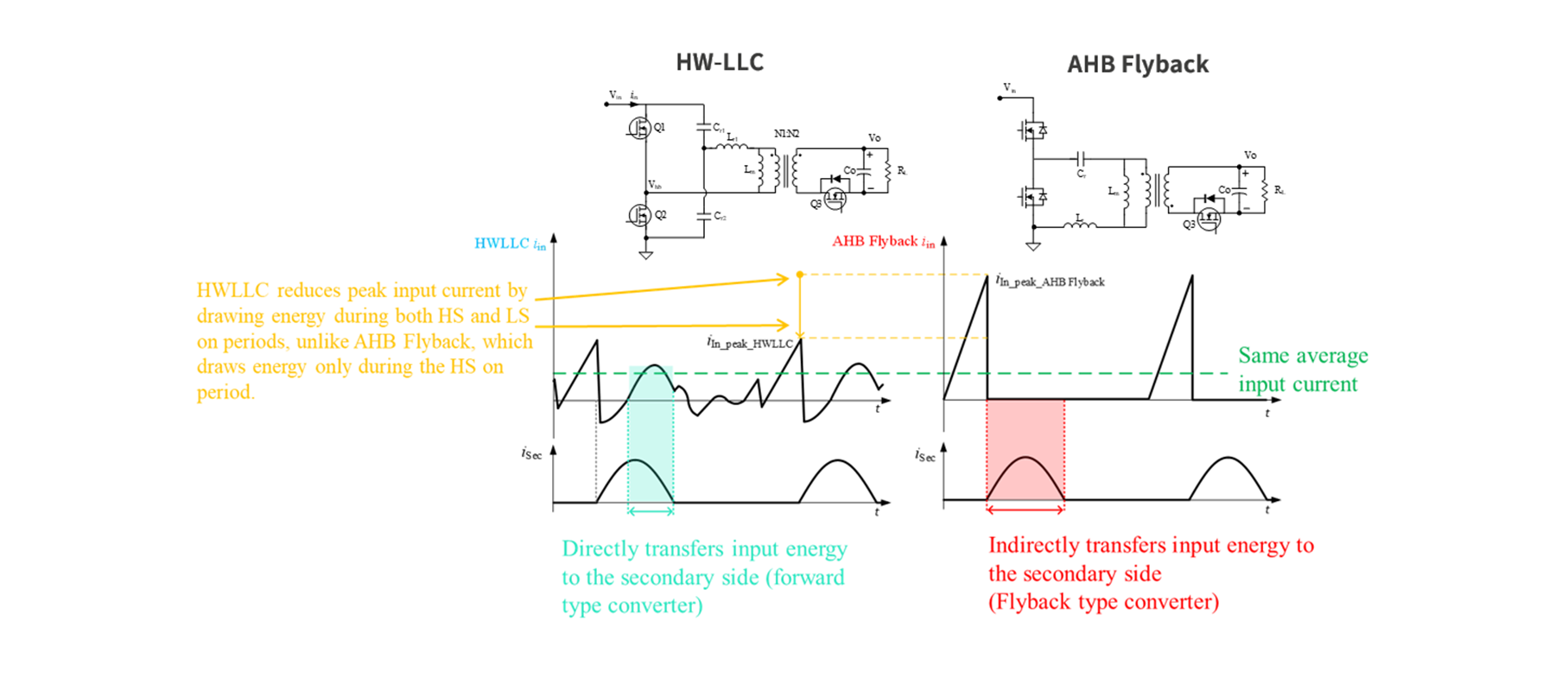
Figure 4: Comparison of HW-LLC and AHB-Flyback waveforms
Source: Renesas Electronics, "HIGH-POWER DENSITY AC/DC FOR 240W USB CHARGING,"p. 14
Figure 4 compares the waveforms of HW-LLC and AHB-Flyback. When placed side by side, they both look like very similar circuits, but their operating concepts are different.
AHB-Flyback is a straightforward design that stores energy before transferring it to the output. On the other hand, HW-LLC is a design that tends to have a section where energy is transferred relatively directly from the input to the output. As a result, it is considered a design that can easily suppress peak current and unnecessary circulation in the circuit, and contribute to reducing losses and EMI.
This is what truly pleases the designer.
- Less likely to experience problems with EMI or heat later on.
- Device selection is less likely to fail.
• Easily adaptable to changes in input conditions
This ability to easily incorporate such "design flexibility" is what makes HW-LLC more appealing compared to AHB-Flyback.
Feature 5: It performs at its best when used at 500W or less.
HW-LLC cannot be simply described as "a system that can handle up to 500W." Rather, its appeal lies in its ability to demonstrate different strengths in both the lower and medium power ranges.
In the 140W and below range, this configuration is well-suited to smaller, more efficient designs. In adapters and small power supplies where high density is beneficial, this advantage directly translates into increased product value.
On the other hand, for USB PD EPR devices ranging from 240W to 500W, the key is to achieve both a wide power output range and high power density. The theme here is "combining high output in a compact and effortless way."
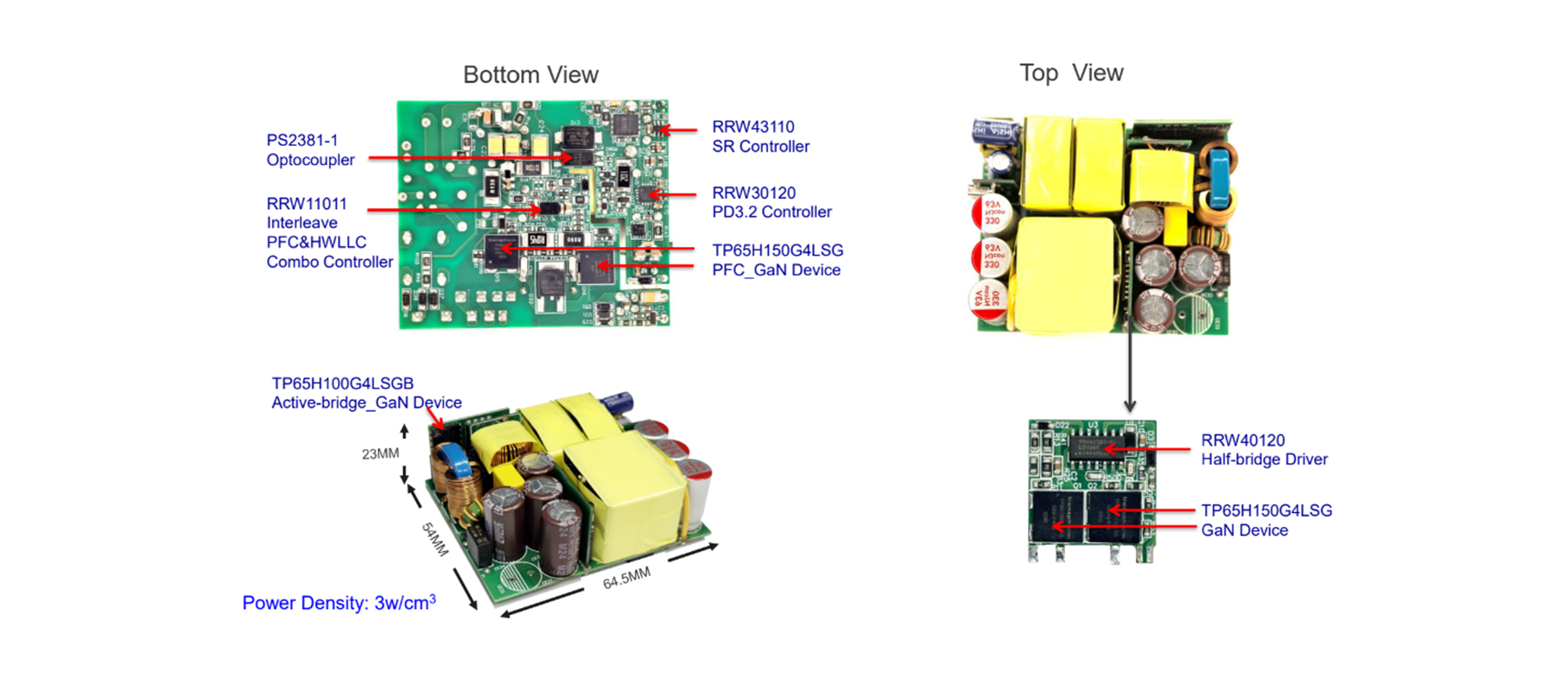
Figure 5: HW-LLC evaluation board "EBC10293"
Source: Renesas Electronics "RRW11011+RRW40120+RRW43110+RRW30120 FOR 240W PD3.2_EPR DESIGN EBC10293"P6
In short, HW-LLC is not a one-size-fits-all solution. At low power levels, it excels in miniaturization and high efficiency, while at medium power levels, it offers range-bound capability and high power density. This duality is what makes HW-LLC so worth considering.
Feature 6: Solutions that support development
No matter how attractive the topology, development cannot proceed without the necessary components to actually use it. Renesas'HW-LLC solution already addresses this issue.
The envisioned configuration centers around a combo controller that can handle both PFC and HW-LLC, connecting to a half-bridge GaN gate driver, a synchronous rectifier controller, and a USB PD controller. This allows us to visualize specific power supply configurations ranging from 100W to 500W.
Furthermore, when product-specific metrics such as EPR compatibility, a wide power range, high power density, and high peak efficiency become visible, designers are more likely to move from a "this looks interesting" stage to a "let's take a serious look at this" stage.
When evaluating a new approach, the appeal of the idea isn't the only important factor. It's whether you can implement it in your own design. Renesas' solutions provide a very concrete starting point for this. This is a crucial point in stimulating development motivation.
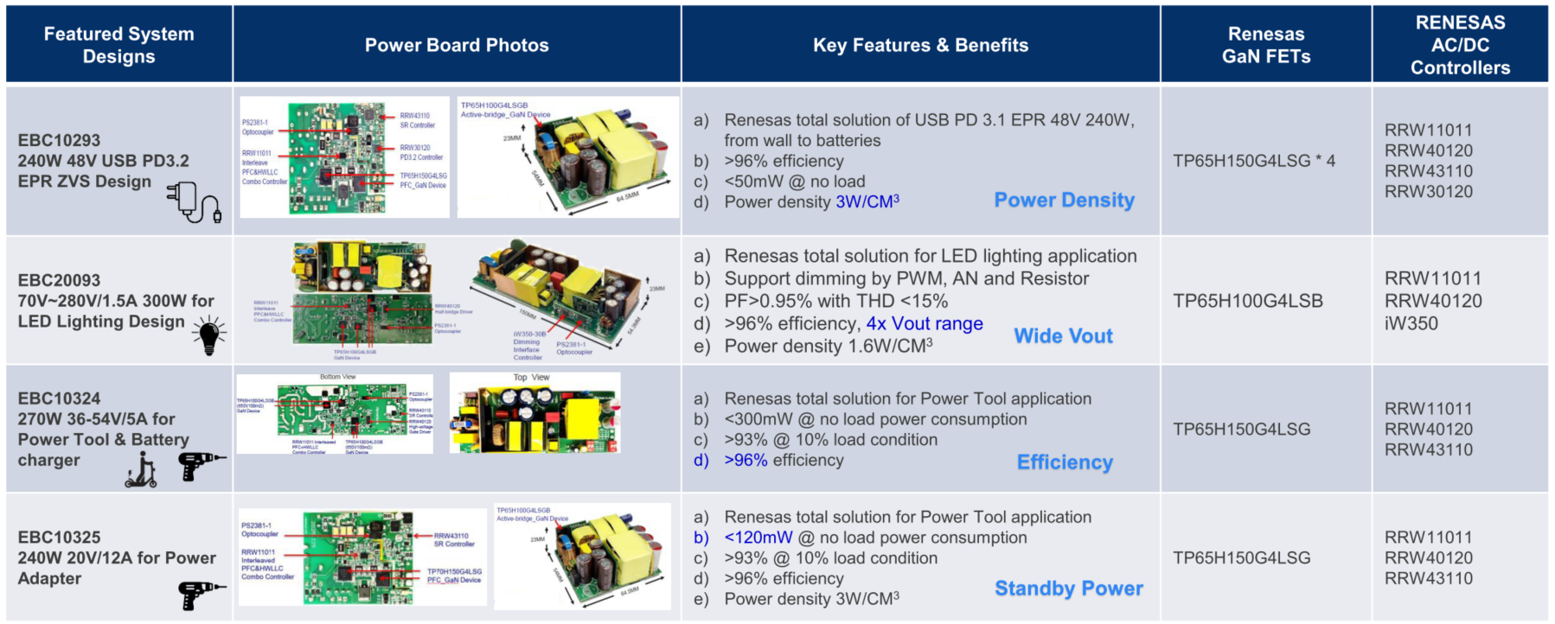
Figure 6: List of Renesas Electronics HW-LLC evaluation boards
Source: Renesas Electronics "RRW11011+RRW40120+RRW43110+RRW30120 FOR 240W PD3.2_EPR DESIGN EBC10293" P17
Summary—HW-LLC is a realistic option worthy of being the next development theme.
Half-Wave LLC is no longer an "unusual method."
The combination of factors such as a wide input/output range, a configuration that easily suppresses BoM, efficient energy flow, ZVS/ZCS, reduced switch stress, and ease of heat management makes HW-LLC appear as a "practically robust system."
Furthermore, it delivers meaningful value in both low-power and medium-power applications. That's why this topology isn't just a technology to know as mere knowledge; it's a topology worth seriously considering as a future design theme.
If you want to make your product smaller and more efficient, but don't want to overextend your overall development process, then HW-LLC is definitely worth considering. And as an entry point, Renesas'HW-LLC solution is quite appealing.
It's not about "it's worth trying," but rather "there's a reason to do it next"—that's what HW-LLC is all about today.
Contact Us