- Semiconductor BusinessHOME
- Products and Services of Macnica,Inc.
-
technical information

-
Events and Seminars
- Handling Manufacturer
- Support
- Inquiry
- Click here to purchase products
- Semiconductor business e-mail magazine registration


 Narrow down by specifying conditions
現在2162件がヒットしています。check

SiC FET body diode characteristics and good SW characteristics
Some parts of ON Semiconductor's SiC FET product lineup are built around a core technology that combines a high-voltage normally-on SiC JFET with a low-voltage normally-off Si MOSFET in a cascode configuration.
Figure 1 shows a simplified cross-sectional structure of a typical SiC MOSFET and ON Semiconductor's SiC cascode JFET.
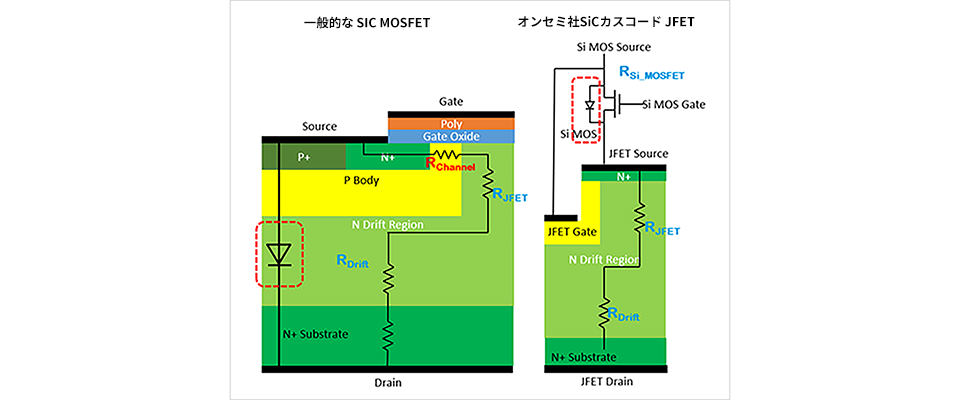
Figure 1: Schematic cross-section of a typical SiC MOSFET and ON Semiconductor's SiC cascode JFET
First, the body diode of a typical SiC MOSFET is made of SiC and is a PN diode. Since it uses SiC, a wide bandgap material, the VF is high, exceeding 3.5V. The Qrr characteristics are also not very good, and the value increases very quickly depending on the temperature. When used in a step-down power supply, synchronous rectification or a Schottky barrier diode in parallel is required. Even with synchronous rectification, as the switching frequency increases, the loss during the dead time required to avoid shoot-through current cannot be ignored, and a Schottky barrier diode in parallel is eventually required. In addition, the body diode of a typical SiC MOSFET may have a problem where the VF increases during use due to internal crystal defects.
However, in ON Semiconductor's SiC cascode JFET, the body diode is made of Si. The current passes through the body diode of the low-voltage MOSFET and the two resistors of the JFET, RJFET and RDRIFT. Therefore, the SiC JFET itself behaves like a simple resistor. Cascode-connected Si MOSFETs have a low voltage resistance of 20 to 30V, so the body diode characteristics are very good. As shown in the graph in Figure 2, the forward voltage drop is usually about 1.5V due to the low voltage drop.
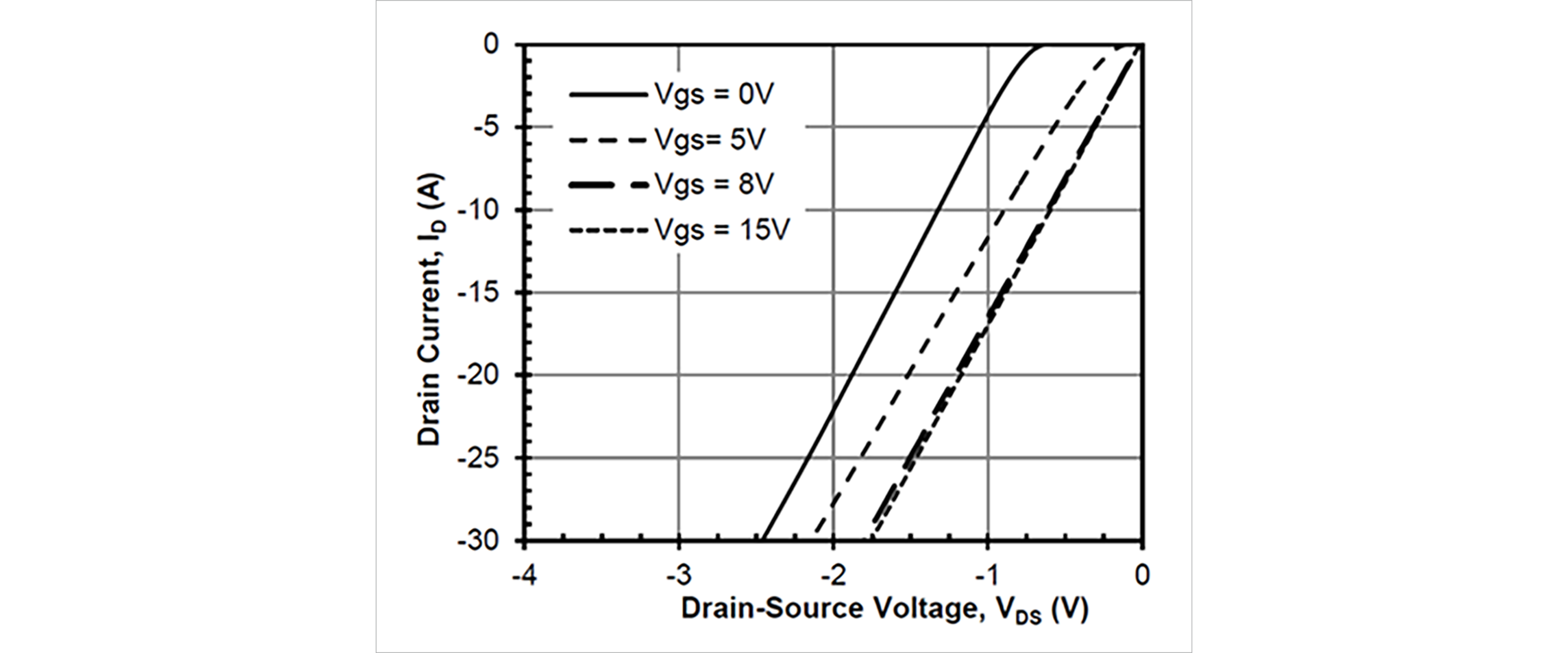
Figure 2: ON Semiconductor SiC cascode JFET third quadrant characteristics
In the waveform in Figure 3, the Qrr of a SiC MOSFET was measured at 150°C, and a high value of 220nC was observed. Also, because the forward drop voltage VF of the body diode of a SiC MOSFET is high, if VF is too high a SiC Schottky barrier diode can be connected in parallel, at which point Qrr rises to 275nC.
ON Semiconductor's SiC cascode JFET has a Qrr of only 105nC at 150°C, which can contribute to reducing switching losses.
The waveform data in Figure 3 was measured at 150°C, 800V, and 11A. The characteristic of the body diode Qrr of ON Semiconductor's SiC cascode JFET is that it does not change much even when the temperature is changed. Qrr increases by only 10% when changing from 25°C to 150°C. The reason for this is that Qrr of ON Semiconductor's SiC cascode JFET is mostly generated from the output capacitance (Coss) of the SiC JFET. Since it is a capacitive charge, it does not increase with temperature. Part of Qrr is generated from the body diode of the Si MOSFET and increases with temperature, but overall it only increases by 10%.
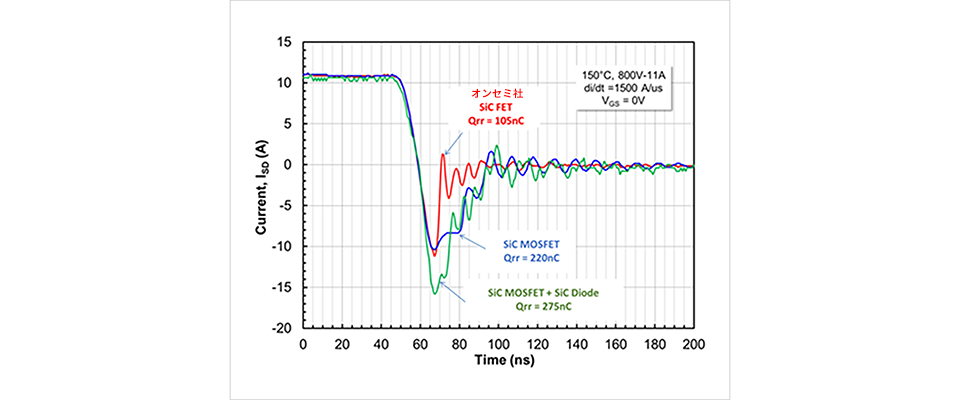
Figure 3: Body diode recovery characteristics
In summary, when ON Semiconductor's SiC cascode JFET conducts from source to drain, the on-resistance of the SiC JFET is very low, and the voltage drop of the body diode of the low-voltage Si MOSFET is also low at 1.5V, resulting in a much smaller voltage than the voltage drop of either the SiC MOSFET or GaN HEMT.
Therefore, even if used in a step-down power supply, if the synchronous FET is not driven by a synchronous rectifier circuit, the parallel Schottky barrier diode is not necessary and the internal body diode can be used as is. Moreover, this body diode is not made of Si but of SiC, so there is no need to worry about degradation.
Figure 4 shows a comparison of the forward effect voltage VF of a Si fast recovery diode (FRD), the body diode of an ON Semiconductor SiC cascode JFET, and the body diode of a SiC MOSFET. The figures show the cases of 25 °C and 150 °C. It can be seen that the body diode of the ON Semiconductor SiC cascode JFET is equivalent to a Si fast recovery diode (FRD).
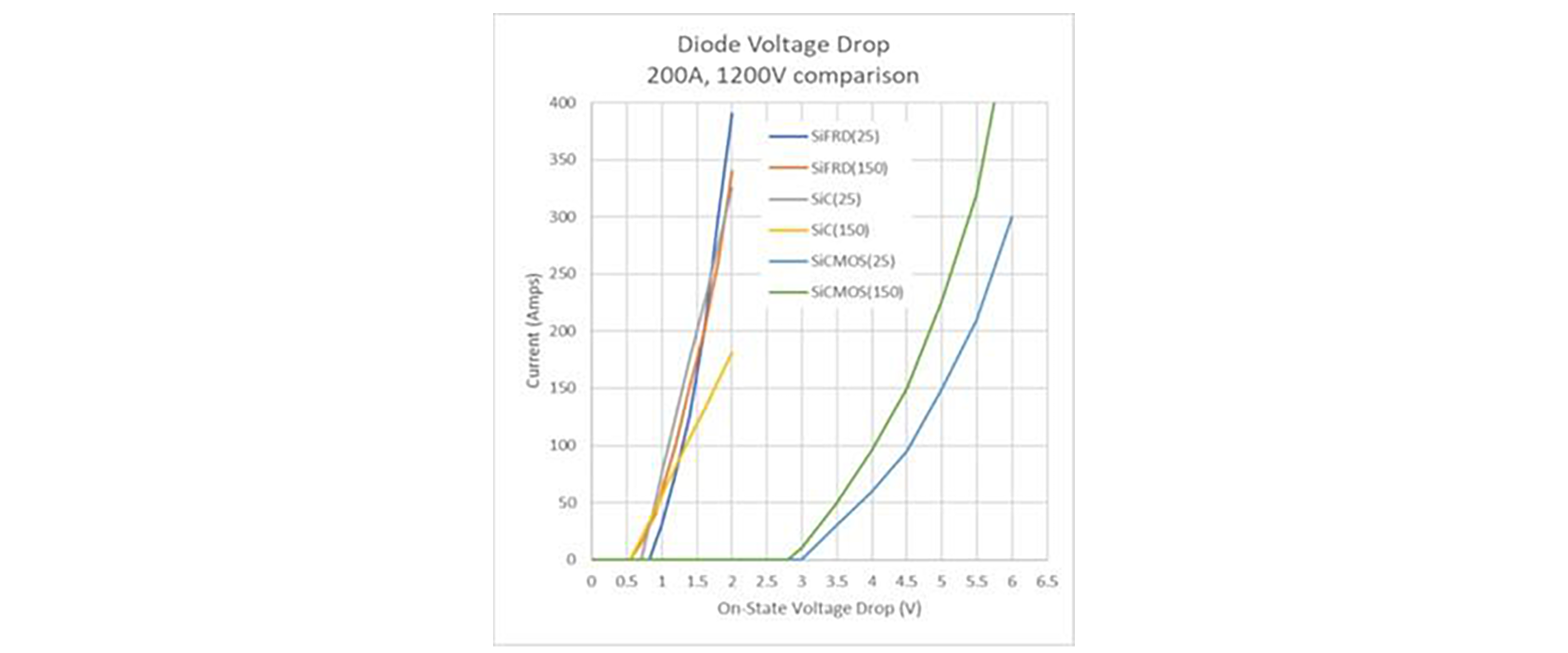
Figure 4: Comparison of body diode forward voltage drop between SiC MOSFET and cascode structure SiC FET
In SiC MOSFETs and GaN MEMTs, reverse recovery losses are low enough or even non-existent, but the reverse conduction voltage drop is a different story, which causes significant losses during switching dead time.
ON Semiconductor's SiC cascode JFET has very good body diode characteristics, and has the advantage of lower switching losses compared to SiC MOSFETs and Si MOSFETs.
Inquiry
If you have any questions regarding this article, please contact us below.
On Semiconductor Manufacturer Information Top Page
If you want to go back to ONSEMI maker information top page, please click below.