- Semiconductor BusinessHOME
- Products and Services of Macnica,Inc.
-
technical information

-
Events and Seminars
- Handling Manufacturer
- Support
- Inquiry
- Click here to purchase products
- Semiconductor business e-mail magazine registration


 Narrow down by specifying conditions
現在2149件がヒットしています。check



Hi, I'm Tott.
One day in training, when I learned about flip-flops, the words synchronous counter and asynchronous counter came up.
"Synchronous? Asynchronous? What is the difference? ’ I was confused.
Also, my seniors taught me that "asynchronous circuits are not suitable for FPGA design", so I compared synchronous counters and asynchronous counters.
そもそも '同期式'、'非同期式' って何?
Synchronous and asynchronous are clock control methods.
• Synchronous: Registers must operate with the same clock.
• Asynchronous method: registers operate on different clocks
Circuit diagram of synchronous counter and asynchronous counter
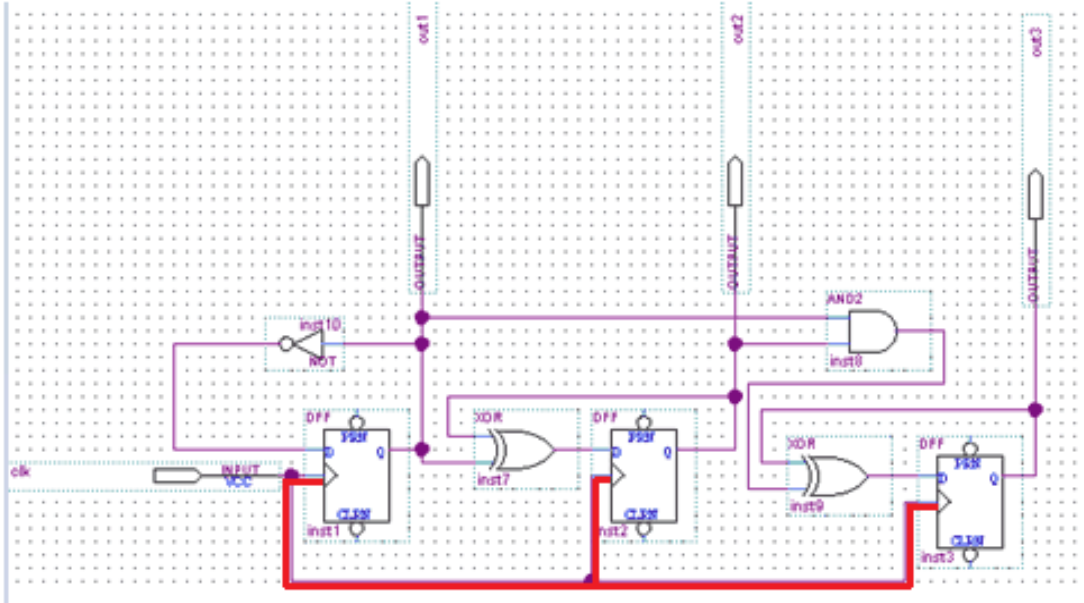
The synchronous counter in Figure 1 has three registers connected to the same clock (red arrows).
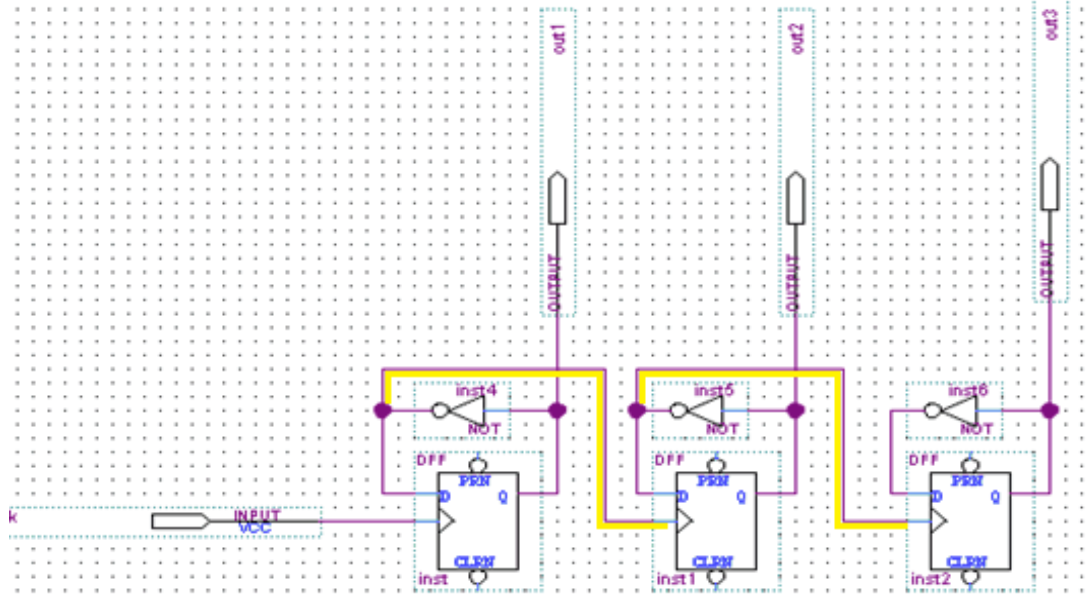
The asynchronous counter in Figure 2 has the output of each register connected to the clock (yellow arrow).
Synchronous counter, asynchronous counter output
Figure 3 shows the register output of the synchronous counter and Figure 4 shows the register output of the asynchronous counter.
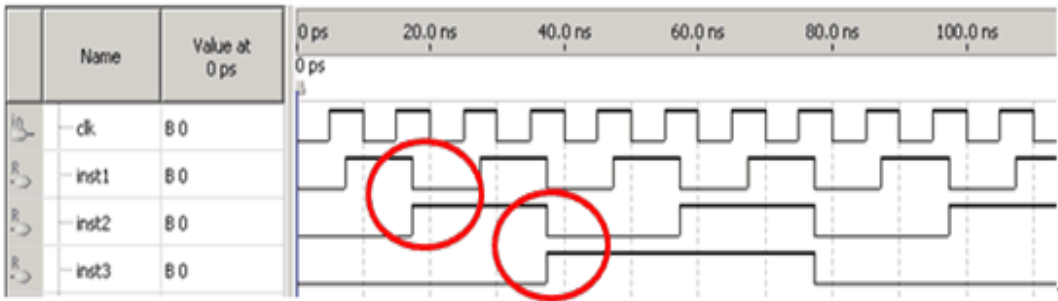
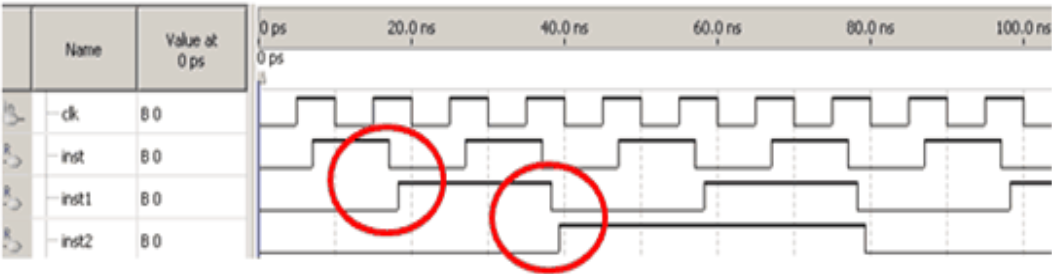
• Synchronous counter: All bits change at the same timing
• Asynchronous counter: Data change point is different timing for each bit
Why don't all bits of the aperiodic counter change at the same timing?
Continuing with theory...
Click here for recommended articles/materials
[A must-see for RTL design beginners] Differences between synchronous and asynchronous design
[Must-see for Beginners in RTL Design] Impact on the System when Inputting Asynchronous Signals