- Semiconductor BusinessHOME
- Products and Services of Macnica,Inc.
-
technical information

-
Events and Seminars
- Handling Manufacturer
- Support
- Inquiry
- Click here to purchase products
- Semiconductor business e-mail magazine registration


 Narrow down by specifying conditions
現在2165件がヒットしています。check
Do you have any issues with "detecting weak light" or "countering noise" in medical devices?
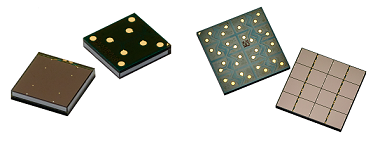
In the medical device field, SiPMs (Silicon Photomultipliers) are rapidly gaining popularity as next-generation sensors to replace conventional PMTs (Photomultiplier Tubes) and APDs (Avalanche Photodiodes), primarily for applications involving weak light detection. With the many benefits of introducing SiPMs, an increasing number of customers are replacing PMTs and APDs with SiPMs.
▼Main reasons for adoption
- Highly sensitive design capable of detecting single photons
- Low voltage operation (32.5 to 36.5V) provides excellent safety and energy efficiency
・Compact size and LGA mounting allow for compact equipment
-High noise resistance and effective for EMC measures
▼Main uses
PET/CT equipment: Contributes to highly accurate diagnostic imaging as a radiation detector
・PET equipment combined with MRI: SiPMs that are resistant to magnetic fields are required.
・Fluorescence detection devices: cancer diagnosis, molecular imaging, DNA analysis, etc.
An increasing number of customers have the following needs:
|
[Request example 1] |
[Request example 2] |
|
▼ |
▼ |
|
\ Broadcom's SiPM sensor makes this possible! / |
|
|
Small and thin, low voltage, high speed, and immunity to ambient light and magnetic fields |
Higher sensitivity than APD, faster speed, lower voltage, and higher density mounting possible. High resistance to external light. |
PMT/APD vs SiPM technology comparison table (medical device applications)
● Selection points
PMT: Highly sensitive, but large, vulnerable to high voltage and magnetic fields, making it difficult to use in conjunction with MRI or to miniaturize.
APD: Medium performance, suitable for applications where a good balance between cost and design is important.
SiPM: Compact, low voltage, magnetic field resistant, and high resolution make it ideal for next-generation medical devices.
| characteristics |
PMT |
APD |
Broadcom SiPM (Silicon Photomultiplier) |
Benefits of SiPMReplacement from PMT/APD |
| Detection Principle |
Photoelectron multiplication |
Photon detection using semiconductors (avalanche effect) |
Semiconductor photon detection |
|
| sensitivity |
High sensitivity |
High sensitivity |
High sensitivity |
|
| Operating voltage |
High voltage |
Medium voltage |
Low voltage drive |
▶Low voltage and compact design allows for greater freedom in the design of medical equipment. |
| Size and Mountability |
Large vacuum tube structure |
Medium size, SMD mountable |
Compact and LGA mountable |
|
| Magnetic field resistance |
weak |
Medium (temperature dependent) |
Strong (can be used in conjunction with MRI) |
▶ Magnetic field resistance Compatible with MRI and other combined diagnostic equipment. |
| Response speed |
High speed (several ns) |
High speed (several ns) |
Ultra high speed (hundreds of ps to several ns) |
▶ "Ultra-fast response"improves diagnostic accuracy. |
| Lifespan/durability |
Glass tube deteriorated |
It is a stable semiconductor |
Semiconductors provide long life and high stability |
|
| cost |
Expensive (manufacturing and maintenance) |
Moderate (varies depending on application) |
Relatively low cost (suitable for mass production) |
|
| Typical uses |
PET, SPECT, |
Fluorescence detection, optical communication, |
PET, CT, fluorescence detection, DNA analysis, |
|
[SiPM] There are three types in the lineup!
| Product series | High performance SiPM – NUV-MT | KーType SiPM | High Dynamic Range NIR-sensitive SiPMs |
| Sensitivity Range | From near ultraviolet (NUV) High sensitivity up to red light wavelengths |
From near ultraviolet (NUV) |
New generation red and near-infrared sensitivity with ultra-high dynamic range |
| PDE (detection efficiency) | 63% at 420nm |
45% at 430nm |
37% at 750nm 28% at 905nm |
| Main Applications | Suitable for a wide range of applications, including medical, life science, safety and security, and high-efficiency energy (HEP) experiments | Medical, life science, flow cytometry, fluorescence detection, etc. | dTOF, LiDAR, Life Sciences |
| Semiconductor and electronic parts online store Macnica-Mouser |
You can purchase in small lots! |
||
Inquiry
If you have any questions about this product or would like a quote, please contact us using the information below.