- Semiconductor BusinessHOME
- Products and Services of Macnica,Inc.
-
technical information

-
Events and Seminars
- Handling Manufacturer
- Support
- Inquiry
- Click here to purchase products
- Semiconductor business e-mail magazine registration


 Narrow down by specifying conditions
現在2240件がヒットしています。check

Introduction
The evolution of electric vehicles (EVs) is creating additional design challenges requiring new technologies to support reliable operation in many harsh environments, strict compliance with increasing emissions regulations, and enhanced solutions to meet ever-evolving standards. These challenges are compounded by increasing consumer demand for in-vehicle comfort.
Without the internal combustion engine (ICE) as the heat source, electric vehicle (EV) designers must look for other heating methods. The heating method they choose must maximize battery life and efficiency while providing a reliable and safe interior comfort system for passengers and improve visibility with defrosting capabilities.
Systems used to heat steering wheels, seats, panels, sensors, mirrors, and batteries are rapidly becoming standard equipment in most vehicle models today. In electric vehicles (EVs), these systems are typically powered by a heating element and electronic control device designed to provide a comfortable surface temperature. For example, a long strip of heating element can be placed under the material of a seat, and when switched on, an electric current heats the element, thereby heating the seat.
As manufacturers focus on optimizing energy efficiency, they are challenged with implementing effective "thermal management", including replacing traditional overheating protection solutions.
With advanced cabin comfort significantly improved, accurate temperature measurement and protection is a critical design element needed to optimize energy efficiency and ensure driver and passenger safety in the event of a heating element failure. Primary and secondary overtemperature protection is required to guard against dangerous short circuits that could damage the vehicle and harm the driver and passengers.
Heater Circuit
There is a wide range of options for heater design, with different factors to consider, such as power rating, watt density, and required surface temperature. As such, there is no fixed design for a heater circuit. Methods for controlling temperature also vary widely, from thermostatic control, to more advanced control using temperature sensors (NTC thermistors, PTC thermistors, RTDs, etc.), control ICs, and switching MOSFETs. Some heater designers also choose to use a temperature protection circuit to provide back-up safety, such as a single-blow thermal fuse or thermostat. This is especially important for circuits that come into contact with the human body (such as seat heaters, steering wheel heaters, etc.). An example of such a circuit is shown in the figure below.
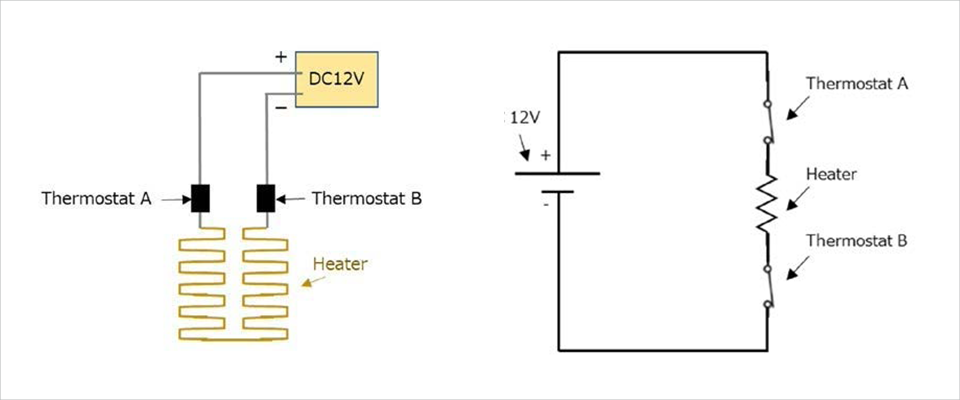
One of the main reasons that the ideal circuit architecture for heater design has not been identified is the potential risks with many existing solutions. Typically heater control comes in the form of a bimetal based thermostat, or more recently an NTC thermistor and power MOSFET. Circuits using a temperature sensor, control IC and power MOSFET can control the circuit at a predetermined temperature level and increase energy efficiency. However, MOSFETs in automotive applications are at risk of thermal instability and may fail in the worst case scenario. Circuits using single blow thermal fuses may suffer nuisance tripping during assembly or in the field and prove costly to replace. Using wired components instead of surface mount components can provide control and protection in hard to reach locations, but can be costly to assemble and maintain due to variability caused by manual installation.
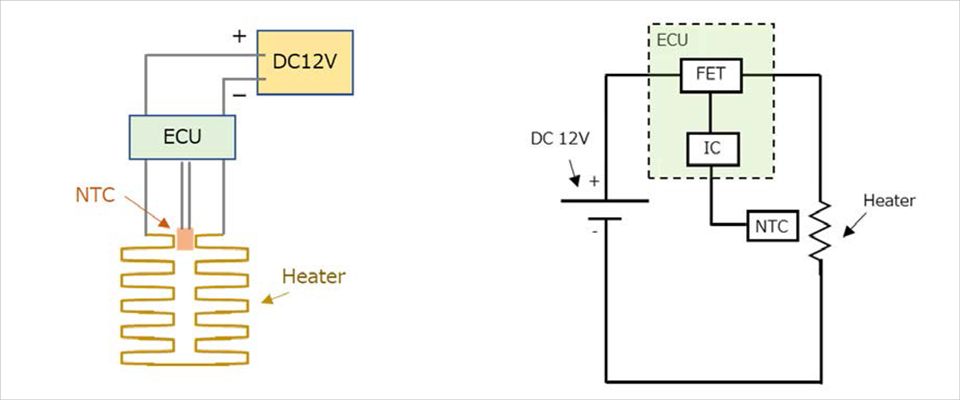
Optimal Heater Protection with Bourns Mini-Breakers
Bourns has been manufacturing mini-breaker thermal cut-off (TCO) devices for the Li-ion battery pack market, primarily used in notebook PCs and tablets, for nearly 20 years. Designed with Li-ion protection in mind, Bourns mini-breakers offer trip temperatures ranging from 72 °C to 90 °C, providing a practical protection solution in a very small footprint. Leveraging its experience in overtemperature protection, Bourns is now applying its proven product developments to the heater market. The new Bourns SD and AD series mini-breakers can meet additional heater application requirements with a wide trip temperature range of 55 °C to 150 °C. This is particularly applicable to a range of heater devices requiring either low trip temperatures (e.g., cosmetic and low / medium risk medical heaters) and high trip temperatures (e.g., automotive heaters in electric vehicles).
In electric vehicle heating applications, these devices can be attached to the heating element or electronic control system to measure the temperature of the heating element. If the temperature exceeds a threshold temperature, the Bourns mini-breaker device is triggered and reduces the current to prevent further temperature increase. The mini-breaker then remains in the off mode until power is removed. These small, resettable devices are an ideal solution for overtemperature protection of heater circuits where previously no solution of suitable size or functionality was available.
Advantages of Mini-Breaker Heater Design
Bourns SD mini-breakers can be surface mounted directly to a flexible film heater or on a heater control unit PCB. If the design allows, a Bourns SMD mini-breaker can also be placed close to a power MOSFET and the mini-breaker can be used to protect that device. Connecting a wire to an AD mini-breaker device is also a protection solution for wired heater assemblies. Such small package resettable overtemperature protection is a new and unique solution that offers many benefits for these applications. Examples are shown in Figures 3 and 4 below.
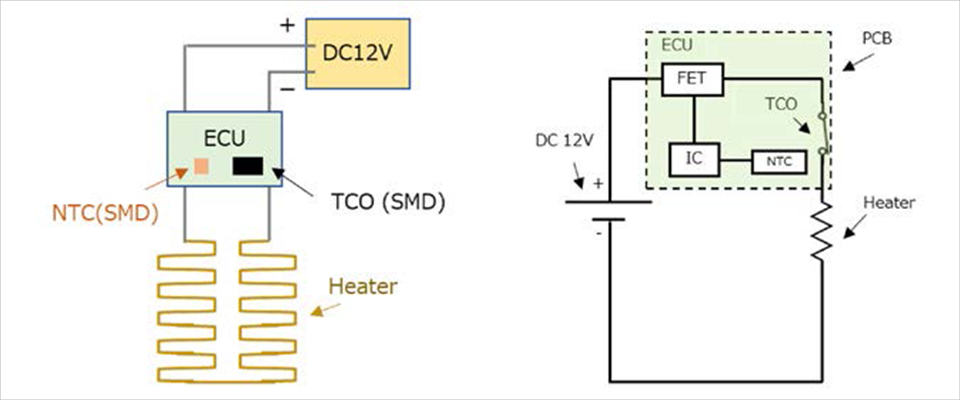
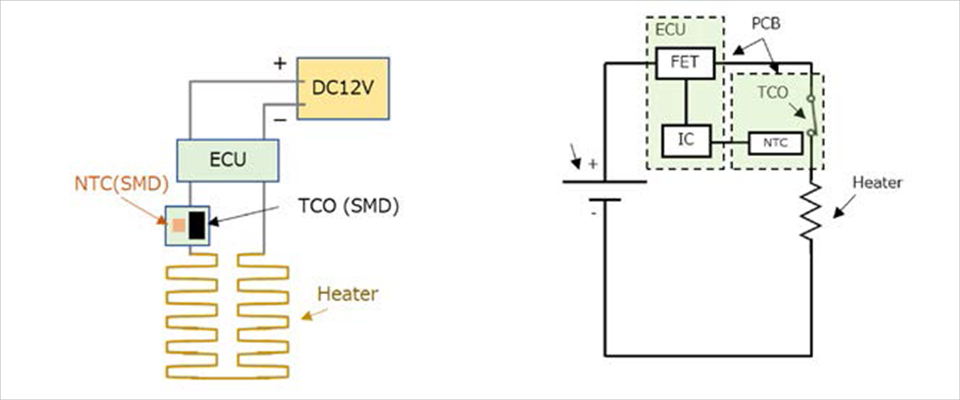
Figure 3 shows how designers can use a single package that includes the mini-breaker, IC, FET, NTC and other components. Figure 4 shows a design with a separate mini-breaker and NTC thermistor. Integrating the mini-breaker into the protection circuit can meet independent overheat protection requirements and help reduce the size of the heater control unit. Bourns' latest AD and SD series mini-breakers are tested to withstand up to 10,000 cycles compared to the traditional 6,000 cycles used in lithium-ion battery applications.
Effective EV Heater Protection Solutions
Bourns offers a range of time-tested mini-breaker TCO devices proven to protect against over-temperature conditions. Bourns mini-breaker TCOs combine two common circuit protection technologies: PTC and bimetal switches. As one of the leading suppliers of TCOs, Bourns has perfected precision metal stamping, plastic injection molding and high-end assembly processes to make these ubiquitous technologies into increasingly effective protection solutions.
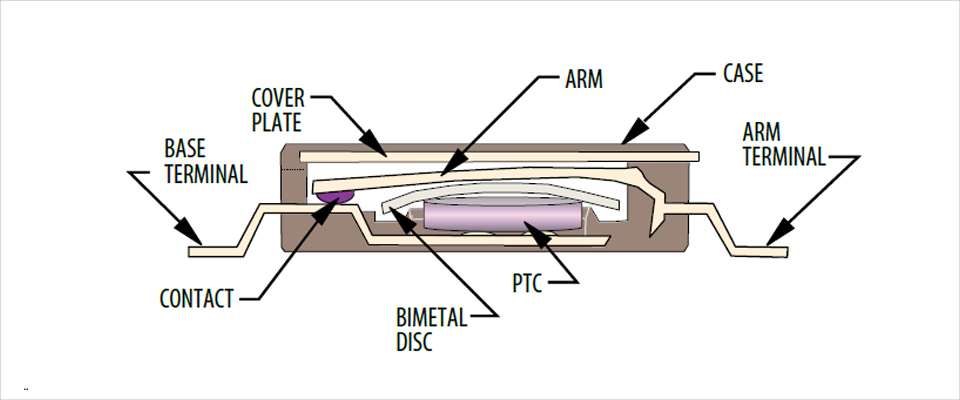
A simple schematic of a mini-breaker's construction is shown in Figure 5. The two terminals (arm and base) are connected in the normally closed position to allow current to flow through the device. The contact between the two terminals plays a critical function in supporting a contact resistance as low as 1 milliohm.
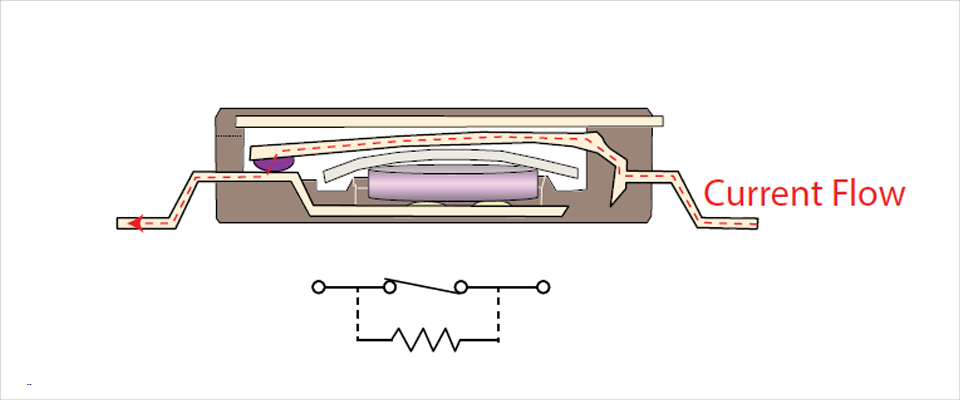
Under normal conditions, current flows through the arm terminal, through the very low resistance contacts, and out the base terminal (Figure 6).
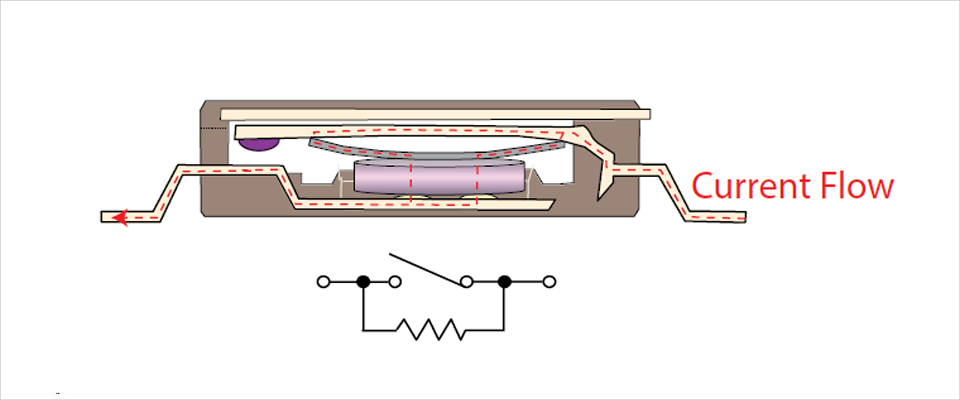
Mini-breaker devices are triggered by an increase in environmental temperature or excessive current flow. When the trip temperature is reached, the bimetallic disc flexes and this movement opens the arms (Figure 7). Once the bimetal disc opens the arm, current flows through the bimetal disc to the PTC device. This current causes the PTC device to act like a current-limiting heater, providing enough heat to cause the bimetal disc to flex and hold the arm open. The combination of the bimetal disc and PTC device prevents the mini-breaker arm from oscillating open and closed. Instead, the design keeps the arm open until a lower, safe temperature level is reached (between 10°C below the mini-breaker's lower specification limit of 40°C), at which point the arm is reset.
Specifically, we have released our miniature thermal cutoff devices "SD" and "AD" series for automotive applications. They offer temperature accuracy and excellent cycle performance in a compact package optimized for heater applications. These devices effectively control abnormal overcurrents almost instantly up to the rated limit.
Conclusion
With the electric vehicle market expected to expand rapidly, driver and passenger safety will remain a top priority. In addition, the trend towards increased power density and miniaturization of electronic circuits shows no end in sight. Especially in the electrification era, effective thermal management design is a key safety factor, as is the development of accurate and robust temperature measurement systems.
Therefore, to ensure efficient performance of the heater system inside the vehicle, proper over-temperature protection is required to ensure reliability and safety despite extreme environmental conditions. The AD and SD series mini-breakers are the smallest over-temperature protection devices on the market. Tested by Bourns to standards equivalent to AEC-Q200, their small size makes them an ideal solution for electronic circuits with limited space, and their precise temperature protection effect improves the reliability of temperature control, helping to improve safety and efficiency.
Recommended related articles
Inquiry
If you have any questions regarding this article, please contact us below.
Bourns Manufacturer Information Top
If you would like to return to the Bourns Manufacturer Information top page, please click below.