- Semiconductor BusinessHOME
- Products and Services of Macnica,Inc.
-
technical information

-
Events and Seminars
- Handling Manufacturer
- Support
- Inquiry
- Click here to purchase products
- Semiconductor business e-mail magazine registration


 Narrow down by specifying conditions
現在2230件がヒットしています。check
![Bringing manufacturing back to Japan: Examples and strategies for mitigating geopolitical risks [2026 Edition]](/business/semiconductor/articles/411c9e4b8399753bb40788d1bde9e4da_1.png)
Bringing outsourced manufacturing back to Japan
Bringing outsourced manufacturing back to Japan means moving products that were previously made in overseas contract factories to be manufactured in factories within Japan. However, this doesn't simply mean closing overseas factories and bringing everything back to Japan. It involves reviewing which products to produce, where to produce them, and to what extent to maintain duplicate production.
There are three criteria for making a decision.
1. Destination of shipment: Products destined for the United States face increased tariffs and the need to prove that they are "not related to China."
2. Losses when production stops– How many months of no shipments would it take for the business to survive due to factory closures or export suspensions?
3. System for transfer– Can jigs, inspection equipment, and parts be sourced on the Japanese side?
This article explains the geopolitical risks to supply chains in 2026 and how to proceed with production transfers, based on a real-world example from Macnica 's Manufacturing Consulting Division (MonoCon®), a semiconductor trading company, which supported the transfer of manufacturing from a contract factory in China to Japan.
Geopolitical Risks and Supply Chain Strategies in 2026: How Outsourcing Has Changed
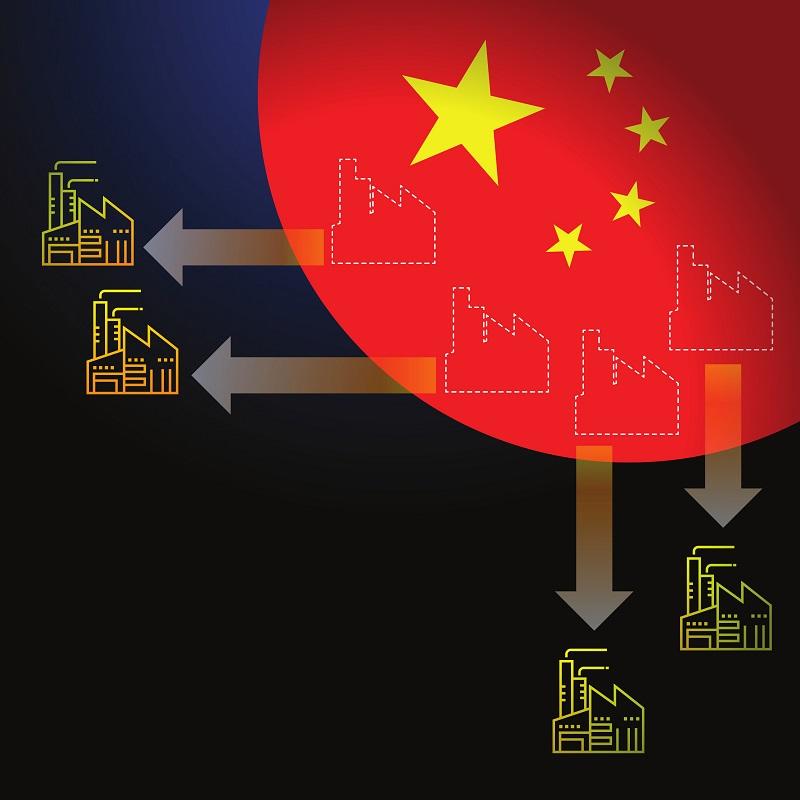
In the spring of 2025, US tariffs on China rose to a maximum of 145%. They were later reduced to 30%, and in February 2026, the US Supreme Court ruled the basis for these tariffs invalid. While the numbers may appear to indicate a calmer situation, the underlying risks have actually increased.
Japanese companies are also making progress in reviewing their supply chains. According to a survey by Teikoku Databank, 16.2% of companies consider China to be their most important production base, a decrease of about 8 percentage points from 2019. A survey by JETRO shows that more than a quarter of companies have reviewed their supply chains.
MonoCon has also received inquiries related to these trends. One electronics manufacturer has started bringing production back to Japan since last year because it is too much trouble to prove that products destined for the US are "not related to China" even when changing transit points when shipping from overseas factories.
Even if tariff figures change, the importance of being able to explain "where and with what materials it was made" remains unchanged.
[Comparison Table] Differences between domestic return, China Plus One, continuing in China, and dualization
The choice of production base is not a simple "continue in China or move." It's possible to maintain factories in China while also setting up the same production facilities in Japan.Redundancy (mirror factory)This is the fourth option. The key factor in making this decision is whether it's possible to separate production facilities by destination. If it's possible to produce goods for the Chinese domestic market in China and goods for the domestic market in Japan, both costs and risks can be reduced.
| Comparison item | China continues | China Plus One | Return to Japan (complete transfer) | Redundancy (mirror factory) |
|---|---|---|---|---|
| Manufacturing cost | ◎ Currently, it is often the cheapest option. | ○ There are significant differences depending on the country. | ▲ Tendency to be expensive | ▲ Startup costs for two locations |
| The effects when it stops | × Exports will be stopped entirely due to the suspension of exports and lockdowns. | ▲ The risks are transferred to the receiving country. | ▲ Service interrupted by domestic disasters and fires | ◎ If one of them stops working, the other can still ship. |
| Quality control and factory audits | ▲ The process is difficult to understand without going to the site. | ▲ Same as above | ◎ Easy to audit | ○ The Chinese side can be aligned based on the Japanese side. |
| Shipping days | About one week | About one week | Minimum 1-2 days | Selectable by shipping destination |
| Suitable cases | Products intended for the Chinese domestic market | Mass-produced goods that want to maintain low costs | Products intended for the domestic market that would incur significant losses if they stopped working. | Products available for both the Chinese and domestic markets. |
Who should I consult about the transfer?
One of the challenges faced when reviewing outsourcing manufacturing is "Who should we consult?" Transferring manufacturing involves a great many processes, such as restructuring production lines, establishing quality control systems, and reviewing contracts with suppliers, making it unrealistic to complete the process in-house.
Macnica MonoCon® can answer your questions regarding this matter.
At MonoCon®, we take the lead in relocating factories from China to Japan and setting up domestic factories from a Business Continuity Plan (BCP) perspective. This ensures the stability of the supply chain and enables us to respond quickly and reliably to customer needs. When considering the relocation of manufacturing, our experts can provide comprehensive support, from process design and quality control to negotiations with local parties and logistics.
Here, the Company will introduce our experience in relocating factories from China to Japan.
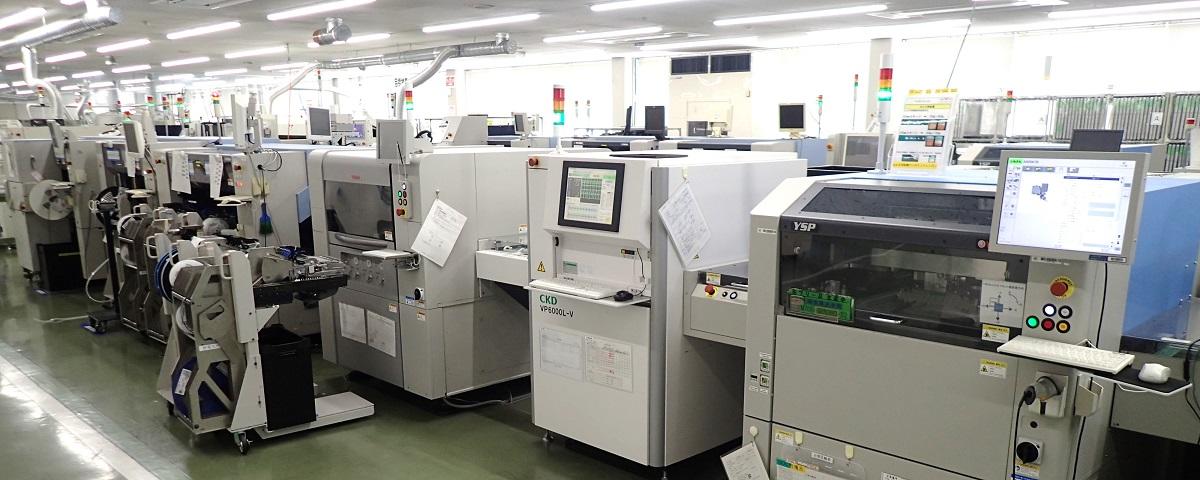
[Case Study] Macnica Supports Manufacturing Transfer from Chinese Factory to Japan
One electronics manufacturer decided to restructure its domestic production system to avoid the risk of overconcentration in China. Monocon® supported this transfer project from the concept stage to the start of production. The table below summarizes the issues the transfer project faced and how Monocon® resolved them.
| Task | Macnica Monocon® Support |
|
Issue 1: A manufacturing system that cannot ensure reproducible quality |
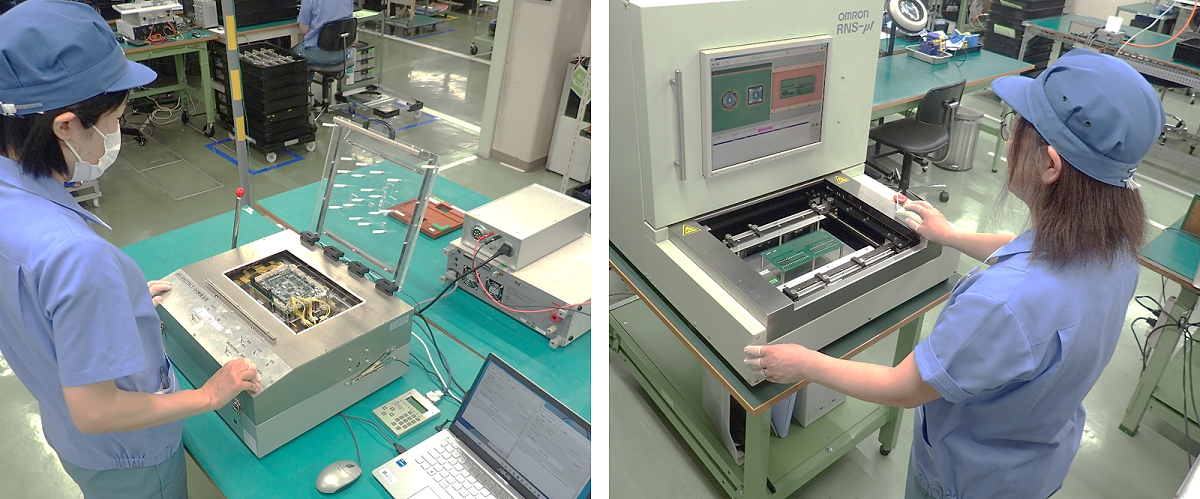
・Proposing manufacturing jigs (e.g. robot soldering jigs, connector insertion cradles, cradles for mounting heat sinks, etc.) to reproduce uniform quality in domestic factories |
|
Issue 2: Material procurement and supplier restructuring |
・Propose alternative parts that are easily available in Japan |
|
Issue 3: Black Box of shipping inspection details |
・Through thorough analysis of the actual product, reverse engineering the functions, wiring, and software structure of the FCT device |
|
Issue 4: Establishing a quality control system and ensuring traceability |
・Select multiple EMS candidate factories based on our own evaluation criteria, without relying on name value |
|
Issue 5: The need for running changes |
・ the Company and our factories thoroughly manage the process, including the trial production period, material procurement, and mass production schedule. |
The option of preparing for China without stopping it: a "mirror factory"
In this project, instead of completely halting production in China, we proposed strengthening our business continuity plan (BCP) by establishing a new factory in China and adding a "mirror factory" production system in Japan. This resulted in the creation of the following dual system:
China: Continue supplying to the Chinese domestic market (product costs, logistics costs, and short delivery times).
Japan: Supply base prioritizing the domestic market and security (emphasis on quality and reliability, logistics costs, and the sense of security provided by domestic bases)
The value of redundancy becomes apparent when one of the facilities shuts down. MonoCon receives inquiries from companies that have experienced lockdowns and want to return to Japan for business continuity planning (BCP), as well as inquiries from companies that want to be able to ship even if their Japanese factory catches fire or their Chinese factory is shut down. Bringing production back to Japan is not about shifting the risks from China to Japan. It's about creating a situation where shipments can continue even if one of the facilities shuts down.
Bringing production back to Japan is a strategy, not just an insurance policy. Throughout this transfer project, Macnica worked alongside the client through every stage, from jig design and quality restructuring to material procurement, factory audits, and startup planning. This support enabled the client to acquire a multi-site system that is resilient to risk, achieving both supply chain stability and profitability.
Frequently Asked Questions (FAQ)
Q1. Can you continue production in Japan without shutting down your contract factory in China?
Yes, it's possible. This involves a "mirror factory" model, where the Chinese factory continues supplying the domestic market while a factory in Japan produces the same product. By separating production bases for each destination, costs can be kept down, and shipments can continue even if one of the bases shuts down. The case study in this article also followed this dual-factory model.
Q2. What determines the time and cost involved in transferring production?
The cost is mainly determined by three factors: whether new jigs and inspection equipment need to be manufactured, how many parts are unavailable in Japan, and whether recertification is required. If the original factory does not have procedures or documentation, the process will be extended as we will have to start by analyzing the existing products. At MonoCon, we will propose a plan and estimate after reviewing the current products and parts lists.
Q3. Should jigs and inspection equipment be duplicates of those from the original factory?
Duplication isn't always the best solution. If the original factory's jigs are based on processes that rely on human labor, redesigning them to ensure consistent quality during the transfer process can reduce variations in mass production. Since the specifications of inspection equipment are often unknown, the decision of whether to duplicate or redesign is made after analyzing the existing equipment.
Q4. For products destined for the US market, what should be checked regarding the country of origin and whether components are made in China?
Review the bill of materials (BOM) to ensure it does not contain parts or materials from UFLPA-covered companies or their suppliers. If such items are included, the shipment may be seized or denied import by U.S. Customs. It is also important to keep records that can explain the final assembly location and the source of major components, and to confirm with customs and legal officials that there are no issues with determining the country of origin.
Summary: Consider "returning to Japan" as an opportunity to maximize business performance
Tariff issues and rising geopolitical risks are inevitably impacting the manufacturing industry. While reshoring and China Plus One strategies may seem expensive at first glance, a combination of gradual relocation, standardization, and external assistance can be a more realistic option than you might think.
Not only from the perspective of the supply chain (BCP), but also human rights violations, conflict minerals, and due diligence obligations are topics that should be considered. Now is the time for companies that have relied entirely on Chinese factories to take a step toward "de-personalization" and "de-centralization."
We provide consulting services to help companies successfully return to Japan in outsourcing manufacturing. We develop specific strategies to stabilize the supply chain and provide support in their implementation, helping to resolve the challenges companies face. Please contact us to help you achieve corporate growth and sustainable operations while appropriately dealing with geopolitical risks.
Manufacturing consulting service
For details on our manufacturing consulting services, please click the button below.