- Semiconductor BusinessHOME
- Products and Services of Macnica,Inc.
-
technical information

-
Events and Seminars
- Handling Manufacturer
- Support
- Inquiry
- Click here to purchase products
- Semiconductor business e-mail magazine registration


 Narrow down by specifying conditions
現在2204件がヒットしています。check

Introduction
In recent years, devices that utilize voice, such as smart speakers, wireless earphones, and headsets with noise-canceling functions, have become increasingly popular. Furthermore, sound detection technology is becoming increasingly important in in-vehicle devices and industrial monitoring equipment, and applications are expanding beyond the consumer sector.
Supporting the development of these voice interfaces and environmental sound sensing technologies are MEMS (Micro-Electro-Mechanical Systems Microphones), extremely small microphone elements formed using semiconductor manufacturing processes, which offer higher consistency, reliability, and sound quality than the previously mainstream ECM (Electron Condenser Microphone).
In particular, recent MEMS microphones have a high S/N ratio (Signal-to-Noise Ratio) and a wide dynamic range, allowing them to accurately capture a wide range of sounds, from a human whisper to environmental noise. These performance features are important not only for consumer devices, but also for automotive applications, which require a wide temperature range and long-term reliability.
This article will explain the basic mechanism of MEMS microphones and the differences between them and ECMs, while providing an easy-to-understand explanation of the features of Infineon's MEMS microphones.In addition to consumer products, Infineon also offers a lineup of automotive-grade MEMS microphones that meet automotive quality standards, allowing you to select the optimal product for your application.
What is a MEMS microphone?
A MEMS microphone (Micro-Electro-Mechanical Systems Microphone) is an acoustic sensor that uses a tiny micromechanical structure formed on a silicon substrate using semiconductor processing. The basic principle of converting sound waves into an electrical signal is the same as that of a conventional electret condenser microphone (ECM)**, but there are significant differences in its structure and manufacturing method.
MEMS microphone structure and operating principle
A MEMS microphone consists of three main elements:
-
MEMS die:
It has a variable capacitor structure that combines a thin diaphragm (movable film) that vibrates in response to sound pressure with a fixed electrode. When sound waves enter, the diaphragm deforms slightly, and this change in capacitance is converted into an electrical signal. -
ASIC (signal processing IC):
It contains a circuit that amplifies and shapes the minute signals obtained by the MEMS element, suppressing noise and adjusting the output level to a constant level. -
Package Structure:
They are sealed in small packages with openings (top or bottom ports) for sound to enter. In recent years, metal or resin packages suitable for SMT mounting have become mainstream.
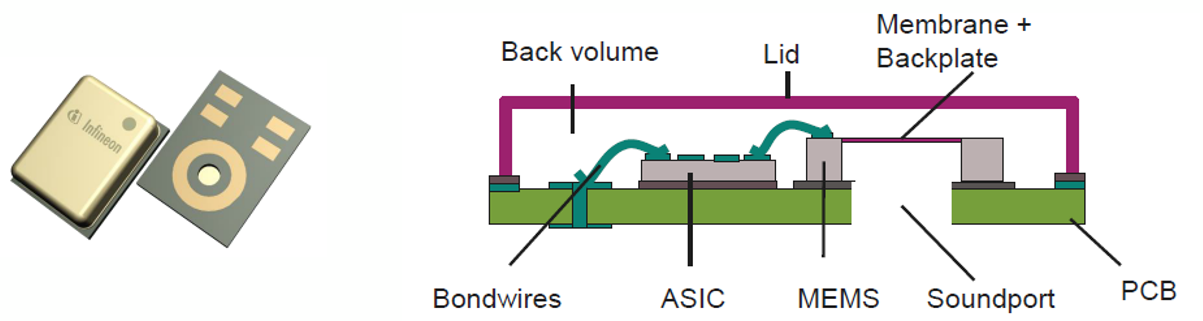
Left: Infineon Bottom Port MEMS Microphone Right: Schematic diagram of MEMS structure
MEMS microphone features
MEMS microphones are manufactured with high precision using semiconductor processes, and therefore have the following features:
-
Easy to make small and thin: Suitable for smartphones, earphones, and other devices with limited space
-
Consistent performance with minimal variation: High reproducibility due to uniformity of manufacturing process
-
Low noise and high S/N ratio: High sensitivity enables clear audio capture
-
High AOP allows for loud volume handling: Reduces distortion and supports a wide range of input sound pressure levels
-
Excellent power efficiency: Low voltage operation makes it ideal for mobile devices
|
item |
explanation |
|
sensitivity |
Output voltage for standard sound pressure |
|
Signal-to-Noise Ratio (S/N Ratio) |
High sensitivity and low noise for high quality sound |
|
AOP(Acoustic Overload Point) |
Maximum sound pressure level at which distortion begins to occur. Clear sound recording even in loud environments. |
|
Total Harmonic Distortion (THD) |
Ensure faithful sound reproduction |
|
Operating voltage |
Supports low voltage drive |
|
current consumption |
Suitable for power-saving designs in mobile devices |
|
Port Type |
Can be selected according to the design layout |
|
interface |
Flexible system configuration |
The dynamic range of a MEMS microphone is calculated as the difference between the AOP and S/N ratio (e.g., 120 dB − 69 dB ≒ 51 dB). The higher the AOP, the wider the sound pressure range it can handle with less noise.
As such, MEMS microphones are increasingly replacing conventional ECMs (Electret Condenser Microphones) because they are compact, offer high sound quality, and offer excellent AOP performance.
We will take a closer look at the differences between the two, comparing their structure, performance, and implementation.
Typical indicators of MEMS microphones
When selecting and comparing MEMS microphones, it is important to comprehensively check not only sound quality but also multiple specification indicators related to the usage environment and system configuration.
In particular, in addition to acoustic performance indicators such as sensitivity, S/N ratio, and AOP, factors such as output format, power supply conditions, and waterproof/dustproof specifications have a significant impact on the design freedom and reliability of the final product.
Here we will briefly explain the major indicators for MEMS microphones and their meanings.
Sensitivity
This is an index that indicates the output level when a certain sound pressure (usually 94 dB SPL) is input.
For digital output MEMS microphones, the sensitivity is expressed in dBFS, which indicates the range of the digital signal used relative to normal audio levels. If the sensitivity is too high, it will be prone to saturation at high volumes, and if it is too low, noise will be noticeable at low volumes.
●S/N ratio
A measure of the ratio between the useful audio signal and the internal microphone noise.
The higher the S/N ratio, the clearer the audio can be captured even in quiet environments or with low volumes, making it an important parameter that determines sound quality.
●AOP
Indicates the maximum sound input pressure at which the microphone output reaches a specified distortion level.
The higher the AOP, the less likely it is to produce distortion even in loud environments and the wider the range of sound pressure levels that can be handled, which is particularly important in noisy environments and industrial applications.
●Output format
This refers to the format of the microphone's output signal, and is typically either analog output or digital output (PDM, I²S, etc.).
Digital output has high noise resistance and is suitable for connection to microcontrollers and DSPs, while analog output offers greater freedom in circuit design and is suitable for designs that take advantage of a high S/N ratio.
●Operating voltage/current consumption
This shows the power requirements and power consumption required for the microphone to operate.
Low voltage and low current consumption products are suitable for battery-powered devices and applications requiring power saving.
●Waterproof and dustproof specifications
This is an index that indicates resistance to water and dust, and is defined as the IP standard (e.g., IP57).
This is an important selection point for applications in harsh environments, such as outdoor equipment, industrial applications, and wearable devices.
*Automotive grade *For automotive applications
When considering installing the product in a vehicle, does it comply with automotive grade and automotive standards (e.g., AEC-Q103)?
This is an important selection point for applications such as automotive.
Differences from ECM (Electret Condenser Microphone)
To understand MEMS microphones, it is important to understand the
It is important to understand the difference between this and an ECM (Electret Condenser Microphone).
Although both are condenser microphones, there are differences in their structure, manufacturing techniques, and performance characteristics.
ECM features and limitations
ECM has a relatively simple structure using an electret film (permanently charged film).
It has been widely adopted for many years, primarily for voice input purposes.
The simple structure and low cost are major advantages.
However, there are limitations due to the mechanical structure and material properties, such as:
-
Individual differences are likely to occur
-
Characteristics change due to environmental conditions such as temperature and humidity
-
Limitations of distortion tolerance at loud volumes (AOP)
-
Difficulty in implementation and mass production automation
While these are not a problem depending on the application, they are points that should be taken into consideration when using applications that require high sound quality and high reliability.
General characteristics of MEMS microphones
A MEMS microphone is an acoustic sensor manufactured using semiconductor processes.
A major feature of this product is that it uses microfabrication technology to achieve stable performance with reduced structural variation.
Typical MEMS microphone performance trends include:
-
S/N ratio: about 65-73 dB
-
AOP (Acoustic Overload Point): Approximately 120 to 135 dB SPL
-
Output format: Digital output (PDM, I²S, etc.) is the mainstream
-
Mounting method: SMT compatible, reflow mounting possible
-
Environmental resistance: Many products comply with waterproof and dustproof specifications (IP standard)
This allows the MEMS microphone to
A wide sound pressure range that can handle a wide range of volumes from low to high,
It combines ease of mounting and reliability suitable for mass-produced products.
Comparison of ECM and MEMS by key indicators (general trends)
| Item | ECM (general trend) | MEMS microphones (a common trend) |
|---|---|---|
| Manufacturing technology | Mainly mechanical structure | Semiconductor Process |
| S/N ratio | Approximately 58-62 dB | Approximately 65-73 dB |
| AOP | Approximately 100-110 dB SPL | Approximately 120-135 dB SPL |
| Output format | analog | Digital (PDM/I²S) |
| Implementation | Mainly manual implementation | SMT/reflow compatible |
| environmental resistance | Susceptible | Highly environmentally resistant design possible |
| Individual variation | relatively large | small |
*The above shows the general specification trends seen in mass-produced products.
Why MEMS microphones are becoming mainstream
Due to these differences in characteristics, in recent years
-
Higher sound quality (high S/N ratio)
-
Supports high volume (high AOP)
-
Suitable for mass production and automatic mounting
-
Expanding to outdoor and industrial applications
As demands for such things increase,
MEMS microphones are increasingly being used.
In the next section,
We have summarized the important indicators for evaluating MEMS microphones,
We will then look at actual performance using specific product examples.
Typical MEMS microphone performance
The indicators such as the differences with ECM, sensitivity, S/N ratio, AOP, output format, power supply conditions, and waterproof/dustproof specifications that have been explained so far are as follows:
This is an important factor to consider when selecting a MEMS microphone.
In actual products, it is important not only that these indicators are excellent individually, but also that they are designed in a balanced manner according to the intended use.
Here, we will take up Infineon's MEMS microphone products as a representative example of MEMS microphone performance, and examine how each indicator is reflected in product performance.
Overview of Infineon's XENSIV™ MEMS microphone IM66D130M
The IM66D130M is part of Infineon's XENSIV™ MEMS microphone series.
This is a digital output type MEMS microphone that combines high acoustic performance with ease of system design.
It is designed for a wide range of applications, from voice input to environmental sound detection.
Additionally, there is an AEC-Q103 compliant MEMS microphone called the IM66D130MA for automotive applications.
Below are the key metrics discussed above and the corresponding actual numbers.
Main performance of IM66D130M
| Index | Typ Spec | remarks |
| Sensitivity | -37 dBFS |
While ensuring sufficient signal level for general audio levels, |
| Signal-to-Noise Ratio | 66 dB(A) | A signal-to-noise ratio of 66 dB(A) ensures clear audio capture with low noise. This makes it less likely that quiet environments or soft voices will be drowned out by noise. |
| AOP(Acoustic Overload Point) | 130 dB SPL | The AOP 130 dB SPL provides excellent distortion suppression even in noisy environments and with high sound pressure inputs. It can handle a wide range of sound pressure levels, making it suitable for a wide range of applications, including environmental sound detection. |
| Output format | Digital PDM | A digital signal output method with high noise resistance. |
| Operating voltage | 1.6 〜 3.465 V | Compatible with a wide range of power supply conditions. |
| current consumption | 540 µA (Normal mode) 170 µA (low consumption mode) |
The low power consumption design is also advantageous for battery-powered devices. |
| Waterproof and dustproof | IP57 | It has IP57-grade waterproof and dustproof protection, allowing it to be used stably even under changing environmental conditions, such as outdoors or in industrial environments. |
IM66D130M is
-
Acoustic performance indexes: sensitivity, S/N ratio, and AOP
-
Digital output for ease of system design
-
Low power consumption and environmental resistance
This is a representative MEMS microphone that incorporates a good balance of these features.
This is particularly useful as a configuration example that enables stable audio acquisition for IoT devices that require long operating times and sensor applications that are subject to environmental fluctuations.
Captures audio from a whisper to a rock concert
The IM66D130M has a high output linearity of 66 dB(A) S/N ratio and AOP maximum 130 dBSPL.
This makes it ideal for applications with low noise audio signals, from whispers to rock concerts, excellent hit rate, and high sensitivity from weak to strong signals.
| Example of use | Details and challenges |
| pop/ rock music concert |
Concerts are usually very loud. High sound quality is the key to good and natural acoustic performance. |
| sporting event | A situation where either the sport (such as motorsports) or the crowd (such as an ice hockey stadium) is very large. |
| Transportation | There is a lot of low frequency noise. |
| Wind | Wind is a common cause of poor quality audio/video recordings taken outdoors. A high AOP is useful for certain types of wind conditions. |
Easy to solder to the printed circuit board. Supports reflow soldering!
The IM66D130M MEMS microphone can withstand temperatures up to 260°C.
Its high heat resistance makes it easy to solder to printed circuit boards, and it can be used without problems in fully automated production lines including solder reflow.
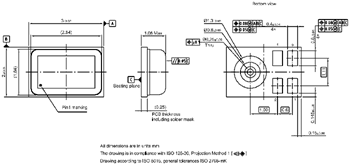
Application example
- smart speaker
- home automation
- IoT device
- Active Noise Canceling (ANC) headphones or earphones
- Capturing high-quality audio
- conference system
- In-car noise cancelling
- External sound capture
- Emergency vehicle detection

Videos related to Mems microphones
Listen to the benefits of microphones with different S/N ratios and compare them when a loud sound is input.
How far can you recognize speech with a high-performance microphone?
Voice direction detection using 4 microphones
Inquiry
If you have any questions regarding this product, please feel free to contact us.