A long-established film maker takes on the challenge!
The first step in DX to solve problems and transform business
──Shikoku Kako Co., Ltd.
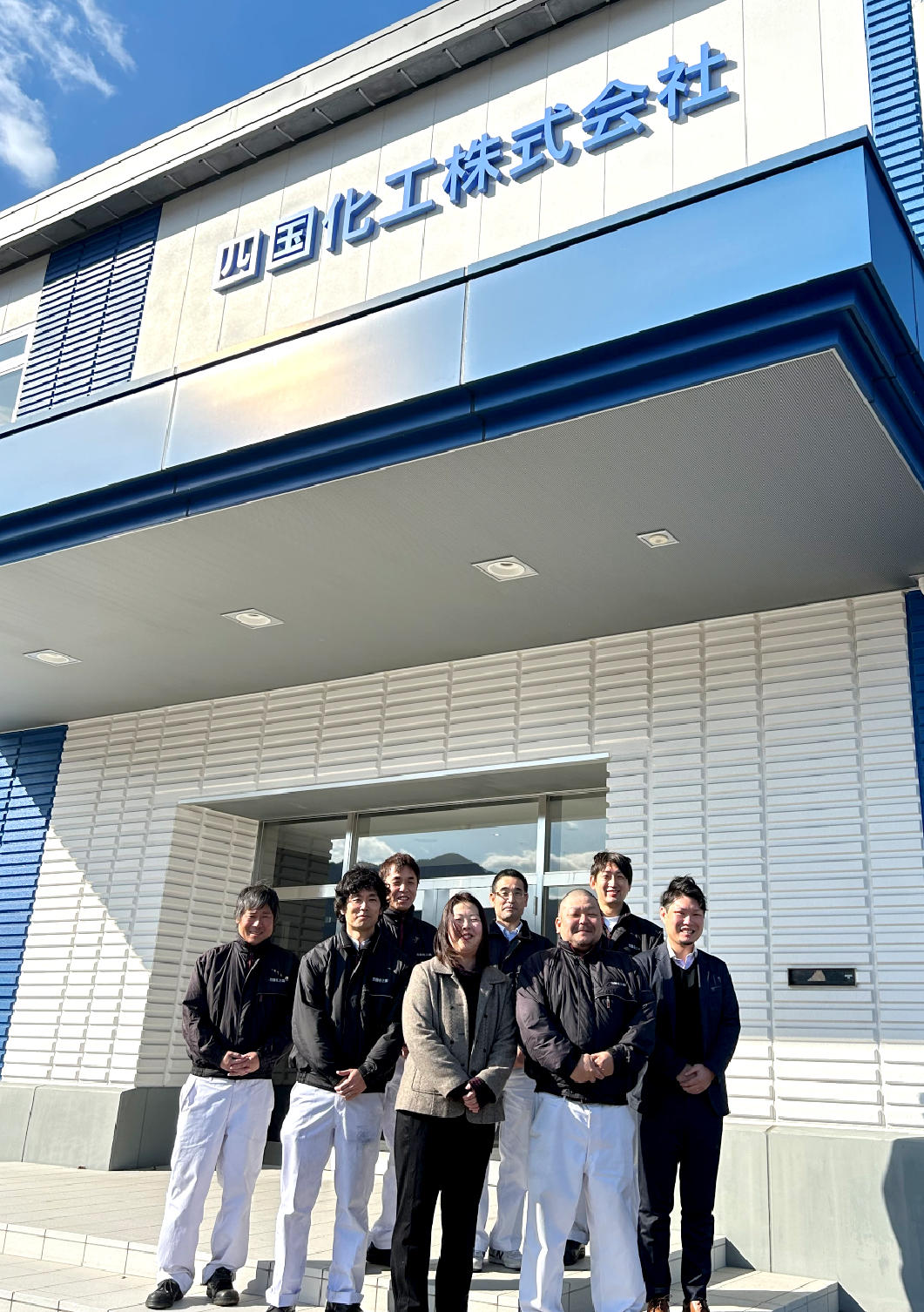
Shikoku Kako Co., Ltd. is a company that manufactures medical and food packaging films with a focus on safety and sustainability. With a history spanning several decades, the company is promoting business reform through the use of digital transformation and AI, led by Nakanishi, head of the Corporate Planning Department. We spoke to him about the details of their efforts.
Participants in this interview
People from Shikoku Kako Co., Ltd.
- Mr. Kandai Nakanishi, General Manager of the Corporate Planning Department
- Ryo Matsuura, Section Manager, Technology Development Division, Technology Development Department
Macnica
- Yuma Murazawa, Co-Creation Offerings Division, Digital Business Development Department, Innovation Strategy Business Headquarters
- Hiroki Yamada, Product Planning and Development Division, Digital Business Development Department, Innovation Strategy Business Headquarters
- Task
-
- Only the word "DX" comes first
- Difficulty in securing human resources due to population decline
- The current situation of "not being aware of issues"
- Purpose
-
- Acquire weapons other than manufacturing
- Organizational reform with a sense of crisis
- Investing in people to secure market advantage
- effect
-
- The beginning of a project born from an encounter
- I got an idea of how generative AI can be used in business.
- Expectations for "analog to digital conversion"
Manufacturers face a number of serious challenges
A long-established film manufacturer founded in 1983
Mr. Nakanishi: Shikoku Kako Co., Ltd. is a film manufacturer headquartered in Higashikagawa City, Kagawa Prefecture, and took over the business from its predecessor, Shiratori Kako Co., Ltd. It was established in 1983, and will mark its 42nd year in business in 2024.
Matsuura: We have expanded into a wide range of fields, including food, electronics, and medical care, but we mainly deal with products that are not often seen in daily life. In the food and electronics fields, we do not deal with products that catch the consumer's eye, but mainly deal with packaging materials used for commercial use and transportation between factories. In the medical field, infusion bags for intravenous drips are examples of this. Recently, we have also entered the B to C sales business on Amazon (EC).
Background to the need to promote DX
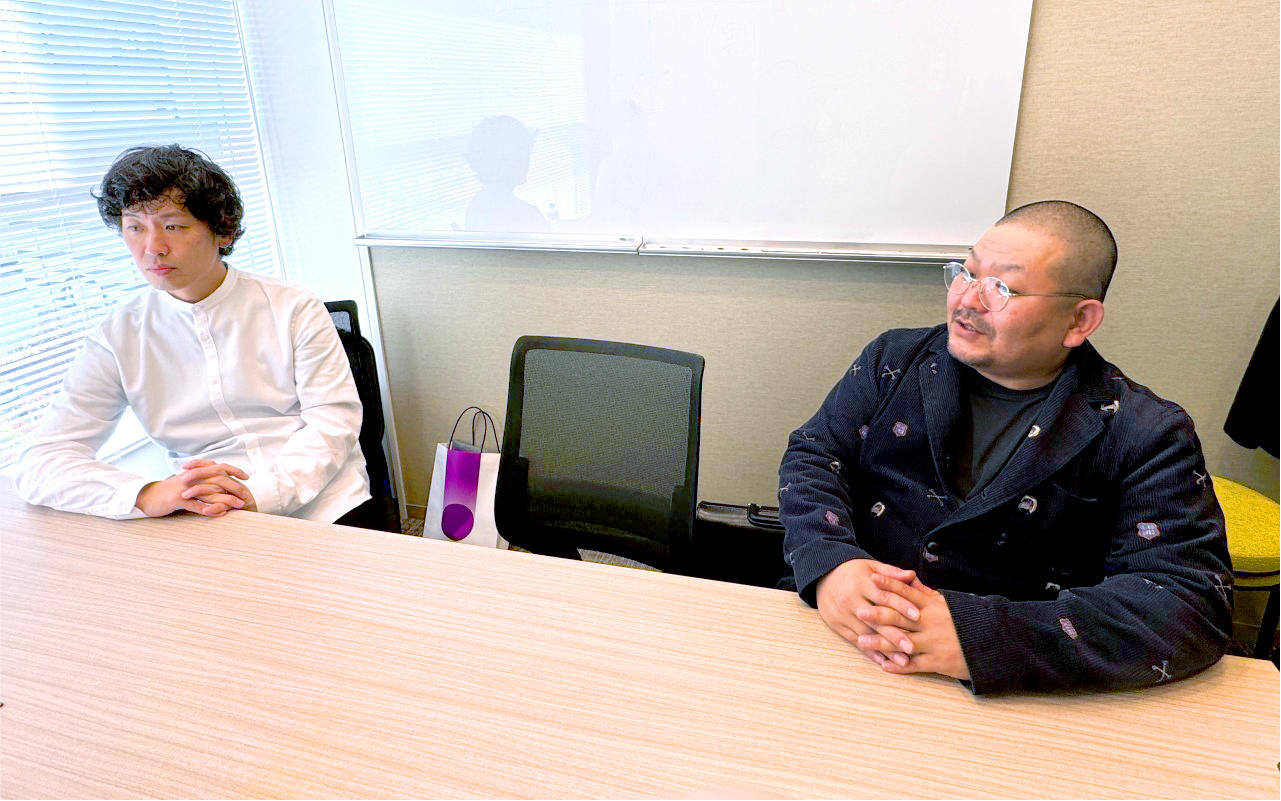
Nakanishi: Words like DX, IT, and IoT have been used within the company for several years, but the words have taken on a life of their own. For example, the mid-term business plan states that "DX will be implemented," but this was limited to a very small number of projects. This means that it will not take root among employees, and even if we do work on it, we cannot expect any significant results.
Mr. Matsuura: Shikoku is depopulating faster than the national average, and there are concerns that the working population will continue to decline significantly in the future. Higashikagawa City's population is currently about 27,000 (as of November 2024), but it is said that in 20 years, it will definitely decrease by about 40 % to about 17,000. Higashikagawa City has also been suggested as a "municipality at risk of disappearing." It is easy to imagine that the situation will become even more severe than it is now.
Nakanishi: Our company is located in such an area. We have about 260 employees, about 70% of whom work in the manufacturing department, but there are many departments where the average age is over 50 years old. If that happens, we will have a shortage of human resources in 10 years and probably will not be able to operate. Very few people get a job after graduating from high school, and some jobs require shift work, so the reality is that it is quite difficult to recruit, even for new university graduates.
Although the continuation of our business is in jeopardy, manufacturing is our main business, so we can't just say "we're quitting." The two biggest obstacles are the labor shortage and our high reliance on manufacturing. However, at this point in time, we are not planning to leave Higashikagawa City from a management perspective.
Unable to find the issue
Nakanishi: I think it's also an issue that the words IT and digital are not connected in the workplace. This is especially true when it comes to connecting it to your own work, and sometimes people don't even realize that their daily work is routine work. I sometimes realize this at random moments. In this situation, the problem is that you can't find the issues.
Our company's work involves a lot of analog processes, but in the world, everything is done digitally. In such a situation, if we improve the efficiency of only a part of our work and become complacent by saying "we are doing DX," nothing will change and we will fall behind our competitors. That's why we tell our employees, "We're not in business yet, so let's get ready."
The encounter was the starting point for the project
Recognized for diverse track records, including in the manufacturing industry
Nakanishi: I believe that vision and determination are the most important aspects of management. Therefore, in 2024, we established a Corporate Planning Office and began to promote full-scale digital transformation.
Matsuura: It's not easy to increase employees' literacy in digital transformation and IT, and I felt it would be difficult for our company to achieve this on our own.
Nakanishi: We came across Macnica while contacting various consulting companies. We are looking to launch new businesses outside of manufacturing in the future, and Macnica has a track record in a variety of fields and the ability to materialize what we want to do, so we were confident that they would be able to provide us with strong support.
Matsuura: It is no exaggeration to say that this project was launched because of our encounter with Macnica.
Participate in the "Generative AI Study Group"
Nakanishi: I use generative AI on a regular basis, and I think it's useful, so I want everyone to use it too. Above all, the biggest benefit of using generative AI is that it can standardize the quality of work to a certain extent for both new employees and veterans. I was just thinking about creating an environment in which I could use it within the company, so I was lucky to receive an invitation from Murazawa to attend the study session. This time, the target audience was from Board Director to managers, but in the future, we plan to expand the target audience to include section managers.
The study session was very enjoyable. We also used "Omatome Ninja" at the site, which is useful for creating minutes and daily reports. I knew that such tools existed, but it was good to experience and share with the company how useful they are when actually used. For example, if we turn the ratio of the terms we use on a daily basis into data, we should be able to verify various things. I think I was able to find the answer to the question I've always wondered about, "How do we proceed with the conversion from analog to digital?" and rediscover the necessity of it.
Business reorganization continues
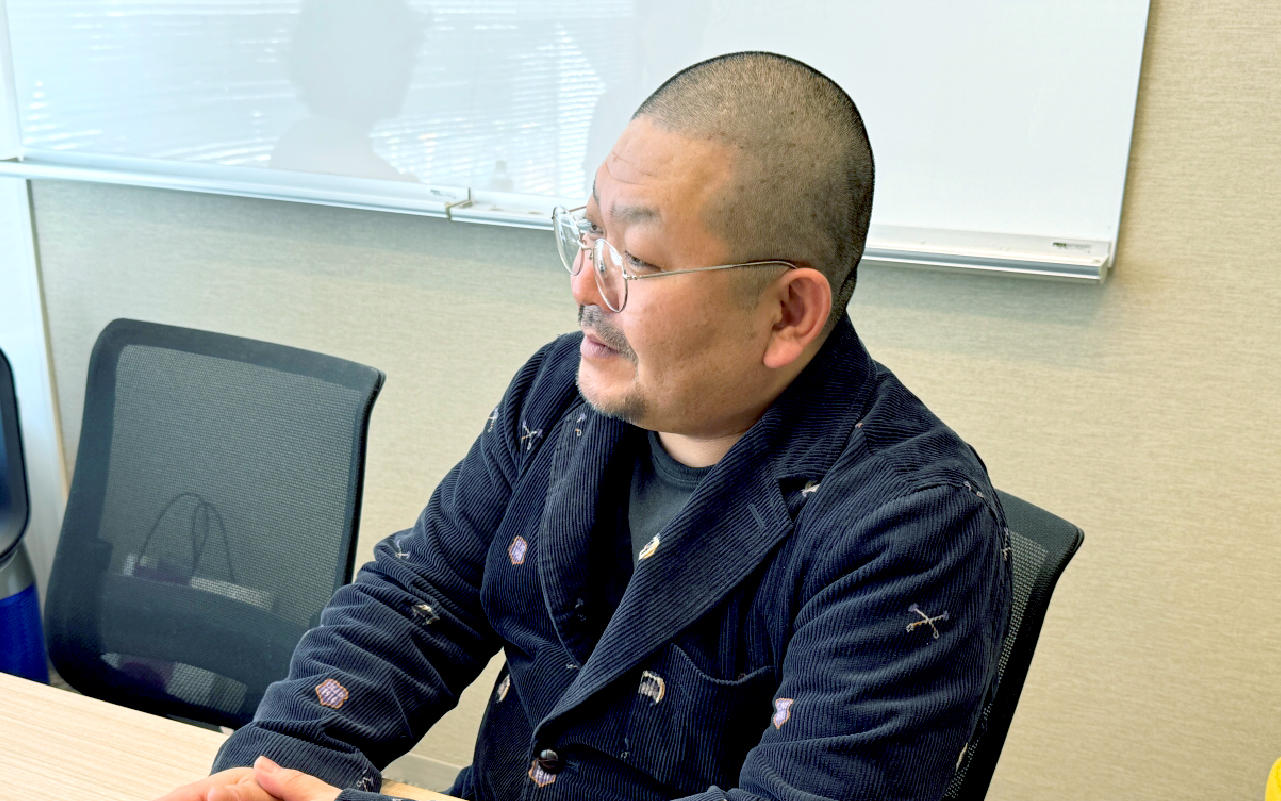
Nakanishi: However, I think it will be some time before we receive requests for large-scale DX on the manufacturing side. This is because we have not yet been able to sort out which businesses we should keep and which we should not. We need to carefully examine what we can expect to be profitable over the next 10 years and identify the equipment we should DX.
Mr. Matsuura: Equipment can be introduced as long as you have the capital, and once introduced, you can manufacture similar products. You can add value by combining manufacturing technologies, but as digital transformation and AI evolve, manufacturing technologies become standardized, making it difficult to differentiate.
Nakanishi: At present, some customers buy our products because they are made in Japan and negotiations can be conducted in Japanese, but there is equipment with similar specifications overseas, and eventually the privilege of being made in Japan will be lost. If only our company had a certain piece of equipment, we might be able to win in the market, but conversely, if only our company could make it, there will be customers who cannot use it from the perspective of BCP. This is an area where it is very difficult to find the right balance.
Proactive approach to stakeholders
Steps to achieve DX
Nakanishi: I explain the need for DX within the company, including data such as the expected decline in the working population over the next 20 years. Last year, we discussed "transforming existing businesses" and summarized each person's thoughts on the issue.
As a result, I found that there was a big gap between my perception and the speed I expected. The reason people think that solving problems requires a long time and effort is because they don't know how to solve them. I think it's important to first decide on priorities, and I tell them, "I want you to approach problems using digital processes, not the current analog processes."
Mr. Matsuura: On the other hand, in the manufacturing process, one employee is currently required for each machine to manufacture the film and make bags, so such personnel will still be necessary. Some people say, "Why not automate it?" but it is quite difficult to fully automate one bag making machine, as it costs a considerable amount of money. There is a big difference when comparing the total cost of purchasing a conventional bag making machine and the labor costs.
Furthermore, automation requires a certain amount of production, but demand fluctuates, and in 10 years' time, domestic demand will shrink further due to the declining population. Automating all of the dozens of bag-making machines would be hugely expensive, and it is not realistic to expect to recover the investment costs when sales are falling.
Nakanishi: I think that what local small and medium-sized enterprises, including us, should do is not to "turn toward mass production," but rather to "invest in people and an environment where people can develop, rather than in production facilities, so that we can make money through people and IT."
Reform through seven projects
Nakanishi: Given the current situation, I think it is important to prioritize advancing the digital transformation roadmap. In the future, we will need even more creative talent for digital transformation, product planning, product development, and so on. I also think it is necessary to create an environment where employees can continue to grow and reskill.
We are currently working on seven projects to transform our business. These projects include "Transforming existing businesses," "Promoting restructuring businesses," "Introducing RPA," "Launch of B2C businesses," "Improving cost accuracy," "Thinner films," and "Promoting digital transformation."
In carrying out all of these projects, I believe that an entrepreneurial mindset is especially important for project members. It is important to always take on challenges without fear of failure, to believe that innovation can occur, and to proceed with your daily work in a positive manner. In addition, I always try to keep UX in mind when planning and developing products so that customers can feel the maximum value from our products.
Mr. Matsuura: Although all of the projects have been launched in the last year or so, and a sense of change has begun to take root within the company, it cannot be said that it has taken root yet. There are still employees who are resistant to changing the way things have been done up until now. However, the world is changing at a frightening speed, far beyond our imagination. Many existing businesses have already become commodities, and we need to accept the reality correctly.
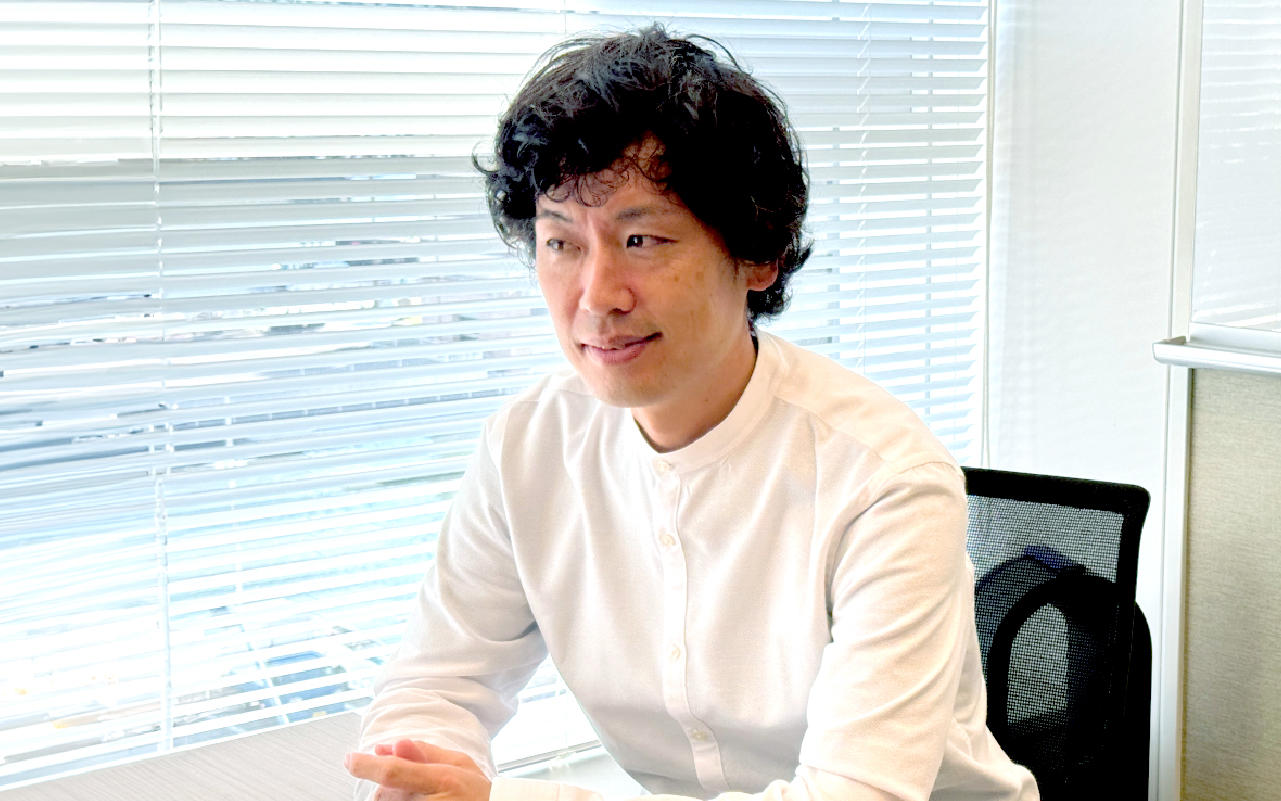
Nakanishi: Many people are afraid of "change" and tend to overestimate risks. Because they don't know how to hedge risks, they tend to delusionally inflate risks in their own minds. That's why I've always said, "If you can hedge risks, they're not risks." I think it's important to think about how to reduce existing risks and actually try to approach them.
Above all, enjoy life
Beyond the goal
Nakanishi: The moment I think "it's better not to be me," my role will change and I will set a new goal. As for Shikoku Kako, I think it will be difficult for us to survive in the future if we just want to be the best in Shikoku. Even if that is our immediate goal, I think we need a vision that looks to Japan and the world in the future.
If you are determined, you can do anything. The important thing is where you place your focus. If you are determined to continue doing business in Higashikagawa City, you must do business accordingly.
Matsuura: I think one of our goals is to produce talent that can independently create a vision based on our own company's situation and the state of the world. With that as our first goal, we would like to work with Macnica on digital transformation to improve Shikoku Kako's culture and working environment.
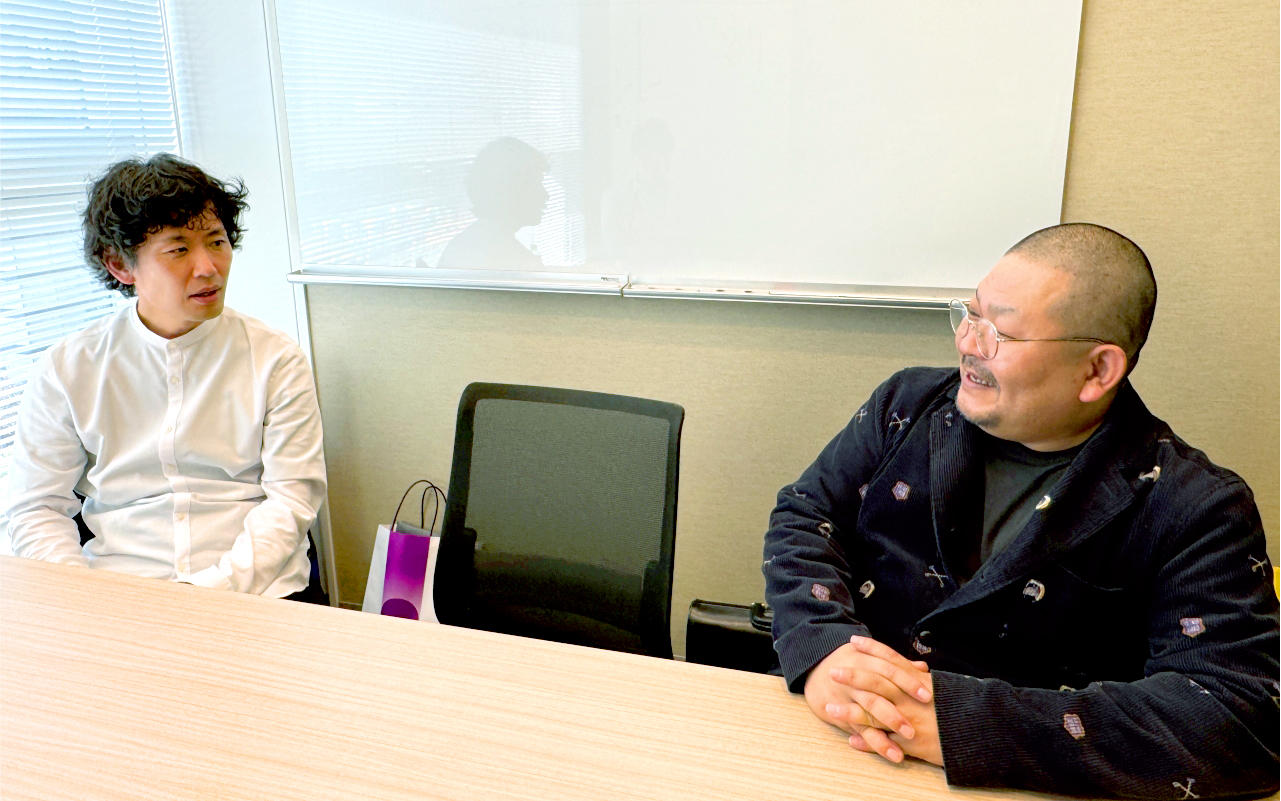
Nakanishi: I've heard the theory that "in order to obtain a strong individual, it is good to crossbreed distantly related genes to give them complementary elements." This is also true when trying to create innovation, and in our case, we think it is good to obtain know-how from outside the film industry. We see DX and AI as the quickest way to achieve this.
However, once they are introduced, they will become a thing of the past and will eventually become commonplace, so we must think about our next steps. The important thing is what to combine with AI and Shikoku Kako? However, we are confident that we can find something by feeling and learning various things, including information and experience.
In order to overcome this AI era, it is most important that we make decisions and act with determination. I want Shikoku Kako employees to be "honest," "learn," "not afraid," and above all, to enjoy life.

Shikoku Kako Co., Ltd.
- Business
- Development, manufacturing and sales of medical, food, electronic and industrial films
- Founded
- April 11, 1983 (Showa 58)
- Number of Employees
- 263 people
- website
- https://www.shikoku-kakoh.com/company/
\Click here for details on Re:Alize/

 Latest Information
 Case Study
 Blog
Blog Document List