The whole group aims to achieve progress with AI
──Heisei Group
The Heisei Group is involved in a wide range of businesses, including urban development such as civil engineering, construction, housing, renovation, and real estate, as well as daily life such as cleaning, nursing care, and food. The group has witnessed the rapid progress of AI, and has come to realize that "in the future, we will not be able to survive without utilizing AI," regardless of the layer of the company, whether on the front lines or at the management level. Through this workshop, they aimed to acquire new know-how.
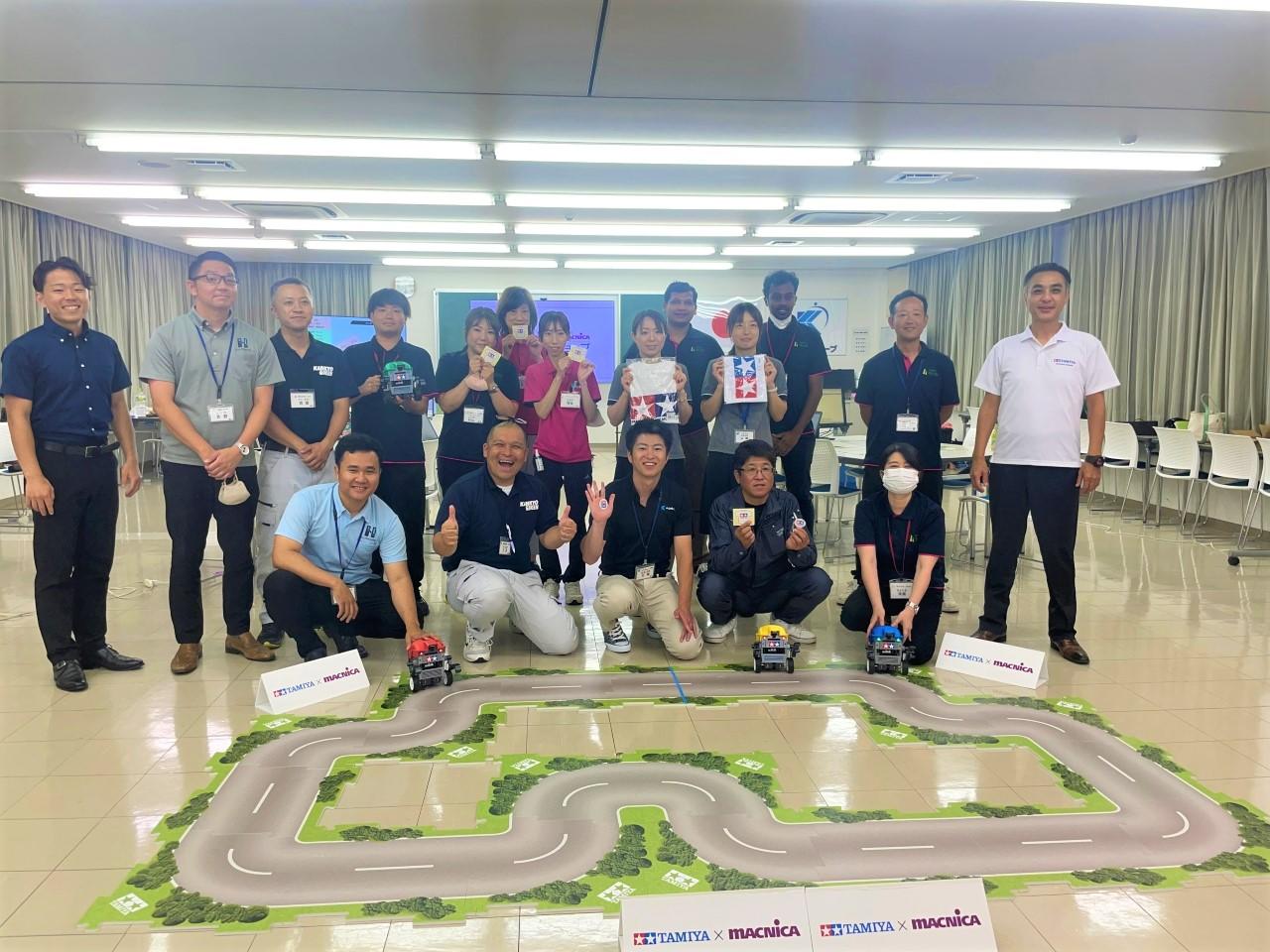
Participants in this interview
Members of the Heisei Group
- Mr. Akio Terumoto, Chief, Heisei Group Holdings Co., Ltd.
- Shinsuke Nagao, Public Relations Manager, Heisei Group Holdings Co., Ltd.
- Kohei Harada, Director of the President's Office, New Hope Co., Ltd. and Facility Manager, Care Rapport Noma
- Yuko Yamashita, Section Chief, Construction Department, Heisei Corporation
A locally based company with a close relationship between the workplace and management
-First, please tell us about your company.
Terumoto-san: We participated in this workshop not only as Heisei Co., Ltd., but as the Heisei Group. Our group is centered on the founding spirit, management philosophy, and code of conduct below, and covers the entire area from the western Fukuoka area to the Itoshima area, and is engaged in various businesses that are closely tied to the local community.
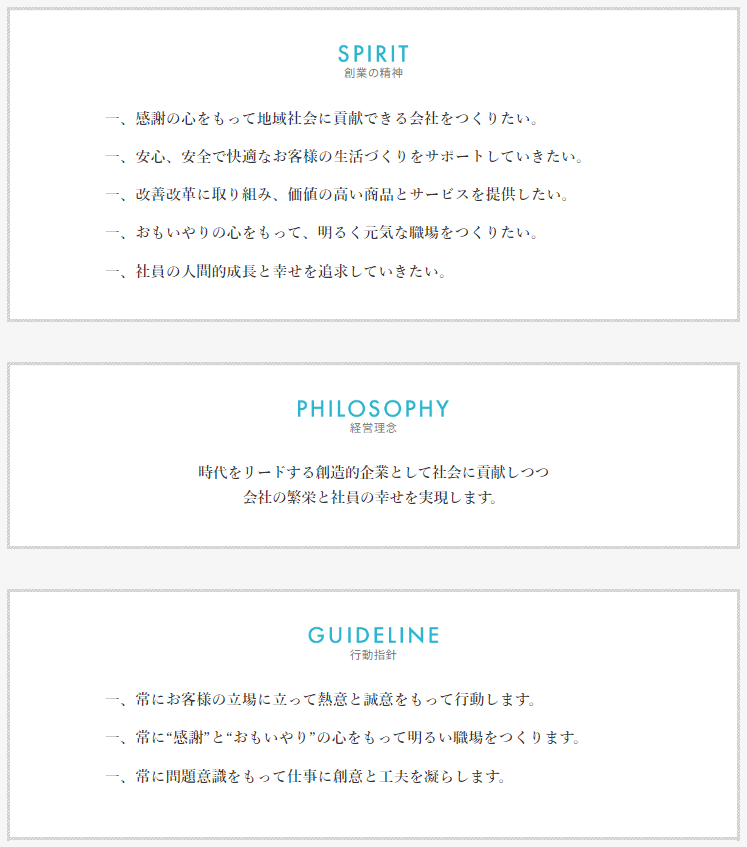
Image source: Heisei Co., Ltd. website, https://heisei-g.co.jp/message/ (accessed 2024-08-19)
--Everyone was really cheerful and energetic, and I felt that there was a close relationship between the management and corporate levels and the people on the front lines.
Terumoto: The Heisei Group has a committee organization that spans group companies and is constantly promoting initiatives like this workshop. I've been with the company for a little over three years, and I think it's thanks to this committee that the connections between the companies are so strong. Currently, there are 12 committees, including web strategy, financial strategy, and social contribution, and employees basically belong to one of the committees. There were group companies in my previous job, but I didn't have any contact with them at the time, so I feel that the situation is completely different.
--It's true that this workshop was a cross-disciplinary one, but it was exciting right from the start.
Harada: It wasn't my first time working in a group with people I didn't know, so I think I was able to participate with the same feeling as if I were taking part in a training session for the whole group.
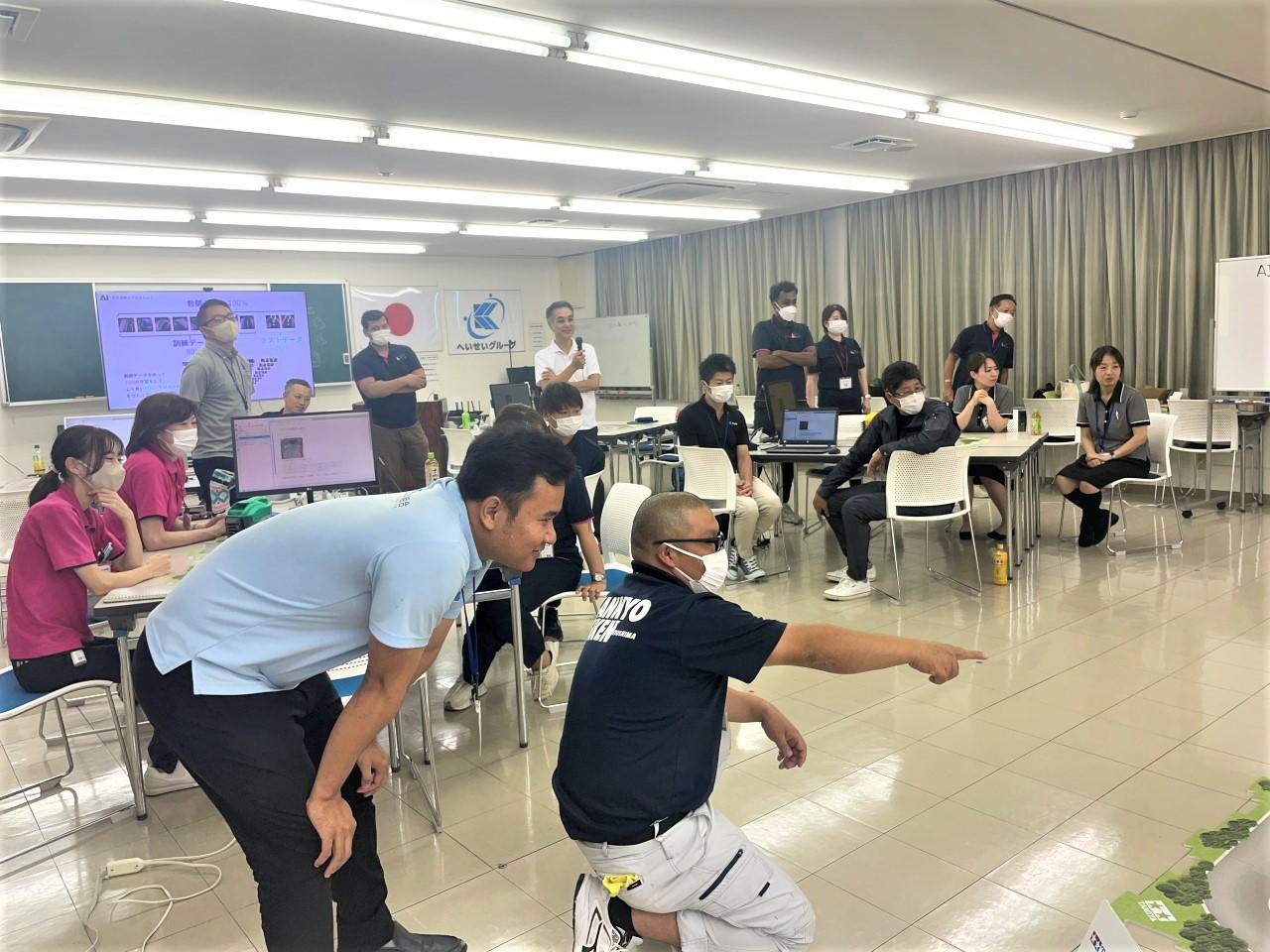
Decided that AI is essential for new challenges
-Why did you want to hold an AI workshop this time?
Terumoto: Both my superiors and I had a rough sense that AI was advancing for some time, but when the advances in AI started to become more noticeable with the popularity of ChatGPT, we began to feel that "if we don't utilize AI in the future, we will be left behind by the times and will not be able to survive."
In particular, many small and medium-sized enterprises have been unable to withstand the impact of COVID-19, and as we are in a similar position, we have to try things that other companies have not done yet and follow what other companies have started. From that perspective, the management team also had the idea of "fully incorporating AI in the future," but we were unsure of the impressions of the group members about AI, such as where to start and how to proceed. Therefore, we decided to hold a study session first.
--So it was you, Terumoto-san, who took the lead.
Terumoto: After I presented at the executive meeting about the greatness of AI and the background to why we should use it, and got the approval of the management, I looked for various ways to learn about AI, such as study groups and educational tools, and spoke to many companies. Among them, I found workshops by Macnica and Tamiya, which have the unique feature of being able to learn in a practical and systematic way, and I thought it would be a fun way to learn, so I asked them to participate.
--At many companies, convincing management is a hurdle when it comes to introducing cutting-edge technology, but were there no problems at all in this regard?
Terumoto-san: Some people completely agreed with us, but others didn't. However, in this case, we all agreed that we had to continue doing it.
--What do you think, Mr. Harada, as an advisor?
Harada: I agree with what Terumoto said. It's taken a long time, but I realized that "you can't understand anything unless you try it once, and you can't convey the information to your subordinates," which is why we decided to hold this workshop. Even now that the workshop is over, it's still difficult for everyone to explain AI, but I think we've come to the common understanding that it's not that difficult to use, and that it's useful when you use it. Without Terumoto, who was the driving force behind it, I wouldn't have even heard of Macnica, and I wouldn't have used the paid ChatGPT4. That's how important he is.
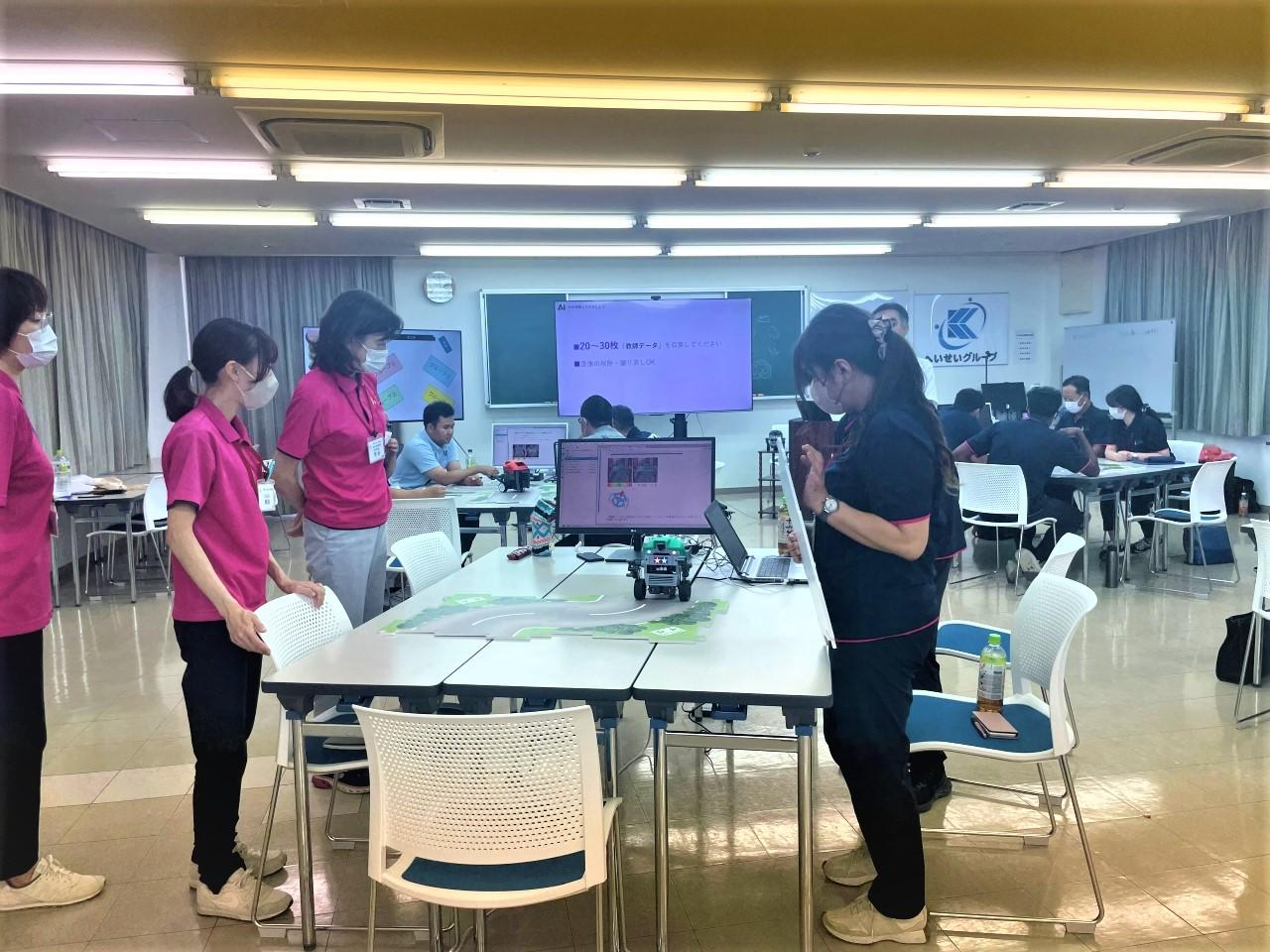
Even AI beginners can learn in a fun way!
--What did you think about the workshop, Mr. Yamashita?
Yamashita: I didn't know enough about AI to explain it, but it looked fun so I said I wanted to participate. I went to the workshop without knowing what I would be doing, and frankly, it was a lot of fun. When I saw the robot before the explanation at the venue, I thought, "Oh, it's a machine, what's it like?" But once the program started, I was able to have fun with everyone as we tried and tested things, and I really felt how important it is to experience it first.
--There were probably a lot of words that were unfamiliar to you, but did your image of AI change after combining the classroom learning with practical experience?
Mr. Yamashita: The lectures were full of difficult words and katakana, so I took notes and looked them up later. Among the things I learned, I felt that the idea of "Small Win & Quick Win," which emphasizes the importance of accumulating small successes, was very good.
Do you use technology in your daily work?
Yamashita-san: Up until now, I would use Google to search for things I didn't understand, but now I use Copilot and Claude. However, I'm still only using them to bounce ideas off of people, so I'd like to use them more in the future. I do a variety of tasks as a sales clerk in the construction department, but there are still many analog tasks and confirmations, and I've come to feel that it's a waste of time to spend on them.
--What did you think of Mr. Nagao, the public relations officer?
Nagao: I've only been with the company for less than six months, but I'd like to spread this kind of initiative outside the company. Also, I used to come up with the body copy and catch phrases for the housing marketing I'm in charge of, but since I learned about Claude, the time it takes has been reduced to about one-tenth. I think everyone recognizes that AI is useful, but there are few opportunities to have it explained to me in a systematic way, so I think this was a very valuable experience.
In the program, we had an autonomous AI race, and that really gave me a sense of "small win & quick win," and I'm glad it led to the idea that "this is what you can do with AI." At Heisei Group, we've always valued the idea of "let's try it first," so I feel like there were some similarities.
--By the way, co-sponsor Tamiya is famous for its Mini 4WDs, but are you attracted to men?
Terumoto: We are all from the same generation, and some of us are still active in the industry.
Yamashita-san: Some participants were really happy when they received the stickers (laughs).
--Mr. Harada, could you tell us your impressions as a participant?
Harada-san: There was a guideline for the number of photos to be taken to give instructions to the autonomous driving AI, but in fact, few of the participants said, "I have to follow what I'm told!" Also, it was impressive that they took a lot of photos, thinking, "It's easy if you just take photos." However, it was good to see that in the end, the more photos you prepare, the higher the accuracy of the AI.
In the final program, where tasks were assigned to AI and tasks that were difficult for AI (to be done by humans) by sticking them on sticky notes, some participants chose to do all of the former. They laughed and said things like, "They don't need us anymore," but I think that shows how much potential they felt. I think it was also very good that they realized that in the future, the work we do now will be done by AI, and that from now on we will need to focus on services and support that only we humans can provide.
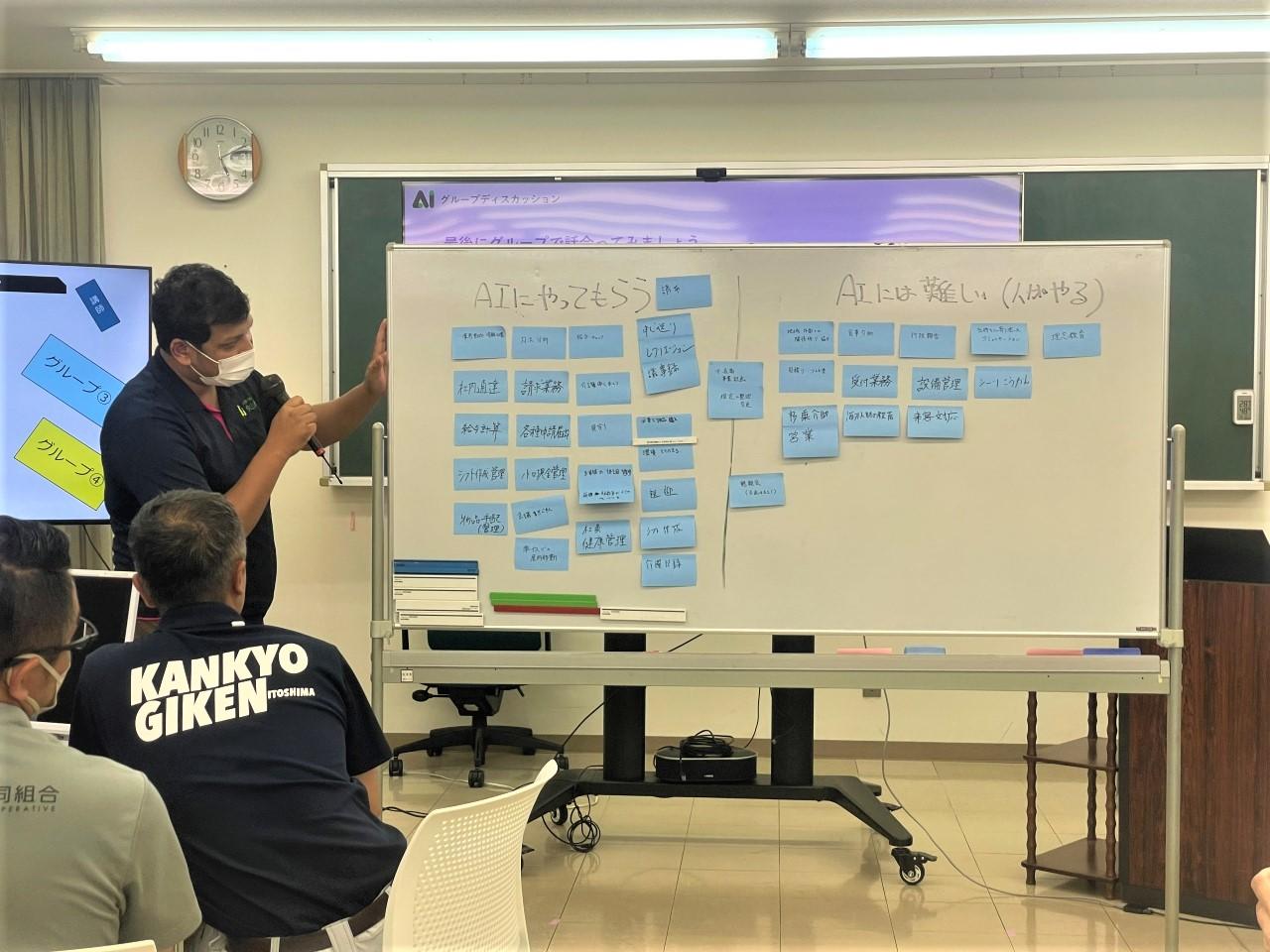
--You realized that there are jobs that can be entrusted to AI, and took the first step toward a positive conversation about what you can do in your free time. There were some young people in the group this time, so how did you select and group the participants?
Terumoto: We compiled the contents of the workshop and then, via Harada, entrusted it to the executives, who then took it down.
Harada-san: I didn't specify any specifics, but I think I said to choose someone as young as possible. Also, several women were selected. At the Heisei Group, there are many women involved in general affairs-related work, and I think they decided that this area would be easy to use AI in.
--Howdid you feel about the workshop as a whole, Terumoto-san?
Terumoto-san: We expected a certain level of reaction, but the response was better than we expected. In the past, employees' interest in AI was low, but when we compiled the survey results to report on this workshop at the executive meeting, we found that the number of people who were strongly interested had clearly increased. Also, at the end of the workshop, we heard comments from various people such as "It was fun" and "I would like you to introduce Omatome Ninja (an app developed by Macnica)."
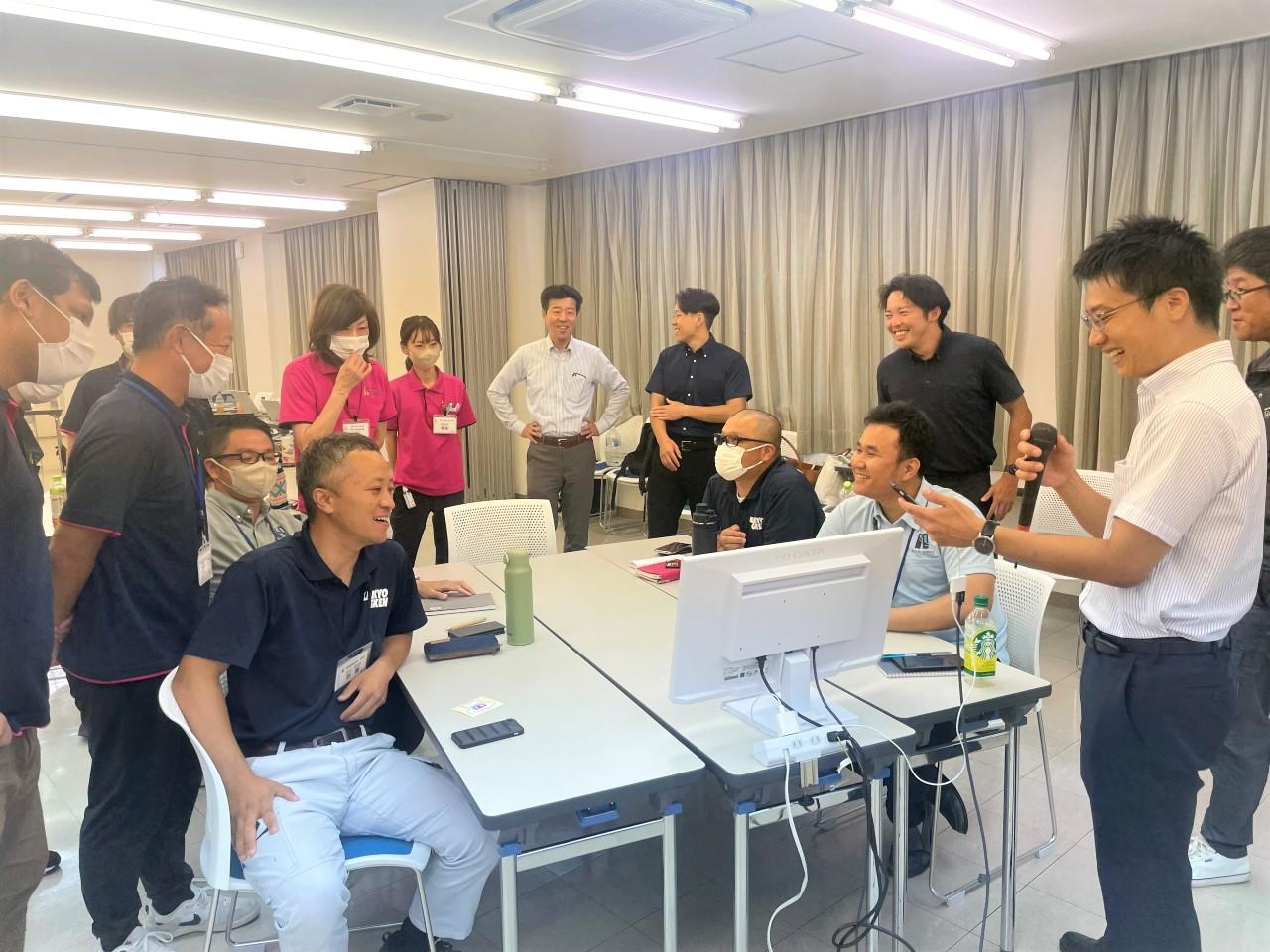
--What did you write in the questionnaire, Mr. Yamashita?
Yamashita: We ourselves enjoyed the time we spent experiencing new things, and Macnica and Tamiya seemed to be really enjoying the operation. Through this workshop, I was able to see their websites for the first time and learn about each company, and read their blogs, and I thought, "We want to work like this too." Although there are times when it is difficult or tough to work with each other, I feel envious that they are in an environment where they can work hard and enjoyably to provide their products and services, and at the same time, it inspired me to think, "There is more we can do."
Aiming for the coexistence of digital and people
--Finally, I would like to ask each of you, Mr. Harada and Mr. Terumoto, to say a few words about the future transformation of the Heisei Group.
Harada-san: Although we each have different perspectives and responsibilities within the group, there is no doubt that Terumoto is the pillar of the group when it comes to management. I believe that if I can support him by thinking together about what he wants to do, rather than what I think, then things will definitely go well.
Terumoto: My goal is to separate the parts that should be processed digitally (including the use of AI) from the parts that should be handled by humans, and to create a rewarding work environment. It is very difficult for Heisei Co., Ltd. alone, but ultimately, with an eye on adapting to the entire group, I would like to create an easy-to-work and attractive work environment where everyone can be proud to work for the Heisei Group.

Heisei Group
- Business
- Civil engineering, architecture, housing, renovation, real estate, cleaning, nursing care, health, food, exercise, and lifestyle infrastructure development
- founding
- August 1947
- Number of Employees
- Approximately 600 people (as of September 2024)
- website
- https://www.heisei-g.jp/
\Click here for details on Re:Alize/


 Latest Information
 Case Study
 Blog
Blog Document List