The convenience of AI and the unique human benefits learned through classroom and practical experience
──Yamaha Fine Technologies Co., Ltd.
Yamaha Finetech Co., Ltd. develops, manufactures, and sells decorative panels for luxury car interiors in its Car Parts Division, and production equipment and devices such as inspection and processing machines in its FA (Factory Automation) Division. While focusing on introducing the latest technology and aiming to stimulate communication between employees, the company was looking into the possibilities of AI and was drawn to an AI workshop co-hosted by Tamiya and Macnica. We spoke to Kazeguchi and Yoshida, two of the actual participants, about the background to their desire to hold the workshop and their impressions.
Participants in this interview
Yamaha Fine Technologies Co., Ltd.
- Ms. Chihiro Kazeguchi, Chief of Sales Group, CP Sales Department, Car Parts Division
- Ms. Kaede Yoshida, FA Business Division, FA Technology Department, LT Group Employee
Participating with an eye on company growth and the purpose of employee exchange
--How many people participated in this AI workshop?
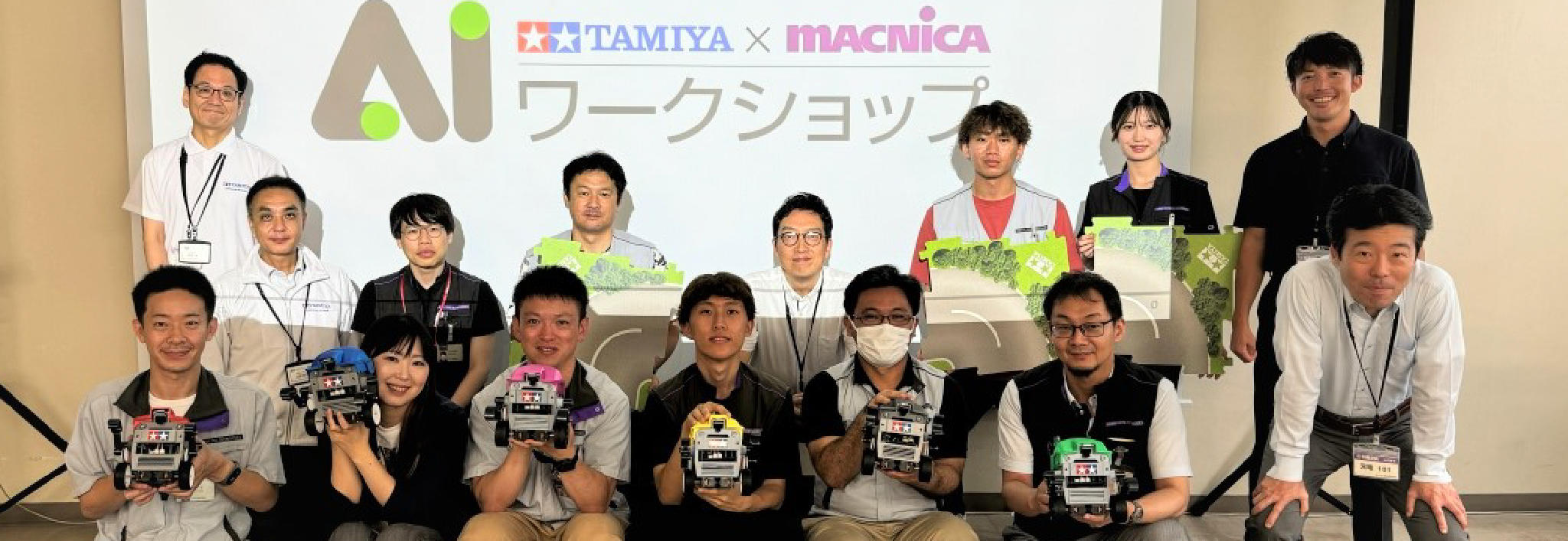
Yoshida: There were eight other people in addition to me, who planned and managed the workshop. The participants were selected by managers from various departments, such as sales, purchasing, and production, and on the day, they were divided into two groups of four. In the future, we plan to have the participants share what they learned in the workshop with their respective departments. What impressed me was how friendly and harmonious the atmosphere was.
Why did you want to hold this event?
Yoshida: There are two reasons. One is that I'm interested in the latest technology, and the other is to promote employee interaction. Our company is promoting a project aimed at improving employee vitality, and this workshop is part of that. We also hold drinking parties in the company cafeteria (laughs). We want to grow even more by making our company more open.
Kazeguchi: We have two divisions, the car parts division and the factory automation division, but because they handle completely different products, they don't usually have any interaction. Therefore, we are promoting a project to deepen employee interaction and to adopt new cultures.
Recognizing the difference between AI and humans
--What was particularly impressive about the program that day?
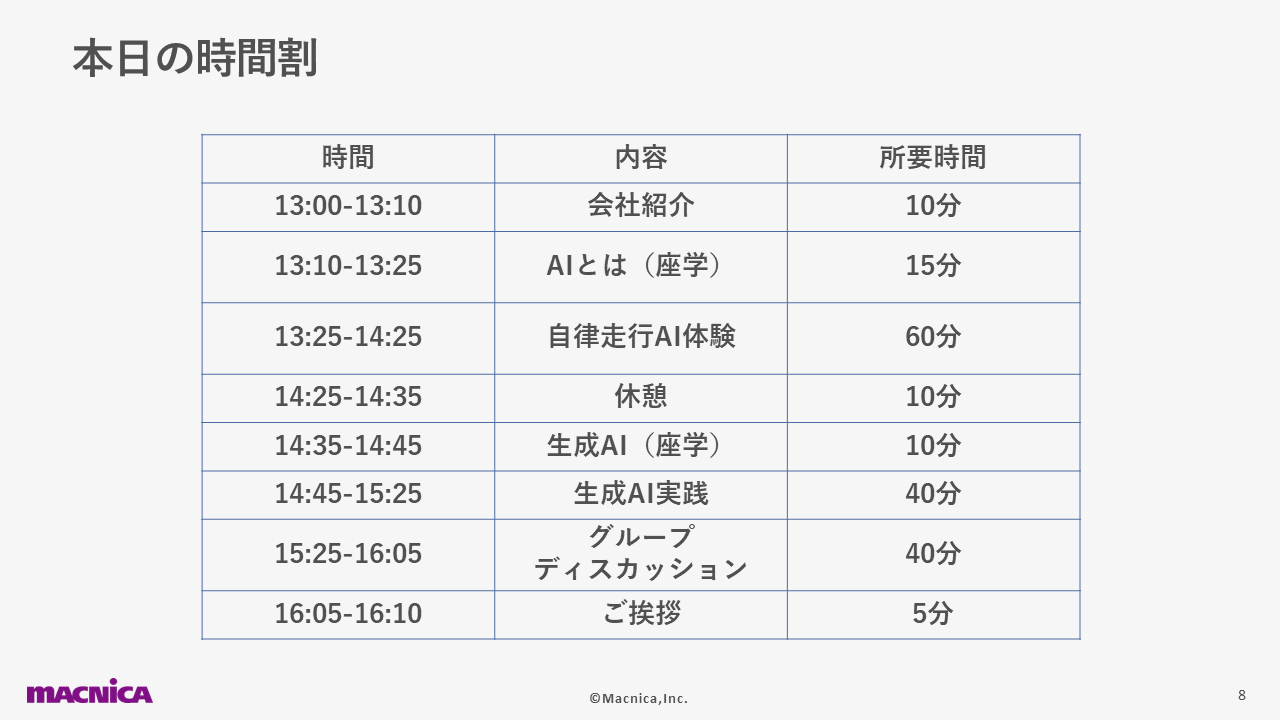
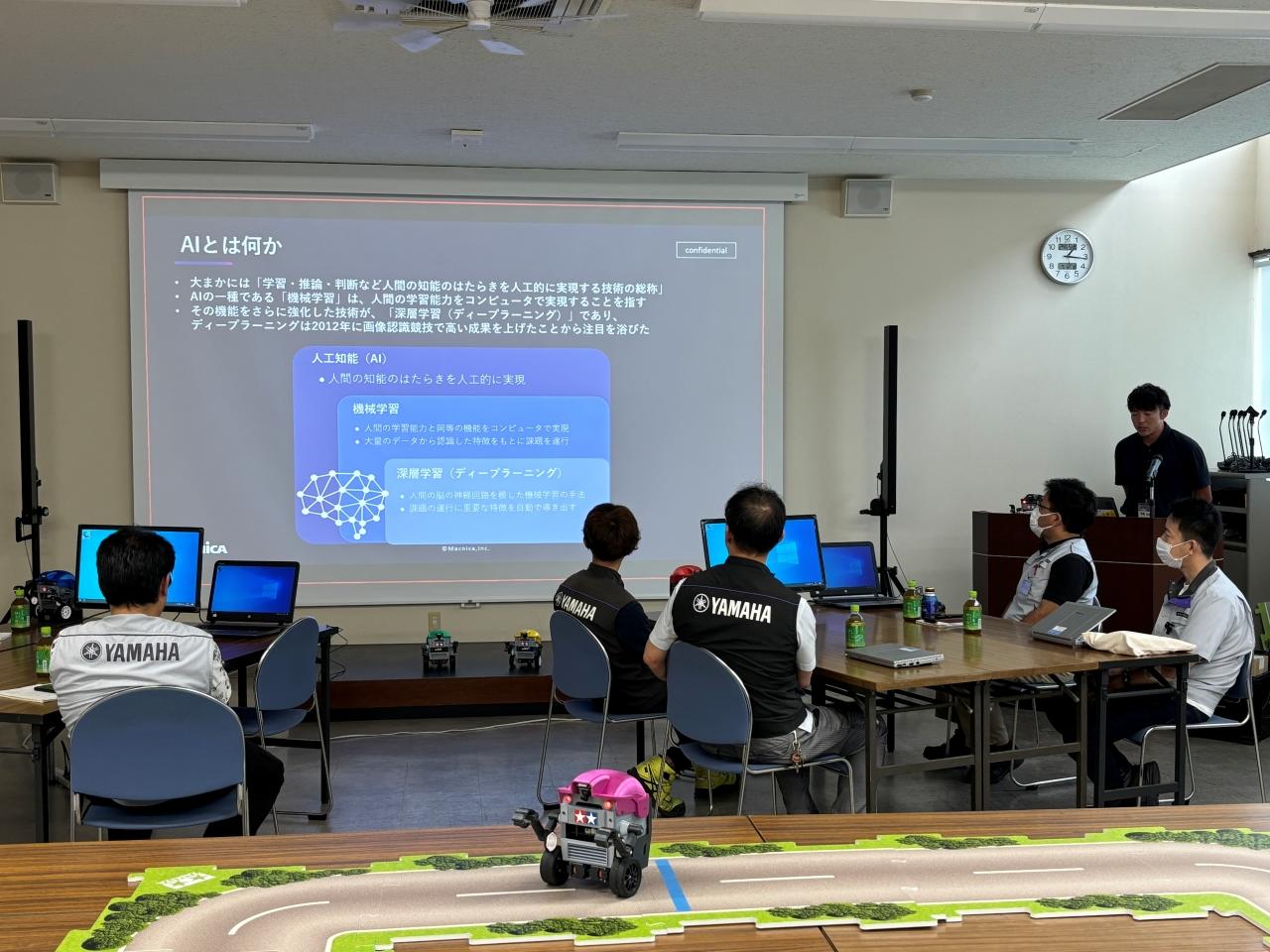
Kazeguchi: First, Macnica explained what AI is, then we had Tamiya's autonomous driving AI experience. After that, Macnica explained the possibilities of generative AI and demonstrated the app "Omatome Ninja" that uses generative AI.
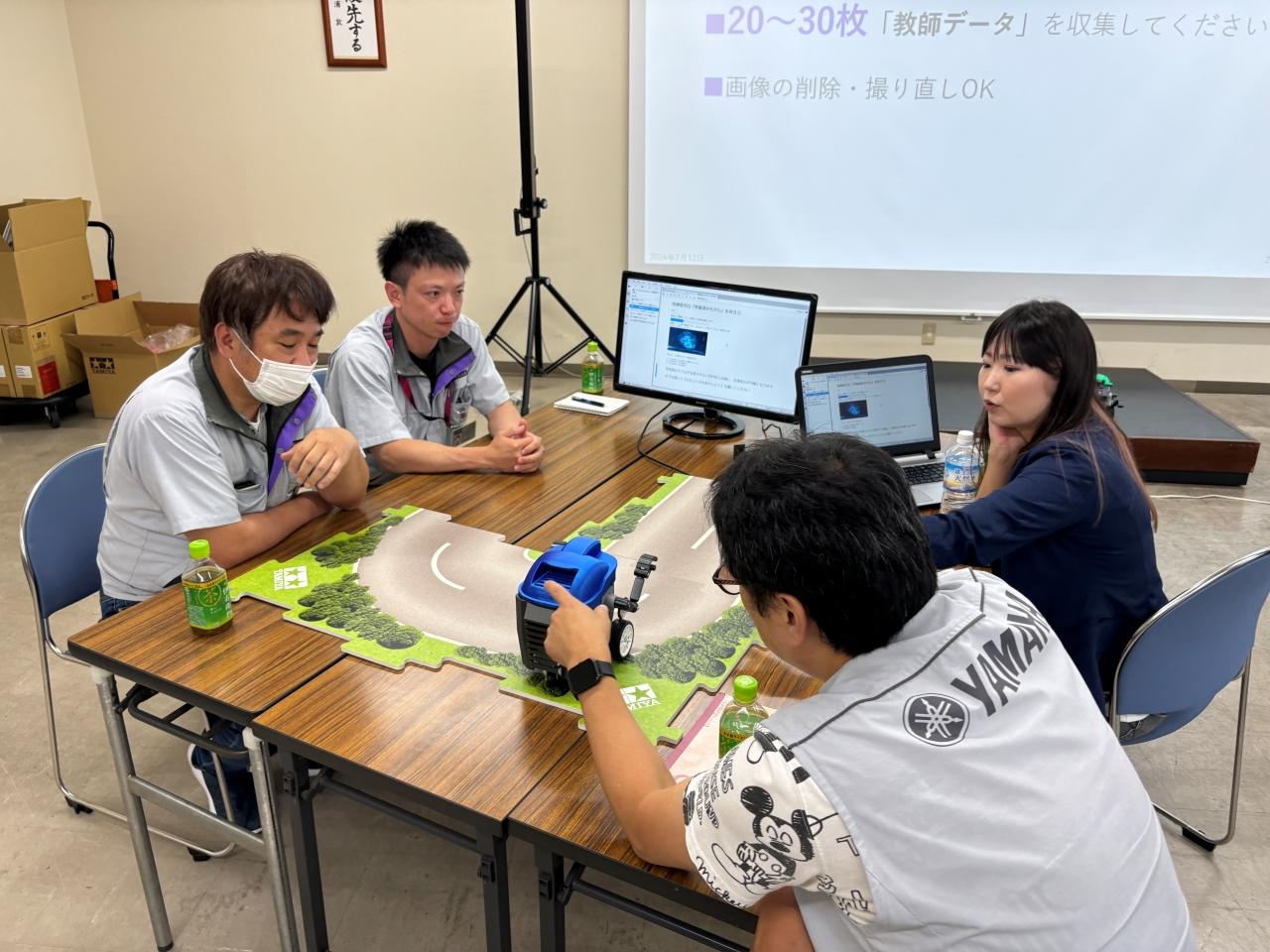
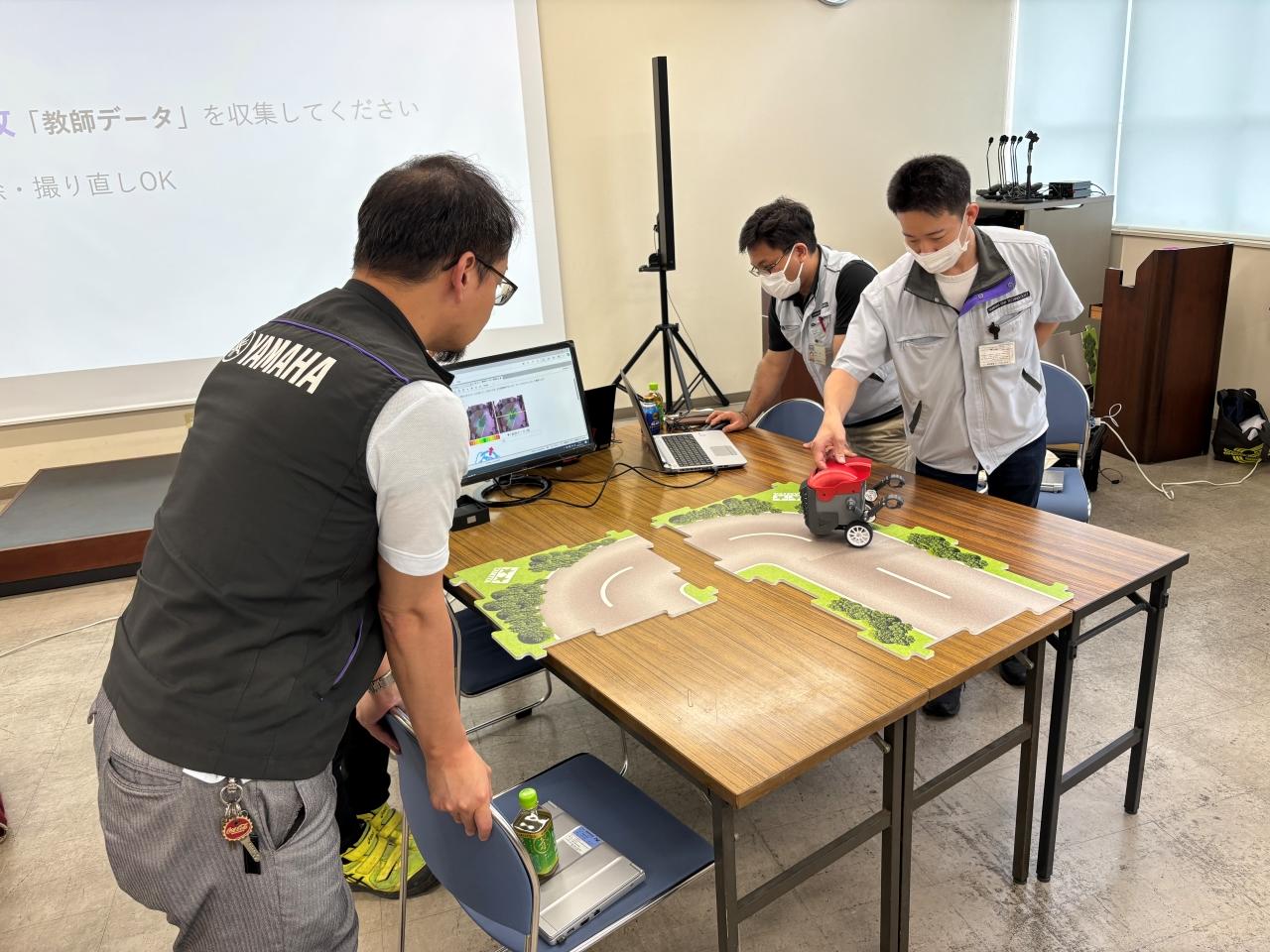
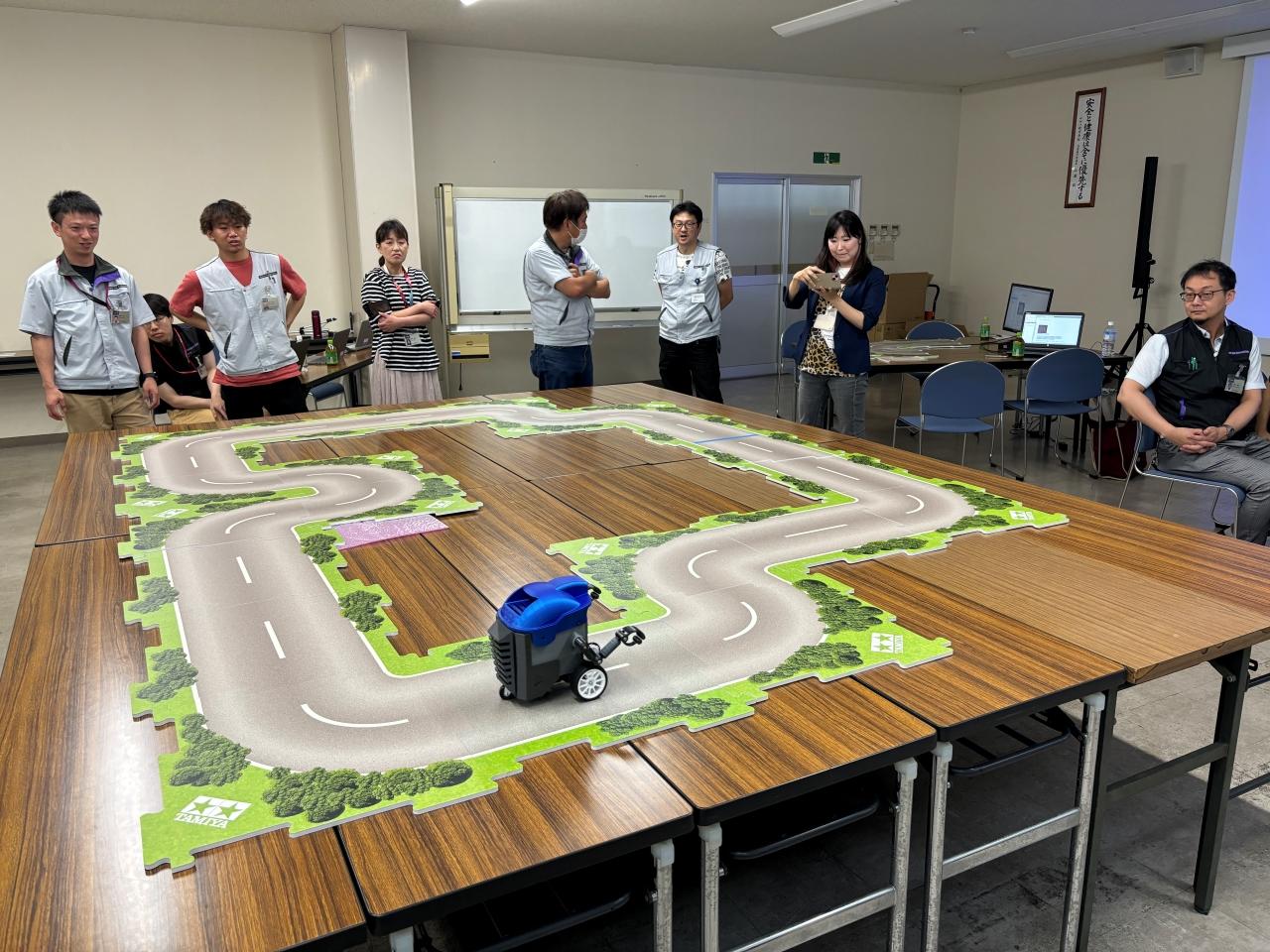
Overall, the most memorable part was the part where we put it into practice ourselves. In the autonomous driving AI experience, we filmed the course for a small robot to travel and had the AI learn the route. Through this experience, I realized once again that "when you want to teach something, both people and AI have to start from scratch." AI is certainly useful, but it was good to learn that the output can be completely different depending on the knowledge and instructions of the person using it.
--What did you think of the classroom learning?
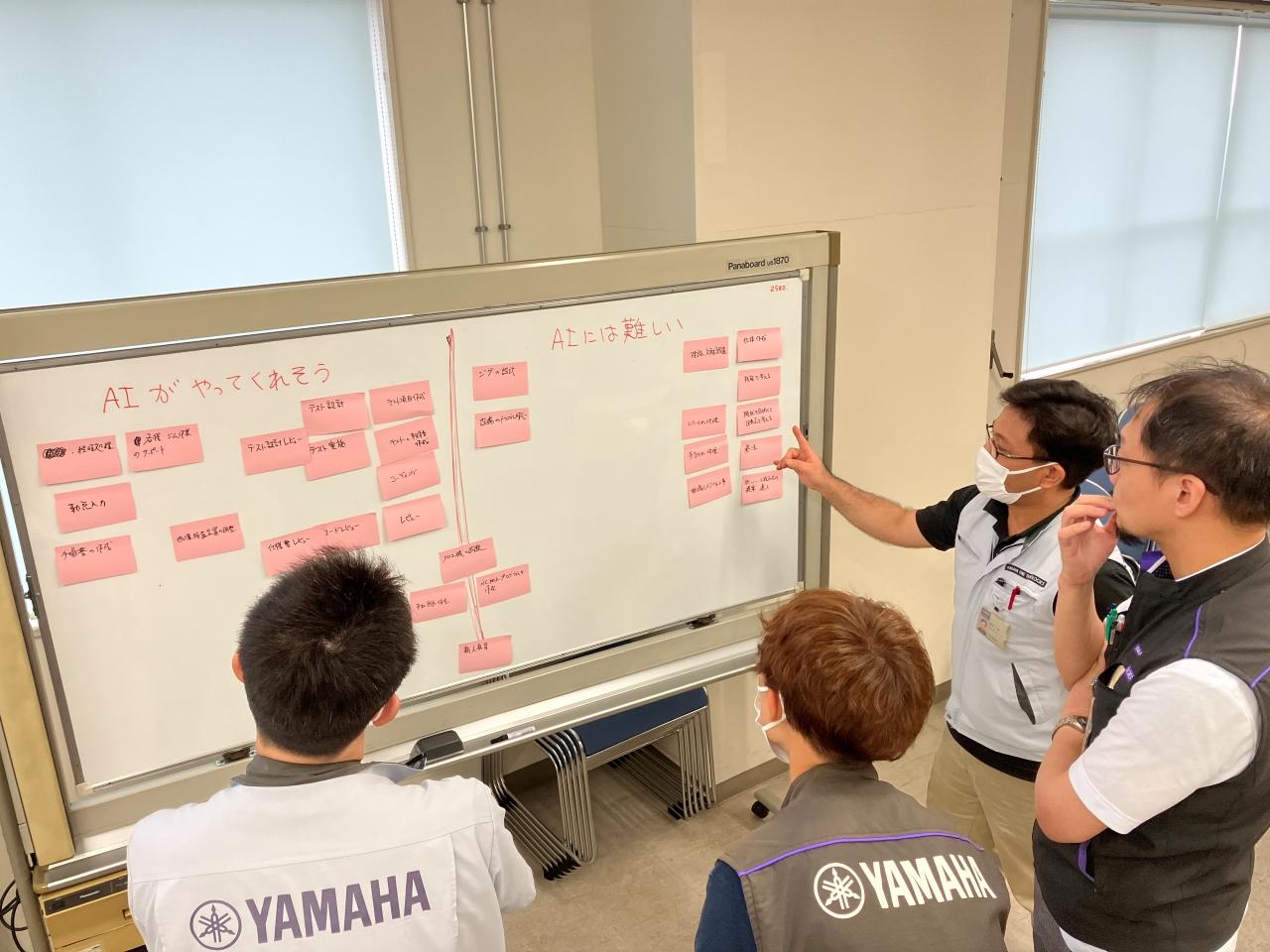
Kazeguchi: I use ChatGPT-4 in my regular work, so the explanation was easy to follow. However, this was the first time I learned about the existence of AI that can generate images. I was also taught about the history of AI, but the uses and purposes of AI have not yet been fully understood within the company. This lecture gave me an idea of how to use AI in future work and improve efficiency. Also, at the end of the session, there was a program where you write your work on a sticky note and stick it on the board, and we were able to discuss things like, "This work may disappear," and "So how can we improve efficiency and provide our own value?"
By the way, how is ChatGPT used?
Kazeguchi: I work in the car parts division, and as a sales representative for North American companies, I plan new product sales and exhibitions, and I use ChatGPT to create drafts. Sometimes the words I can use are limited based on my knowledge, but ChatGPT will write in that way if I give it instructions like "as a copywriter" or "as a writer," so I can use it to find patterns and check the difference in the feel of words. I use it quite frequently.
What did you talk about in the group discussion?
Kazeguchi: Many of the people we met for the first time on the day started with self-introductions, and we talked about how "if we could do this, our jobs would really disappear." However, the topic of "AI may not be able to move people's hearts" was also raised, which gave us an opportunity to think about how we should provide business value in the future. For example, there will come a time when people will no longer need to create quotations, but people will still have to make decisions. There was also an opinion that "The value conveyed to people changes depending on the way you speak at the time, so it would be good if we could become people who can convey more emotion."
--What do you think is necessary to convey emotion to people?
Kazeguchi: It's very difficult because the way we convey emotion and the way it is conveyed differs from person to person, but I think it's important to be sincere in your work. I think sincerity in work is something that is easy to convey to others.
-- Honesty is something only humans have. By the way, I heard that when you completed a full lap of the course in the autonomous driving AI experience, you jumped for joy (laughs).
Kazeguchi-san: (laughs). This time, we worked hard as a team to think through the things we didn't understand. It's only human that we can achieve good results and celebrate together.
What is required of users
What did you learn throughout the experience?
Kazeguchi: I think that in the future, AI will play a central role in business operations, and efficiency will continue to improve, including in the factory automation that we work on. We don't know yet whether we will enter an era where everything will be managed completely by AI, but how humans use their brains and how they give instructions will surely become important. I think we will also be required to be adept at using communication tools, including the language we normally speak, and tools to complete work quickly and accurately. On the other hand, AI can also be misused, so human conscience and reason will be called into question. One thing I learned is that we, the users, will need to be careful in the future.
--Specifically, what kind of work can it be used for?
Kazeguchi: My current work is mainly in English, but AI-based simultaneous interpretation seems like it would be useful when multiple languages are needed at exhibitions. Other than that, I can imagine various uses, such as inputting humidity and temperature in a factory to find the optimal paint pattern, or having AI derive the production conditions for each day. Also, Macnica showed me "Omatome Ninja," which automatically summarizes what you say, and it was really useful, so I'd definitely like to use it (laughs).
-Would you recommend this workshop to other people in your company?
Kazeguchi: Yes. I learned a lot and broadened my horizons, so I would definitely recommend it. This time, I participated in the course in a sales capacity, but I would also like people who are thinking about making improvements at production sites, people who are actually working there, and people from generations who are not very familiar with AI to take the course to expand the possibilities of their work. It would be a great thing if we could efficiently create a safety-first workplace using AI. There are various perspectives depending on the job, so you might discover something that you could use in your own workplace.
--As you said at the beginning, if you expand your interactions in the workplace, you'll have more interactions and that circle will grow.

Yamaha Fine Technologies Co., Ltd.
- Business
- Car Parts Division: Development, manufacturing and sales of decorative panels for luxury car interiors
FA Division: Development, manufacture and sale of production equipment and devices such as inspection machines and processing machines - founding
- February 14, 1987
- Number of Employees
- 315 people (as of June 2023)
- website
- https://www.yamahafinetech.co.jp/
\Click here for details on Re:Alize/

 Latest Information
 Case Study
 Blog
Blog Document List