
Digital transformation (DX) efforts, the need of which has been emphasized for some time, are accelerating.
This has increased the workload for everyone involved in DX and made projects more difficult. In this article, we will explain what DX in the manufacturing industry is, how to proceed, and the root causes of DX difficulties and how to avoid them.
What is manufacturing digital transformation?
DX in the manufacturing industry is not simply about introducing IT tools and systems, but rather an effort to review and transform the business itself.
The term "DX = Digital Transformation" tends to draw attention to "digitalization," but the essence lies in business reform.
By visualizing and standardizing business processes through DX and utilizing data, the following goals can be expected to be achieved:
- Improved productivity | Reduced manual work and duplicate entries, and reduced on-site burden through increased work efficiency
- Stabilizing and improving quality | Using data to reduce variation and detect signs of problems
- Addressing labor shortages | Labor saving, reduced training time, and more efficient skill transfer
In other words, the goal of manufacturing DX is to "use digital technology to improve on-site operations," and introducing tools is merely one of the means to that end.
Basic steps for DX in the manufacturing industry
To successfully implement DX in the manufacturing industry, it is important to get the method of implementation right. In particular, in the manufacturing industry, where DX managers often hold multiple roles, designing a reasonable method of implementation is the key to continuing DX.
Step 1. Organize your tasks by task
The first thing to do when promoting DX is to organize the issues in on-site operations by task, rather than thinking in terms of "DX first."
We identify issues such as "taking too long," "depending on people," and "prone to errors" in each daily task, such as production management, quality control, equipment maintenance, education and handover.
Also, at this stage, there is no need to aim for a perfect analysis. If all business processes were included, the analysis alone would place a heavy burden on DX personnel and those in the field. It is important to narrow down and organize only those business processes that have a large room for improvement and are likely to be effective.
Step 2. Identify an area to start small
After sorting out the issues, it is important not to try to DX the entire company and all processes at once. If the scope is expanded too much from the early stages, the project will suddenly become more difficult and the burden on the person in charge will increase.
First, start with a limited area such as one process, one business operation, or one location, assuming proof of concept (PoC). By choosing a theme where results are easy to see and where it is easy to get cooperation from the field, you can accumulate small successes.
This successful experience will serve as an important foundation for the next DX theme.
Step 3. Create a system design that takes into account the burden on staff
In the case of DX in the manufacturing industry, there are cases where DX staff have to promote it while also working on their regular duties, and if the system is designed incorrectly, the staff will become exhausted.
Therefore, rather than leaving all work, coordination, and promotion to the DX staff, it is important to clearly define the division of roles between them and on-site staff and managers.
In addition, when technical considerations and design are difficult, it can be effective to utilize the knowledge of external partners.
By being conscious of creating a system that is not dependent on individuals, we can create an environment in which DX can be promoted continuously, rather than as a temporary initiative.
Step 4. Visualize the results and deploy them in the field
DX is not something that ends with the introduction of the technology; it is important to visualize the results and use them to lead to further improvements.
By visualizing the results, such as reduced work time, fewer mistakes, and shorter training time, it becomes easier to gain understanding and acceptance from the field and management, and cooperation with DX increases.
In addition, by sharing and expanding this success story within the company, it will be possible to expand it to other processes and other locations.
The key to successful DX in the manufacturing industry is to establish it as a continuous improvement activity, rather than ending up as a one-off measure.
The barrier to DX is the difficulty of communication
From here on, we will introduce in detail the content of the lecture by Maruyama of Macnica, who talked about the factors that hinder Digital Manufacturing, as well as the workarounds he arrived at based on his diverse experience in supporting DX.
▪️Speaker Information
Macnica
Innovation Strategy Business Headquarters Digital Industry Division
Director of Professional Services Division 1
Chiaki Maruyama
While DX in the manufacturing industry is progressing, there are obstacles that hinder DX. One of the reasons for this is that it is "too difficult."
"For example, when creating materials that break down the medium-term management plan, 'changes in business processes and collaboration between departments' are issues, and we discuss who will do it and whether there are people who can actually do it. Many people seem to find it difficult to actually reach a consensus across departments.” (Maruyama)
From the system point of view, each department has already made its own optimizations, which makes it even more difficult.
Maruyama analyzes that "difficulty of communication is high" when digging deeper about "difficulty". In particular, the DX promotion department is positioned between management and related departments, and requires complex communication.
From an organizational perspective, the workload of the DX promotion department is extremely heavy, and it appears that the situation is difficult.

Increasing difficulty of DX projects and increased burden on those in charge
Macnica, which has supported over 350 DX projects to date, has the following to say about recent trends surrounding projects:
“The number of management teams recognizing the need for DX and incorporating it into their medium-term management plans is increasing. Some companies have completed the step of technical verification, and are proceeding to the phase of interlocking with management issues and actual operation.In addition, the shift to digital has accelerated due to the impact of the COVID-19. Due to the unstable economic environment, approval requests for plans have become extremely severe, and I feel that the demands for deadlines and speed in particular are increasing every day.” (Maruyama)
Under the influence of these trends, the expectations and burdens of project leaders and members have increased dramatically.
Management also finds it difficult to judge the relevance and progress as good or bad. And what they all have in common is that there is just too much to consider.
"Four points for smooth communication" revealed through 350 cases of support
In order to break through the barriers to promoting DX mentioned above, it is essential to “create a form that facilitates communication.”
“When management, related departments, and the DX team become a trinity, communication will proceed smoothly, and the difficulty level will be lowered. There are four points to achieve this: ``health checkups'' and ``simulations.'' "Fit to Standard" and "Security" (Maruyama)
Regarding the health checkup (current situation analysis), Maruyama said, ``In communication between layers and departments, it is essential to have a consensus on the starting point. We always need diagnostics and analysis.”
On top of that, it is necessary to understand the issues in the current situation analysis and investigation in advance.
“Even if we understand the necessity of analyzing the current situation, there are still difficulties in implementing it. ' and 'costs are high when outsourcing.' Also, we must not forget that current situation analysis imposes a burden not only on the side of the investigation, but also on the side of the investigation." (Maruyama)
So, what will be the breakthrough point of the current situation analysis? It is to realize "objective and quantitative" current status and business process visualization that can be used between departments and layers "quickly and at low cost".
"Specifically, there are maturity diagnostics to check your company's position, and process diagnostics to analyze As-Is in your business, and Macnica also provides diagnostic services." (Maruyama)
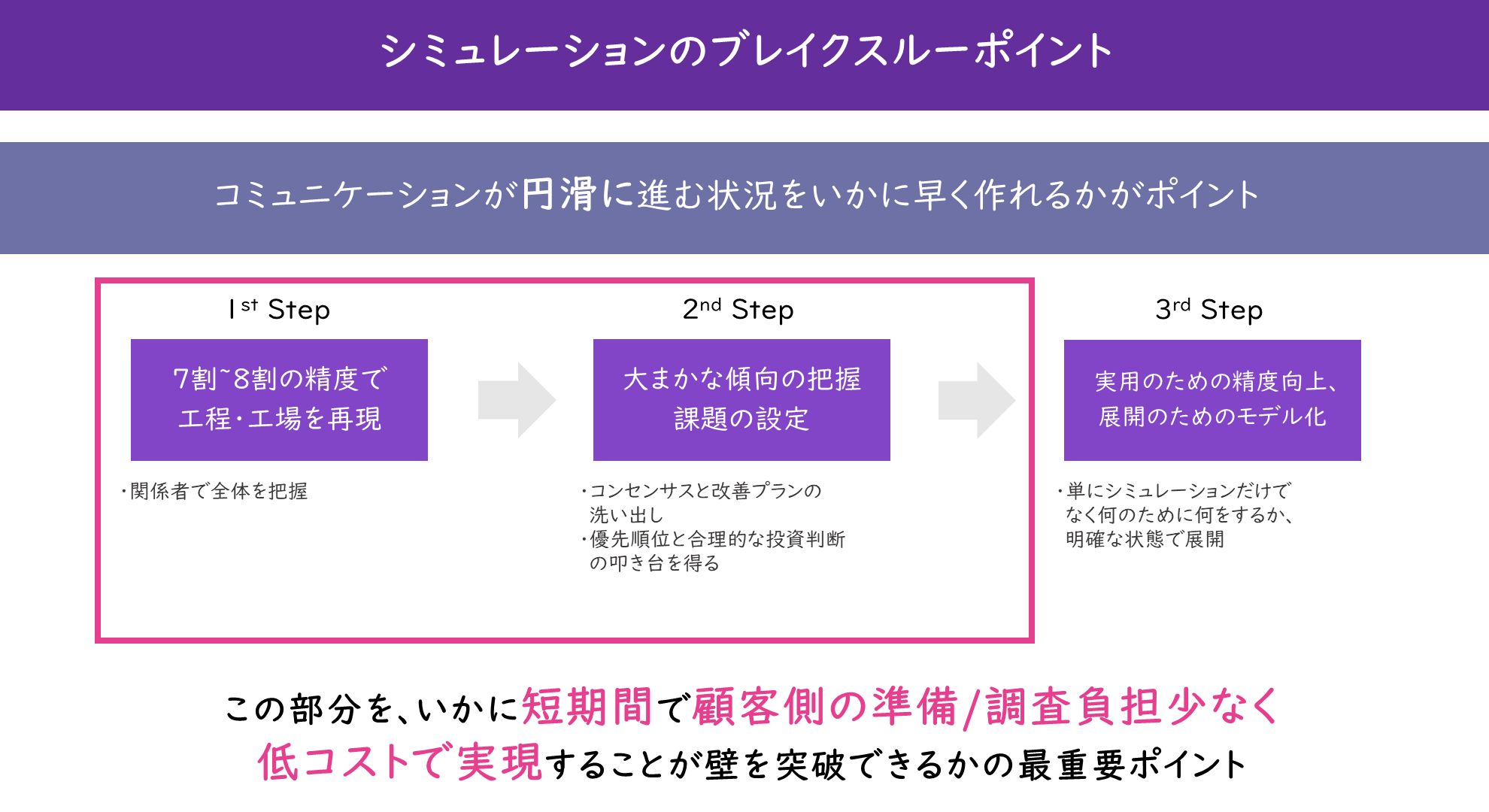
As for “simulation,” communication becomes smoother by sharing experiences. According to Maruyama, the key to breakthroughs is to catch trends that are “cheap, fast, and don’t make too many details.”
--Initially, it's important to focus on understanding the overall picture rather than striving for high accuracy --
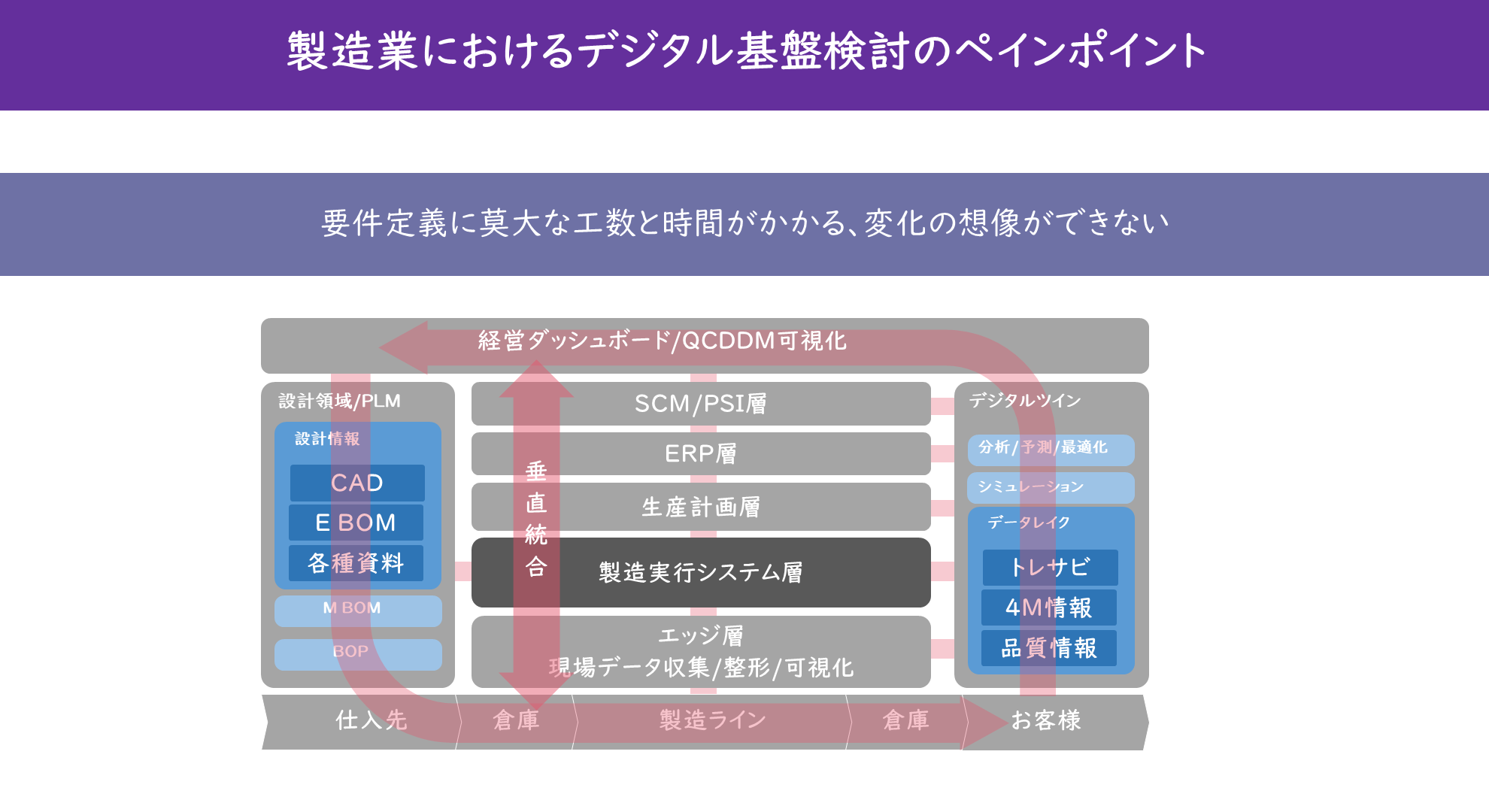
Fit to Standardについては、部門間の連携や業務プロセスの変更が入るプロジェクトでは、机上の理論による説明で経営層と現場の双方から理解を得る難易度が高くなります。
要件定義にかかる時間と工数も非常に大きくなってしまうケースが多く、これをドライブできる人材も枯渇しています。
─ Building a holistically optimized digital infrastructure is becoming increasingly difficult ─
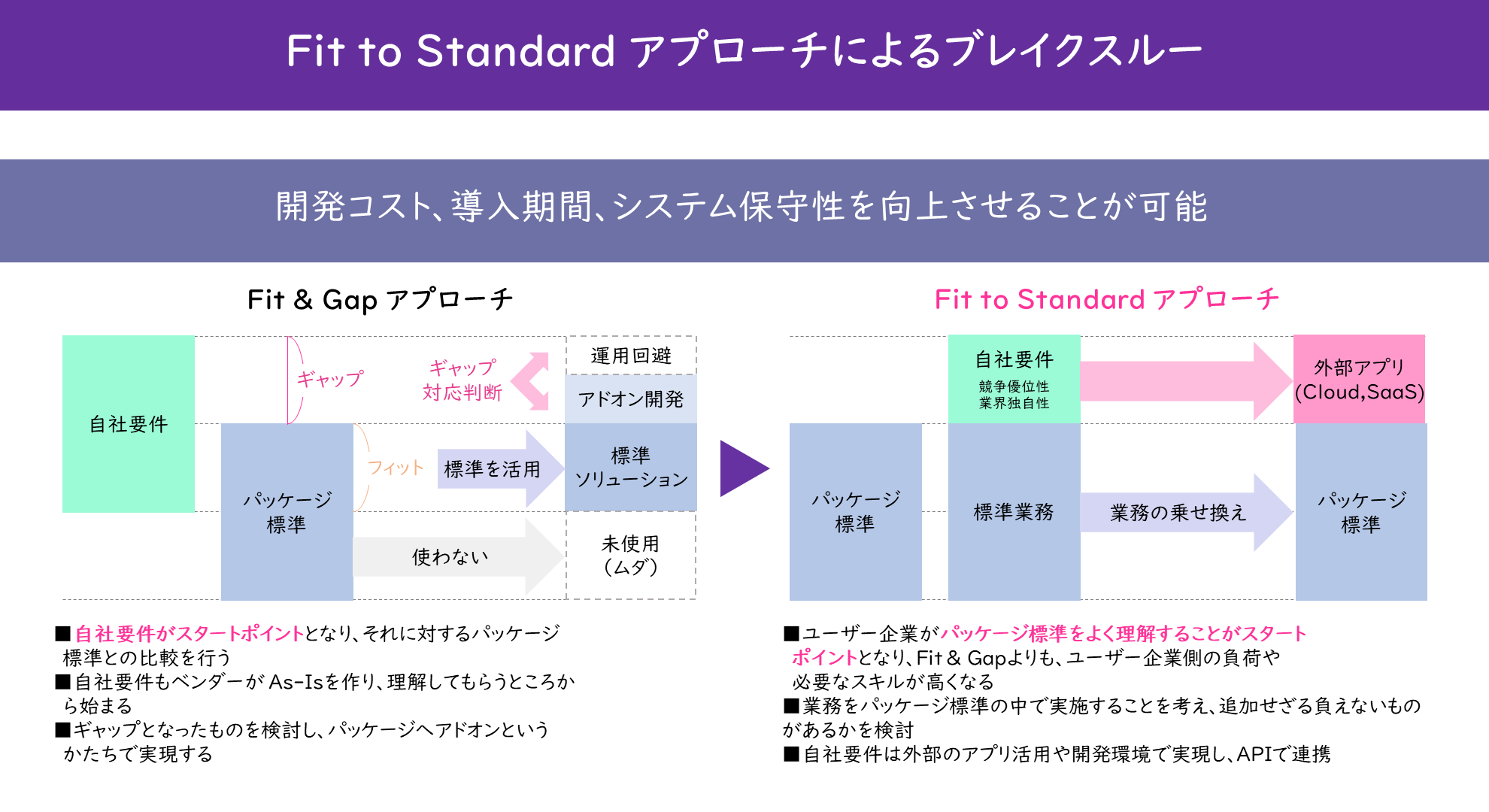
“The Fit to Standard approach is effective as a breakthrough. In Japan, I think there are many Fit & Gap systems that match the system to the business. Fit to Standard, on the other hand, is a method of maximizing the use of so-called packages to match the business to the system.For insufficient in-house requirements, we do not develop add-ons, but externally cooperate with APIs The point is to realize it through the application utilization and development of the "(Maruyama)
─ In the Fit to Standard approach, it is important to have a good understanding of packaging standards ─
Regarding the last question, "security," Maruyama said, "Security is something that can easily be overlooked when discussing issues. Even if you consult with the IT department, they often say, 'Security in the OT area is not under the jurisdiction of the IT department.' It seems that.
In order to get the cooperation of the IT department, we need to think specifically about ``for what,'' ``when,'' and ``where and where will it be connected?'' and offer consultation at the optimum timing." To do.
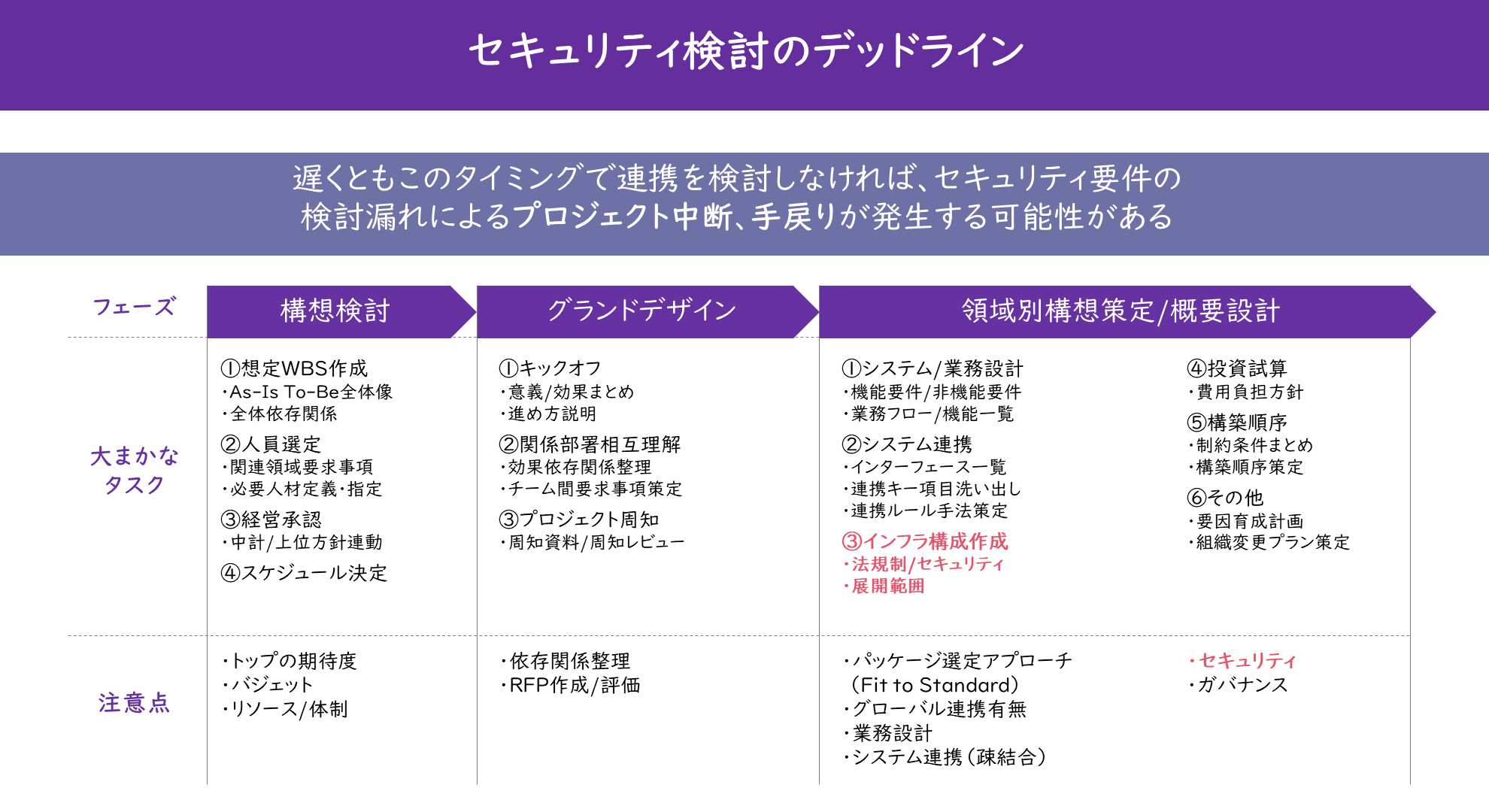
In addition, if the deadline for security consideration is clarified and cooperation is not considered by then, interruptions and rework may occur. When creating the infrastructure configuration in the final phase, it is important to always consider security.
- Failure to consider security requirements can have a major impact on the progress of a project -
"It is important that you proceed with the best consideration in line with your company's policies. The IT department may be busy, but I would like you to try to communicate with them. The first thing you can do is manage and monitor your partner. If you want to complete it in-house, you need to assign a person in charge.Prepare preparations for accidents, escalation paths, and recovery procedures.You can also incorporate it into standards such as ISO. (Maruyama)
If you are worried about how to proceed with DX in the manufacturing industry, consult Macnica.
In this article, we have introduced how to proceed with DX in the manufacturing industry and some tips for smoothing communication, which is a barrier to promoting DX.
Macnica offers a service called "Digital Execution Factory" that resolves the communication issues mentioned above and makes DX an organizational culture, as follows:
- Strengthening governance systems that involve the entire company
- Accompanying the CoE, which spans business and IT departments, from concept design to launch and establishment
- A training program for specialists who can lead DX promotion on-site
- Development support using Mendix, a low-code development platform that allows you to gain small successes through agile development
Such
Through the above support, the "Digital Execution Factory" aims to create a situation where "DX that is optimal for each company is created spontaneously and continuously."
This "Digital Execution Factory" optimizes the practical knowledge established in Europe and the United States, where DX is advanced, for Japanese manufacturing, and is know-how that only Macnica can provide in Japan.
If you are facing any of the obstacles mentioned in this article or are having trouble, please feel free to contact us.
Related article

*Tech Blog*
Why is DX in the manufacturing industry not progressing? Case studies explain the challenges and obstacles to DX and data utilization

*Tech Blog*
What is the best way to deal with "MES (Manufacturing Execution System)", which is the key to realizing data-driven management?