Developing a data aggregation and analysis platform for smart factories
"DSF Cyclone" promotes digital talent development in manufacturing sites
--Nissei Corporation
Nissei Corporation, a pioneer that first launched soft serve ice cream in Japan, is accelerating a project to turn its manufacturing plants into smart factories that contribute to automation and labor saving. As a result, the company has adopted Macnica 's DSF Cyclone as its business infrastructure to consolidate and visualize data scattered across each site and make it useful for daily operations. We asked them about the background to this decision.
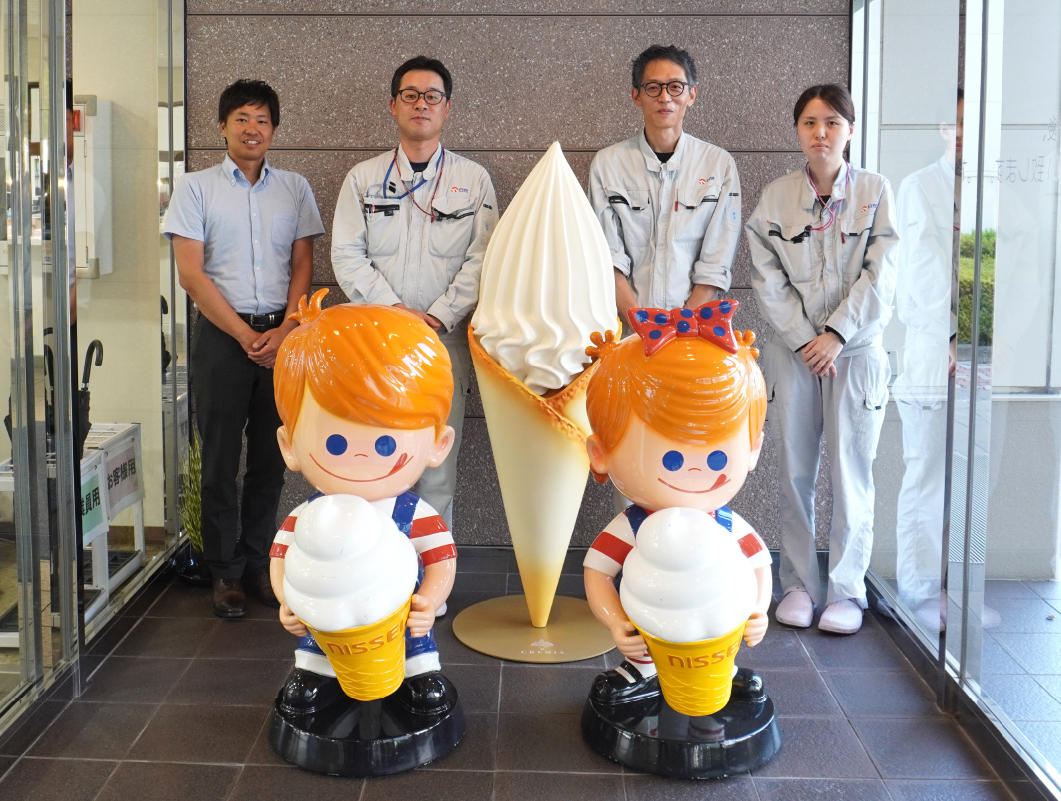
Participating members of this project
People from Nissei Corporation
- Mr. Yoshihiro Murakami, PMO, Section Manager, Technical Maintenance Section, Production Group, Production Department, Presto
- Mr. Yoshiaki Yamano, Chief of Technical Maintenance Section, Production Group, Production Department, Presto
- Sayaka Nishimura, PM Assistant, Production Group, Production Department, Presto
Macnica
- Yuta Kageyama, Section Manager, Professional Services Division 2, Section 3, Digital Industry Business Department
- Task
-
- Promoting smart factory projects
- Lack of comprehensive data visualization and analysis infrastructure
- Lack of digitalization in manufacturing sites
- Purpose
-
- Increased automation in factories
- Building a data-driven improvement process
- Developing digital talent
- effect
-
- Developing a platform for integrating and analyzing multiple data
- Promoting digital adoption through successful experiences
- Creating an environment for improving digital literacy
"Smart Factory Nissei" project aims to automate factories
Promoting smart factories to solve social issues
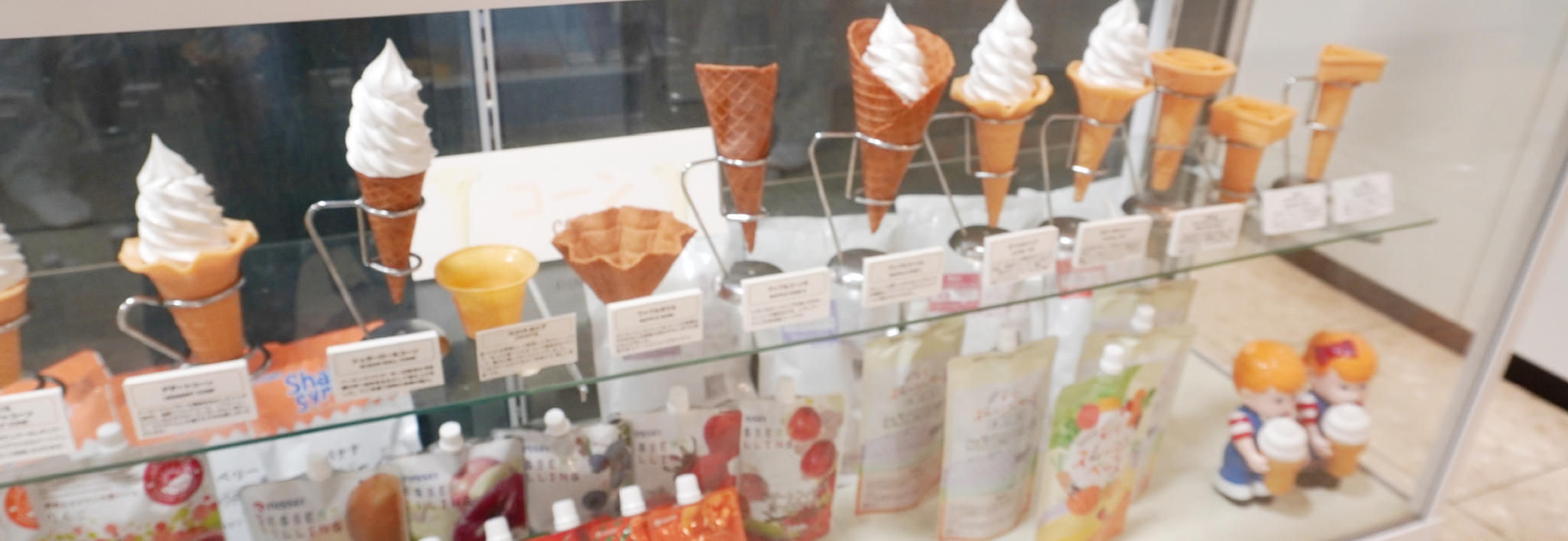
Murakami: We are the first company in Japan to sell soft serve ice cream, and we are the only comprehensive manufacturer of soft serve ice cream in the world that manufactures and sells liquid ingredients, cones, various toppings, and even in-store production machines. Some of you may have seen the characters of a boy and a girl holding a large soft serve ice cream. Our management philosophy is to "contribute to 'creating happiness full of smiles' through our business," and our corporate message is "The source of smiles." In order to become a distinctive No. 1, we are constantly conscious of creating innovation and promoting our business.
In addition, the company is currently working on the "Smart Factory Nissei" project, which aims to use digital technology to make the entire factory more visible, with the aim of solving various social issues such as labor shortages and reducing environmental impact. The Technology Maintenance Department is also promoting digitalization from the field side, the factory site, and is promoting DX with an eye toward expanding to other business locations. In addition, since human resources are essential for introducing new technologies and passing them on, the company is also focusing on developing digital human resources.
Need to create an environment for integrated visualization and utilization of collected data
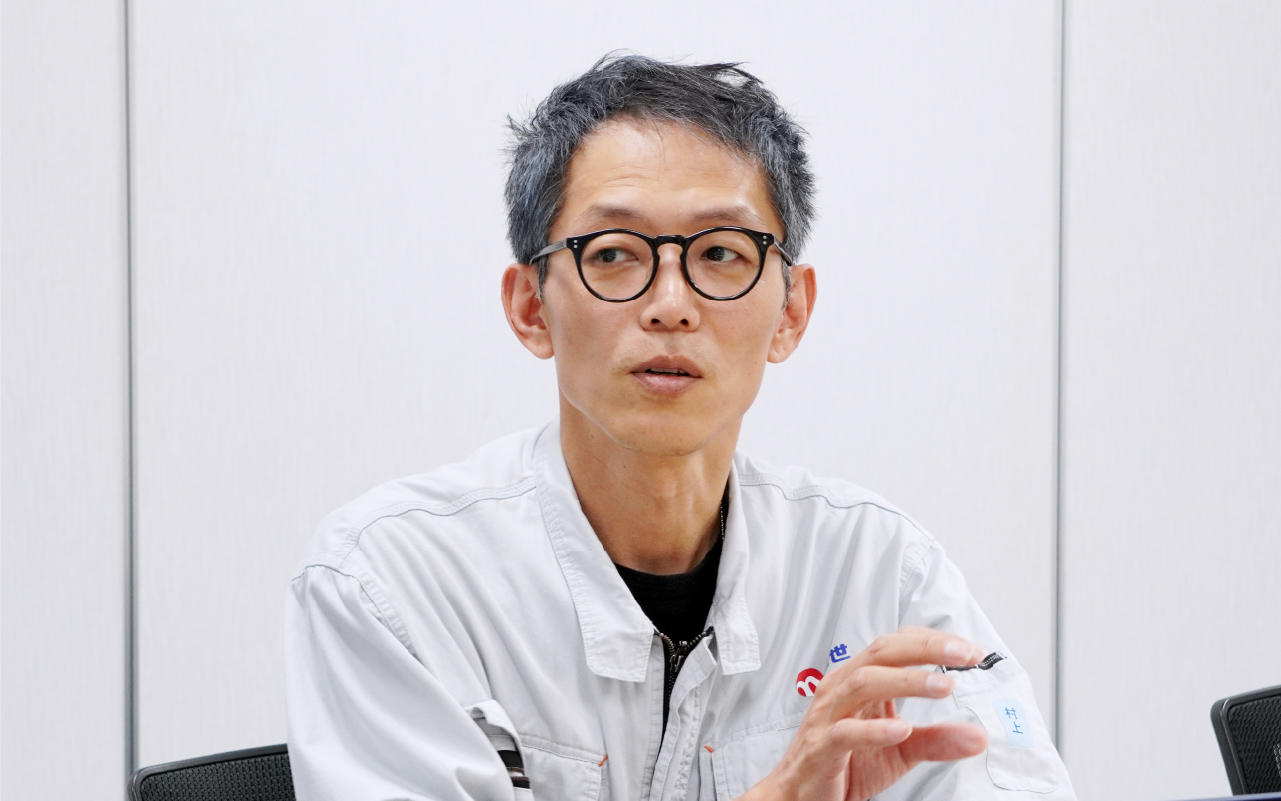
Yamano: The smart factory project, which has set factory automation as the roadmap, began several years ago. After setting a roadmap up to 2030, the first step was to collect data on the manufacturing equipment in the factory. The next step was to utilize the collected data and start to visualize the operation status based on the data. There is no problem in using the information obtained from each piece of equipment individually, but we considered creating a system to integrate the information and use it in the entire factory process.
Murakami: When it was time to improve our data collection environment, we introduced Macnica 's "Mpression Smart Motor Sensor" to collect information such as vibration, temperature, and magnetic flux of the motor equipment, which is essential for emulsifying ingredients. In addition to the "Smart Motor Sensor," we also introduced i-Reporter, an electronic document system for digitizing daily reports from workers, and IoT Data Share, a system for collecting and consolidating information from PLCs, to collect information from the field. Our next step was to figure out how to utilize this collected data.
The purpose of using data in an integrated manner is not only to automate tasks and reduce manpower, but also to develop human resources who can digitally improve on-site operations. Rather than a situation where information is known only by certain sites and not by other sites, we wanted to create an environment where all employees can think together about where the issues lie after sharing data from the entire factory. We aimed to create an environment that would function as a communication platform, where processes could be viewed across the board using data as a medium for conversation.
"DSF Cyclone" connects on-site improvement activities through data aggregation and visualization
The BI tool we thought was best for visualizing the field
Mr. Yamano: We thought that a BI tool capable of aggregating and analyzing large amounts of data would be an effective way to visualize the processes and operating status of the entire factory. Initially, we considered low-code platforms, but we also concluded that it would be difficult to do so given that we had not yet finalized the requirements, such as the need to connect to other systems in order to visualize the accumulated data. As we considered several solutions, mainly BI tools, we came across "MotionBoard" during the information gathering process.
On the introduction page for "MotionBoard," we learned that it has a template for visualizing and analyzing data obtained from manufacturing equipment such as PLCs. A fellow food company had also introduced it, so our first impression was that it looked like something we could use. In fact, we had heard about the use of BI tools at other business locations to visualize the occurrence of industrial accidents. Although we had tried using it before to see what BI itself was like, we thought that "MotionBoard" would be the best fit for us, considering the track record and examples of its use at manufacturing sites.
DSF Cyclone: A promising tool for more than just visualization
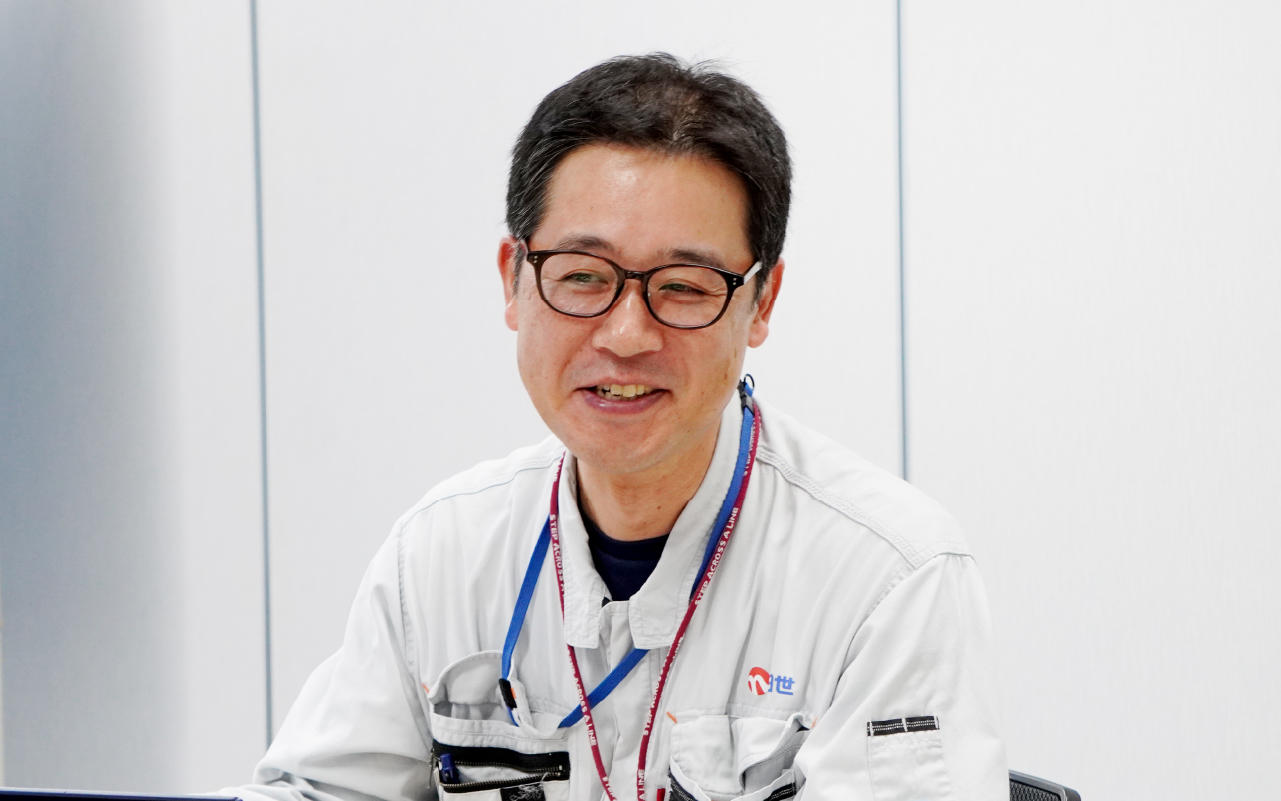
Murakami: In fact, in the process of introducing the "Smart Motor Sensor," we were introduced to "DSF Cyclone" as a platform for collecting data on the operation status of manufacturing equipment, visualizing the data, extracting areas for improvement through analysis, implementing those measures, and then rechecking the improvement status. Since the "Smart Motor Sensor" had actually been effective, we had been asking Macnica to continue to work hard to solve issues at the factory. At that time, we heard that Yamano was considering "MotionBoard," and we focused on "DSF Cyclone," which incorporates the functions of "MotionBoard," as a system that goes beyond simple visualization to lead to improvement activities.
Various opinions come from the field, but digital doesn't lie, even in situations where it's difficult to judge what is truly correct. Of course, the final decision is made by a human, but we needed a system that not only accumulates data, but also efficiently uses it to implement the PDCA cycle for improvement activities. DSF Cyclone was exactly what we expected to link to data-driven improvement activities.
Promoting digitalization by creating successful experiences
Developing "DSF Cyclone" as an information platform for data visualization and improvement
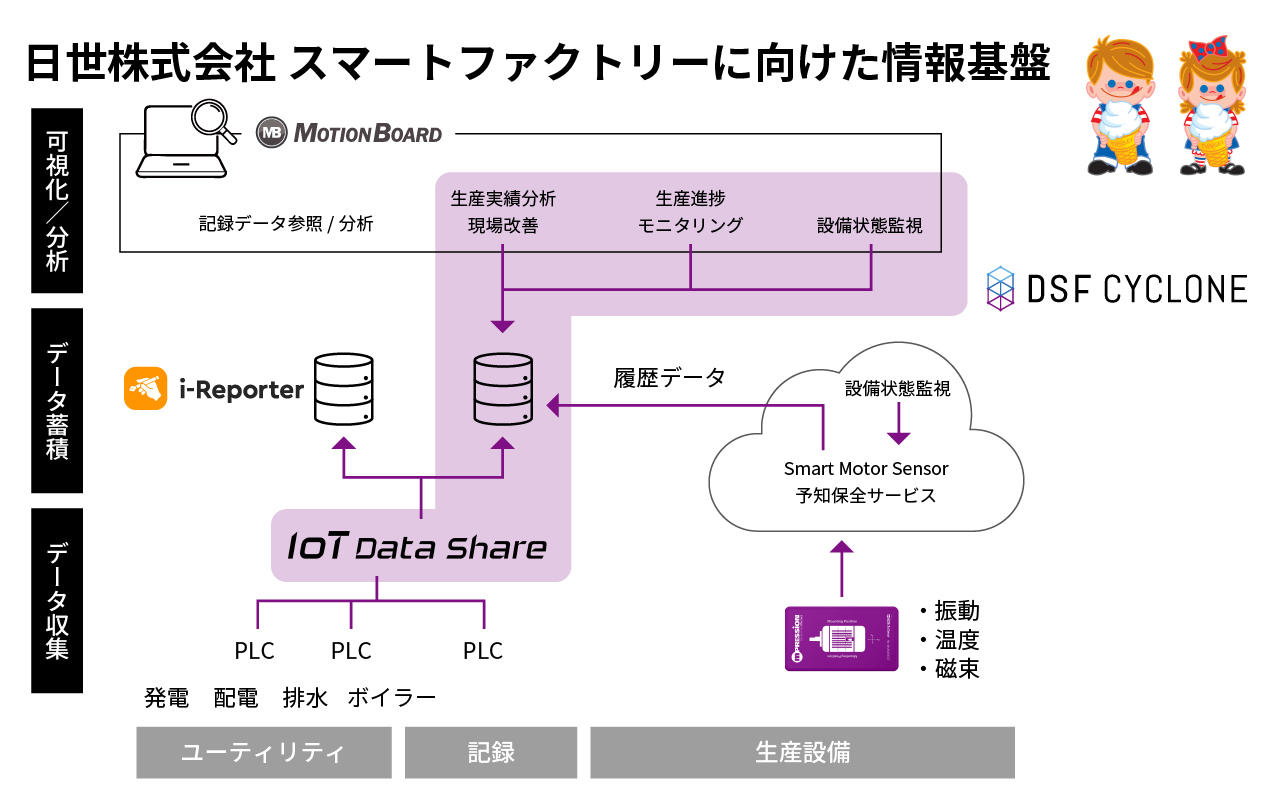
Yamano: We are currently in the stage of aggregating data from each site, including the "Smart Motor Sensor," IoT Data Share, i-Reporter, and other systems using the "DSF Cyclone" system. We will be holding study sessions on how to use the system in the field, and we will be implementing specific data utilization in the future. Although we are making progress in collecting field data, awareness of "DSF Cyclone" is still low, so we plan to continue activities to raise awareness, including its ease of use. As for i-Reporter, our daily reports from the Technical Maintenance Division have already been converted into electronic forms, and we are currently in the stage of promoting its use, so that the operating status of equipment and other information can be entered at the manufacturing site.
Murakami: We have already prepared the infrastructure for visualizing data, but progress has been slow due to a lack of human resources at the manufacturing site itself and an increase in the amount of material. We plan to eventually proceed with digitalization in parallel with our current operations. We are currently forming a team for digitalization, and are split into two teams: one that will use data to advance visualization, and another that will work with the site to make improvements based on the visualized information.
As the first step in on-site deployment, we are targeting one packaging machine that has a large impact on the entire process. We are thinking of using data to make improvements and creating a success story, which will be used as a basis for horizontal deployment. Usually, the manufacturing site does not want to be open about problems. However, we think it is important to make it clear that by being open about it, everyone can solve the problem together and be happy, which is a success story.
Nishimura: The other day, we gathered people in charge of the target packaging machines at the site and arranged for them to see what kind of information can be visualized. We spent about three hours introducing what can be done, including an explanation from Macnica at the beginning of the event. We are still considering how it can be used, but we are already planning the next event, so we would like to gradually let people know about the effectiveness of data utilization.
We will develop the talent of the future by improving digital literacy.
Murakami: We hope that by introducing DSF Cyclone, we can encourage employees to think about how to use data to improve on-site operations. Even if you can come up with an intuitive, temporary solution to a problem, there are cases where you can't find the true cause. By communicating through data, we should be able to develop human resources by improving digital literacy, including technical skills.
When people hear the word "automation," some feel threatened that their jobs will be taken away, but I want them to know that this is not the case. The key is to coexist with digital technology, such as finding elements to improve with "DSF Cyclone" and then having people take action such as performing maintenance based on those elements. In order to get people to feel that way, I feel that we need to make an effort to further improve our digital literacy.
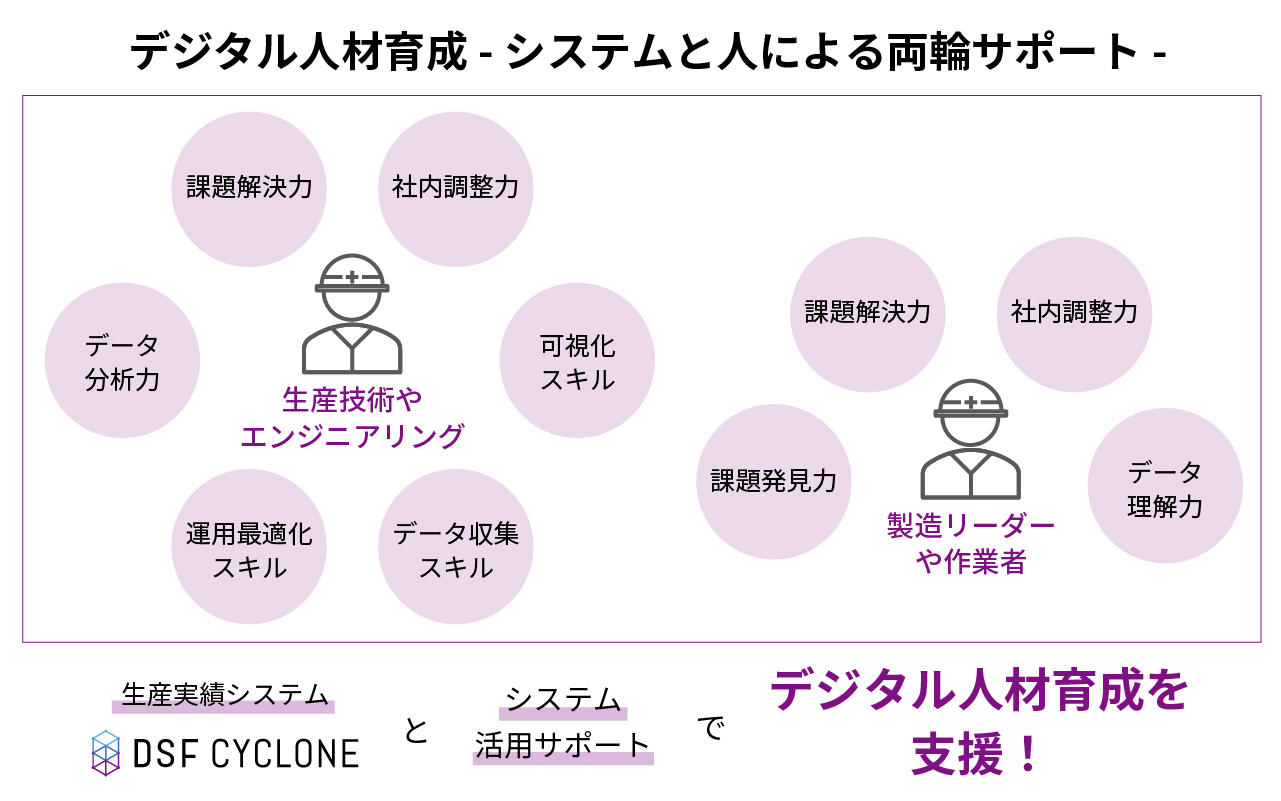
Nishimura: At the moment, I am learning how to use "DSF Cyclone" including "MotionBoard" with the support of Macnica. I have no experience in IT myself, so there are many parts that I am unfamiliar with, but I have the impression that by touching things with their support, I will be able to somehow make it into a reality. With Macnica, they have actually put what needs to be done into an Excel spreadsheet, and they have given me instructions with a schedule of what to do and by when, so they are also very helpful in managing the progress towards implementation.
Murakami: Not only do they give us precise instructions for the project, but they also support our on-site deployment while adapting to our work style, which has been very helpful. We want to change our work style of moving things forward digitally to the standard way of working, and we hope that the positive influence we have received from Macnica will spread to the field.
We feel that Macnica has more creativity than we thought. We always try to keep our antennas up to catch external information so as not to become like a frog in a well while inside the factory, but Macnica 's sales staff and those who help us with implementation always expect us to be on the other side of that antenna. They fully understand the situation and provide support, which we are very grateful for, and this accumulation is leading to a change in our way of thinking.
Promoting further awareness-raising activities towards digitalization
Nishimura: We are just starting to use "DSF Cyclone" on-site, and we would like to actively promote awareness-raising activities while working with the field to find ways to use it in a way that will bring benefits to the field through visualization. At the moment, various information inputs are required at the manufacturing site, such as writing daily reports and recording other information in Excel, and this is already a considerable burden. We would like to create an environment that places as little burden on the field as possible, so that new inputs are not required for visualization.
Murakami: First, we want to create a successful experience with this packaging machine, and then expand to processes other than packaging machines. In our factory, some machines, such as sterilizers and paper carton filling machines, are operated by the vendor's own systems. We have already received permission to use the data, and tests have been conducted that incorporate that data. In the future, we plan to directly incorporate data from our own systems.
In addition, since data from core ERP-like systems such as inventory management and production planning is currently being printed out on paper and utilized, we will effectively integrate this data and link manufacturing equipment data with information within the ERP to accelerate work efficiency, automation of the entire factory, and labor savings.
Of course, we are thinking of expanding this to other business locations, not just this factory. In the office where we manufacture cones, which is also a member of the smart factory project, we are continuing to evaluate whether to introduce a low-code platform or to adopt an environment that combines "MotionBoard" and "DSF Cyclone". We would like to effectively communicate the appeal of "DSF Cyclone" there as well, and lead to its company-wide deployment.
Murakami: The Technical Maintenance Section itself still has few members, and I was originally in the quality assurance department, so it was a completely different field from digital. In this age of accelerating digitalization, we need to increase the number of people with digital literacy. We are currently working to secure more personnel, such as by having people with experience in the manufacturing section join the Technical Maintenance Section.
We are also in a situation where we need to develop innovative human resources, not only for the soft serve ice cream business, but also for the challenge of new fields. Macnica is not only involved in many new businesses, but is also promoting the creation of new businesses, so I think there are many things I can learn from here. The company has given me many opportunities, so I would like to learn more.
Nissei Co., Ltd.
- Business
- Manufacture and sale of soft serve ice cream related materials (cones, mixes, machinery), manufacture and sale of dairy products (whipped cream), manufacture and sale of fruit preparations (fruit preparations), rental of small multipurpose fully automatic filling machines, purchase and sale of packaging materials
- founding
- 1947
- Number of Employees
- 769 (as of the end of December 2023)
- website
- https://www.nissei-com.co.jp/
PRODUCT/SERVICE
Click here for products and services related to this case study

Improving Production Efficiency × Digital Manufacturing “DSF Cyclone”
A service solution that realizes a highly productive factory by connecting manufacturing results and production plans with structured data
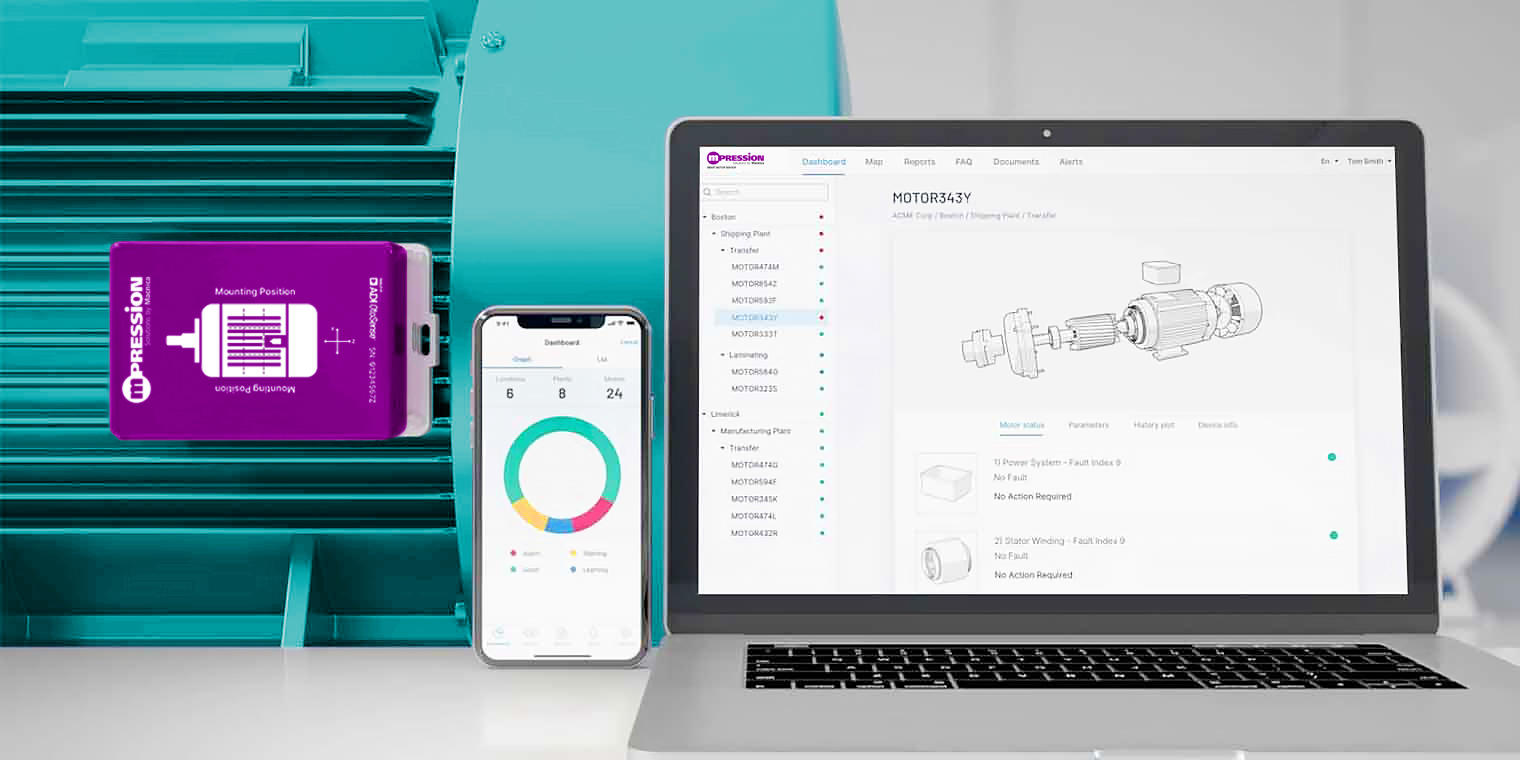
Mpression Smart Motor Sensor
Predictive maintenance service specialized for low-voltage three-phase squirrel-cage induction motors
DOCUMENT
Recommended reading for readers of this case study:
14 Use Cases for Data Utilization in the Manufacturing Sector
Moving beyond mere visualization
We will introduce a framework and use cases for data utilization in manufacturing sites.
*Application is required for download.
CONTACT
Please feel free to contact us with any inquiries regarding this case study or product implementation.