
Solutions by industry and area
Physical AI Solutions
Beyond the Digital Realm: Toward “AI That Moves in the Real World”
What Is “Physical AI”?
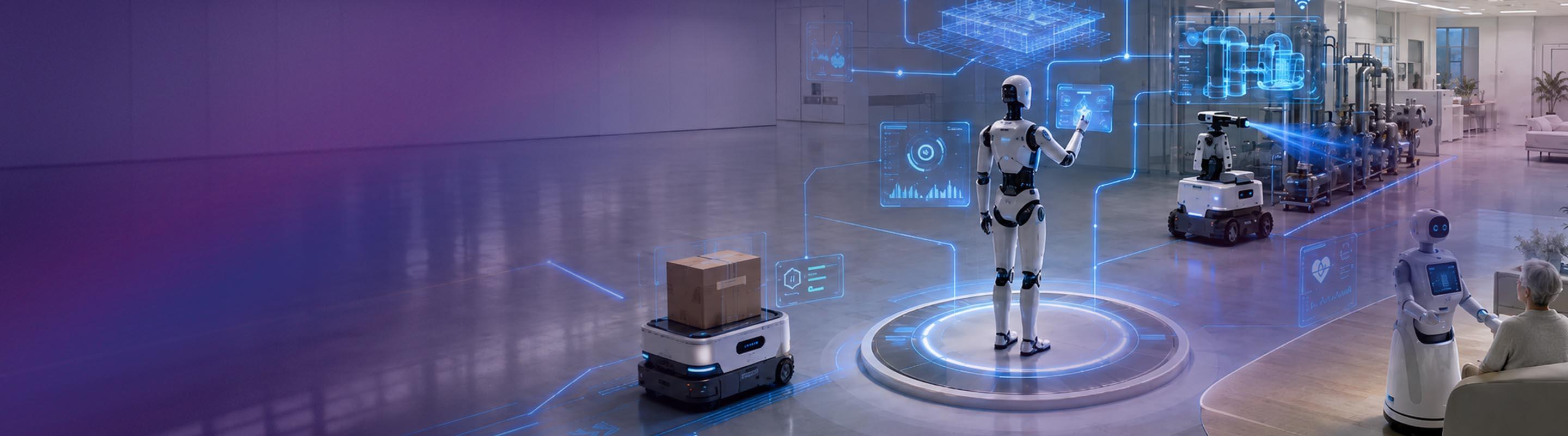
Physical AI is artificial intelligence that generates and executes physical actions in the real world. Whereas traditional AI was limited to generating and processing content within digital spaces, physical AI processes a variety of information—such as visual, tactile, and auditory data—obtained from sensors in real time, and formulates and executes action plans based on the laws of physics.
The Evolution of AI and the Role of Physical AI
- Recognition AI
- Image and audio recognition, text classification, and more. Extracts features from input data to perform classification and recognition.
- Generation AI
- Generation of text, images, and videos. Generating multimodal information.
- Agentic AI
- By repeatedly planning, reasoning, and acting, it autonomously performs tasks in a digital space
- Physical AI
- Understand the laws of physics in the real world and autonomously perceive, reason, plan, and act
The Benefits of “Physical AI”
From “Predetermined Tasks” to a Workplace Where People “Think and Act”
A prime example of where Physical AI is applied is the field of robotics. Conventional robots were only capable of performing simple, predetermined movements programmed by humans.Physical AI achieves advanced automation even in environments where conditions change dynamically by autonomously repeating a cycle of sensing, reasoning, and action. In the manufacturing industry in particular, it is expected to enable unmanned and labor-saving operations in factories.
-
Conventional
robots - Repetitive tasks
repetition - Rule-based
Operation - For some tasks,
require manual supervision
-
Robots that utilize
Robots Utilizing Physical AI - Multiple
complex tasks - Through self-directed learning,
Operation - Automation of tasks and
reduced staffing
Use cases of robotics x physical AI
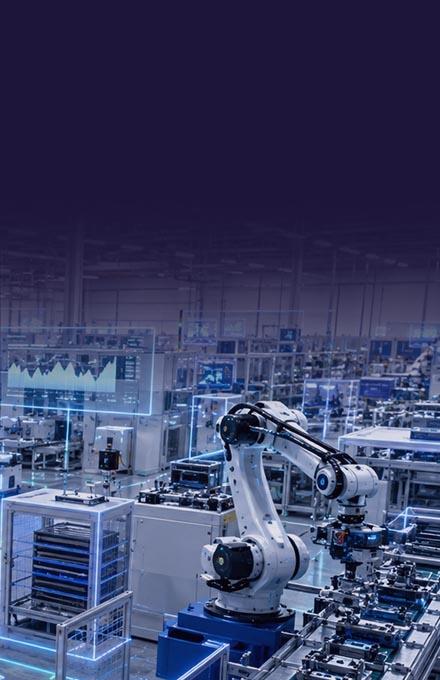
- Manufacturing and Production Lines
- Automation of Parts Assembly, Inspection, and Welding. AI-Based Anomaly Detection and Quality Control
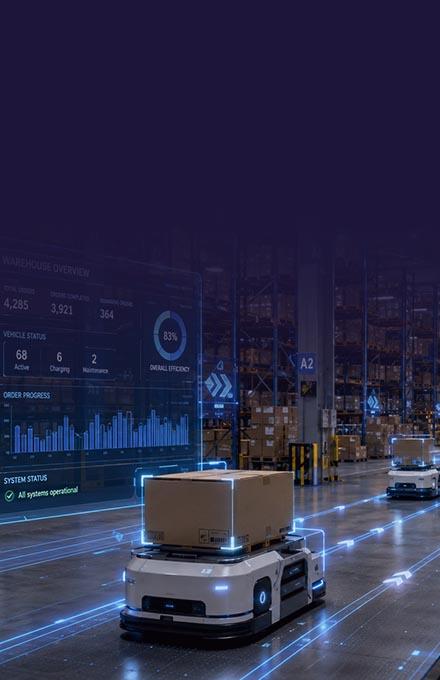
- Logistics/Warehouse
- Product picking and transport using autonomous mobile robots (AMRs). Package sorting
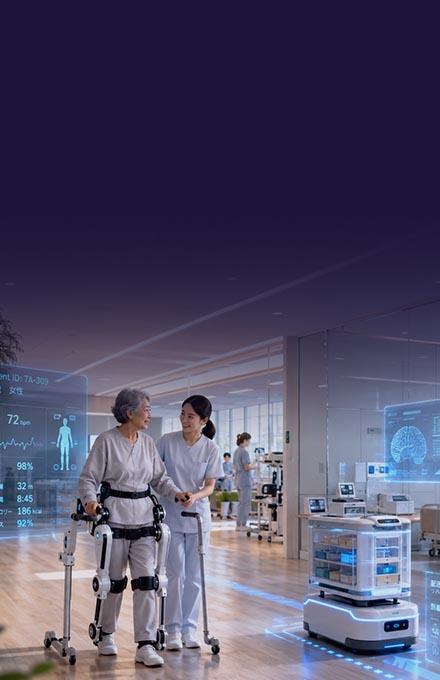
- Medical/nursing care
- Surgical assistance robots, patient transport robots. Daily living support for the elderly and people with disabilities.
- Agriculture and Food
- Harvesting robots, pesticide-spraying drones. Automation of yield forecasting and quality control

- Construction and Infrastructure
- Inspection and surveying robots for hazardous work areas. Transporting materials and assisting with construction at building sites.
Computing Environments for Physical AI and
Development Lifecycle
As with traditional AI, data collection and learning are key to physical AI.Advanced AI robots require vast amounts of training data, but collecting data solely from human operations in the real world has inherent limitations in terms of volume and presents challenges related to cost and time. Therefore, Physical AI requires a cycle in which simulations are performed on a digital twin based on manually collected training data, models are built using the data obtained from those simulations, and the models are then transferred to physical systems for verification.
Essential technical elements for physical AI development
- Foundation Model and
Learning Environment - We need AI models capable of performing autonomous actions, as well as an environment where we can fine-tune and train these models for our own use. Physical AI models include VLM (Vision-Language Model) and VLA (Vision-Language-Action) models, among others.
- Simulation
Digital Twin - In physical AI, real-world data alone is not sufficient to provide adequate training data. A system that enables models to be trained and validated in a simulation environment based on a digital twin that replicates the real world is essential.
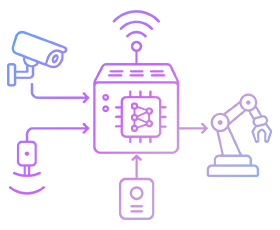
- For Inference Processing
Edge Environment - To execute real-world tasks using a trained AI model, an edge device equipped with a CPU and GPU capable of performing the AI model's inference processes with high performance and stability is required.
An ideal development cycle for realizing superior AI robots

From foundational models to edge inference environments,
NVIDIA's physical AI solutions
NVIDIA is a leading company that provides the solutions necessary for implementing physical AI. Its strengths extend beyond GPUs—its core business and an essential component of AI training and inference. The company offers a comprehensive software platform that supports the entire physical AI development process, ranging from simulation and digital twin environments to training platforms, software, and development frameworks.
NVIDIA's technology stack for realizing physical AI

Steps to smoothly implement physical AI
Simply having the necessary technology on hand does not guarantee the successful implementation of physical AI. The ideal approach is to first gain a proper understanding of physical AI, then assess whether it can address your company’s challenges, and finally proceed by conducting a small-scale proof of concept (PoC) to validate the approach.

The challenges faced when introducing physical AI
Macnica, an NVIDIA certified partner, has resolved the issue.
As mentioned above, building physical AI requires mastery of a wide range of technologies, making it difficult for a company to tackle this on its own.From procuring the necessary hardware and software to conducting simulations and real-world testing, Macnica provides a one-stop solution to handle the many “hassles” involved in implementing and building Physical AI, supporting you until you are fully capable of operating independently.
Comprehensive support for various phases in physical AI development.
Insights and
Providing Use Cases
- As an NVIDIA partner, we research and provide the latest case studies from Japan and abroad
- Based on our past support experience, we provide solutions to technical challenges
Physical AI
Training provided
- We offer a series of programs ranging from an overview of physical AI to the acquisition of technical skills.
- Improve in-house skills through hands-on training to enable future self-sufficiency
Project-Based
On-the-Ground Support
- Support for Building Digital Twin Environments and Generating Data Using NVIDIA Software
- Support for fine-tuning based on the data you've created
Why Macnica is chosen in the field of physical AI
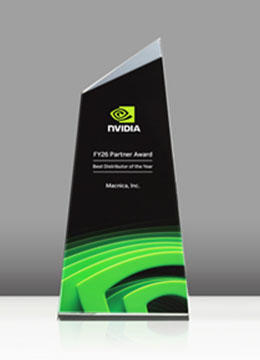
- Best Distributor of the Year
- We have received the highest award given to NVIDIA authorized resellers (2023, 2024, 2026). We possess in-depth expertise in NVIDIA products, ranging from software to hardware.
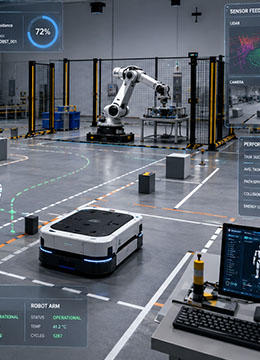
- Providing a Robot Testing Environment
- To address the challenge of conducting adequate testing of physical AI robots due to physical space constraints, the Macnica will establish a testing facility starting in fiscal year 2026.
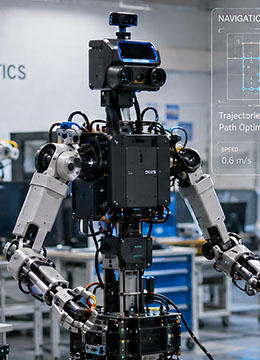
- From Consulting to Implementation
- We provide comprehensive support, ranging from verifying and researching the effectiveness of physical AI for your company’s operations to prototype development and integration into edge devices and equipment.
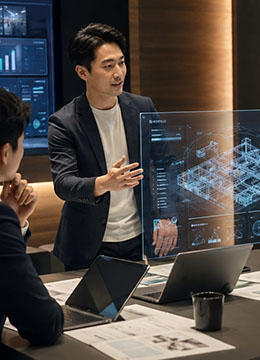
- A wide network of partners
- We are actively developing and collaborating with a wide range of partners both in Japan and abroad to advance the societal implementation of Physical AI, and we are able to drive projects forward by leveraging this network.