- Semiconductor BusinessHOME
- Products and Services of Macnica,Inc.
-
technical information

-
Events and Seminars
- Handling Manufacturer
- Support
- Inquiry
- Click here to purchase products
- Semiconductor business e-mail magazine registration


 Narrow down by specifying conditions
現在2240件がヒットしています。check

Deciding on a concept A surefire plan to win
There are three requirements for creating a robot:
1) Detect the ball rolling from the pitcher's stand and light up the LED
② To move the bat and knock the ball back
3) After going around the bases, it will detect home base and stop.
It seems like it would be difficult to incorporate these three things (sweat)
The next important step is to decide on a concept!
How can we achieve the batting power and running speed reminiscent of Shohei Ohtani?
Would it be better to have a heavy robot with a strong bat to hit home runs, or a light and nimble robot with the speed to aim for the minimum number of hits?
It looks like there will be a trade-off between running and batting (sweat).
This time, there is a special rule that if you don't hit the ball with the bat, you won't get any points even if you run. So we'll create a special bat and aim to run as fast as we can to ensure a hit!
Add to that the additional artistic points and you'll be crowned champion!
We decided to get artistic points by showing off our "love for Macnica" and "an overwhelming presence" through creative design of the robot!
(The robot's appearance will remain a secret until the final episode.)

Robot appearance (secret)
The robot's fun friends
Thus, the production training began in earnest.
Let us introduce our fun team of friends who help us achieve "guaranteed hits and the fastest running"!
First, let me introduce you to a bat that will help you hit the ball with confidence.
This time we will be using a special bat that utilizes the principle of Blackbeard's Last Stand.
As shown in the photo below, when the motor turns, the core inside pops out.
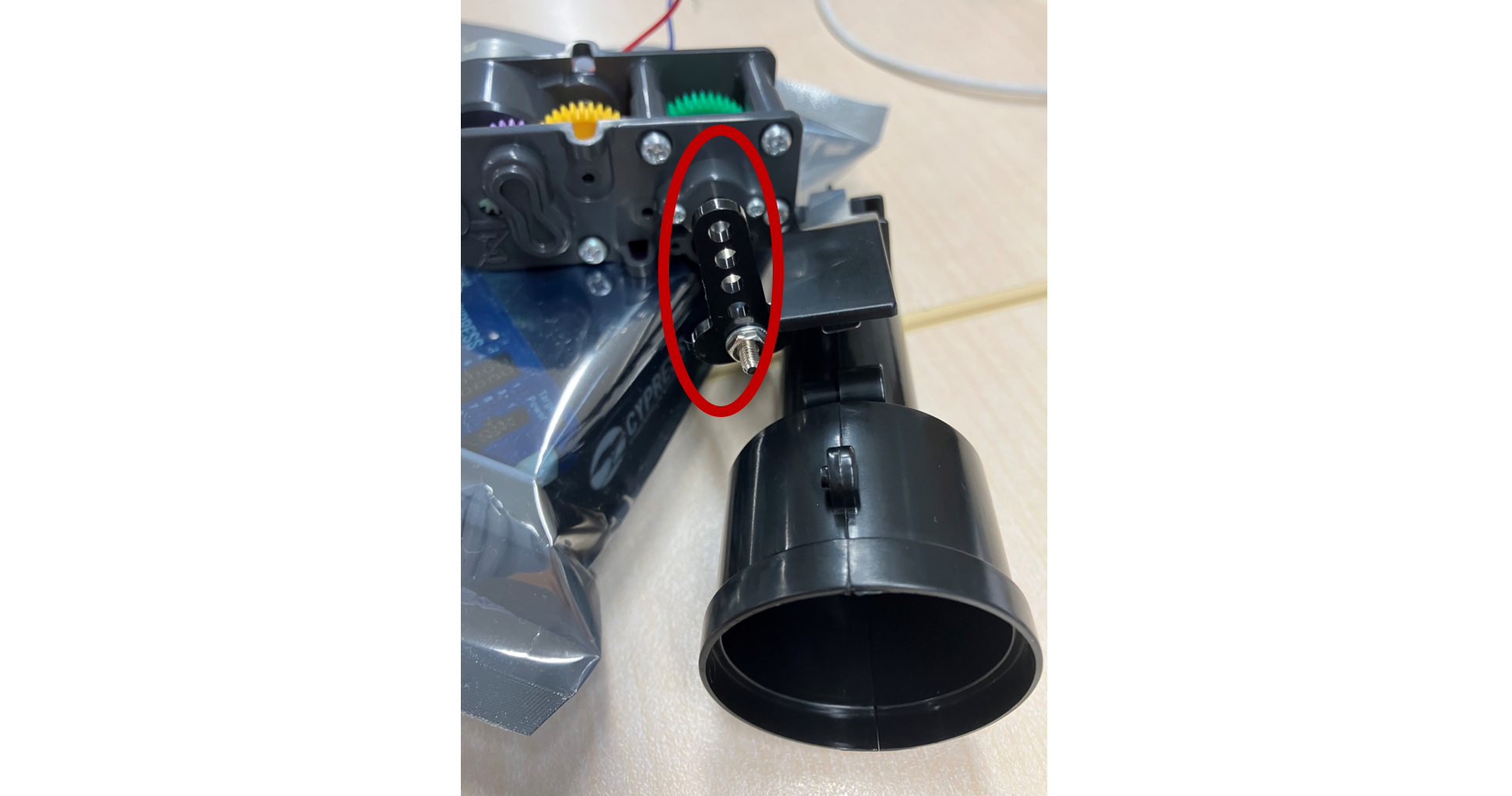
Before the motor starts rotating
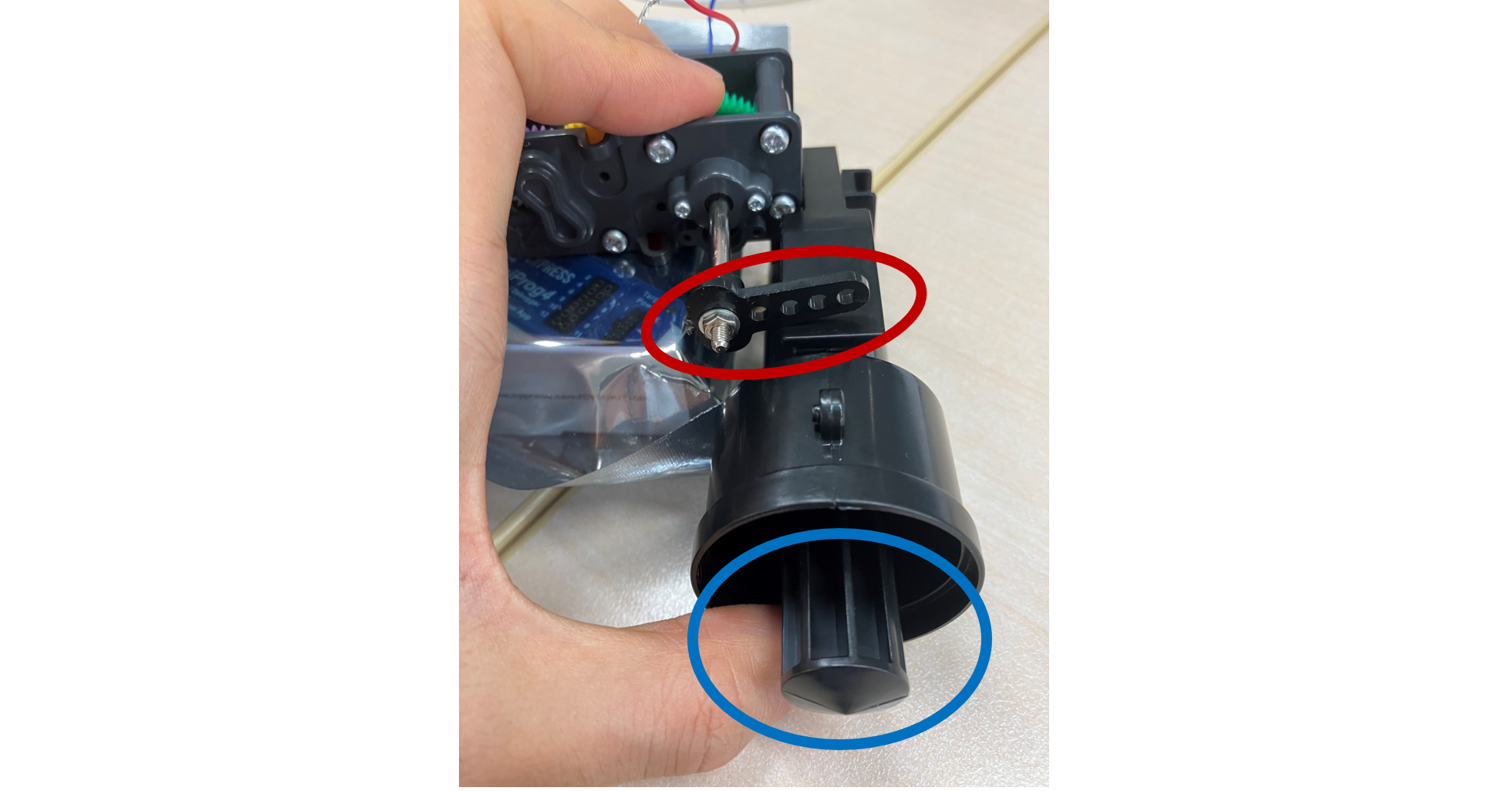
After the motor rotates
You may be wondering, how is this a bat that guarantees hits?
Don't worry. This is where the trick comes in.
How can you ensure a hit?
All you need to do is create a bat that covers the entire strike zone (right?!)
According to prior information, I have heard that the strike zone is 8cm wide.
With this information in mind, this time we will install an 8cm board to ensure a hit.
(It takes a surprisingly large amount of time to install this board.)
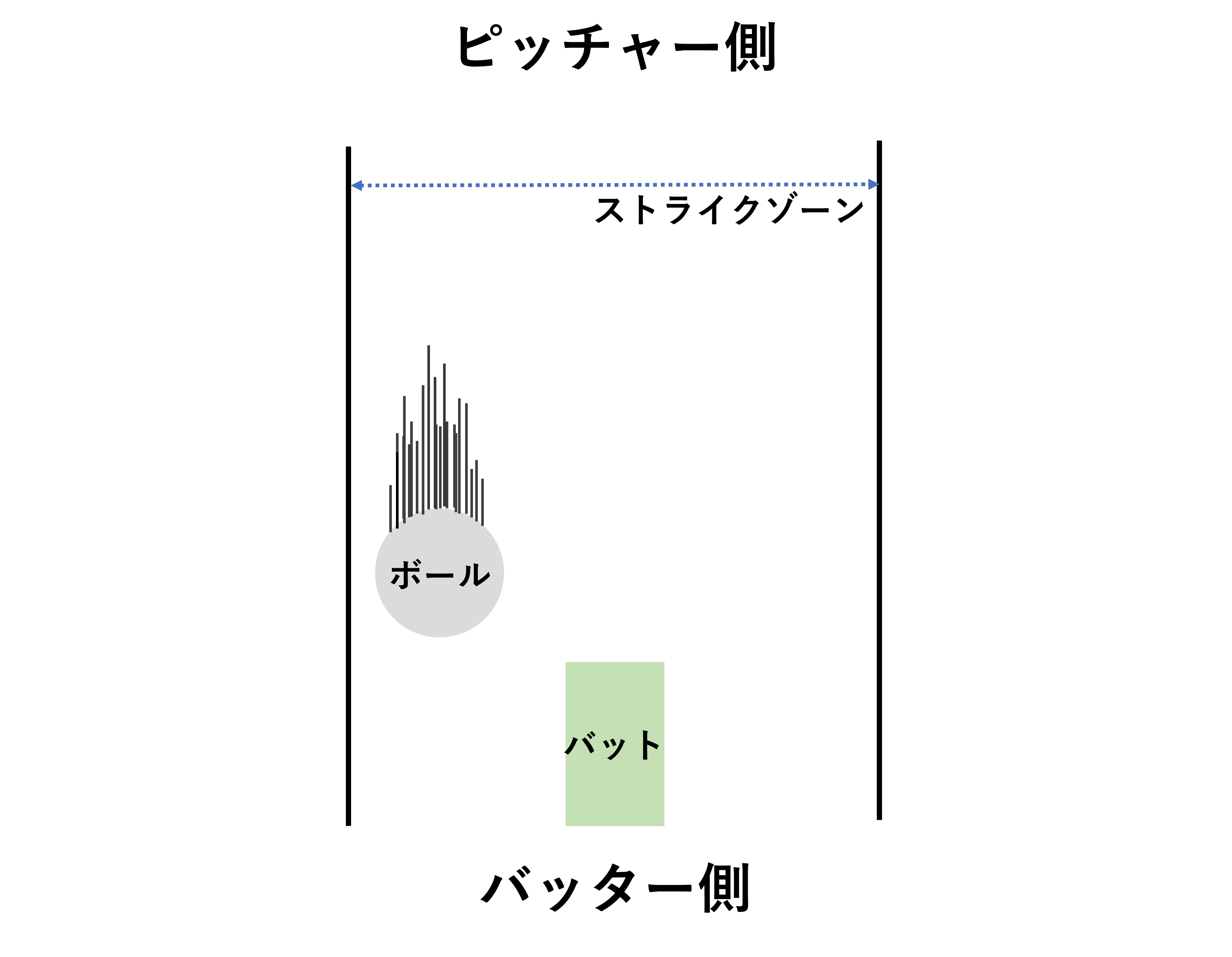
Before installing the board
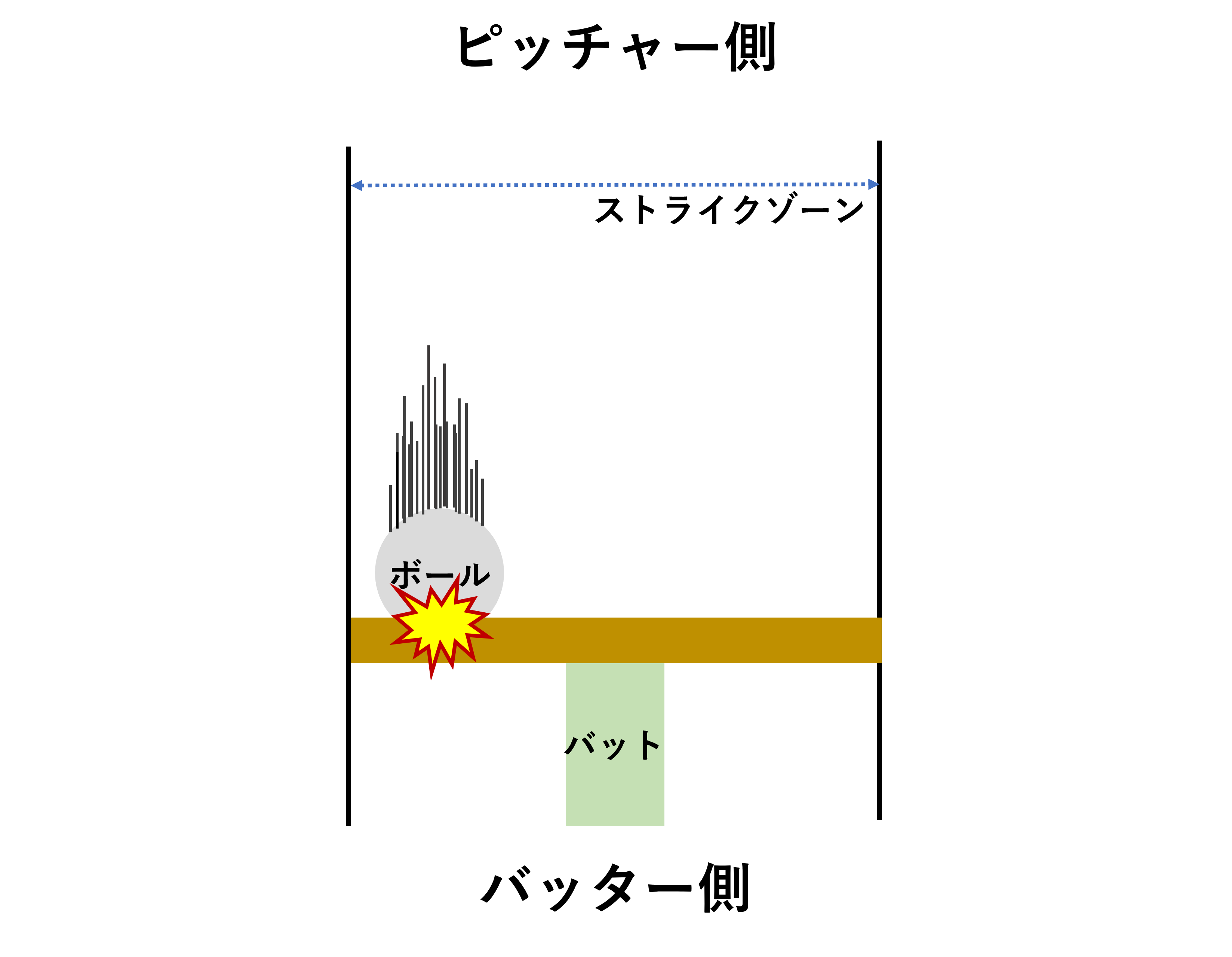
After installing the plate
Next is the motor to achieve the fastest possible running speed.
This time, I decided to buy a variety of motors because I still couldn't decide which one was best.
We hope to achieve the fastest possible running speed by selecting this motor and controlling the software to run and turn at the optimal speed.
I'll tell you more about the software in the next post!
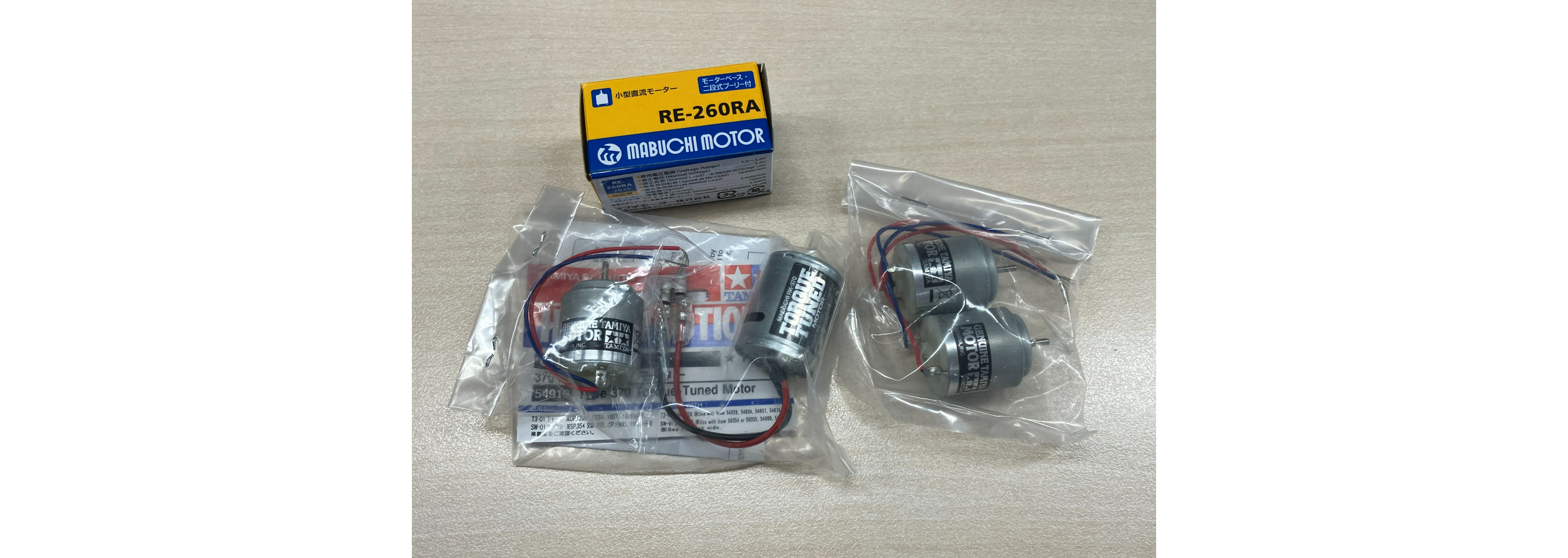
Purchased motor
Now, onto the biggest hurdle of this project: introducing the sensor, our secret weapon for capturing a moving ball!
The sensor we will use this time is an ultrasonic sensor! We will use the principle of ultrasonic sensors to sense the ball.
Also, here is the ultrasonic sensor we will use this time!

Ultrasonic sensor used in this study
This sensor has a long sensing distance and, as you can see, it has only four pins, so it looks easy to use!
I also chose this ultrasonic sensor because there was a lot of information on the Internet about its use.
It might be surprisingly easy to win!
(At that time, I had no idea how difficult it would be to use ultrasonic sensors...)
Robot block diagram and layout
Here is the block diagram of this robot!
Three batteries are used to supply voltage to the control system, line tracing, and bat mechanism! With this, there is no doubt that the robot will move with great energy!
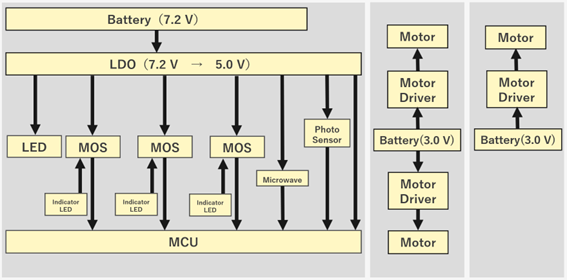
Block Diagram
Here's the layout diagram for the case!
It has a three-layer structure with the power supply on the first layer, the microcontroller on the second layer, and the indicators on the third layer, giving it a neat appearance and making it easy to debug when problems occur with the hardware or software.
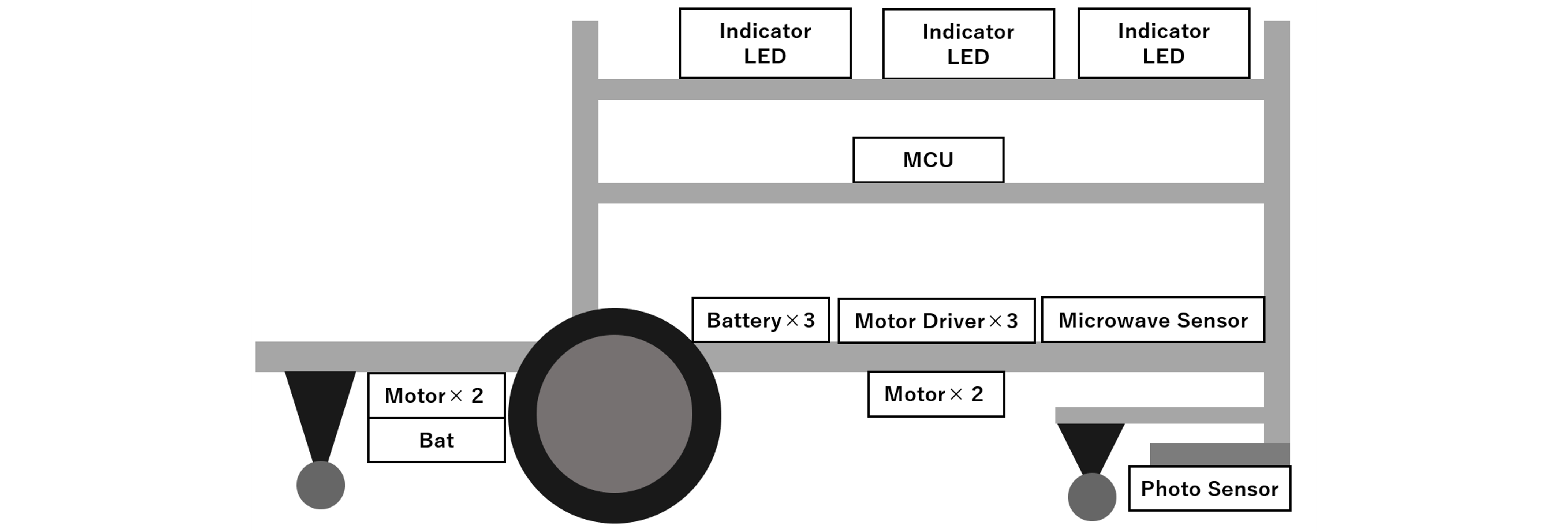
Layout diagram
The basic specifications of the robot have been decided.
However, the composition has only been decided, and the real production training begins from here.
Next time: "Make your robot move with the love of Macnica! Parts mounting edition!"