

Taneva Osaka
Excitement.

timetable
We offer a variety of programs, including lectures, panel discussions, and participatory workshops.
Find a session that interests you and enjoy your day at Taneva Osaka!
| Venue A | Venue B | Venue C | |
| 13:00~ 13:15 |
opening
|
||
| 13:15~ 13:55 |
A-1 "Can you really continue that defense?"
~In an era where we cannot protect ourselves alone, how should we be?~
The increasing sophistication of cyberattacks and the accelerating pace of digitalization are making security risks surrounding businesses and organizations increasingly serious. Meanwhile, a shortage of personnel to combat these risks is a major challenge, and "old ways of defending" are becoming obsolete. This session will address the current state and challenges surrounding security personnel, and explore new approaches needed in the coming era from the perspective of practitioners working in the field. Talent development, knowledge sharing, and connections that transcend organizational and corporate boundaries will be crucial forces supporting security in the future. From "someone protects" to "everyone protects." What should we change, and what kind of future should we aim for, to achieve sustainable security? We will explore clues to these questions together with the participants.
Vice Chairperson of the ICT-ISAC Steering Committee
Vice Chairman, Cross-Industry Cybersecurity Study Group
JCOM Corporation 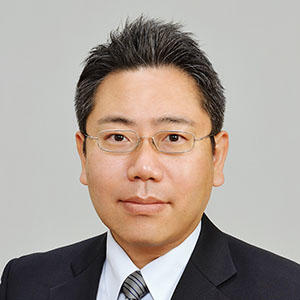 Kansai Information Security Community Leader
Santen Pharmaceutical Co., Ltd. 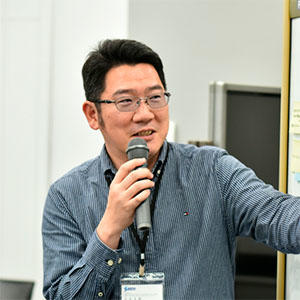 Japan CSIRT Association (General Incorporated Association)
District Activities Committee Vice Chairman
Simple Form Co., Ltd. 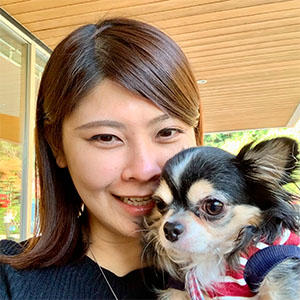 |
||
| 14:05~ 15:05 |
A-2 What should internal communication be like for the security department?
~Eliminating miscommunication about security and developing communication techniques to motivate organizations~
Even though the need for security measures is understood, many people face challenges such as "the field staff aren't taking action," "they're not cooperating," and "the value isn't being communicated to management." Behind this lies not only a problem with technology and countermeasures, but also a problem with "communication."
In this session, a communication expert and a security practitioner will take part in a dialogue format. Addressing challenges faced in daily work, such as communication within teams, across departments, and between superiors and subordinates, they will explain the mindset and practical methods of communication that gets through to others and leads to action. You will take away know-how that can be used regardless of your position or organization, such as technical writing and explanation structuring to convey technical content clearly, and communication skills to engage stakeholders. Key points of communication
Explained from an academic perspective
Kyoto University Graduate School of Management 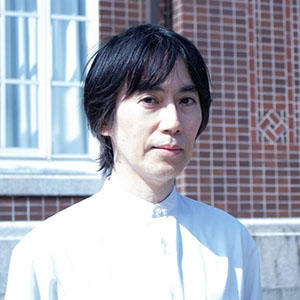 Associate Professor, Graduate School of Management, Kyoto University
From the perspective of managing an organization in a business company
Panasonic Holdings Corporation 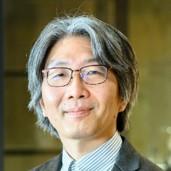 |
B-1 Why aren't AI rules being followed? Thinking about AI governance that works in practice.
Even if guidelines and rules for AI utilization are established, there is no guarantee that they will be correctly understood in the field and translated into actual actions. What are the factors that render AI governance meaningless, such as shadow AI, inappropriate use of generative AI, and differing judgments across departments?
In this session, through a panel discussion by corporate practitioners, we will identify points that need to be reviewed in your company's AI governance and organize the challenges from the perspectives of policies and guidelines, operation, monitoring, education, and organizational culture. Furthermore, we will consider specific next steps that will lead to behavioral changes at the operational level. Transforming AI governance from a "rule-making initiative" to a system that is understood, chosen, and followed at the operational level. You will take away practical tips for increasing its effectiveness. NTT WEST-CIRT practitioners
NTT West Corporation 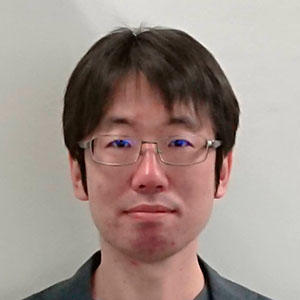 Group as a whole
Covers IT/OT/product security.
Fujitec Co., Ltd.  |
How to cultivate the judgment skills needed to prevent C-1 incidents
- Redesigning employee training -
When considering employee training, issues such as "how to increase attendance rates," "how to reduce the open rate of targeted attack emails," and "how to demonstrate a return on investment" are often discussed. However, beyond these lies a more fundamental question: "how to cultivate employees' judgment skills?"
In this workshop, participants will learn experientially about the background behind biases and oversights in judgment, and the importance of "pauses" for making appropriate decisions, by analyzing real-world examples. Participants will share their perspectives and ideas with each other, reflect on their company's training programs, and explore the learning mechanisms truly necessary to cultivate judgment skills. With feedback from the instructor, participants will develop actionable insights that can be taken back to their workplaces. A security practitioner who studies how people make decisions.
Human-centric cybersecurity researcher 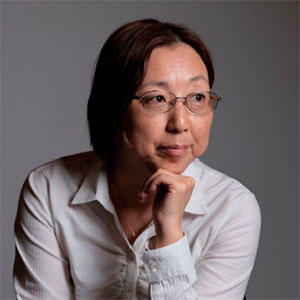 Having worked in cybersecurity for national institutions and private companies across global locations, I have been involved in the practical implementation and management of cybersecurity. Facing the reality of repeated incidents and misjudgments in diverse cultural and organizational environments, I realized that the problem lies not in technology itself, but in "how people make decisions." Currently, I research creating environments where people can confidently relearn and make flexible decisions, focusing on the perspectives of judgment, memory, habits, and culture, and I am disseminating information on human-centered cybersecurity. |
| 15:05~ 15:40 |
Break & Social Time
01
Experience
Permanent experience booths
A hands-on experience corner for those who are too embarrassed to ask about "remote virus infection and manipulation."
Experience a simulated scenario from infection with a remote control program to the point where a device is controlled remotely. This allows you to understand the fear of being remotely controlled from an unseen perspective and the impact cyberattacks can have on the workplace.
02
Interact
Sweets distribution and social time
Let's enjoy some sweets and share our thoughts and impressions.
We'll have snacks selected by sweets enthusiast Masaki-san. This is a time to talk about your impressions of the session, ask questions to the speakers, and casually interact with other participants.
03
Connect
Community Booth
Let today's encounters lead to further learning and connections.
We'll be showcasing the activities of various communities. Find a community that interests you and be sure to visit their booth and talk to them!
|
||
| 15:40~ 16:20 |
A-3
5年後の自分を描けなくてもいい
キャリアは計画ではなく、歩いてきた轍がつくる。
琉球大学・海洋学科卒からNECのCISOに至った講師が、パーツモデル・箱庭・スキルのかけ算という3つの視点で、セキュリティの責任者がこれまでの経験を武器に変え、明日から新たな轍を刻むためのヒントを語ります。
日本電気株式会社 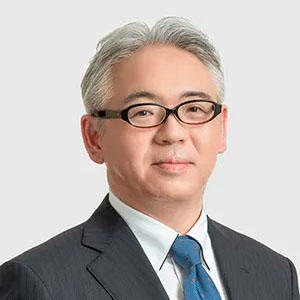 |
B-2 [Participatory] The World's Best AI Guideline Tournament
Reviewing AI Usage Guidelines with Challenge Cards: A Practical Workshop "We've created AI usage guidelines, but we're not sure if they're actually working in practice." "We feel they need reviewing, but we don't know where to start." "We want to gain the necessary perspectives and practical knowledge to formulate them in the future."
This session is an interactive workshop for information security and AI governance professionals who have these kinds of concerns. Using a template guideline and challenge cards, groups will consider what rules, operations, visualization, and training are necessary to address the challenges anticipated when using AI. Rather than simply adding prohibited actions to the list, our aim is to design guidelines that are followed in practice and can be continuously improved. Through this workshop, you will visualize the current state and gaps in your company's guidelines and prioritize the elements that are lacking. You will take home the completed draft guidelines along with specific next actions that your company will take after the session. Responsible for corporate security
Fenrir Inc.  Kansai Information Security Community Manager
Fujitec Co., Ltd.  |
|
| 16:20~ 16:40 |
Break & Social Time
01
Experience
Permanent experience booths
A hands-on experience corner for those who are too embarrassed to ask about "remote virus infection and manipulation."
Experience a simulated scenario from infection with a remote control program to the point where a device is controlled remotely. This allows you to understand the fear of being remotely controlled from an unseen perspective and the impact cyberattacks can have on the workplace.
02
Interact
Sweets distribution and social time
Let's enjoy some sweets and share our thoughts and impressions.
We'll have snacks selected by sweets enthusiast Masaki-san. This is a time to talk about your impressions of the session, ask questions to the speakers, and casually interact with other participants.
03
Connect
Community Booth
Let today's encounters lead to further learning and connections.
We'll be showcasing the activities of various communities. Find a community that interests you and be sure to visit their booth and talk to them!
|
||
| 16:40~ 17:20 |
Is A-4 security staff human?
~Rethinking the Value of Humanity in the Age of AI~
Cybersecurity has developed primarily through technical measures, and management and operational systems have also been established. But as AI and automation advance, what role should humans play? What should we protect, what should we permit, and what risks should we accept? How should we use technology, and how should we respond to its consequences? These decisions involve the values and responsibilities of individuals and organizations.
People get tired, anxious, trust, and try to fulfill their responsibilities. Attackers exploit these traits to manipulate judgment. However, trust and a sense of responsibility are also essential qualities that support work and organizations. Human vulnerabilities cannot be patched up like technology. It is necessary for people to remain human, acknowledge their weaknesses, regain their judgment, and utilize their strengths. This lecture will begin with human judgment and vulnerabilities and then move on to the role that humans will play in the age of AI. We will explore how to connect each individual's knowledge, experience, and strengths to the organization's defense, and how security can lead these efforts. Furthermore, we will consider the role of communities in sharing wisdom, experimenting, and supporting each other with colleagues outside the organization. We will reconsider how to cultivate the resilience of both individuals and organizations by viewing security as a "safety mechanism" that supports organizational activities and growth. A security practitioner who studies how people make decisions.
Human-centric cybersecurity researcher Having worked in cybersecurity for national institutions and private companies across global locations, I have been involved in the practical implementation and management of cybersecurity. Facing the reality of repeated incidents and misjudgments in diverse cultural and organizational environments, I realized that the problem lies not in technology itself, but in "how people make decisions." Currently, I research creating environments where people can confidently relearn and make flexible decisions, focusing on the perspectives of judgment, memory, habits, and culture, and I am disseminating information on human-centered cybersecurity. |
||
| 17:20~ 17:30 |
closing
|
||
| 18:00~ 20:00 |
Social gathering
04
Enjoy
Social gathering
Let's talk about security more casually and more enjoyably.
A social gathering will be held after the event! We are planning a Q&A session about anything and everything, security-related haiku, security quizzes, and more. Let's have fun and network together! *Contents are subject to change.
|
||