- Semiconductor BusinessHOME
- Products and Services of Macnica,Inc.
-
technical information

-
Events and Seminars
- Handling Manufacturer
- Support
- Inquiry
- Click here to purchase products
- Semiconductor business e-mail magazine registration


 Narrow down by specifying conditions
現在2235件がヒットしています。check
The IoT (Internet of Things) market is expected to grow in the future. It seems that the market is not expanding very rapidly, but there are more opportunities to see the words smart house and network home appliances, and people wearing wristwatch-type wearable devices can be seen here and there.
The IoT market is gradually expanding, but Silicon Labs has released a very epoch-making microcomputer aimed at this market.
What is required for microcomputers in the IoT era
Before introducing the product...
What functions and performance are required for microcontrollers used in IoT devices and wearable terminals?
It is often said that "low power consumption performance" is important.
In particular, many sensor nodes, etc. are battery-powered due to the installation location, so it would be a great advantage to be able to build a system with low power consumption. If the frequency of battery replacement can be reduced, maintenance costs can be reduced, and by using batteries with a smaller capacity, it may be possible to reduce the size of equipment and reduce parts procurement costs during manufacturing.
"Affinity with wireless technology" is also important.
Since IoT devices are “devices connected to networks,” they have some means of communication. IoT has a high affinity with radio (wireless), and Bluetooth®, WiFi, 3G/LTE, Z-Wave, ZigBee, Thread, and ultra-small wireless (920MHz band) are used according to the application. Bluetooth Low Energy is spreading rapidly, and ZigBee is also used in North America and parts of Europe. In the future, it is expected that threads that support IPv6 will spread. Wi-Sun (920MHz band), which has been adopted as standard in smart electricity meters in Japan, is also noteworthy.
Silicon Labs is also a very strong manufacturer in this "affinity with wireless technology", but I will introduce it on another occasion.
These two points. In particular, I think that many people are familiar with the "low power consumption performance".
In addition to these, “security” will be the key in the future.
Why "security" now?
As devices form networks to exchange information, the risk of information leaks increases accordingly. For example, it would be terrifying to know whether you are at home or not by spying on sensor information in your home. The importance of enhancing security has been discussed in various places, so I will leave the detailed explanation there, but encryption is one of the means to enhance security.
There are various types of encryption, such as public key cryptography such as AES and DES/3DES, common key cryptography such as RSA and ECC (elliptic function), and hash functions such as SHA-1 and SHA-2. There is a method. Do you want encryption? Which cipher to use? Regarding …, there are cases where the manufacturer has a choice, but there are cases where it is obligatory to use a specific encryption depending on the government, organization, or standard, and the use of encryption is required especially for IoT devices. It seems that there are many cases.
If you need encryption, you can do it with software, so what's the problem? Why is "security" the key? You might think that.
So what's the problem?
That's the time it takes for the software processing of the encryption.
Software processing of cryptography involves very complex operations. If you use a microcomputer that does not have high processing performance, software processing will take a huge amount of time, so the average power consumption will increase accordingly. If it is a device that operates on batteries or batteries, the battery life will be shortened. Also, a system that needs to perform cryptographic authentication at high speed may not be able to tolerate long processing times in the first place.
On the other hand, using a CPU with high processing performance shortens the processing time, but such a CPU usually has a high base current, and the cost of parts also increases.
This is an extremely difficult task, especially for devices such as sensor nodes that require a balance between power consumption and manufacturing costs.
The idea of installing an encryption engine
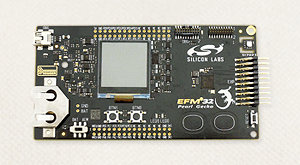
The EFM32PG /JG family released by Silicon Labs is likely to provide a solution to this difficult problem that plagues engineers.
This EFM32PG /JG family includes a dedicated hard macro for encryption. This security engine supports cryptography required by IoT such as ECC, SHA-1, SHA-2 and AES.
Since it is processed by hardware, the processing time required for encryption is short, and it is excellent in low power consumption performance. It is important that this function is installed in the Cortex-M3 (EFM32JG) and Cortex-M4F (EFM32PG) class microcomputers.

Next time, I will introduce the details of this EFM32PG/JG.
If you are interested in the EFM32 series microcontrollers, please also see here
Related article
- Finally equipped with a security engine! IoT era microcomputers have come so far! (1)
- Finally equipped with a security engine! IoT era microcomputers have come so far! (2)
- Finally equipped with a security engine! IoT era microcomputers have come so far! (3)
- Finally equipped with a security engine! IoT era microcomputers have come so far! (4)