- Semiconductor BusinessHOME
- Products and Services of Macnica,Inc.
-
technical information

-
Events and Seminars
- Handling Manufacturer
- Support
- Inquiry
- Click here to purchase products
- Semiconductor business e-mail magazine registration


 Narrow down by specifying conditions
現在2237件がヒットしています。check

ON Semiconductor SiC Cascode JFET Switching Temperature Characteristics and Performance
ON Semiconductor's SiC cascode JFET product lineup is built on a core technology that combines a high-voltage normally-on SiC JFET with a low-voltage normally-off Si MOSFET in a cascode configuration. Figure 1 shows a simplified cross-sectional structure of a typical SiC MOSFET and ON Semiconductor's SiC cascode JFET.

Figure 1: Schematic cross-section of a typical SiC MOSFET and ON Semiconductor's SiC cascode JFET
The problem with switching losses in power circuits is the "reverse recovery loss" that occurs every time the body diode conducts. When the body diode conducts, a charge Qrr accumulates. When the diode is then reverse biased, a recovery current flows that discharges the accumulated charge Qrr, causing losses. This body diode action consumes larger peak power as the switching frequency increases, reducing efficiency.
For Si MOSFETs, the switching losses can be very large. In some circuits, for example a typical totem-pole PFC operating in continuous conduction mode (CCM), Si MOSFETs are not actually used due to the large losses. The stored charge Qrr also depends on the device's breakdown voltage. Figure 2 compares ON Semiconductor's SiC cascode JFET with a Si superjunction MOSFET with similar ratings. Comparing the reverse recovery waveforms of the body diode, we can see that ON Semiconductor's SiC cascode JFET has a smaller reverse recovery time.

Figure 2: Comparison of reverse recovery current waveforms between SJ MOSFET and ON Semiconductor's SiC cascode JFET
ON Semiconductor's SiC cascode JFET feature 1: Short reverse recovery time
The stored charge Qrr of a SiC MOSFET is 10 times better (less than 1/10) than that of a Si MOSFET. However, ON Semiconductor's SiC cascode JFET is even better. This is because the output capacitance of the cascode-configured SiC JFET is small, and the body diode of the low-voltage Si MOSFET that is responsible for ON/OFF switching has less stored charge.
Figure 3 shows waveforms comparing the reverse recovery time of a SiC MOSFET and ON Semiconductor's SiC cascode JFET. The stored charge Qrr of the SiC MOSFET is 220nC. The body diode of the SiC MOSFET has a high forward drop voltage VF, so if VF is too high, a SiC Schottky barrier diode is connected in parallel. Qrr at that time is 275nC. On the other hand, the body diode of ON Semiconductor's SiC cascode JFET has a low Qrr of 105nC, which helps reduce switching losses.
ON Semiconductor's SiC cascode JFET feature 2: Reverse recovery loss does not increase even when temperature rises
The data in Figure 3 was measured at 150 °C, 800V, and 11A. The body diode Qrr of ON Semiconductor's SiC cascode JFET is characterized by the fact that it does not change much with temperature. Qrr increases by only 10% when changing from 25 °C to 150 °C. This is because most of the Qrr of ON Semiconductor's SiC cascode JFET is generated from the output capacitance Coss of the SiC JFET. Since it is a capacitive charge, it does not increase with temperature. Part of Qrr is generated from the body diode of the Si MOSFET and increases with temperature, but overall it only increases by 10%.

Figure 3: Comparison of reverse recovery current waveforms between SiC MOSFET and ON Semiconductor's SiC cascode JFET
ON Semiconductor's SiC cascode JFET feature 3: Almost no Miller capacitance
The SiC JFETs that make up ON Semiconductor's SiC cascode JFETs have almost no drain-source capacitance Cds. Strictly speaking, since the electrodes are opposed, it is not completely zero, but it is a value that is extremely close to zero. If we consider the gate-drain capacitance Cgd of ON Semiconductor's SiC cascode JFET in Figure 4, the drain-source capacitance Cds_sic of the SiC JFET and the gate-drain capacitance Cds_si of the Si MOSFET are connected in series, so the combined Cds value is extremely small.
This means that the feedback capacitance Crss (=Cgd) is small, and when used as a synchronous FET in a synchronous rectification system, the risk of false ON due to a steep rise in the switch node is extremely small.
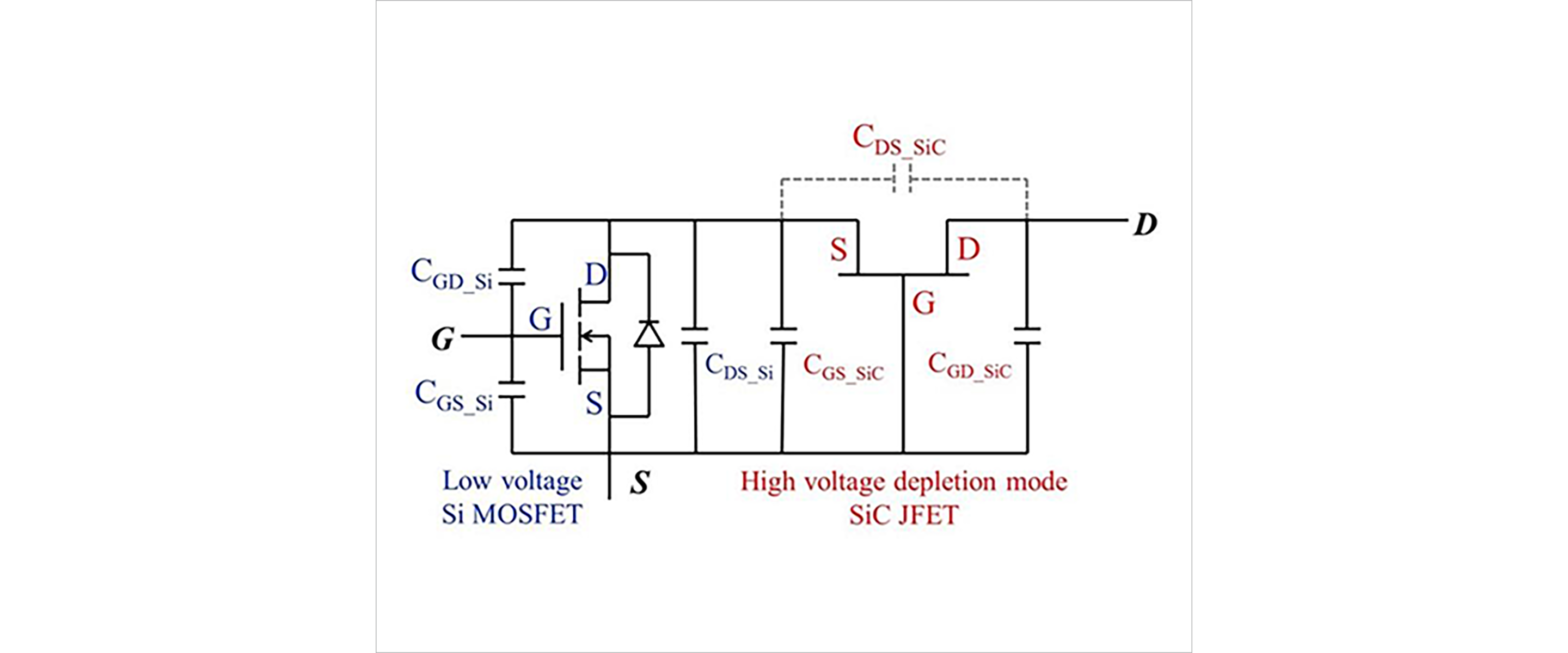
Figure 4: Parasitic capacitance of ON Semiconductor's SiC cascode JFET
FETs have parasitic capacitance as shown in Figure 5. When the drain voltage increases rapidly, the gate potential changes depending on the ratio of Cgd and Cgs capacitance. The effect is particularly large when the drain voltage is high. When the drain voltage changes from zero to 600V, the gate potential changes by 6V if the Cgs/Cds ratio is 1/100. Care must be taken when the gate driver has a high output impedance.
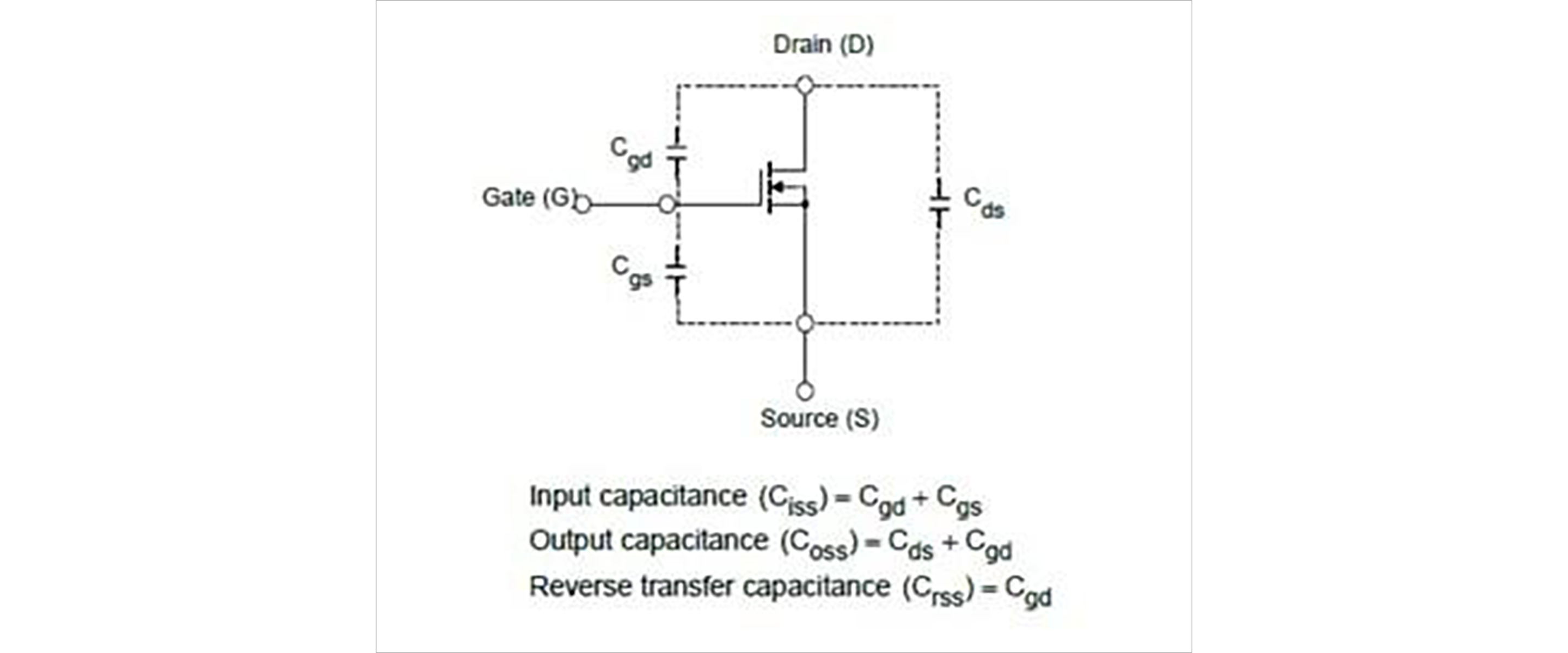
Figure 5: Parasitic capacitance of ON Semiconductor's SiC cascode JFET
Table 1 shows an example of parasitic capacitance extracted from the data sheet for an actual SiC cascode JFET (UJ4SC075006K4S) from ON Semiconductor. In this example, the Cgs/Cds ratio is 4/(8374-4) = 1/2092, and the gate potential fluctuates by less than 0.3 V for a drain voltage change of 600 V, making the possibility of false ON very low.
|
Parameter |
Symbol |
Test Conditions |
Value |
Units |
| Input capacitance |
Ciss |
VDS=400V、VGS=0V f=100kHz |
8374 |
pF |
| Output capacitance |
Coss |
362 |
||
| Reverse Transfer capacitance |
Crss |
4 |
Table 1: Parasitic capacitance of ON Semiconductor's SiC cascode JFET UJ4SC075006K4S
Inquiry
If you have any questions regarding this article, please contact us below.
On Semiconductor Manufacturer Information Top Page
If you want to go back to ONSEMI maker information top page, please click below.