Site Search

USER PROFILE

Minami Group Home Shoyuen

■Company information:
Minami Group Home Shoyuen

■Business details:
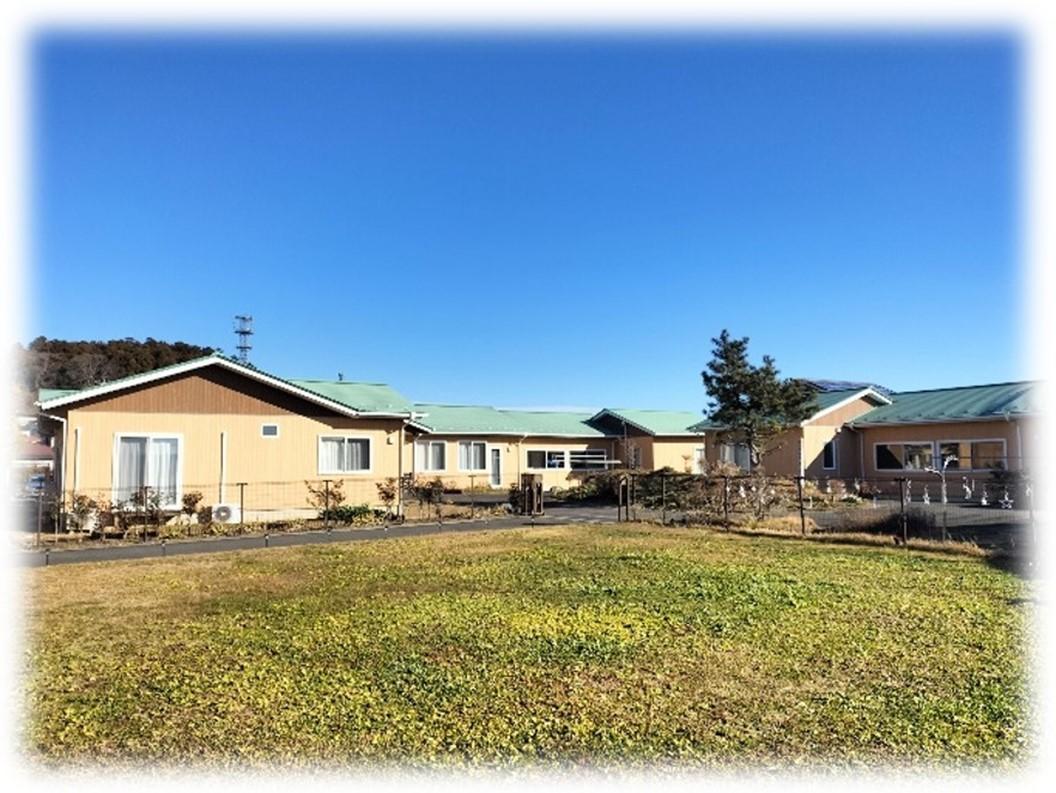
It opened on April 15, 2005, and provides dementia care services in a community living environment.
Additionally, from April 1, 2006, the facility has also been designated as a dementia care prevention community living facility.
It is currently operating as a group home with two units that can accommodate 18 people.

■ Interviewees:
Administrator: Keisuke Ito

summary

Background/issues


Seeking measures to prevent accidents while protecting the privacy of residents
selection

Highly recommended for being "easy to install and use for anyone"
At the time of introduction

Establishing safety measures has brought positive changes to the facility
Current operation


The number of daily inspections has been reduced by 20 to 30 times, and there are many other associated benefits, such as reduced physical and mental stress on employees.
from now on

Expectations for improved safety through data accumulation and cameras

Background and Issues

The situation required urgent action.

A group home is a place where elderly people with dementia live together. They have a good balance between privacy in their individual rooms and social time in the living room and salon.

In typical elderly care facilities, the entire floor can be seen from offices, making it easy to keep an eye on the residents' movements at all times, but we believe it is also important to improve the quality of life for residents while reducing stress as much as possible.

On the other hand, the facility had many blind spots, which was an issue. In fact, there were two to three near misses every month, and there was concern that "at some point, a resident might have an accident, such as a fall or a fracture."

For example, when a resident walks to the toilet alone, their gait can be unsteady and dangerous, so staff would usually rush over to guide them.

However, especially at night, the timing when support was needed was difficult to predict, as the patient was moved before the staff noticed. Even during the day, there was a similar risk when preparing meals, etc.

We felt that we needed to take urgent measures to improve this situation. However, the number of staff members was limited, and there was also a limit to how many times they could increase the number of inspections. To overcome the limitations of manpower, we felt that we needed the power of machines. So we asked a referral company for help, and they introduced us to Macnica.

selection

The low barrier to entry was the deciding factor

Macnica introduced us to their "non-contact bed sensor," which can detect when residents get out of bed or when there is an abnormality, and "Attentive Connect™," which allows us to view that data.

The deciding factor in our selection was how easy it was to install. In our case, we needed to come up with a solution as quickly as possible, so the fact that it was easy to use right away was a great help.

When I worked at another facility, we used other companies' monitoring sensors, etc.
The sensors were attached to the legs of the bed, which required lifting, which was physically demanding and time-consuming work, especially for female staff.

However, this "non-contact bed sensor" requires only placing a thin sensor mat under the mattress, plugging it in, and checking that the PC is working, so it requires far less time and effort. Another advantage is that even if it is installed on one resident's bed, it can be easily moved to another resident's bed.

I also found it convenient that you can set the time period for the alert to be issued individually for each resident. For example, for one resident, we set the alert to go off only at certain times during the night. It is very helpful to be able to focus on only the nighttime hours when there are fewer staff members available to respond.

At the time of introduction

Contributing to changing employees' risk awareness

When introducing the system, we decided to set priorities for staff responses. This is because, in addition to responding to various people such as vendors and visitors from the residents' families, the group home also handles external and internal phone calls. If all of these situations occur at the same time and the "Attentive Connect™" alert goes off, the rule is that the top priority will be to rush to the resident who has received the alert.

When it comes to visitors or phone calls, you can simply say, "Please wait a moment" or "I'll call you back," but the one thing you must avoid is putting off issuing an alert and something that didn't need to happen happening.

However, there's no point in having an alert sound if you can't hear it, so we also established a rule that the volume of the computer running "Attentive Connect™" must always be set to maximum and the volume must not be changed.

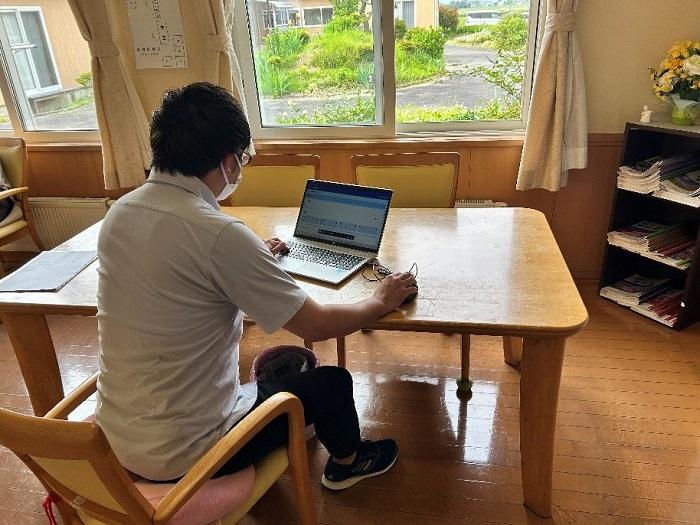
In the past, it was hard to hear the alerts due to everyday life and cooking noises, so I made some adjustments to the environment, such as introducing a portable speaker. Now, I try to keep my computer within sight even when I'm cooking.

When the "non-contact bed sensor" was first introduced, it was used on the bed of a resident in the room furthest back of the home. However, staff soon started to complain that it took too long for them to arrive after the alarm sounded. So, after consulting with the resident's family, we decided to move the resident's room to a location closest to the office and floor.

By introducing these safety measures for residents, staff members have also made new realizations and it seems their awareness of risks has increased considerably.

Current operation

The number of daily patrols has been greatly reduced

It has been about a year and a half since our facility introduced the "Non-contact Bed Sensors" and "Attentive Connect™," and the biggest change has been that the number of daily patrols has decreased by 20 to 30 times. Near misses, which used to occur two to three times a month, have now decreased to about once every two months since the introduction.

Previously, in addition to patrolling once an hour, staff would check in immediately if they heard any noise or anything else. However, even though it was for safety reasons, the residents felt uneasy when staff came to check on them so frequently.
I think that by reducing unnecessary patrols, we have been able to create an environment where employees can get plenty of rest while still ensuring safety.

The same goes for the staff, who were sometimes nervous, saying, "I don't know when I'll need to respond." The more frequent the patrols, the more movement there is, and the more fatigue there is. However, now that they can check the situation to some extent on a computer screen, they have actually said, "The physical and mental burden has been greatly reduced. It's really helped." The number of staff members is particularly low on the night shift, so the effect is all the more significant.

The same goes for the residents' families in terms of peace of mind. We believe that explaining the details of the equipment, as well as the risk reduction measures, helped them feel more at ease. In fact, we have had families see us respond to an alarm that went off when they came to visit.

We cannot imagine going back to the way things were before the machines were introduced, not only from the perspective of safety, but also from the perspective of improving staff productivity. We will continue to make efforts to improve the facility environment by skillfully using the help of machines for areas that are beyond our reach.

from now on

Hopes for data utilization

Currently, we can use Attentive Connect™ to keep track of residents' breathing and vital signs, but we believe that in the future, it will become even easier to use if we can also accumulate data on residents' daily rhythms.

For example, if it is possible to know "until what time does this person sleep and what time does he wake up" and receive advance notification accordingly, there will be no need to send audio notifications, and staff will be able to prepare mentally.

Also, if we could introduce the camera set you introduced previously, it would increase safety even more, so we would definitely consider that as well.
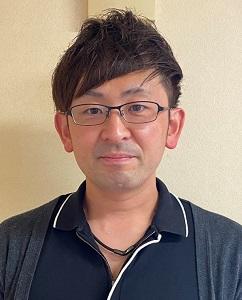
Administrator: Keisuke Ito

Related Information

Inquiry

Attentive Connect™ Information Top

To return to the Attentive Connect™ information top page, please click below.