I was surrounded by the smiles and joy of the members.
"The best AI workshop"
--Panasonic Automotive Systems
Panasonic Automotive Systems is a Tier 1 company for car manufacturers in the mobility field, providing a variety of in-vehicle systems. As the industry undergoes change in line with the times, the company has set a vision of becoming the world's number one "comfortable travel design" company. The company decided to participate in this workshop because it believes that AI know-how is essential to realizing this vision in pursuit of "comfortable travel" for people, cities, and the planet.
Participants in this interview
- Panasonic Automotive Systems Co., Ltd. Cabin UX Business Development Office Expert Hirohiko Kanao
I needed to learn the "basics of AI"
--What departments participated this time?
Kanao: I am a member of the Cabin UX Business Development Department, which was newly established in April 2024. Directly reporting to the president, my main mission is to create new businesses with the aim of increasing corporate value. It is a flat organization made up of a total of 30 BTC (Business, Technology, Creative) members. About half of the members of the department participated this time.
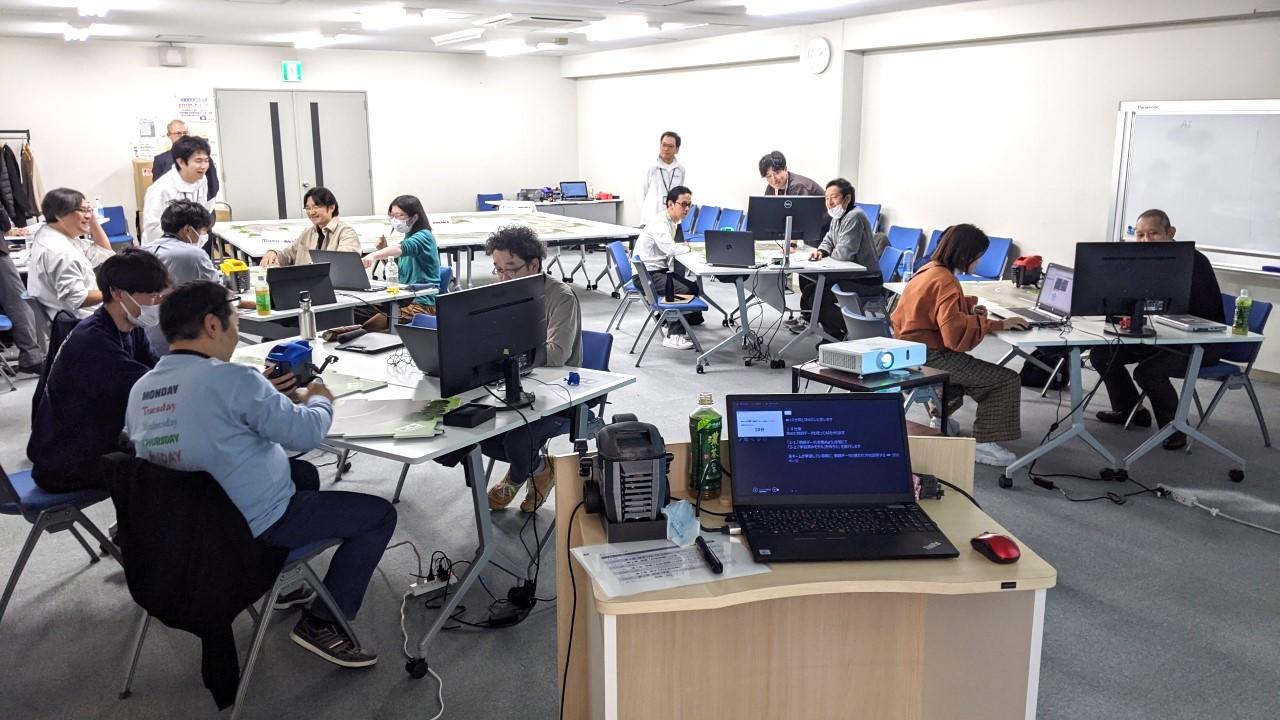
-Have you had any contact with AI before?
Kanao: We use it to create images using image generation and to ask text-based questions. The Panasonic Group has introduced an in-house AI called "PX-AI," which any group employee can use to improve work efficiency.
However, it seemed to me that many employees did not understand how AI worked, or thought that "if we had AI, we could do anything." In other words, they were not able to apply it to themselves, and rather than "using AI to reduce our own man-hours and improve the quality of our output," it seemed as if web searches had simply been replaced with questions for AI. It seems that they have the literacy to use it well, but not the basic literacy.
On the other hand, the current automotive industry has a very close relationship with AI. For example, car manufacturers are using AI to analyze data obtained from sensors (LiDAR, cameras, radar) and learn many patterns to improve development speed. If you are going to be in the mobility industry and do business there, you need to have a solid understanding of AI, which will likely be the basis of the future, and be able to use it well. So I got the members of my department involved and decided to participate in this AI workshop.
-Where did you find out about the workshop?
Kanao: I happened to find Macnica 's workshop when I was searching the web for AI seminars on the theme of "Understanding cutting-edge technology and applying it to work." The Cabin UX Business Development Department is a small organization, so each individual needs to acquire and demonstrate their multi-talented abilities. However, since the organization's launch, no training for this purpose had been provided, so I proposed it to the department head. By the way, I am currently in a business planning position, but until March 2024 I was an engineer, and one of the reasons for this was that I had a long relationship with Macnica.
The benefits of team building are also "great"
--What are your impressions of the workshop?
Kanao-san: It was absolutely amazing, no exaggeration needed.
Panasonic has a saying left by its founder, Konosuke Matsushita, that "we develop people before we develop things," and the word for people is written as "jinzai" (human capital) rather than "jinzai" (human resources). Based on this philosophy, Panasonic is a company that provides learning opportunities, so I think that employees have more opportunities to gain various knowledge than other companies.
In fact, I also actively attend seminars both inside and outside the company. I've been with the company for 20 years, so if we assume 10 seminars per year, that means I've attended 200 seminars. This is common in corporate seminars, but when I looked around the classroom while attending, it was not uncommon to see employees falling asleep during the seminar, bringing in their computers to start doing work at home, etc.
However, this workshop was completely different. Everyone was smiling and actively participating, and not a single person remained silent. The participants were placed in an environment where they had to stretch a little beyond their current knowledge and skills in order to enjoy the workshop, but I got the impression that they just couldn't help but enjoy stretching themselves.
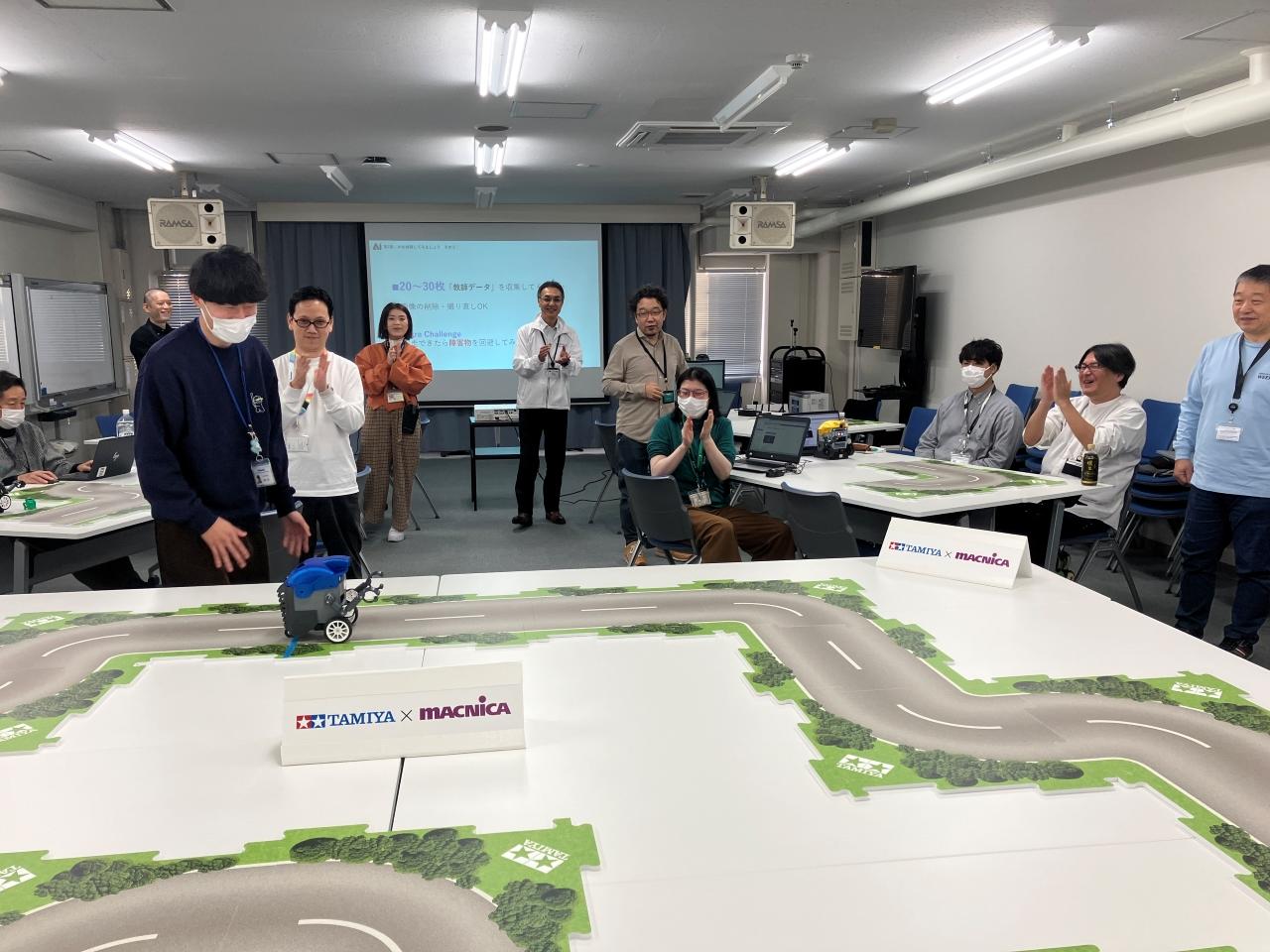
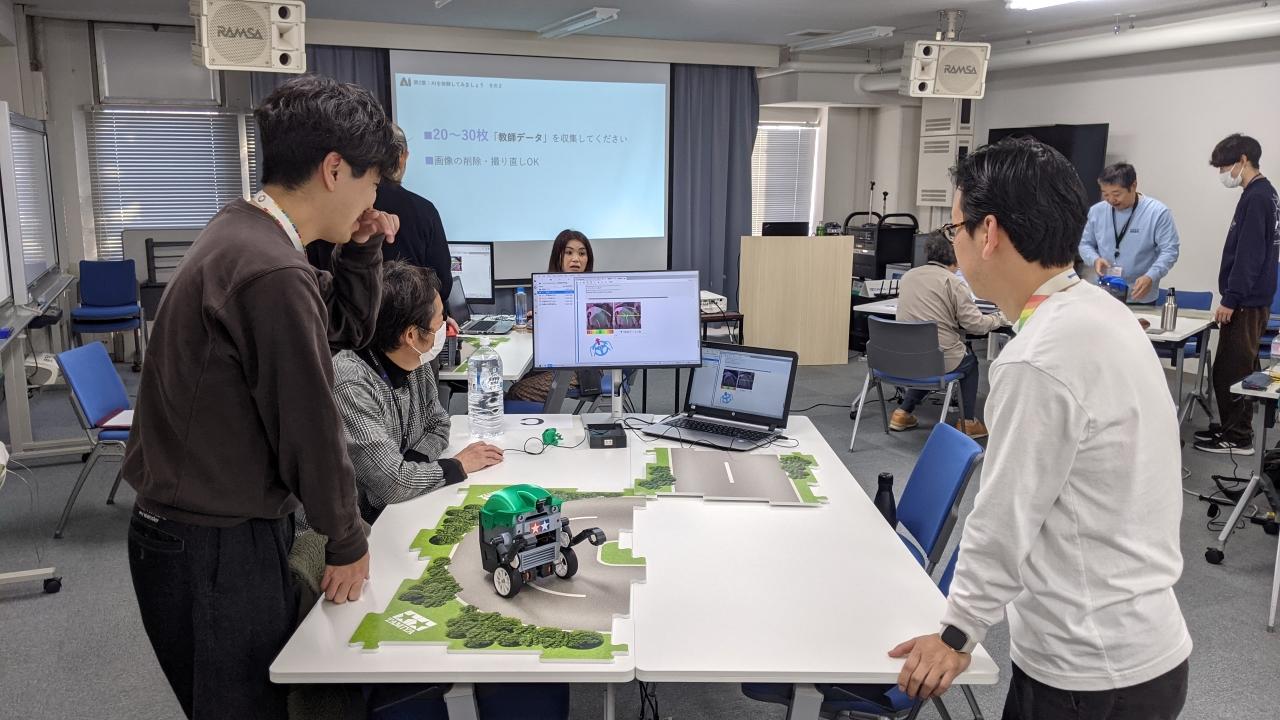
Many of the participants are working remotely and are busy with various projects. In addition, some participants had only met each other for the first time or via web conferences due to recent changes in members due to transfers or return to work. However, I felt that this workshop was not only useful for learning about AI, but also in terms of team building.
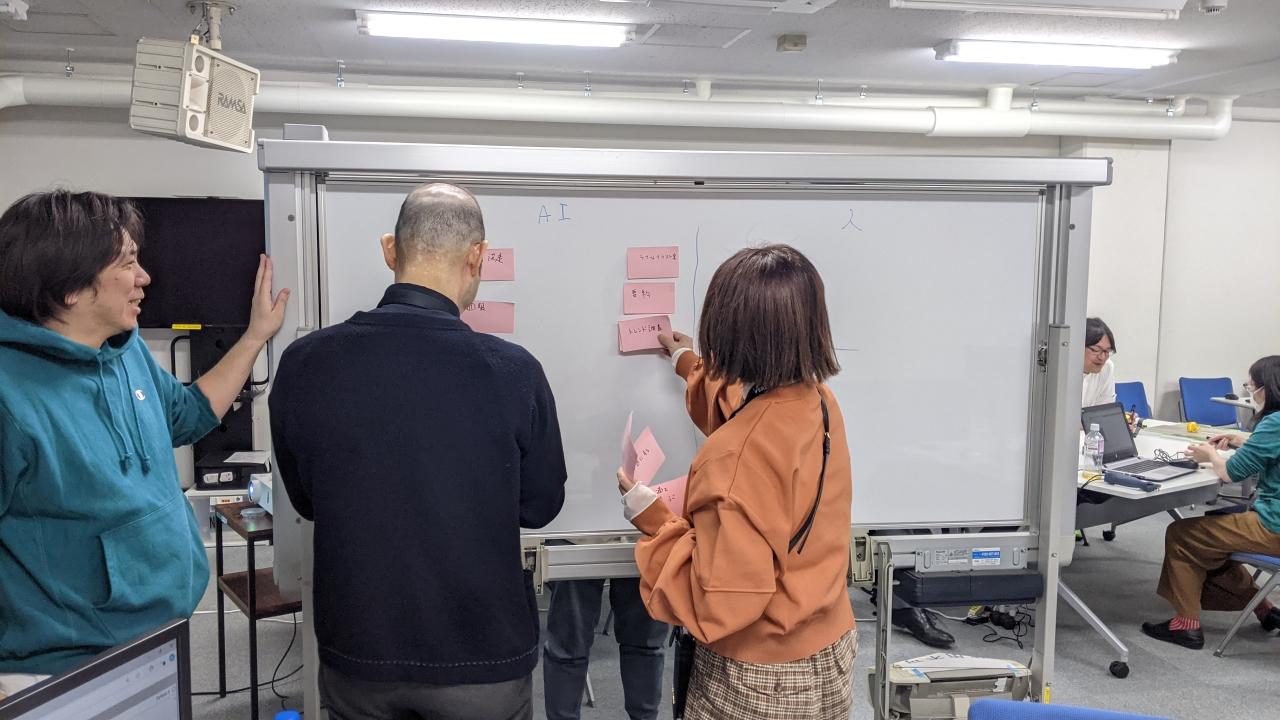
I feel that the program's forum for discussion allowed each participant to take the use of AI personally. It was also important that the participants were able to acquire a common language. Especially in the case of participants from different cultures like BTC, if they grew up in the same culture and speak a common language, their comprehension will be completely different. After all, I think that if there is a person who understands AI from a structural perspective and a person who does not, even if the output is the same, the person who understands it will definitely have a positive attitude.
It was also impressive that the participants were enthusiastically talking during breaks, regretfully leaving the seminar midway through an essential meeting, and some even requested an extension to the seminar. Also, on the way back to the office from the seminar venue after the seminar, all the participants were reflecting on the experience, saying things like, "That was like this, that was like that." Even the members who were unable to attend looked envious when they saw the participants returning to the workplace with a happy look on their faces, asking, "What happened!?" (laughs).
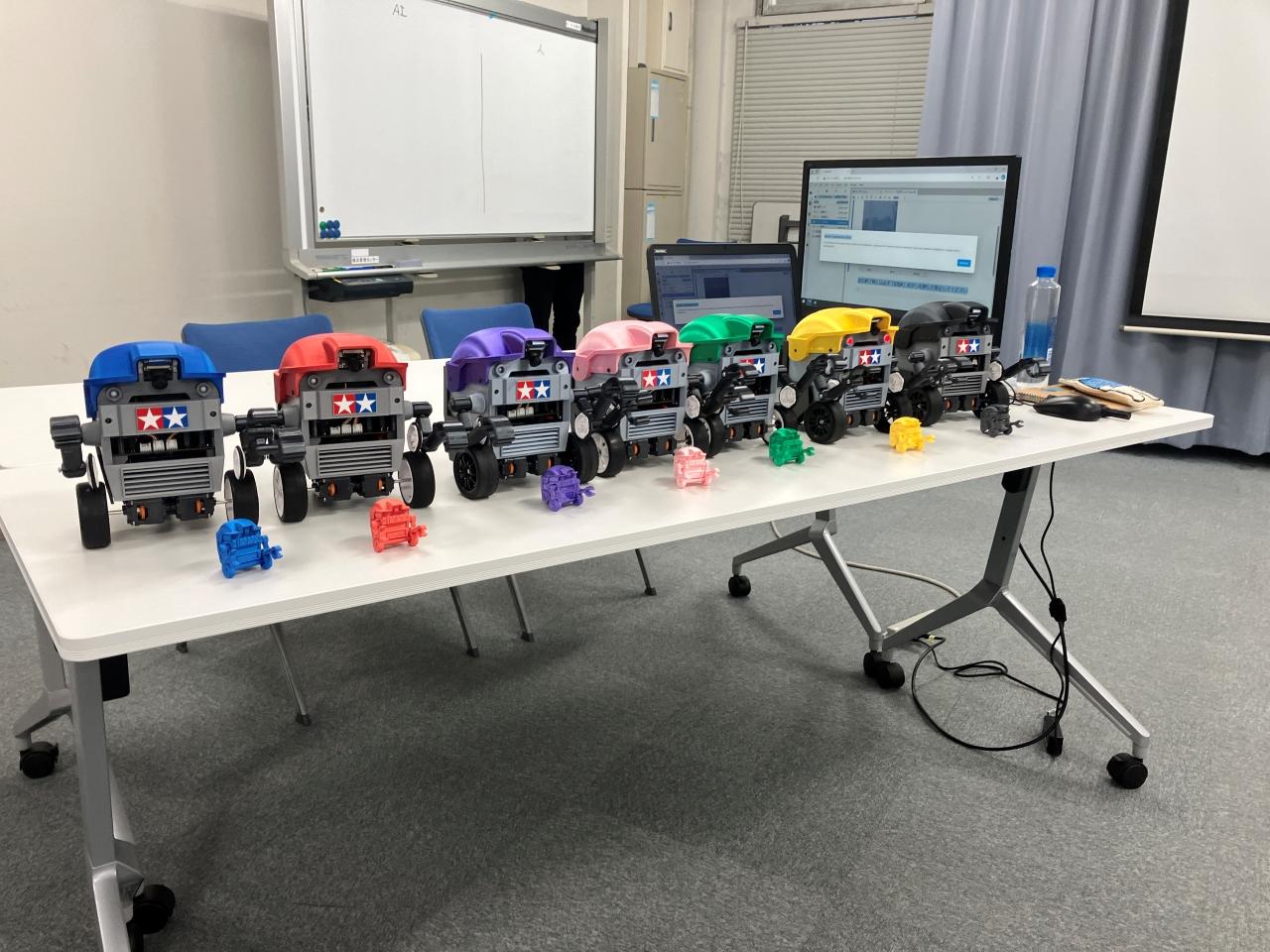
One of our members who was good at video production later told us, "I made a video of the Tamiya Robot running and used it to soothe my child." I don't think anything like this has ever happened before.
In the future, everyone will look back on this workshop and ask themselves questions such as "What is AI?" and "What does it do behind the scenes?"
Is a re-run in sight?
Would you recommend this workshop to other people?
Kanao-san: As the planner, I am very satisfied and really glad that we did it, so I would like to interview the remaining members and plan it again if there are many people who want to participate. This workshop is aimed at non-engineers, so I would like to introduce it to people in those departments as well.
--If there was a next time, what would you like it to be?
Kanao-san: This time, the content was beginner-level, but from the perspective of a former engineer, I would like to see an intermediate to advanced curriculum. For example, how NVIDIA 's chips work, and how they store captured images on the chips. I would also like to know why NVIDIA is said to be strong in AI, and the difference between ML and inference mechanisms. I think participants would be more interested if there were disassembled robots on display so they could be looked at during breaks.
AI has already become widespread in society, but I think there is also a demand for social topics such as "Actually, it is being used in these places" or "Conversely, there are many things that are not processed by AI."
"AI has data centers, which consume a lot of electricity, require water and cold air to cool, and if that electricity is not renewable, CO2 is generated when it is generated..." It is important to learn about these issues and how to solve them, and how to deal with them. There is talk that the more AI becomes widespread, the more carbon dioxide emissions will increase, but since you rarely see data centers in Japan, it is a valuable opportunity to learn about these things.
AI-based technology and the accuracy of AI itself will continue to improve, so if you could talk about a future world where all cars in the world are autonomous driving, for example, it would broaden our dreams and make it easier to visualize. It might be interesting to have a discussion together to generate ideas while imagining what the singularity (※) will be like in the future.
*: A concept referring to the tipping point at which AI surpasses human intelligence, or the changes that will occur as a result of that tipping point.
Panasonic Automotive Systems Co., Ltd.
- Business
- Development, manufacturing, and sales of in-vehicle cockpit systems, ADAS (Advanced Driver Assistance Systems) and related devices, in-vehicle chargers, xEV systems and devices, etc.
- Founded
- April 2022
- Number of Employees
- 33,000 people (about 6,000 in Japan, 27,000 overseas)
- website
- https://automotive.panasonic.com/
\Click here for details on Re:Alize/

 Latest Information
 Case Study
 Blog
Blog Document List