- Semiconductor BusinessHOME
- Products and Services of Macnica,Inc.
-
technical information

-
Events and Seminars
- Handling Manufacturer
- Support
- Inquiry
- Click here to purchase products
- Semiconductor business e-mail magazine registration

"Sensor" is the gateway to IoT
A sensor is a device or apparatus that converts physical or chemical phenomena into electrical signals or data and outputs them, serving as the "perception" in electronics applications.
Just as humans act based on the information they perceive through sight and hearing, electronic devices also collect information from sensors, which are perceptual devices, and display or operate based on that information.
Sensors are used not only in industrial fields such as factory automation, but also in transportation systems such as aircraft and automobiles, home appliances, and digital devices such as personal computers, smartphones, and digital cameras.
Especially for IoT, sensors are indispensable. In developing IoT devices, it is becoming very important to select the most suitable sensor from among many sensors. Knowing sensors is the first step in building IoT.
Sensors include not only sensors that measure physical phenomena such as light, sound, temperature/humidity, pressure, distance, electricity, magnetism, velocity, acceleration, and angular velocity, but also sensors that measure gases in the atmosphere, There are chemical sensors that examine the composition of, for example.
In addition, when classifying sensors according to the materials they are composed of, there are semiconductor sensors that use changes in the properties of semiconductor elements due to changes in physical quantities, and biosensors that use biological substances (enzyme sensors, microbial sensors, and immunosensors).
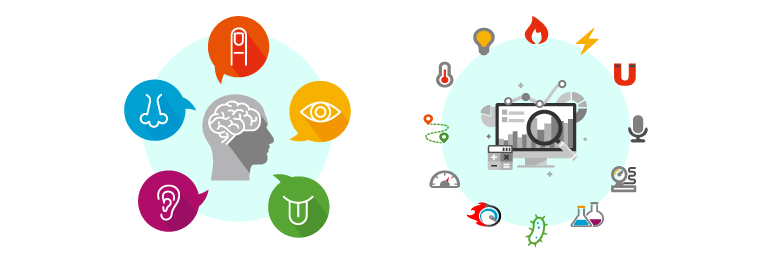
The point is to choose the sensor that is most suitable for the purpose of measurement.
Today, a large number of sensors have been developed, depending on the phenomenon we want to perceive. It is important to select the most appropriate sensor for the purpose of measuring what kind of phenomenon you want to measure. Here is an overview of the main sensors.
light sensor
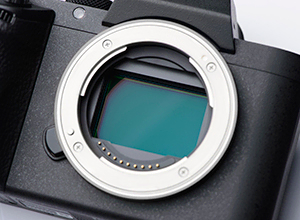
The first is the light sensor. Phototransistors with a transistor attached after a photodiode, infrared detectors that convert electromagnetic waves with a wavelength of 0.78 μm or longer into electrical signals, image sensors such as CCDs and CMOSs, and the presence or absence of objects and their surface conditions using the properties of light. There are optoelectronic sensors that detect changes in
Temperature sensor
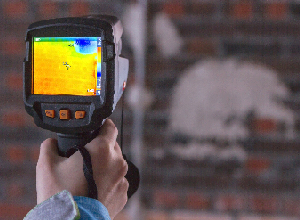
Temperature sensors include a thermostat that works to maintain a set temperature, a board-mounted temperature sensor that monitors the temperature of the electronic system and protects the system from overheating, and low to high temperatures. There are industrial temperature sensors such as thermocouples and resistance temperature detectors that can measure up to
humidity sensor

Humidity sensors are roughly divided into two types: polymer capacitance type and polymer resistance type.
Both use moisture-sensitive material that absorbs and dehumidifies moisture, but the polymer electrostatic capacitance type humidity sensor captures the converted electrical signal with electrical capacity, and the polymer resistance sensor captures the converted electrical signal with electrical resistance. A humidity sensor. Currently, polymer capacitance is the mainstream.
sound sensor
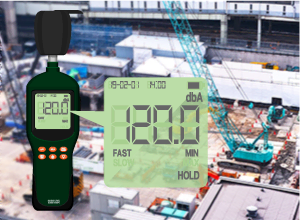
A sound sensor is a sensor that measures sound vibrations. To detect the vibration, there are methods that use electromagnetic induction, piezoelectric effect, and changes in the capacitance of the diaphragm.
pressure sensor

There are two types of pressure sensors: the dynamic measurement method, which measures pressure that fluctuates at high speed like sound waves, and the static measurement method, which measures the depth of water and the internal pressure of a pressure vessel. In addition, depending on the strength of the pressure, such as ultra-high pressure, normal pressure, or low pressure, there is a suitable measurement method for each.
magnetic sensor
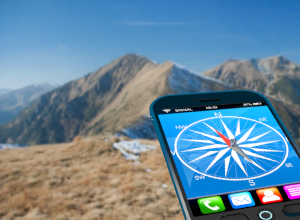
Magnetic sensors measure the magnitude and direction of magnetism generated by magnets and currents, as well as geomagnetism. Since magnetism has various strengths, there are many types of magnets, from coils, Hall elements, magnetoresistive elements to superconducting quantum interference elements.
Pioneering the Future of Applications Using Sensors
Sensors have come a long way today. Compact, high-performance, and compounded sensors have been developed, and the range of applications has expanded accordingly.
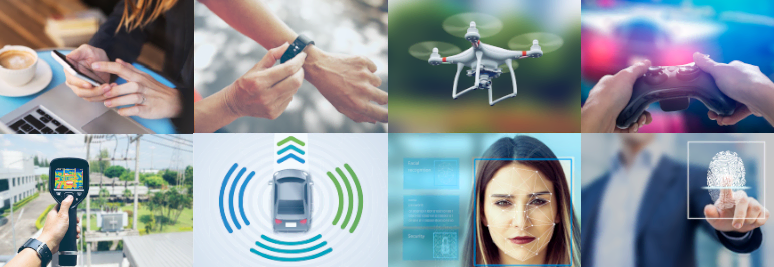
For example, small digital composite sensors that can measure atmospheric pressure, temperature, etc. have appeared and are already being incorporated into smartphones, wearable devices, drones, etc.
Accelerometers that can measure acceleration in the three directions of XYZ are also used in game controllers.
Contactless sensors are attracting attention in industrial IoT. This is because various data can be measured without contact and there is no need to worry about wear or damage to the detection target. Non-contact sensors use various methods such as infrared, magnetic, and optical sensors. In particular, optical high-temperature sensors, which measure temperature by detecting radiant heat, are being adopted in many factories because they can measure the temperature of many products simultaneously and instantly. is.
Millimeter-wave sensors that utilize electromagnetic waves with frequencies of 30 GHz to 300 GHz are also attracting attention in the industrial world. Since millimeter waves have a very high frequency band, they are highly linear and can be treated like lasers, even though they are radio waves. Therefore, it is expected to be applied to automotive and industrial equipment in particular.
In addition, face recognition sensors that analyze and match images captured by cameras with software are also used in building entry/exit management, immigration control at airports, and entrance checks at concerts.
Fingerprint authentication, which analyzes fingerprint information read by a touch sensor and compares it with pre-registered fingerprint information, is also widespread.
In the form of thermography, taste sensors, and gas leak detectors that use sensors that read infrared rays, the application areas of sensors are expanding in our homes as well.
The future of electronics applications will continue to expand through the skillful use of sensors.
Document download
We are preparing to document this page. Please download from the link below.
*Customers who have downloaded materials may be asked to provide feedback.
Inquiry
For companies that are considering digitizing their products and services and IoT in order to develop new markets and develop new products, we will provide easy-to-understand explanations from optimal product selection to introduction methods. I'll enjoy having this. Please feel free to contact us.