- Semiconductor BusinessHOME
- Products and Services of Macnica,Inc.
-
technical information

-
Events and Seminars
- Handling Manufacturer
- Support
- Inquiry
- Click here to purchase products
- Semiconductor business e-mail magazine registration

Product Summary
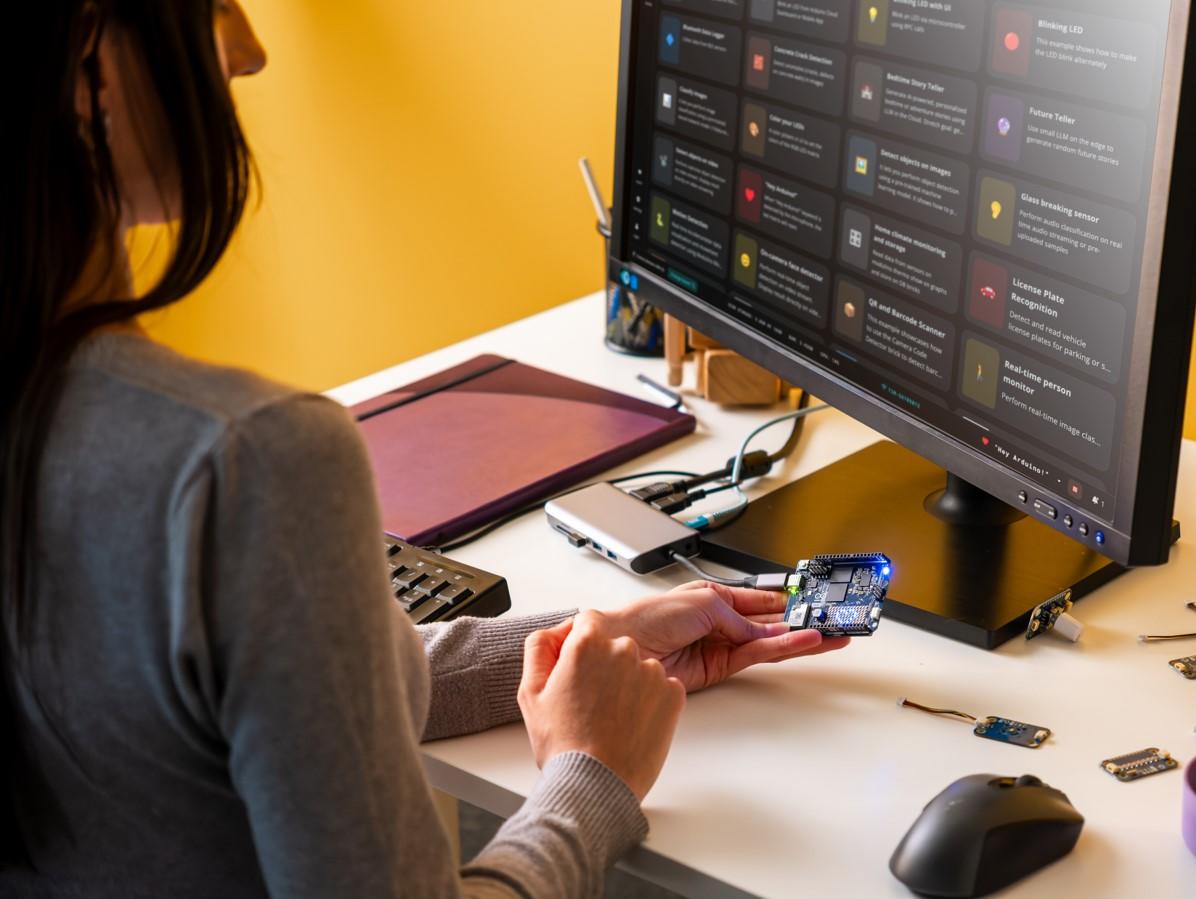
The Arduino® UNO Q is a dual-architecture platform that integrates a Qualcomm® Dragonwing™ QRB2210 system-on-a-chip (SoC) running in a complete Debian-based Linux environment with an STMicroelectronics® STM32U585 microcontroller (MCU) in a compact UNO form factor. It combines high-performance computing and real-time control to deliver the power and versatility required for edge AI applications.
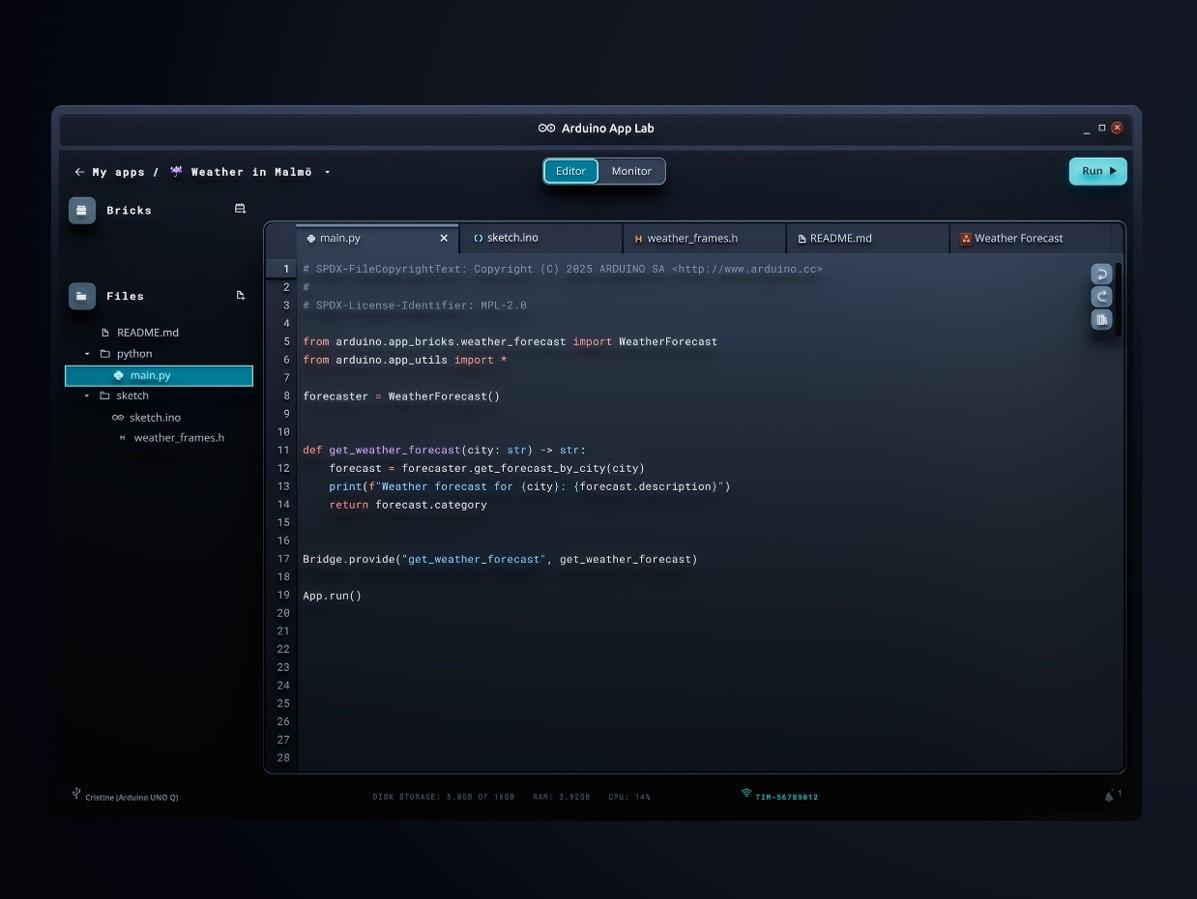
Arduino App Lab enables the integration of Python applications, Arduino sketches, and AI models into a single workflow. It's a next-generation embedded platform that can be used for a wide range of applications, from AI-driven vision/sound solutions to advanced smart home systems.
For developing the MCU subsystem, you are free to choose between the Arduino IDE or an editor such as VS Code with the Arduino CLI integrated.

Processor specifications
Qualcomm Dragonwing™ QRB2210 (SoC)
Quad-core Arm® Cortex®-A53 @2.0GHz
• Adreno GPU (3D graphics accelerator)
Dual ISP (13MP + 13MP or 25MP) @ 30fps
STM32U585 Arm® Cortex®-M33 (MCU)
・Arm® Cortex®-M33 maximum 160MHz
・Flash memory 2MB
・SRAM 786kB
• Floating-point unit (FPU)
Main function
Debian Linux OS
The built-in Debian Linux environment allows you to use a familiar Linux development environment without the need for additional hardware.
Use as a single-board computer
By connecting a USB-C dongle (with external power supply support), the following devices can be used.
HDMI display
Mouse and keyboard
USB camera
USB drive
Ethernet cable
• microSD card
USB microphone and headphones
*4GB RAM model recommended
Wireless connection (WCBN3536A module)
• Wi-Fi® 5 dual-band (2.4/5GHz), onboard antenna
Bluetooth® 5.1, onboard antenna
RPC (Remote Procedure Call)
The built-in RPC library (Arduino Bridge) enables the integration of MPUs and microcontrollers running on Linux, allowing for the creation of powerful and responsive applications in both environments.
Development environment
• Arduino App Lab: Enables integrated development of both MPUs and MCUs. Recommended for a full development experience.
• Arduino IDE 2.0+: Supports MCU programming.
Detailed specifications
|
Board |
|||
|
Name |
Arduino® UNO Q |
||
|
SKUs |
ABX00162 |
Memory |
2 GB RAM / 16 GB eMMC |
| ABX00173 |
Memory |
4 GB RAM / 32 GB eMMC |
|
|
Microprocessor Unit |
|||
|
Module |
Qualcomm Dragonwing™ QRB2210 |
||
|
CPU |
Quad-core Arm® Cortex®-A53 @ 2.0 GHz |
||
|
GPUs |
Adreno 702 GPU @ 845 MHz | 3D graphics accelerator |
||
|
ISP |
2x Image Signal Processor (13 MP + 13 MP or 25 MP) @ 30 fps |
||
|
Operating System |
Debian Linux OS with upstream support |
||
|
Memory |
Storage |
16 GB (ABX00162) or 32 GB (ABX00173) eMMC |
|
|
RAM |
2 GB (ABX00162) or 4 GB (ABX00173) LPDDR4 |
||
|
Pins |
Digital I/O Pins |
12x exposed on JMISC |
|
|
Media Interfaces |
Audio |
Microphone IN / Headphone OUT / Line OUT and Ear OUT on JMISC header |
|
|
Video |
Video output support via USB-C, HDMI display (through USB-C dongle) and MIPI DSI bus on JMEDIA header |
||
|
Camera |
Support for USB cameras via a USB-C dongle, plus dual MIPI CSI interfaces available through the JMEDIA header. |
||
|
User Interfaces |
RGB LED |
Yes (2x) |
|
|
Power Button |
Yes |
||
|
Microcontroller Unit |
|||
|
Core |
STM32U585 Arm® Cortex®-M33 up to 160 MHz |
||
|
Operating System |
Arduino Code on Zephyr OS |
||
|
Memory |
Flash |
2 MB |
|
|
SRAM |
786 kB |
||
|
Pins |
Digital I/O Pins |
47x (22x exposed on JANALOG/JDIGITAL, and 25x on JMISC) |
|
|
ADC |
14-bit |
6x analog inputs on JANALOG |
|
|
DAC |
12-bit |
Yes (2x) |
|
|
PWM pins |
6x (shared with GPIOs) |
||
|
OPAMP |
Yes (2x) |
||
|
External interrupts |
Yes (16x assignable to GPIOs) |
||
|
Communication |
USART |
Yes (3x) |
|
|
UART |
Yes (2x) |
||
|
I2C |
Yes (4x) |
||
|
SPI |
Yes (3x) |
||
|
CAN |
Yes (1x FDCAN) |
||
|
SAI |
Yes (2x) |
||
|
PSSI |
Yes (1x) |
||
|
User Interfaces |
RGB LED |
Yes (2x) |
|
|
LED Matrix |
Yes (8x13) |
||
|
Radio Module |
|||
|
Module |
WCBN3536A |
||
|
WiFi |
Wi-Fi® 5 Dual-band 2.4/5 GHz with onboard antenna |
||
|
Bluetooth |
Bluetooth® 5.1 with onboard antenna |
||
|
USB |
|||
|
USB-C® |
With host/device role switching, power role switch and video output |
||
|
Voltage |
+5 VDC max at 3 A |
||
|
Power |
|||
|
USB-C® |
+5 VDC max at 3 A to power the board. |
||
|
Input voltage (VIN) |
7 - 24 VDC |
||
|
I/O operating voltage |
+3.3 VDC MCU (+5 VDC tolerant) | +1.8 VDC MPU |
||
|
DC Current per I/O Pin |
20 mA (JANALOG and JMEDIA) |
||
|
Special Connectors |
|||
|
Qwiic |
Yes, for I2C (3V3) |
||
|
JCTL |
Yes, MPU Remote Debug connector |
||
|
Dimensions |
|||
|
Width |
53.34 mm |
||
|
Length |
68.58 mm |
||
Those interested in purchasing, please click here.
The Arduino UNO Qcan be purchased on Macnica-Mo Macnica user, an online store for semiconductor and electronic components.
Clicking on the product name below will take you to the Macnica-Mouser page.
Arduino® UNO Q (2 GB RAM / 16 GB eMMC)
Arduino® UNO Q (4 GB RAM / 32 GB eMMC)

Inquiry
If you have any questions about the contents of this page or would like detailed product information, please contact us here.