- Semiconductor BusinessHOME
- Products and Services of Macnica,Inc.
-
technical information

-
Events and Seminars
- Handling Manufacturer
- Support
- Inquiry
- Click here to purchase products
- Semiconductor business e-mail magazine registration


 Narrow down by specifying conditions
現在2196件がヒットしています。check

This article explains MRAM, a next-generation memory that combines non-volatility and high speed.
Chapter 3, "Verification Data," presents the results of a field study on the magnetic flux density of motors and inductors to evaluate the applicability of MRAM in magnetic field environments. The results of the magnetic flux density measurements taken at a certain distance from the magnetic field source are presented, and the effects are discussed.
Chapters 1 and 2 can be viewed via the link below.
Chapter 1, "Fundamentals": This chapter provides a clear explanation of the basic principles and features of MRAM, its differences from conventional memory, and its applications.
Chapter 2, "Applications": This chapter provides a detailed explanation of the applicability ofMRAMin magnetic field environments.
Actual measurement survey of magnetic flux density (conducted by Renesas Electronics Corporation)
This document summarizes the results of actual measurements of magnetic flux density in motors and inductors.
This section primarily presents the results of Gaussmeter measurements of magnetic flux density from the vicinity of the magnetic field source up to a certain distance.
No. 1 Motor
① Low-voltage motor
We measured the magnetic flux density of small, low-voltage BLDC motors (24V to 36V class) during both stopping and operation. Multiple motors were used for evaluation.

Figure 1: Low-voltage motor image (Image creator: Renesas Electronics Corporation, Production method: AI-generated image using Microsoft 365 Copilot)
Measured motor performance
Voltage: 24V to 36V
• Rated output: Approximately 10W to 30W
• Rotational speed: several thousand rpm
Measurement result
Outside the motor housing, the magnetic flux density was less than 2 gauss, both when the motor was stopped and when it was operating. Almost no difference was observed depending on the measurement direction (side, axial, or opposite direction).
|
Measurement conditions |
Lateral direction |
Motor axis |
motor shaft opposite direction |
|||
|
0mm |
3mm |
1mm |
3mm |
1mm |
3mm |
|
|
Motor (when stopped) |
<2 |
<2 |
<2 |
<2 |
<2 |
<2 |
|
Motor (20mA during operation) |
<2 |
<2 |
<2 |
<2 |
<2 |
<2 |
|
Motor (400mA during operation) |
<2 |
<2 |
<2 |
<2 |
<2 |
<2 |
*The distance (0/1/3mm) is the separation between the tip of the Gauss meter probe and the surface of the motor housing (0mm = contact).
Analysis and Summary
These motors are entirely encased in an iron casing, which itself acts as a magnetic shield. Since leakage flux is a factor that reduces efficiency in motor design, the structure is designed to minimize the leakage of magnetic fields to the outside.
Therefore, the magnetic field around the low-voltage motor is very small, and it is thought that placing an MRAM nearby will not have any effect.
② High-voltage motor
We measured the magnetic flux density of high-voltage motors intended for industrial applications, primarily during shutdown.

Figure 2: High-voltage motor image
Measurement result
The magnetic flux density outside the motor housing was less than 2 gauss, and no significant magnetic field was observed even with larger sizes and higher rated voltages.
Analysis and Summary
Even in high-voltage motors, the magnetic flux is contained within the casing due to the high magnetic shielding effect of the iron casing.
Therefore, the magnetic field around the high-voltage motor is very small, and it is thought that placing an MRAM nearby will not have any effect.
③ Outer rotor motor
We measured the magnetic flux density of an outer rotor motor, such as those used in drones.
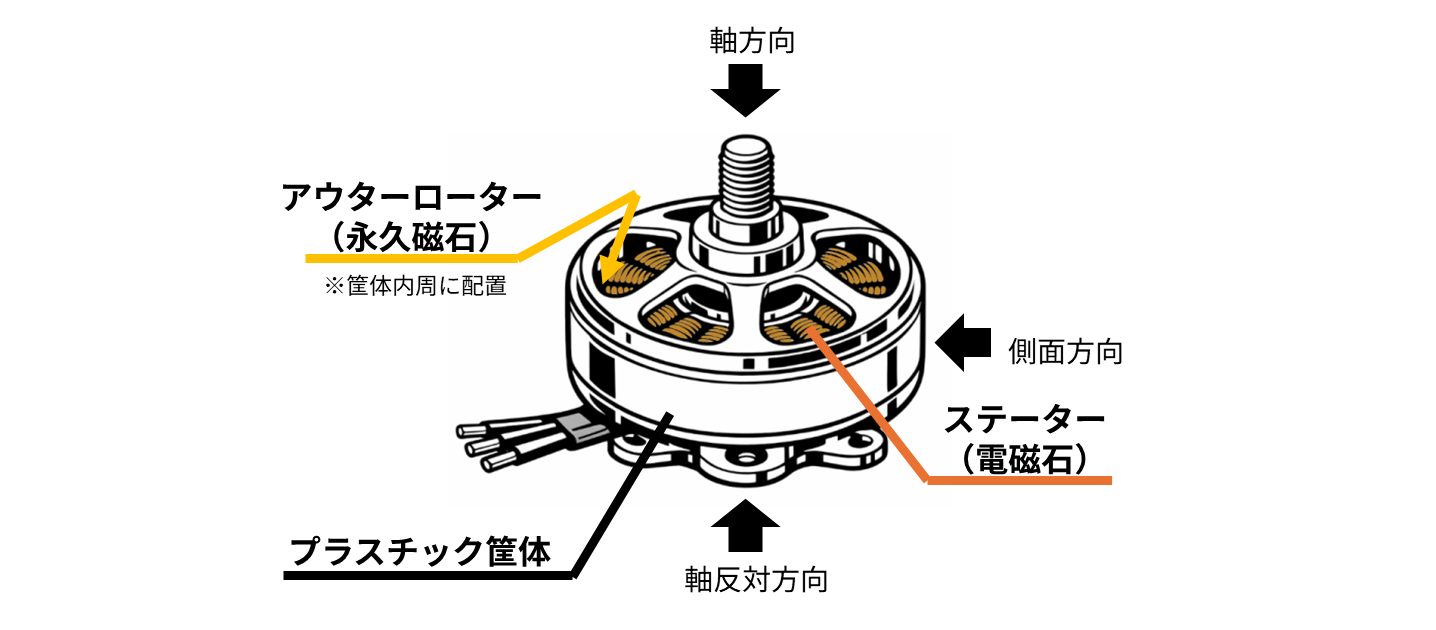
Figure 3: Outer rotor motor image (Image creator: Renesas Electronics Corporation, Production method: AI-generated image using Microsoft 365 Copilot)
Measurement result
• Lateral direction: Maximum approximately 50 Gauss
- Axial direction and opposite direction: Approximately 20 Gauss
While the magnet alone exhibited a magnetic field of several hundred gauss or more, its sides were covered in plastic, and even the surface only registered around 50 gauss.
Analysis and Summary
Drones often lack magnetically shielded enclosures to reduce weight, resulting in leakage magnetic flux into the surrounding environment. However, even in such cases, the leakage is only around tens of gauss.
Furthermore, because the motors and control board (equipped with an MCU) are physically separated in the drone, the influence of magnetic fields is reduced due to magnetic field attenuation caused by the distance.
Structurally, leakage flux exists, but its impact on MRAM in actual applications is expected to be limited.
④ Lightweight motor
We measured the magnetic flux density of lightweight motors. In motors that use materials with low magnetic permeability, such as aluminum, for their housings in order to reduce weight, the magnetic shielding effect is smaller and the leakage magnetic flux is larger compared to motors with iron housings.
Measurement result
- At low current: Magnetic flux density is below the detection limit.
- During high current: Tens of gauss near the casing
consideration
The magnetic field levels observed in this instance did not affect the operation or data retention of the MRAM. However, it should be noted that materials with low magnetic permeability, such as aluminum, will exhibit increased leakage flux compared to conventional iron-cased motors.
⑤ Motor with magnetic sensor
We measured the magnetic flux density of a motor with a magnet for magnetic sensor detection attached to its shaft.
Measurement result
• Leakage flux from motor housing: Less than 2 gauss
• Magnets for magnetic sensors:
- 0mm: Approximately 14,000 gauss
- 2mm: Several hundred gauss
- 5mm: Approximately 200 Gauss
Analysis and Summary
While the motor itself is magnetically shielded, the magnets used for magnetic sensors become a very strong magnetic field source. If the MCU is placed within a few millimeters of the magnets, it may exceed the magnetic field tolerance specifications of the built-in MRAM.
Therefore, careful design is required when combining a motor with a magnetic sensor with an MCU equipped with MRAM.
No. 2 Inductor
① Inductor with gap
To prevent magnetic saturation, we measured the magnetic flux density of a power supply inductor with a gap in its core.
Measurement result
A magnetic field leakage of up to approximately 10 gauss was observed near the gap, but it was less than a few gauss in other regions.
Analysis and Summary
Although there is some localized magnetic field leakage, it is not thought to be at a level that would affect the MRAM.
② Power Inductor
For the results of measuring the magnetic flux density of a Sagami Electric power inductor with a closed magnetic circuit structure and an external diameter of approximately 20 mm, please refer to the next section.
Simulation results regarding leakage flux from an inductor (provided by Sagami Elecs Co., Ltd.)
Sagami Elecs Co., Ltd. conducted an evaluation of leakage flux using magnetic field analysis simulations for power inductors.
We are investigating the magnetic field distribution around an inductor under high current conditions.
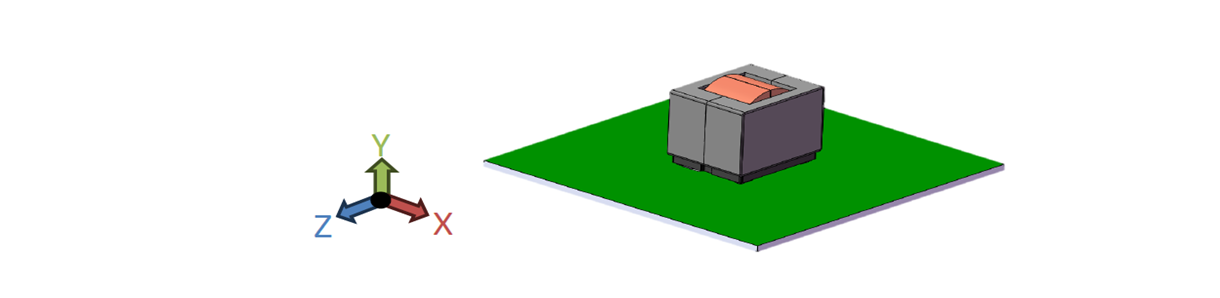
Target inductor
- ① Sagami Electric Co., Ltd. Power Inductor CVK2522H-5R4M
-Magnetic permeability (μ) = 40
-External dimensions: 20 × 25 × 22.5 mm
-Inductance value L = 5.4 uH - ② Sagami Electric ferrite core inductor (same size and L value as CVK2522H-5R4M)
-Magnetic permeability (μ) = 3000
-External dimensions: 9 × 16.5 × 22.3 mm
-Inductance value L = 5.4 uH
Simulation conditions
・Current conditions
- DC 100A (The current value at which the inductance changes by 30 % from the initial inductance value in ①)
• Substrate conditions - Board size: 75 × 75 × 1 mm
➀CVK2522H-5R4M
② Ferrite core inductor

Figure 4: Simulation conditions (Image provided by Sagami Elecs Co., Ltd.)
simulation result
①CVK2522H-5R4M
・X–Y plane:
A separation distance of approximately 3.0 mm is sufficient to reduce the magnetic flux density to 200 gauss.
・YZ plane:
A separation distance of approximately 1.5 mm is sufficient to reduce the magnetic flux density to 200 gauss.
② Ferrite core inductor
・X–Y plane:
The magnetic flux density was well below 200 gauss.
・YZ plane:
A separation distance of approximately 0.5 mm is sufficient to reduce the magnetic flux density to 200 gauss.
|
200 Gauss |
|
| ➀ | XY plane 3.0mm |
| YZ plane 1.5mm | |
| ➁ | XY plane - |
| YZ plane 0.5mm | |
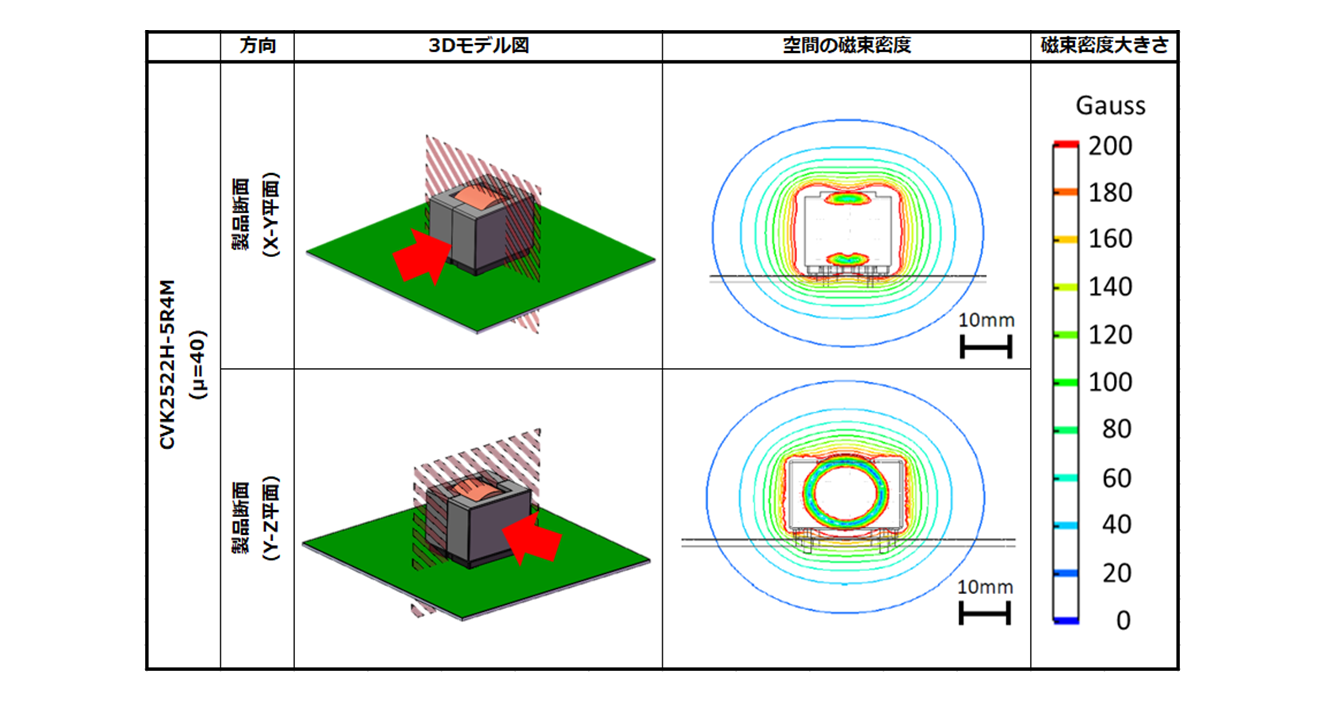
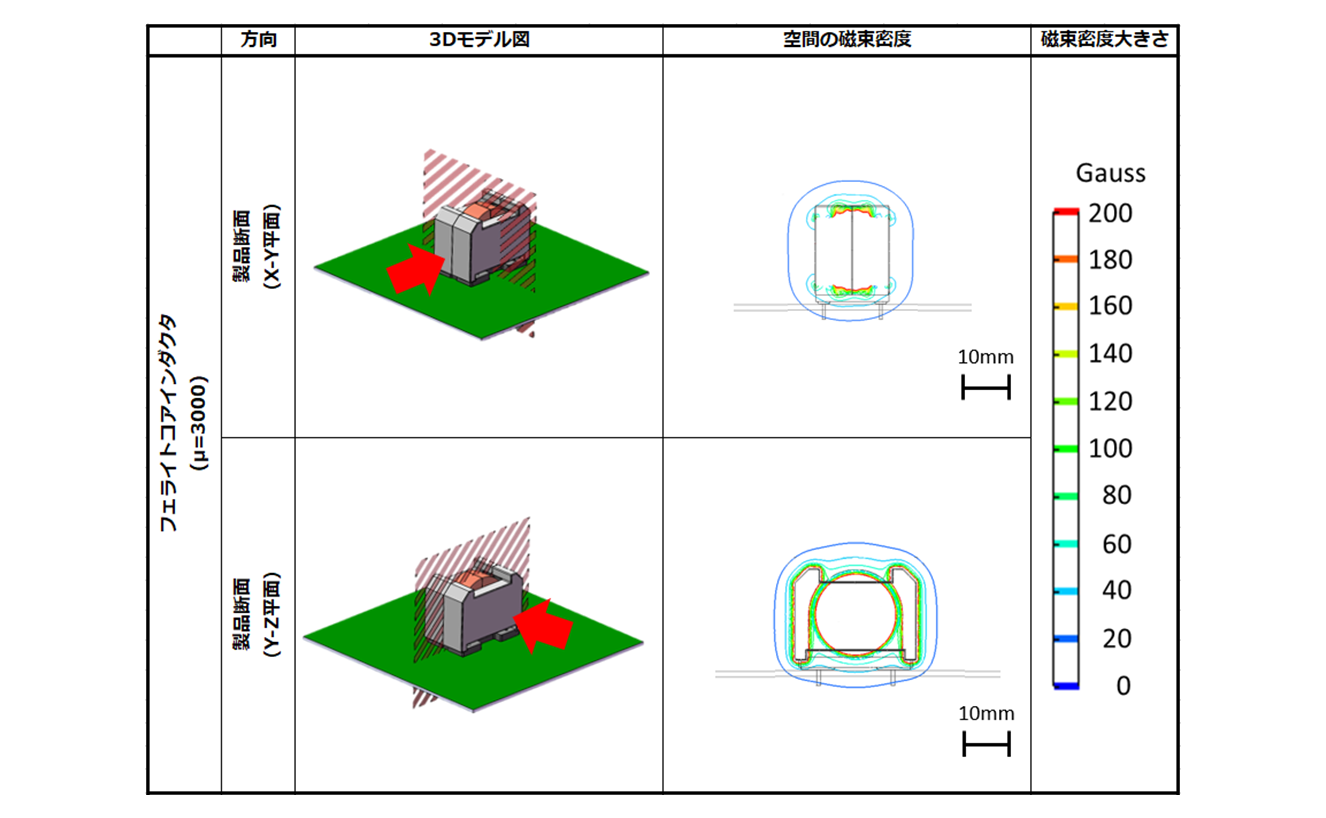
Figure 5: Magnetic flux density simulation results (Image provided by Sagami Elecs Co., Ltd.)
Summary of evaluation results
- Confirmed that even under conditions where a large current flows, a large portion of the magnetic flux is confined inside the inductor core.
The state of leakage flux differs depending on the permeability μ of the material; materials with higher μ tend to confine the magnetic flux internally.
The magnetic flux leaking around the inductor is limited and does not affect the operation of the MRAM.
This data provides an example of the design guideline that, in a typical power supply circuit, the effects of magnetic fields can be sufficiently suppressed by placing the inductor and the MRAM-integrated MCU at an appropriate distance from each other.
Although the magnetic field is concentrated near the inductor, it attenuates rapidly with distance, and its impact on surrounding circuits is limited.
At the end
This chapter examines the magnetic field effects on MRAM based on measured data. For a deeper understanding, please also refer to Chapter 1 "Fundamentals" and Chapter 2 "Applications."
Contact Us