- Semiconductor BusinessHOME
- Products and Services of Macnica,Inc.
-
technical information

-
Events and Seminars
- Handling Manufacturer
- Support
- Inquiry
- Click here to purchase products
- Semiconductor business e-mail magazine registration


 Narrow down by specifying conditions
現在2220件がヒットしています。check

China has played the role of "the world's factory" - who will take over next?
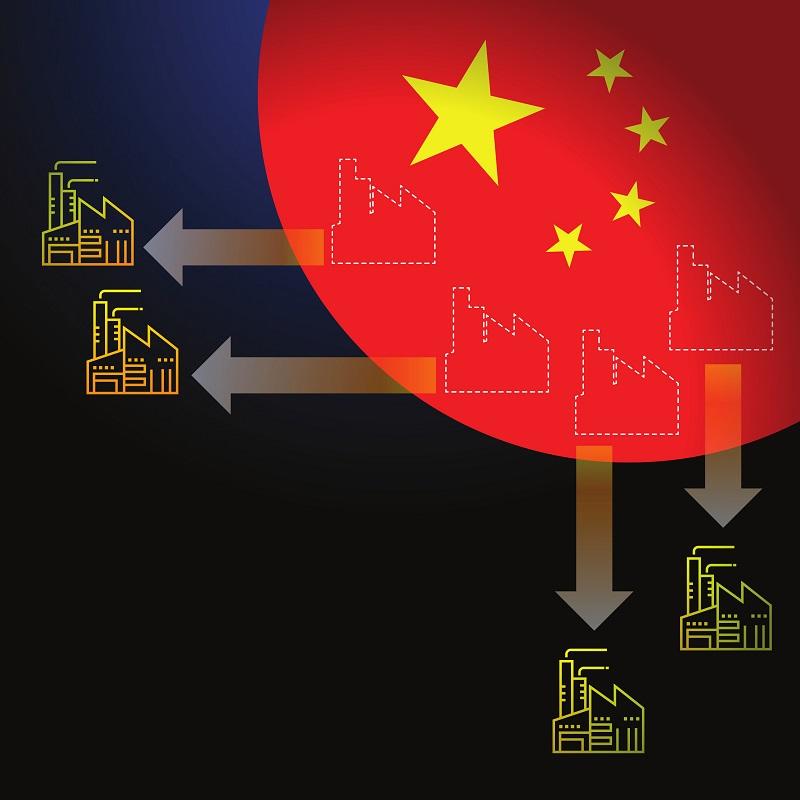
China was once called the "world's factory." It reigned as the center that collected raw materials from all over the world and mass-produced and exported all kinds of products. This position was taken over by Britain in the 19th century, America in the first half of the 20th century, Japan in the second half, and China in the 21st century. However, that position is beginning to fade.
Recent changes in international trade rules, such as the hike in tariffs between the United States and China, are expected to deal a major blow to many manufacturers, including fabless companies. For companies that have relied on China for manufacturing because it is cheap, reviewing their supply chains has become a management issue that can no longer be put off.
Companies around the world are beginning to move their production bases from China to other countries in order to diversify risks and optimize costs. We will explain actual corporate examples along the themes of "returning manufacturing contractors to Japan" or "China Plus One (diversifying manufacturing contractors to countries other than China)."
Three reasons why the retreat from China is accelerating
1. Rising labor costs and demographic changes
China has an overwhelming advantage in production costs due to its large population and cheap labor force. However, in 2013, the productive population of 15-64 year olds peaked and has since started to decline. Even the total population is expected to decline by 2022, and as a result, labor costs are rising year by year. Production in China is no longer benefiting from its "cheap" nature.
2. Intensifying trade friction between the U.S. and China
Recent changes in international trade rules, such as the increase in tariffs between the United States and China, have forced many companies to reassess their supply chains and restructure their procurement systems.
3. Geopolitical risks and lessons learned from the pandemic
The area around where COVID-19 was first confirmed was an important production base for electronic devices and automotive parts. As the infection spread, operations were suspended one after another, and Japanese companies were also forced to suspend production. In addition, global geopolitical risks are rapidly increasing, and the unification of supply chains is once again recognized as dangerous.
But is reshoring too costly? Where should we outsource our manufacturing?
When considering reassessing their manufacturing bases, the first thing that many companies are concerned about is cost. However, in reality, other important considerations include the level of risk, stability of delivery schedules, and support systems such as subsidies. At first glance, China may seem the cheapest, but that is only if you look at short-term figures. When considering long-term stability and geopolitical risks, there are many cases where returning to Japan or transferring to China Plus One is a viable option.
Below is a table comparing each option in terms of manufacturing costs, transportation lead times, subsidy systems, etc.
|
Item
|
Japan
|
China Plus One
|
China continues
|
|
Manufacturing Cost
|
▲ (slightly high)
|
○ (relatively inexpensive)
|
◎ (currently the cheapest)
|
|
Geopolitical risks
|
minimum
|
During ~
|
high
|
|
Transportation days
|
Shortest (1-2 days)
|
About 1 week
|
About 1 week
|
|
Language and cultural barriers
|
none
|
▲Yes
|
▲Yes
|
|
Utilizing subsidies
|
◎ Possible
|
○ Some target countries
|
×
|
Who should I consult about the transfer?
When reviewing a manufacturing outsourcing company, one issue that many companies face is "Who should I consult?" The transfer of manufacturing involves a large number of processes, such as restructuring the manufacturing line, establishing a quality control system, and reviewing contracts with suppliers, so it is not realistic to complete the process in-house alone.
Macnica 's Manufacturing Consulting Department (Monocon®) can answer any questions you may have about this.
From the perspective of BCP (Business Continuity Plan), Monocon® is also leading the transfer of factories from China to Japan and working to set up domestic factories. This has ensured the stability of the supply chain and enabled us to respond quickly and reliably to customer needs. When considering the transfer of manufacturing, our experts can provide comprehensive support, from process design to quality control, negotiations with local parties, and logistics.
Here the Company will introduce our achievements in transferring factories from China to Japan.
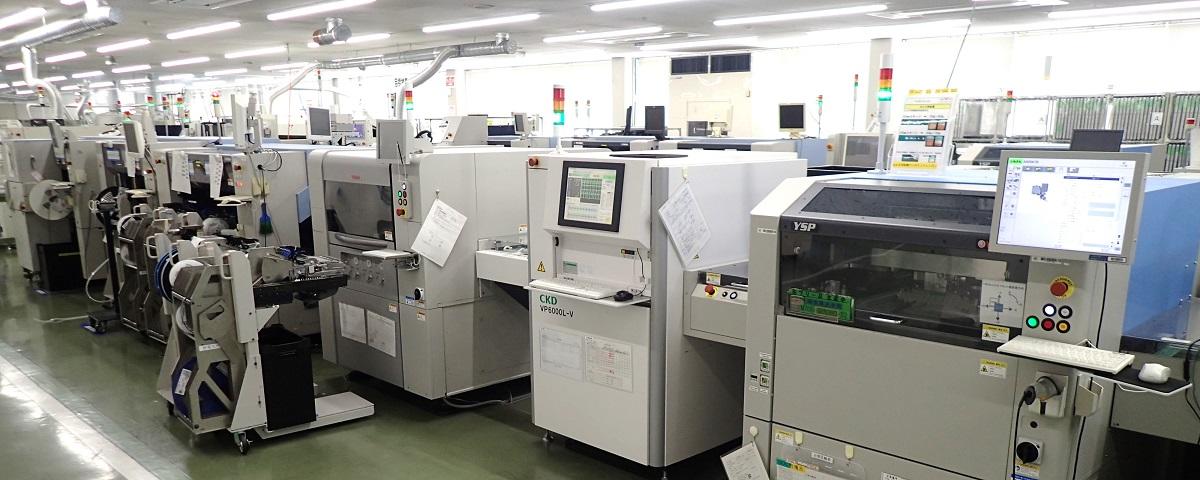
[Case Study] Macnica Supports the Transfer of Manufacturing from Chinese Factories to Japan
One electronics manufacturer decided to restructure its domestic production system to avoid the risk of overconcentration in China. Monocon® supported this transfer project from the concept stage to the start of production. The table below summarizes the issues the transfer project faced and how Monocon® resolved them.
| Task | Macnica Monocon® Support |
|
Issue 1: A manufacturing system that cannot ensure reproducible quality |
・Proposing manufacturing jigs (e.g. robot soldering jigs, connector insertion cradles, cradles for mounting heat sinks, etc.) to reproduce uniform quality in domestic factories |
|
Issue 2: Material procurement and supplier restructuring |
・Propose alternative parts that are easily available in Japan |
|
Issue 3: Black Box of shipping inspection details |
・Through thorough analysis of the actual product, reverse engineering the functions, wiring, and software structure of the FCT device |
|
Issue 4: Establishing a quality control system and ensuring traceability |
・Select multiple EMS candidate factories based on our own evaluation criteria, without relying on name value |
|
Issue 5: The need for running changes |
・ the Company and our factories thoroughly manage the process, including the trial production period, material procurement, and mass production schedule. |
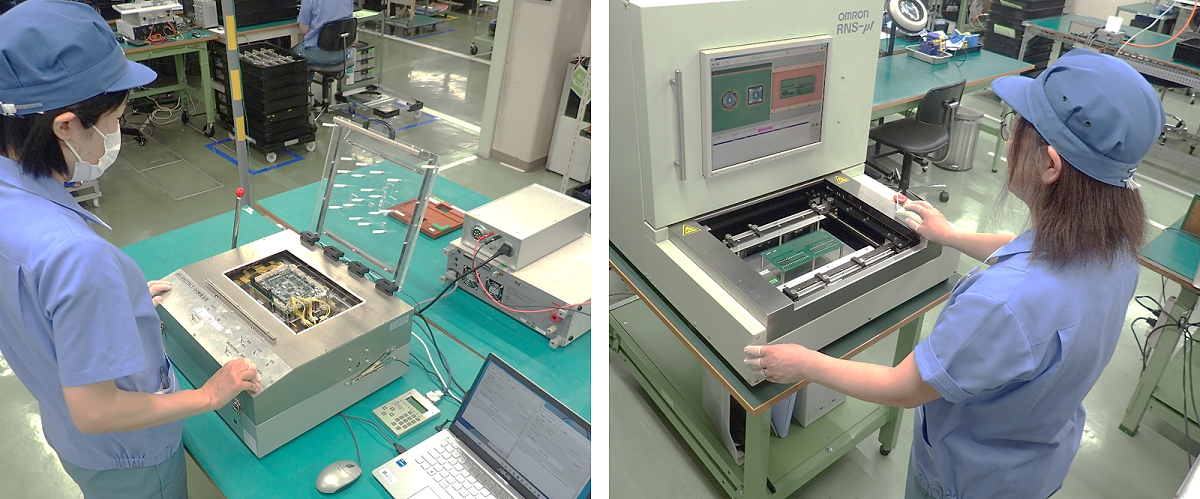
Proposal for redundant production system at mirror factory
In this project, rather than completely stopping production in China, we proposed to build a new factory in China and a new production system in Japan as a "mirror factory" as a plan to strengthen the business in order to strengthen BCP and increase business continuity. This resulted in the creation of a dual system as shown below.
China: Continue supplying to the Chinese market (product costs, logistics costs, short delivery times)
Japan: Supply base that prioritizes the domestic market and security (emphasis on quality and reliability, logistics costs, peace of mind of a domestic base)
Returning to Japan is not an insurance policy but a strategy. Throughout this transfer project, Macnica ran side-by-side with all processes, including fixture design, quality rebuilding, material procurement, factory audits, and launch planning. With this support, our client has gained a multi-site system that is resilient to risks, and has achieved both supply chain stability and profitability.
Summary: Consider "returning to Japan" as an opportunity to maximize business performance
Tariff issues and rising geopolitical risks are inevitably impacting the manufacturing industry. While reshoring and China Plus One strategies may seem expensive at first glance, a combination of gradual relocation, standardization, and external assistance can be a more realistic option than you might think.
Not only from the perspective of the supply chain (BCP), but also human rights violations, conflict minerals, and due diligence obligations are topics that should be considered. Now is the time for companies that have relied entirely on Chinese factories to take a step toward "de-personalization" and "de-centralization."
We provide consulting services to help companies successfully return to Japan in outsourcing manufacturing. We develop specific strategies to stabilize the supply chain and provide support in their implementation, helping to resolve the challenges companies face. Please contact us to help you achieve corporate growth and sustainable operations while appropriately dealing with geopolitical risks.
Manufacturing consulting service
For details on our manufacturing consulting services, please click the button below.