- Healthcare Business HOME
- wellness
- nursing care
- medical care
- DX Support
-
column·
example
- Inquiry
In the field of nursing care, assisting with excretion is a particularly delicate and careful situation.
"What if I leak something?" "What if the client feels uncomfortable?" I'm sure there are many caregivers who have these kinds of worries.
In particular, if excretion is mainly done in diapers, this can hinder the user's independence and increase the risk of skin problems.
In this article, we will introduce how to choose and use a urinal for those who are new to caregiving and for caregivers who are worried about their clients' excretion methods.
By using urinals properly, we can protect the dignity of users, reduce the burden on caregivers, and find tips for providing safe excretion care.
Changing continence care with urinals: "Less" the burden on users and caregivers
A urinal is a device used to defecate while lying down or sitting in bed.
It is suitable for people who feel the urge to urinate or defecate but have difficulty getting out of bed or going to the toilet.
While diapers are often thought of as the only means of toilet assistance, there are also challenges that arise when relying solely on diapers. While diapers are convenient for people who have difficulty getting out of bed or walking to the toilet even when they feel the urge to urinate, there are also some potential disadvantages.
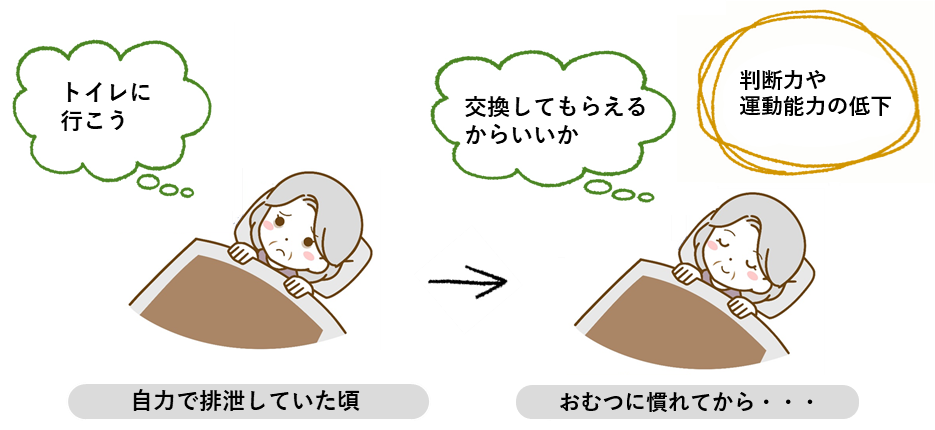
For example, if urination in a diaper becomes a habit, it may lead to a decline in the ability to judge when to go to the toilet when they feel the need to urinate, and the motor function of being able to excrete on their own. This is not desirable from the perspective of caregiving, which is to make use of the remaining abilities of the user.
What are the specific benefits of a urinal?
Incorporating urinals into excretion care brings great benefits not only to the users but also to all those providing care.
● Reduces the risk of skin problems and infections
Prolonged use of diapers can cause skin problems such as diaper rash and eczema due to the skin becoming damp from urine and feces, and the continuous contact of excrement with the skin. It can also make it easier for bacteria to enter the urinary tract, increasing the risk of urinary tract infections, especially in women.
Using a urinal allows immediate disposal after excretion, significantly reducing the amount of time the skin comes into contact with excrement. This keeps the skin clean and effectively reduces the risk of skin problems and infections. This is extremely important for reducing the physical pain of the individual and allowing them to live a more comfortable daily life.
● Reduced discomfort
Excretion is a natural physiological phenomenon for humans, but not being able to control it can often lead to mental stress and discomfort. Some people are reluctant to excrete in diapers.
Using a urinal can reduce the discomfort that comes with defecating in a diaper, such as the unpleasant feeling of wetness and the unpleasant smell. In addition, by increasing the number of opportunities to urinate and defecate at will, children can gain greater independence in defecating, reduce feelings of shame, and maintain dignity. This is a psychological benefit that directly leads to improved quality of life (QOL).
● Reduce the burden on caregivers
Changing diapers places a great physical burden on caregivers, as they have to reposition an immobile person and deal with excrement.Furthermore, frequent diaper changes and dealing with leaks can also be mentally stressful.
Using a urinal can reduce the frequency of diaper changes. In particular, if a urinal can be used effectively for nighttime excretion, it can eliminate the need for positioning and wiping, significantly reducing the physical burden. Reducing the burden on caregivers will give them more time to provide care and allow them to spend more time interacting with the user in a more relaxed manner.
● Reduced financial burden
Diapers are essential for daily care, but their continued use can add up in costs, especially for highly absorbent nighttime diapers or those that require frequent changes, which can be a financial burden on households and facility operations.
Introducing a urinal can potentially reduce the amount of diapers used. As a result, diaper costs can be reduced, which in the long run will help reduce the financial burden of care costs. This is a very real benefit for both those receiving care and those providing care.
If you are worried about leaking or about accidentally using the urinal, it is a good idea to use an absorbent pad in conjunction with the urinal. This will allow you to deal with any leaks that may occur, and will allow both the user and caregiver to focus on toileting with greater peace of mind.
Choose the right urinal for your user
There are several types of urinals, and it is important to choose one that suits the user's condition and the circumstances of the assistance required. Let's take a look at the main types of urinals.
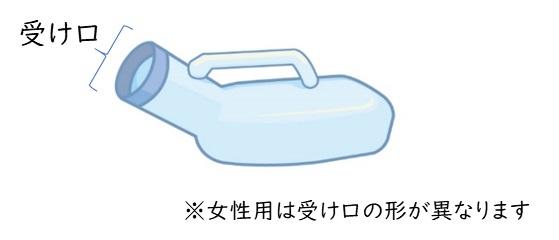
・Urine bottle
It is suitable for people who can pull their pants up and down and hold a urinal to their genitals by themselves.
Because of its small capacity, you will need to dispose of your urine frequently after urination.
The main materials are glass, plastic, and silicone.
Glass: It is easy to clean, but it is heavy and may break if dropped.
Plastic/Silicone: Lightweight and easy to use, but may develop an odor over time.
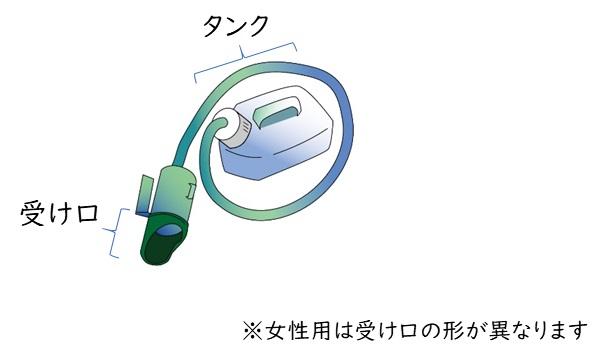
・Comfortable urinal
You can urinate while lying in bed.
It is recommended for people who cannot get up even when they need to urinate, or for people who are at high risk of falling.
When wearing the device for long periods of time, make sure that the urine flows from the top to the bottom of the receiving port to the tank to prevent backflow. Since it needs to be at a height different from the floor, it may not be suitable for use on a futon. Some types come with a hose and automatically suck up urine.
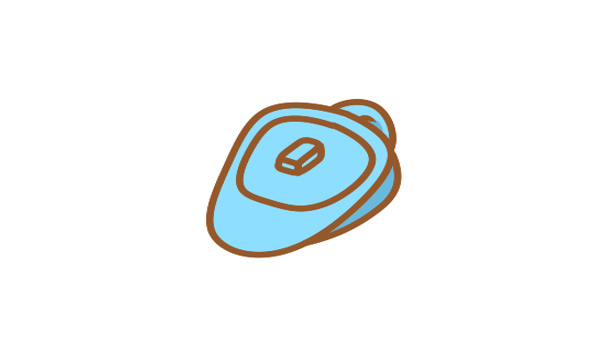
・Insertion toilet
It is mainly used by women when urinating or defecating. Even if you have difficulty sitting, anyone who can lift their hips can use it. The one in the picture is a Japanese-style toilet, but there are also Western-style and rubber-type toilets. Placing toilet paper in the toilet bowl before defecating makes cleaning up easier.
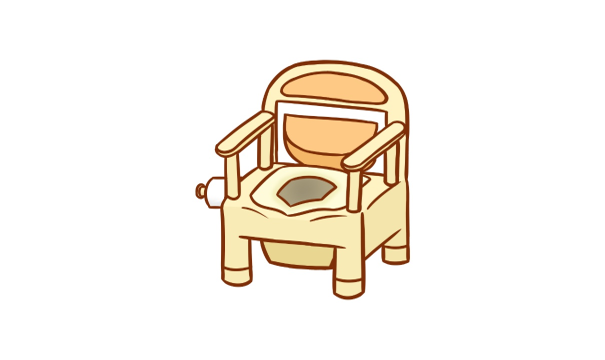
Other methods of excretion than urinals: portable toilets
In addition to urinals, portable toilets are also an option for toileting assistance.
This nursing care product can be placed next to the bed, allowing the patient to use the toilet in their own room without having to walk to the toilet.
Use the bucket by placing it under the toilet seat.
To combat odors, it's a good idea to fill a bucket with deodorizing liquid.
Some products come with features such as armrests, soft toilet seats, heating, deodorizing, and flushing.
Points to consider when selecting an excretion method
When choosing the best method of excretion for your client, it is important to consider the following points comprehensively:
● How to utilize the remaining abilities of users
First, it is important to closely observe and understand what the user can do on their own and how much support is needed to enable them to become independent in the toilet. Rather than simply focusing on what they cannot do, it is essential to have a perspective that maximizes what they can do.
in particular···
It is important to assess the person's ADL (activities of daily living) and cognitive function, such as whether they can sit and stand, whether they can walk, whether they can clearly communicate their intention to use the toilet using words or gestures, and the state of their cognitive function. For example, if a person can walk with a little assistance, it would be better to support them in getting to the toilet rather than using a portable toilet, as this would make the most of their remaining abilities.
We must also remember to strive to maintain and improve remaining abilities through rehabilitation and functional training. By taking into consideration not only current abilities but also future potential, we can provide care that is more tailored to the needs of each user.
● How much support can the caregiver provide?
Not only the condition of the user, but also the number and skills of the caregivers, as well as time constraints, are practical factors in selecting an excretion method. Unreasonable assistance not only increases the physical burden on the caregiver, such as back pain, but can also lead to mental exhaustion.
for example···
Guiding users to the toilet with full assistance can be difficult at night or early in the morning when there are fewer caregivers available, or for users with different physiques. In these situations, using a urinal or portable toilet is an effective option for reducing the burden on caregivers while ensuring the safety of users.
Collaboration with multiple professionals, such as nurses, physiotherapists, and occupational therapists, is also extremely important. By receiving advice from a specialist perspective, it is possible to find safe and effective continence care that is more suited to the user's physical condition. Choosing reasonable and sustainable care is essential to maintaining the quality of care.
● Is it possible to use it in the living room environment?
Finally, it is important to check whether the environment of the room in which the user lives is suitable for the selected excretion method.
in particular···
Physical compatibility issues include whether there is enough space to install a portable toilet, and whether the route from the bed is safe. It is also important to ensure the resident's privacy. If other people frequently enter and exit the room, consideration must be given to maintaining dignity when using the toilet, using partitions or curtains, etc.
Ease of cleaning is also an important consideration. Toiletry aids need to be kept clean at all times, and choosing equipment that is easy to clean daily from the perspective of preventing infectious diseases will reduce the workload of caregivers and help maintain a hygienic environment. Carefully check factors related to comfort, such as room temperature in winter, to create an environment where users can use the toilet with peace of mind.
Summary
Assisting with excretion is an important aspect of care that contributes to the comfort and dignity of the user.
By properly utilizing not only diapers but also various excretion aids such as urinals and portable toilets, it is possible to reduce caregivers' anxiety about what to do if the user leaks, and to create an environment where the user can excrete with peace of mind.
We will choose the most appropriate excretion method based on the user's condition and environment, and aim to provide better care that is less stressful for both parties.
Related information
Inquiry
If you have any questions about this service, please contact us below.
Introduction of monitoring system

Next-generation monitoring system AttentiveConnect
Data such as sensor alerts, sleep and vital information can be collectively managed on this system.