Starting with the rise of ChatGPT and other AI technologies, generative AI has been a hot topic around the world. While its convenience has led to a need for it, many companies have been hesitant to introduce it due to reasons such as "not knowing how to use it specifically."
Did you know that there are organizations that are holding study groups and seminars for companies with business locations in an effort to make a difference in this situation? The Ibaraki Prefectural Industrial Technology Innovation Center, featured in this article, is one such organization. Here, we will introduce some of the content of the "Generative AI Utilization Workshop" hosted by the organization, with Macnica as the lecturer and attended by 26 companies.
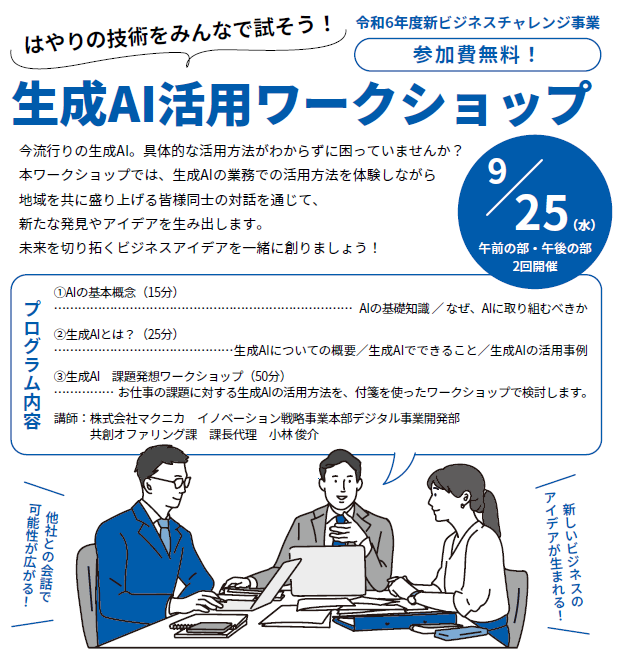
▲The first half of the program explained the basic concepts of AI and generative AI, and the second half involved participants in groups thinking about ways to solve business problems using generative AI.
Atmosphere and greetings at the venue
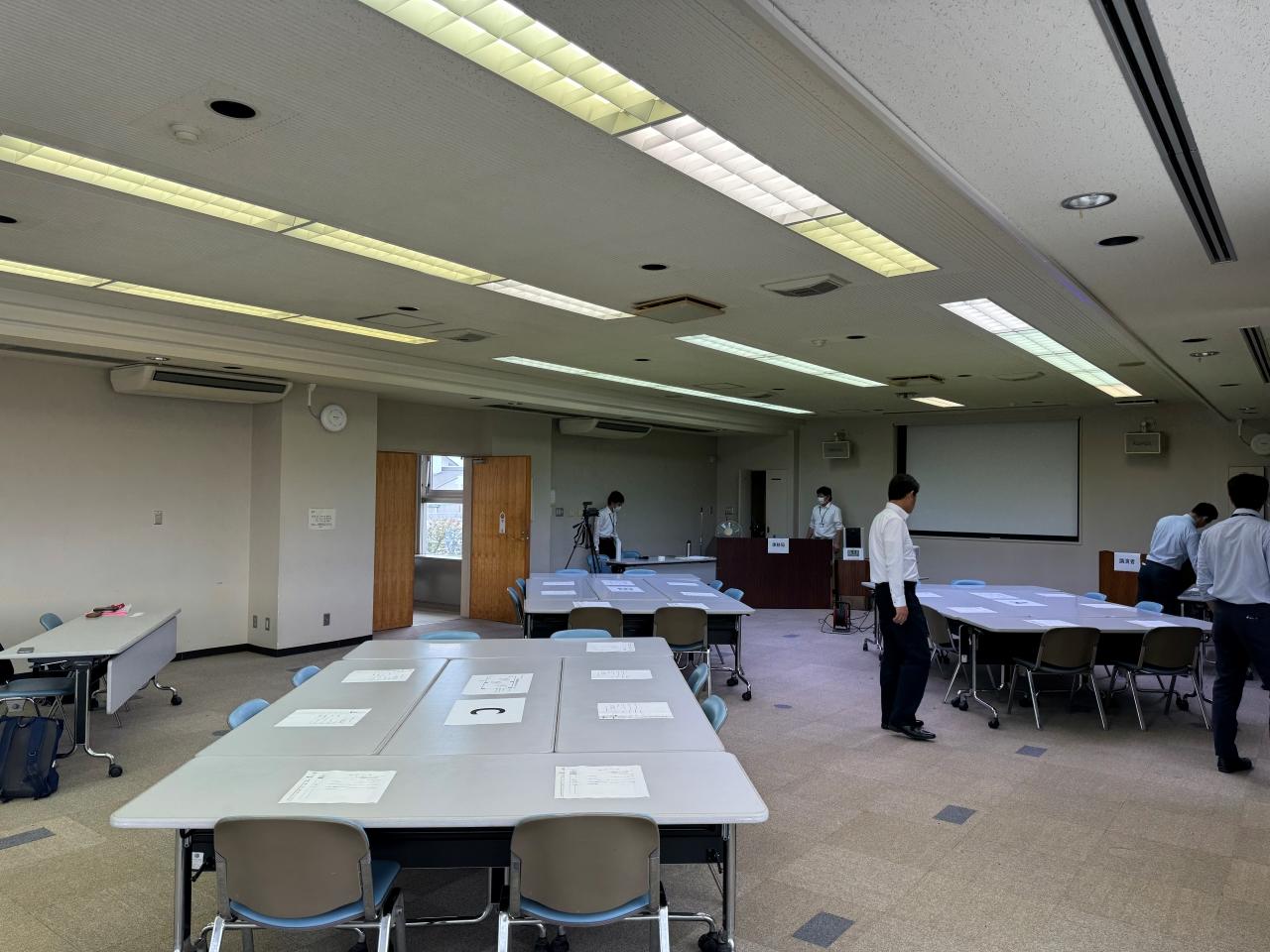
This workshop was held in a large conference room that could easily accommodate several dozen people. Tables A, B, and C were prepared, and participants were seated in the group they were assigned to.
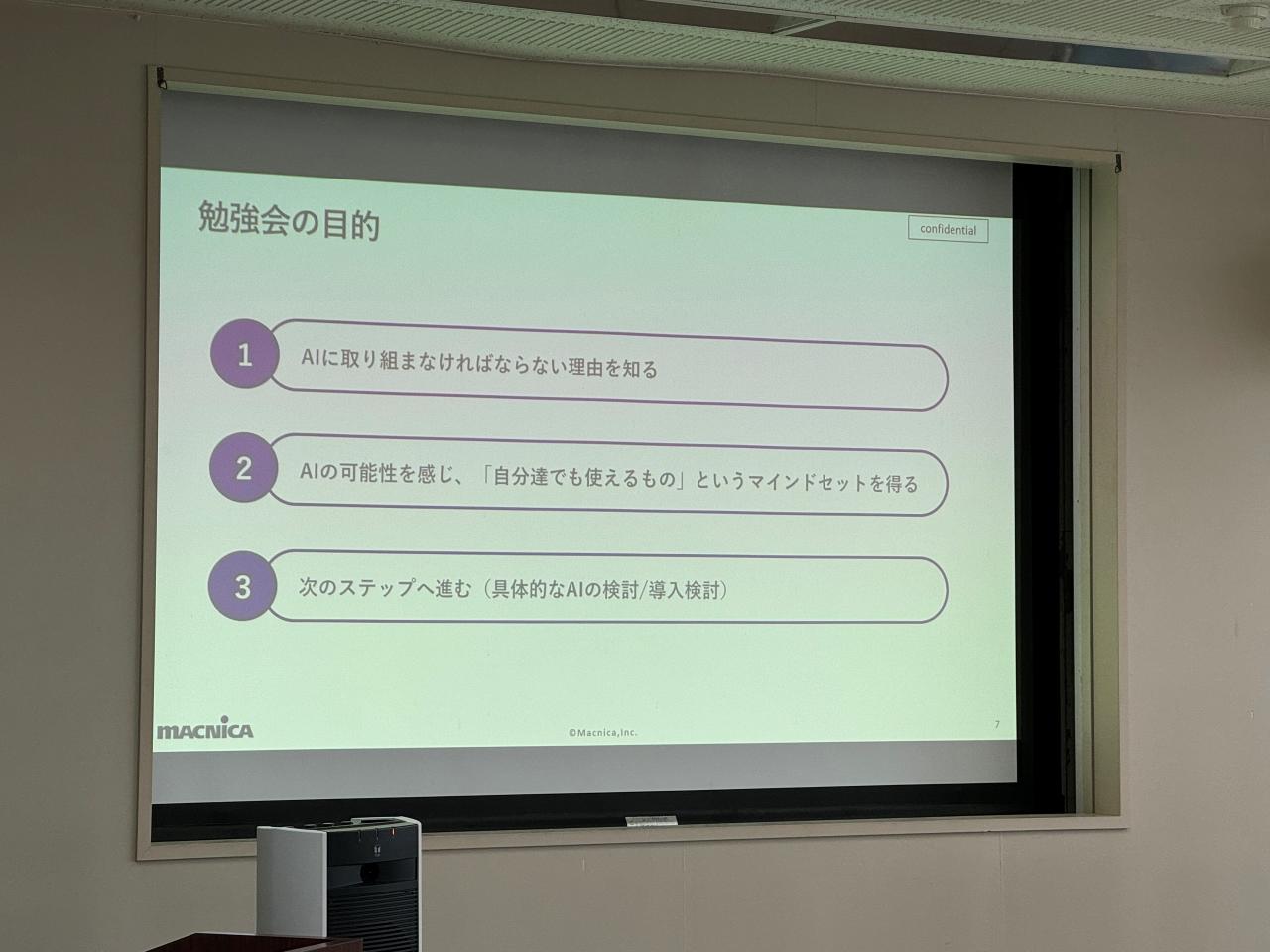
The event began with an introduction to Macnica and an explanation of the workshop. Kobayashi, the first speaker, said, "I'm sure you all have concerns and questions about why AI has become a buzzword, and why we need to get involved. Also, even if you want to try using AI, some of you may not know how to actually apply it to your work, or what steps to take. I hope that today we can take the time to remove those hurdles that you may be feeling."
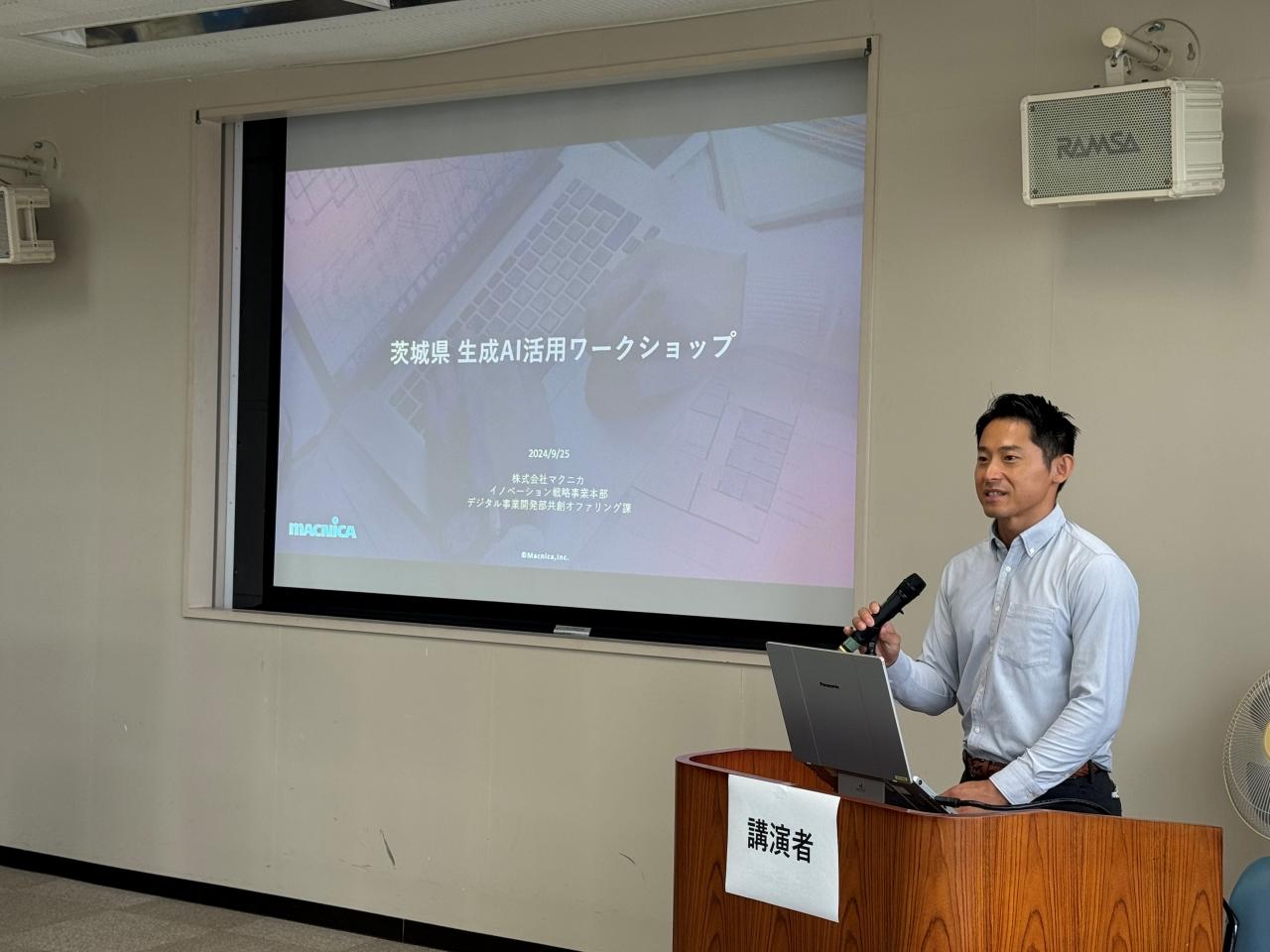
▲ Kobayashi Shunsuke, Co-Creation Offerings Section, Digital Business Development Department, Innovation Strategy Business Headquarters, Macnica.
Classroom learning about AI and generative AI
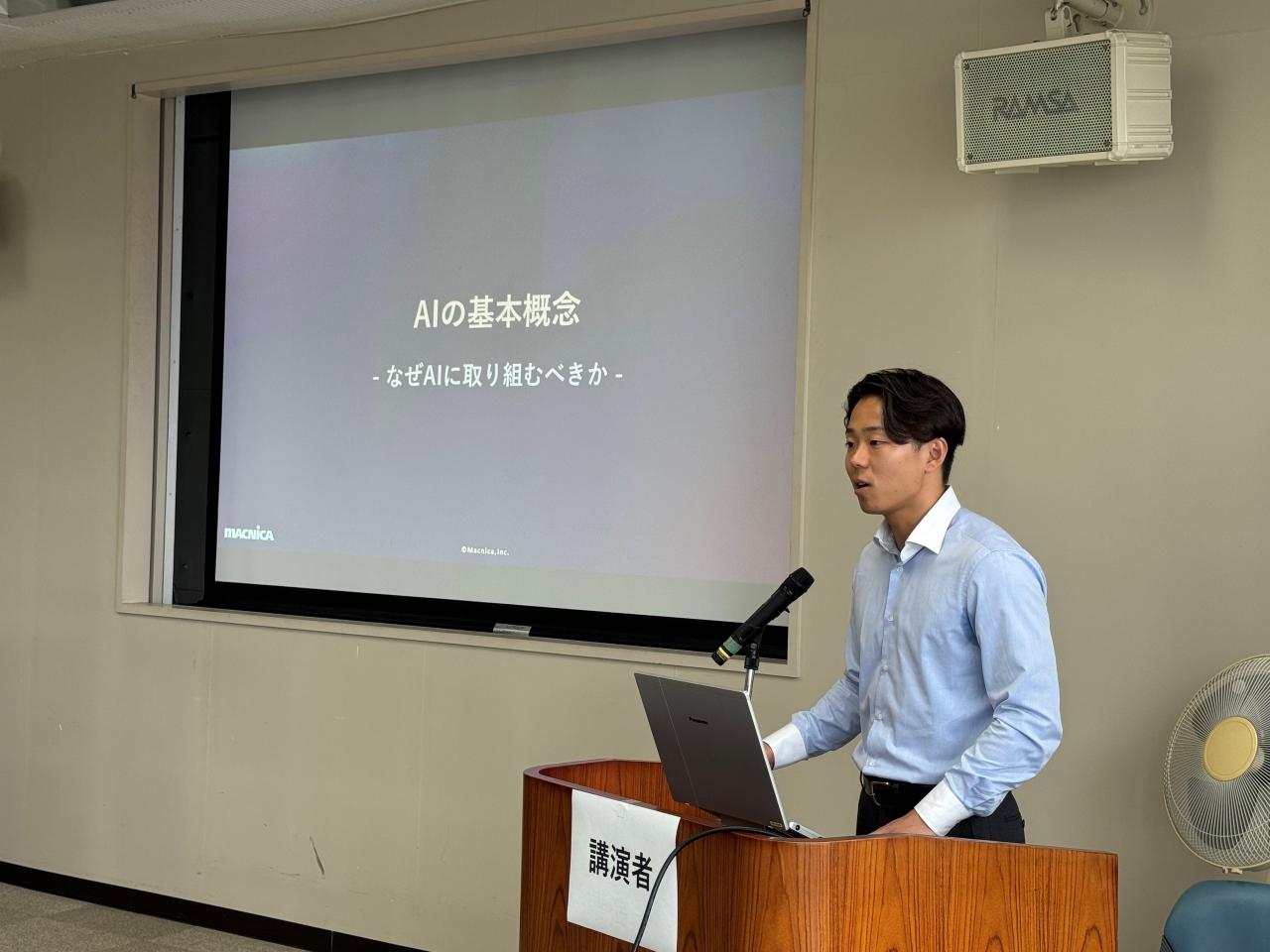
At this point, Kobayashi took over as speaker, and Senba took over as speaker. The next program was a lecture on AI and generative AI.
Senba began by projecting an image onto the screen.
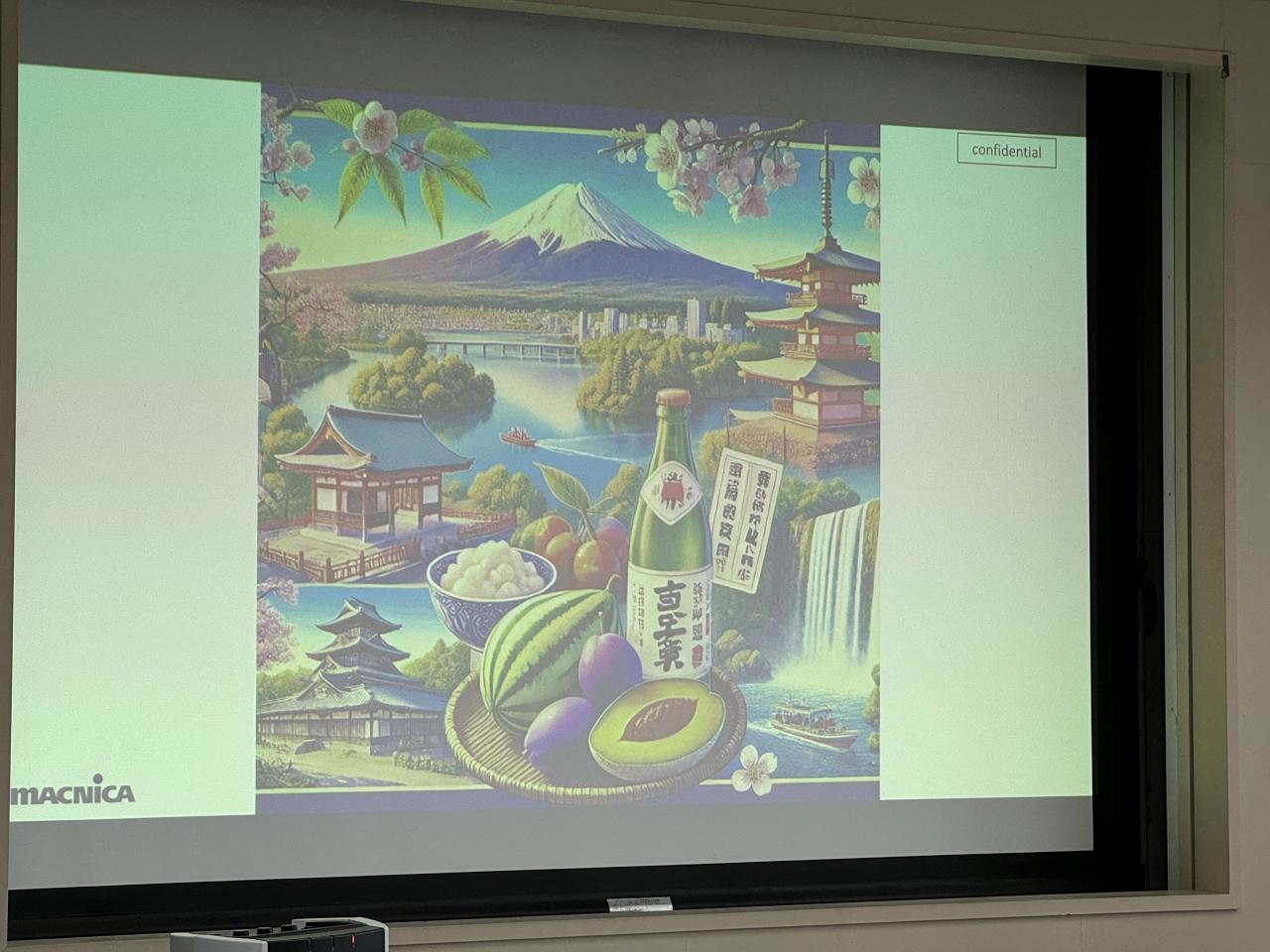
This mysterious image was drawn by Senba using a generative AI (ChatGPT), who used the prompt, "Generate an image that is full of the charms of Ibaraki Prefecture." What is interesting is that, even though the image is about the "charms of Ibaraki Prefecture," it somehow also includes Mt.Fuji and a mysterious three-story pagoda. Senba explained, "Generative AI can generate these kinds of images very easily, but the accuracy is still far from perfect."
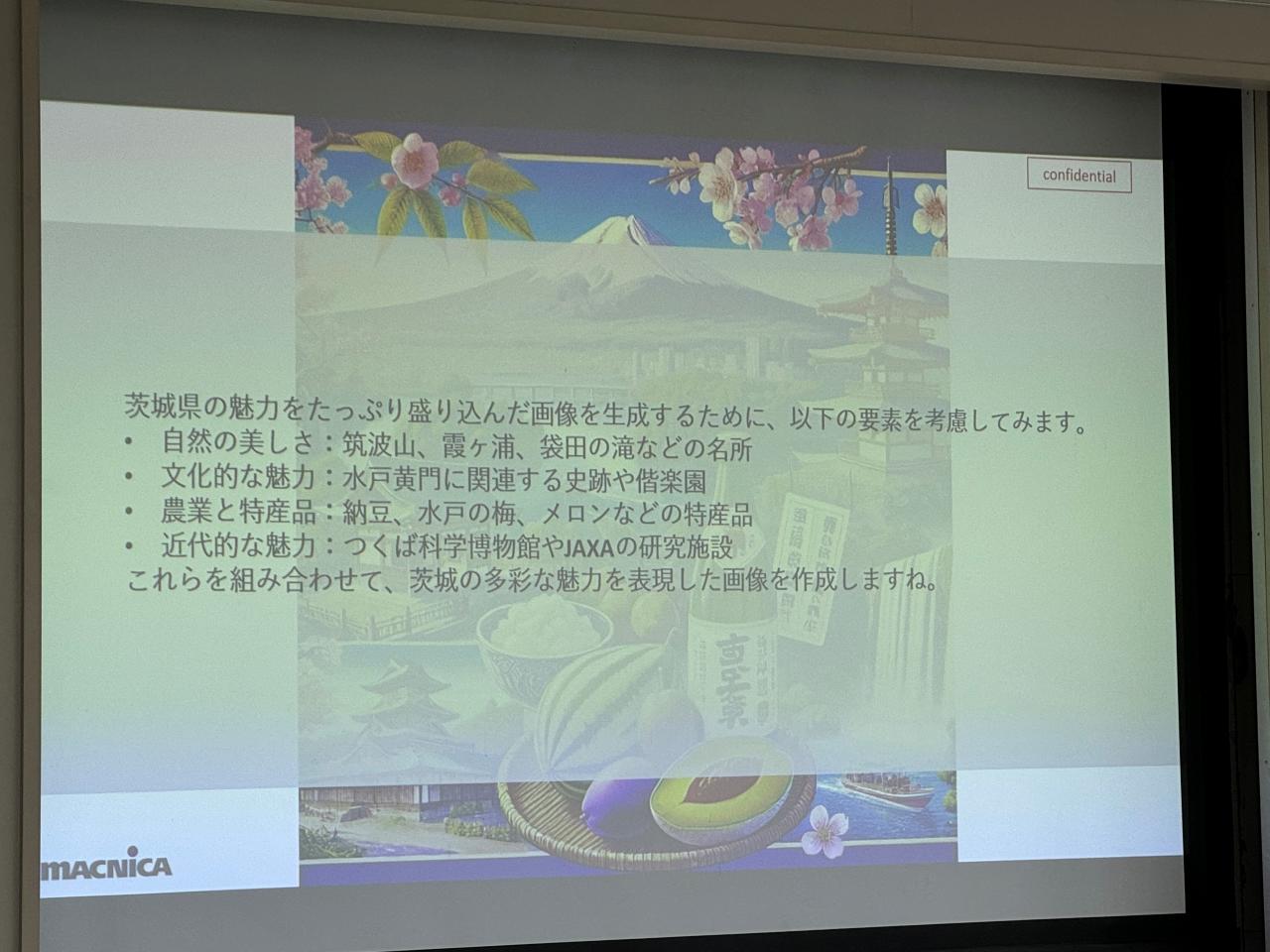
▲The generated AI accurately captured Ibaraki Prefecture's famous products and places, but when depicting them in a picture, it seemed to be biased, such as "mountain = Mt.Fuji."
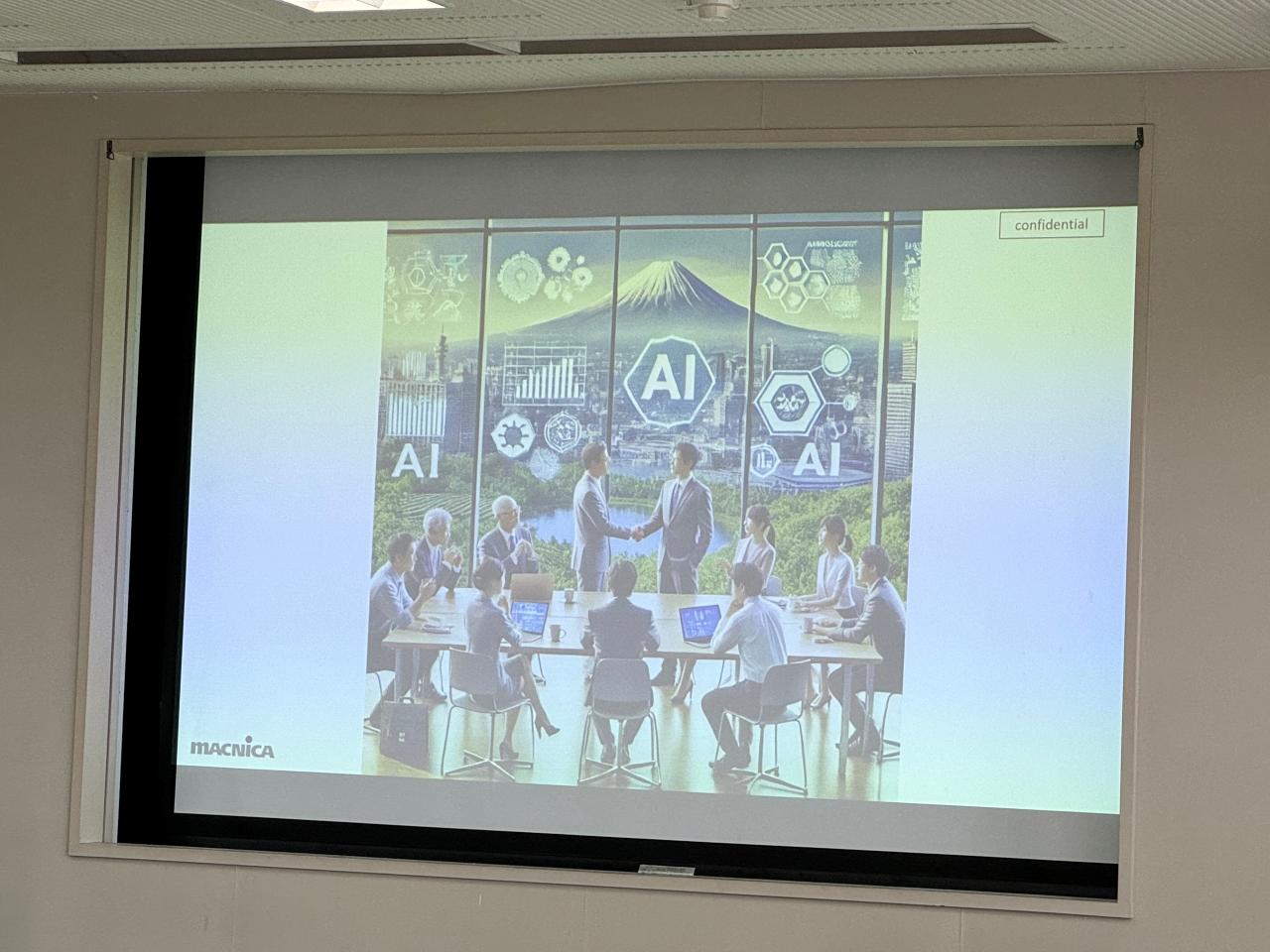
▲ An image drawn in response to the prompt, "Create an image of companies in Ibaraki prefecture joining hands to learn about AI," was also shown. Senba felt that this was "too stiff"...
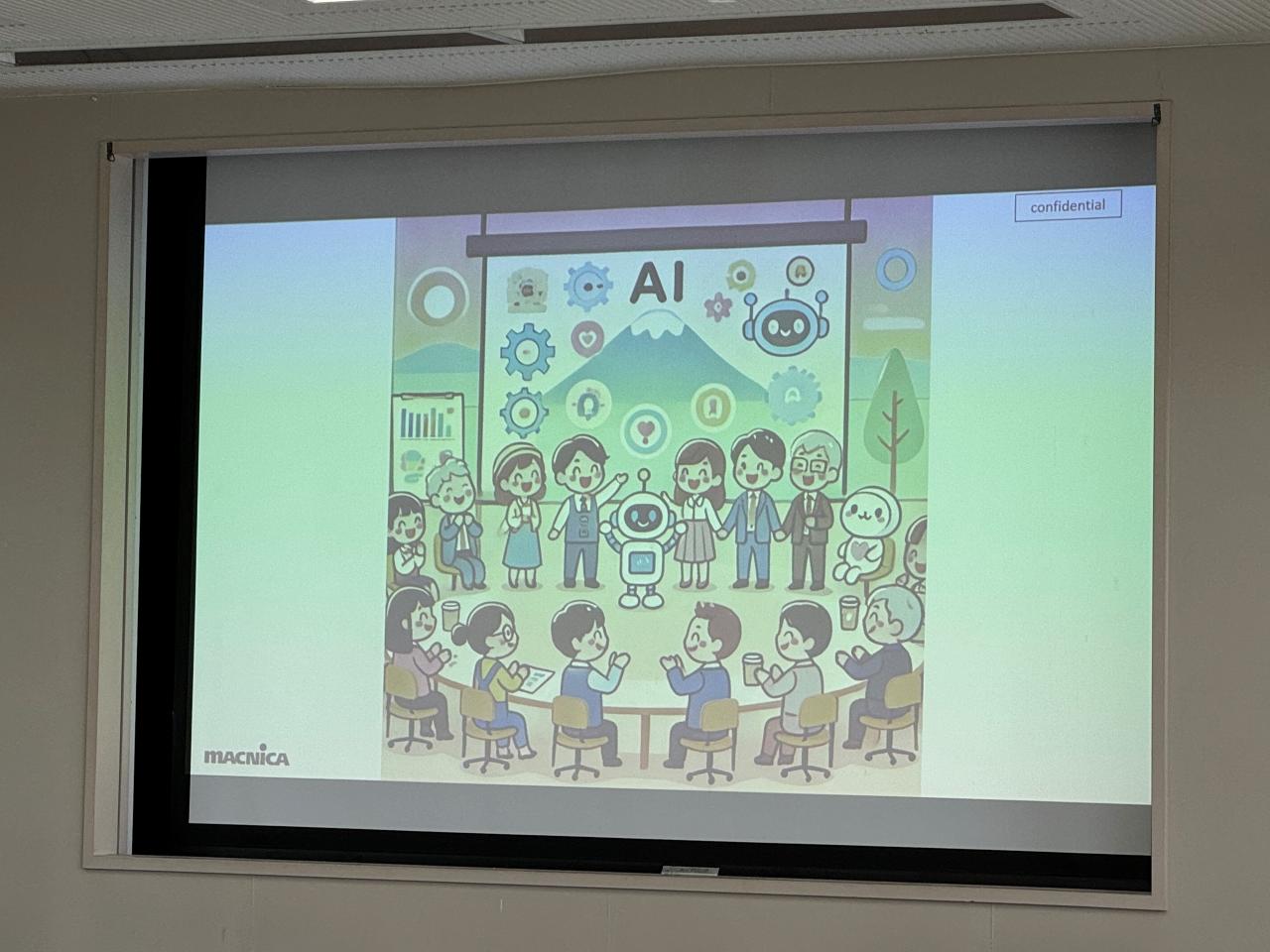
▲An image was also prepared with the instruction to "make it cuter."
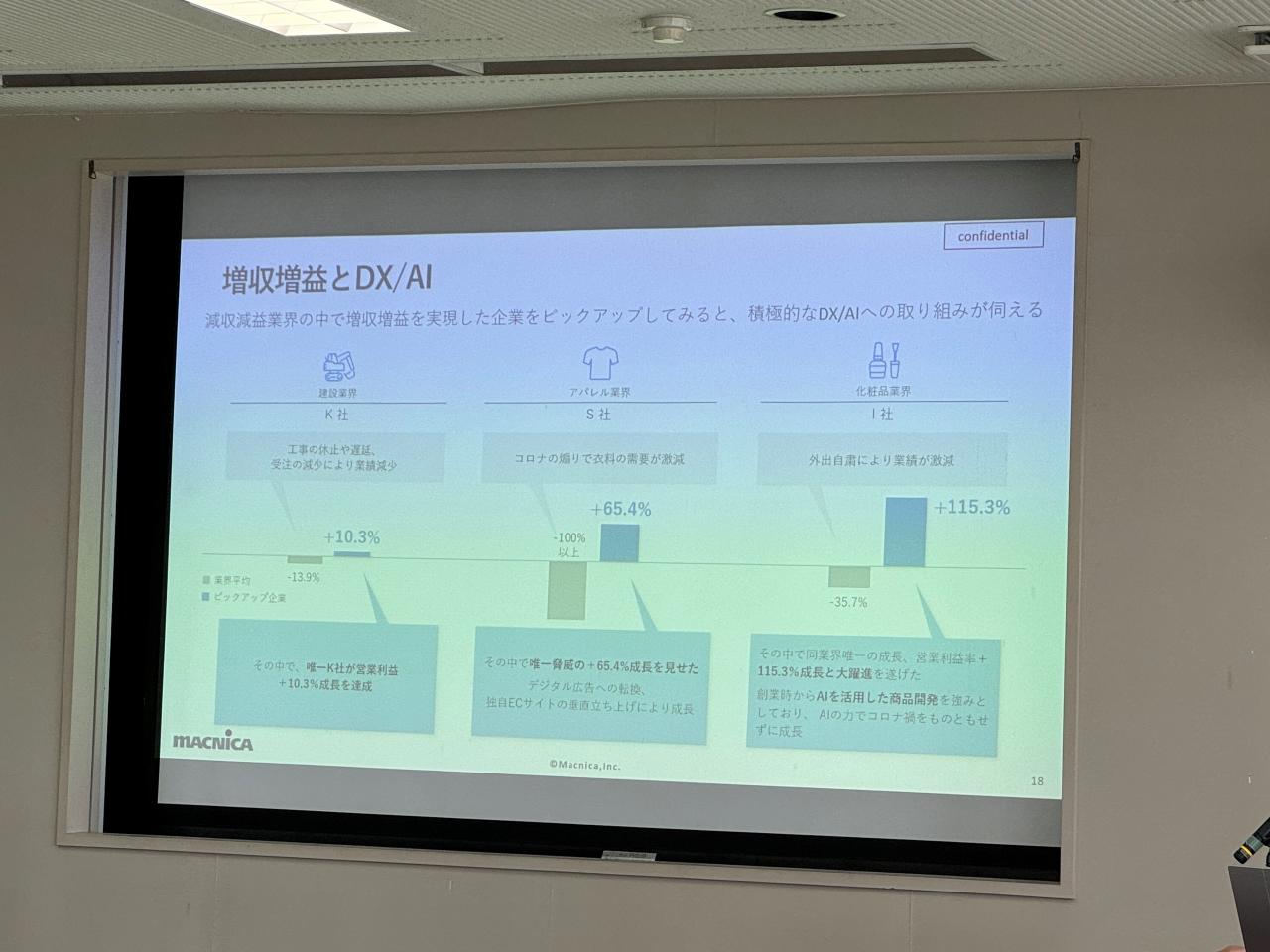
Next, Senba explained the necessity of AI in companies and the background to it. He used COVID-19 has had a major impact on the entire world, as an example. At the time of the pandemic, the business sector was clearly divided into industries that saw increases in revenue and profits and those that saw decreases in revenue and profits.
However, even though the industry as a whole was experiencing declining revenues and profits, there were companies that were growing when viewed individually. "When we looked at the initiatives and materials of these companies, we found that a common thread was the active promotion of AI and DX. The expected future labor shortage and unpredictable disasters are precisely the reasons why we need the power of AI," says Senba.
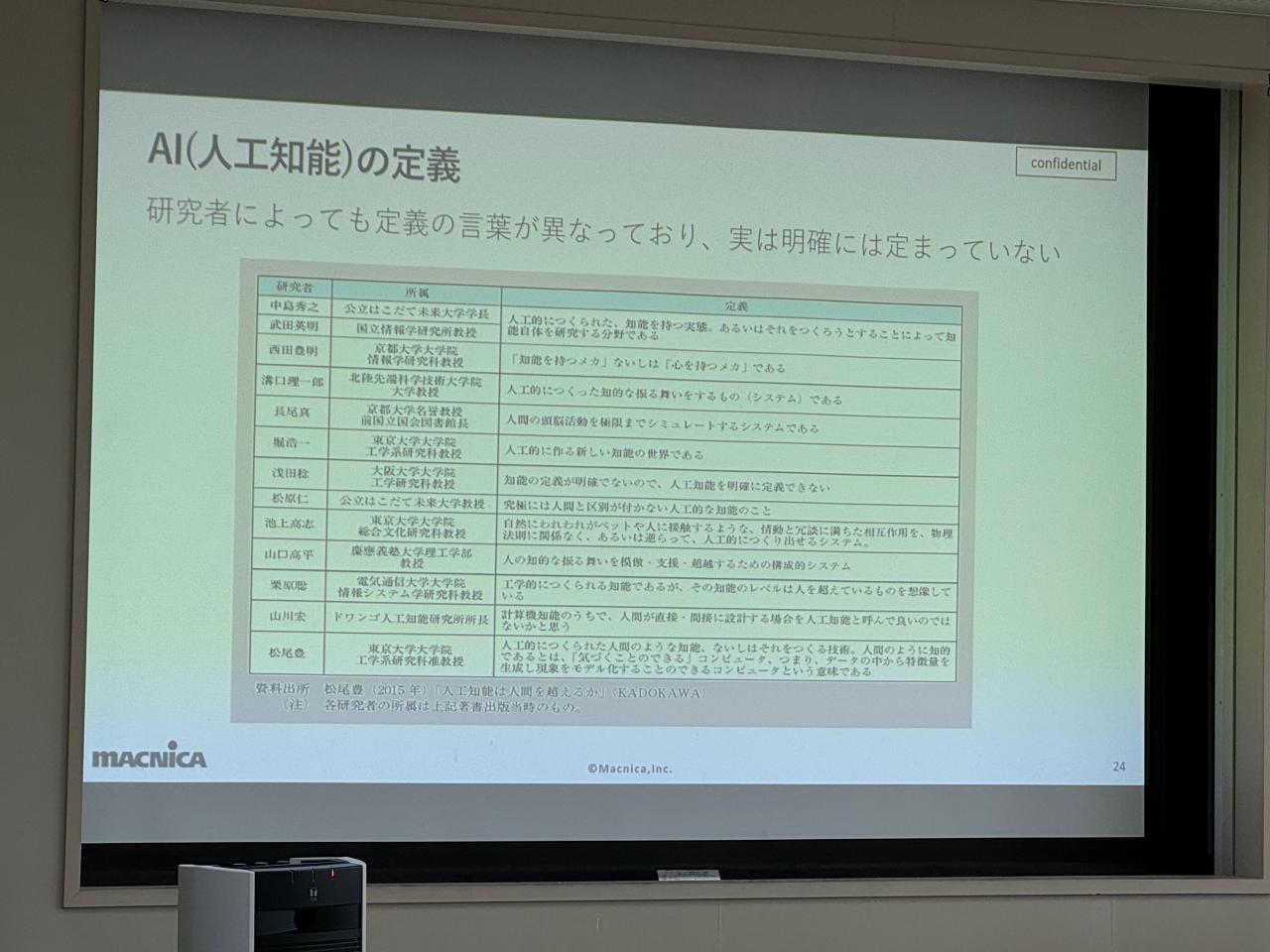
For the next topic, the basic concept of AI, Senba asked the participants, "What would you answer if your child asked you, 'What is AI?'" Answering this question is not an easy task, because even the top researchers in Japan have different answers regarding the definition of AI.
Senba then said, "AI is still in its early stages of development and has a lot of room for growth in the future. Therefore, at this point in time, I think it should be viewed as just artificial intelligence (artificial intelligence) and that there is no need to set clear standards."
Next, an explanation was given about the differences between machine learning and deep learning, as well as the mechanisms behind different types of AI.
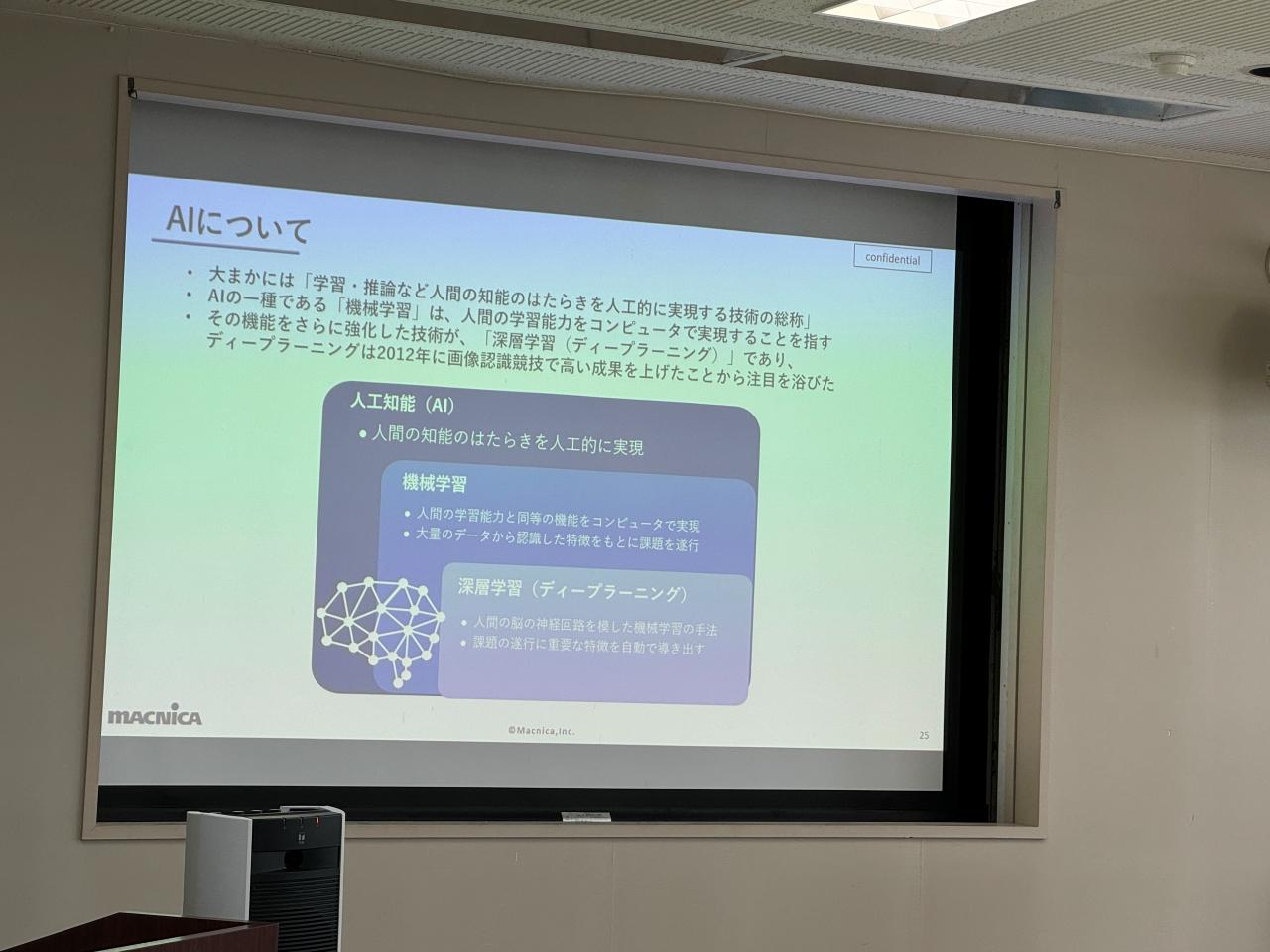
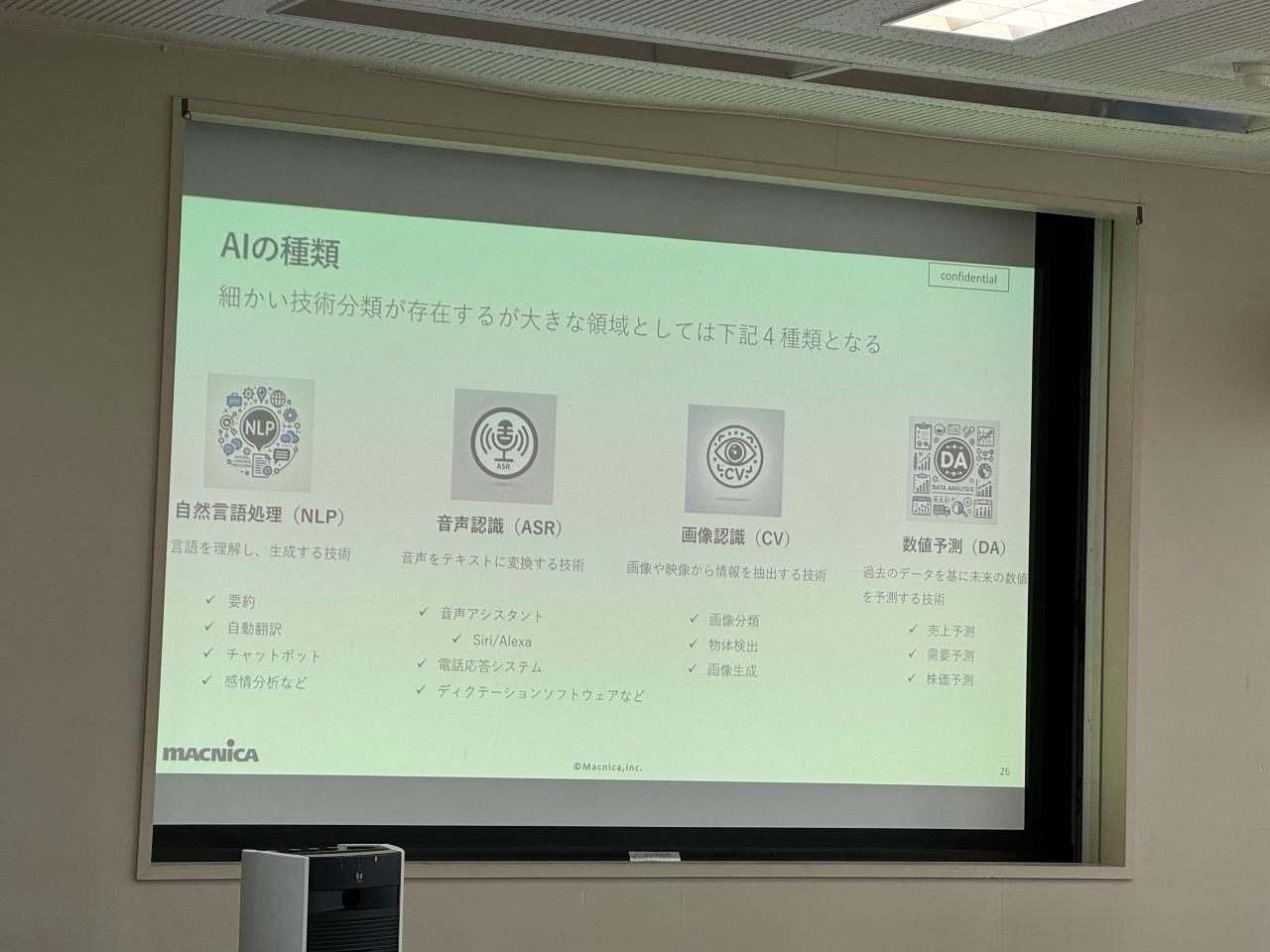
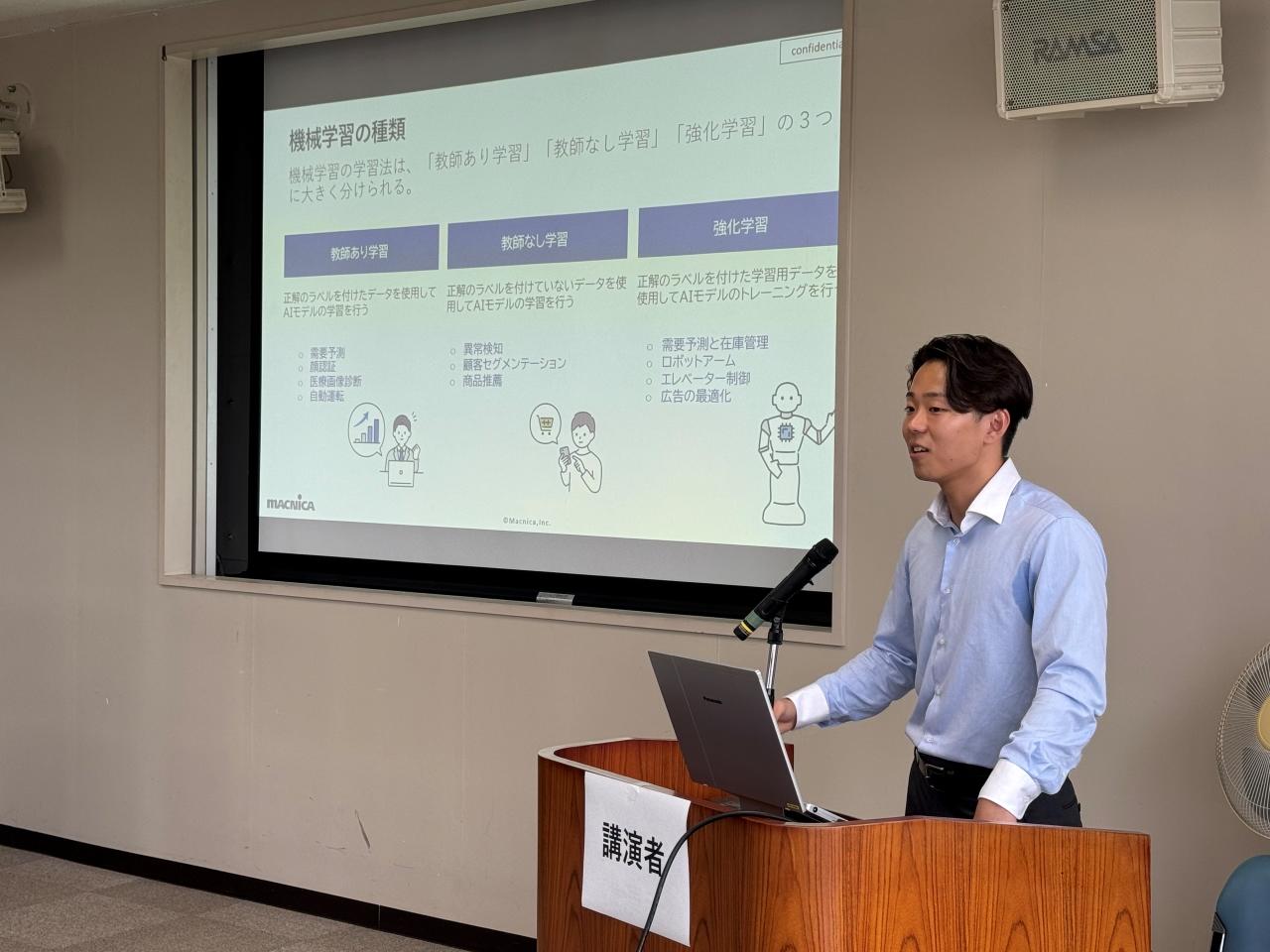
Here, Senba cited "learning and inference" as important keywords and said the following:
"The term 'AI model' sounds impressive, but AI is not all-powerful, and like a small child, we need to nurture it. For example, showing an AI model a large number of images of cats, telling it that this is a cat over and over again, and then asking, 'Is this a cat?' is the basis of AI. Therefore, in order for you to utilize AI, it is extremely important to first organize the location and format of the data that exists within your company."
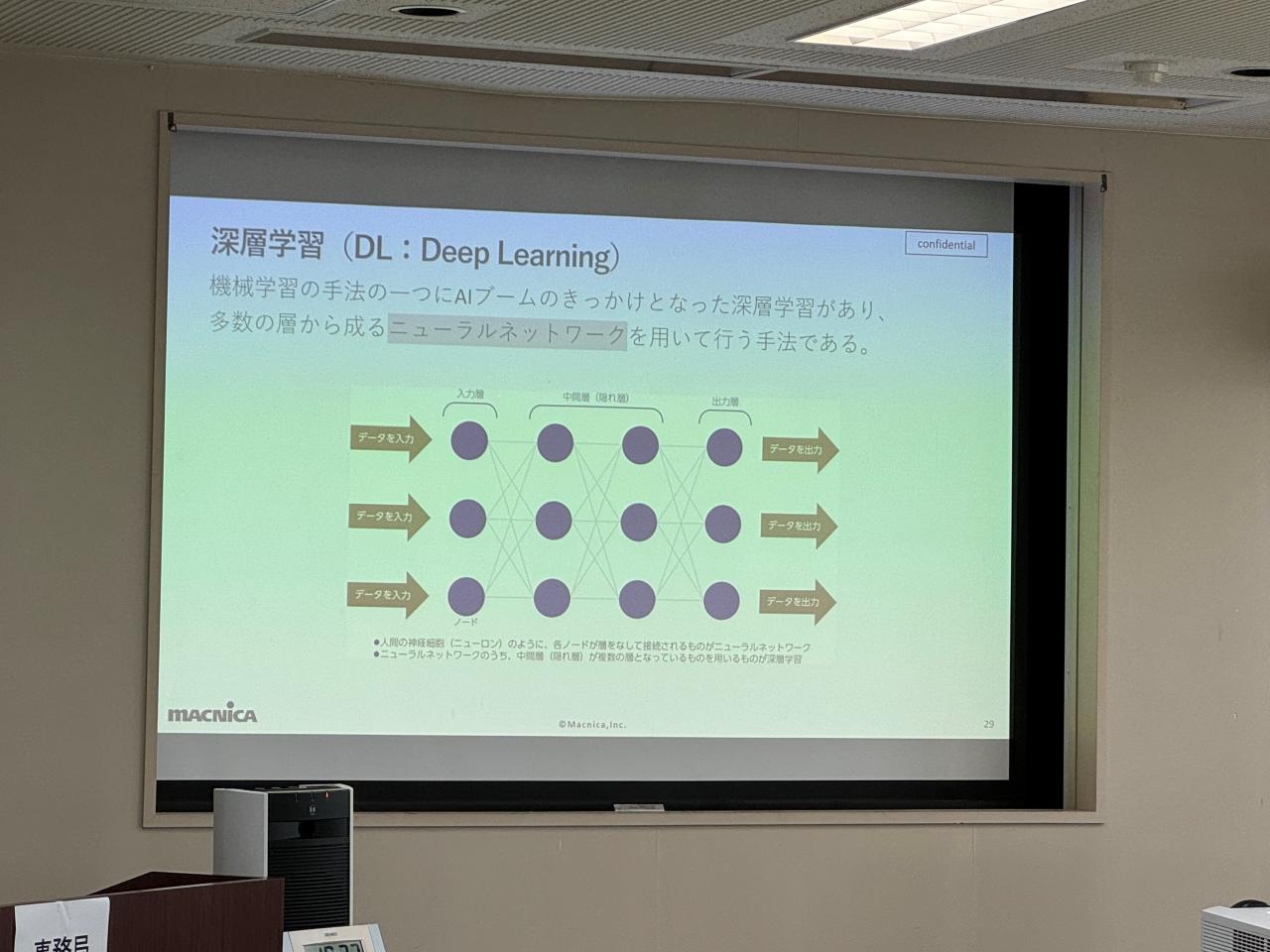
▲He also gave a detailed explanation of the mechanisms and types of machine learning and deep learning. At first glance, the content may seem difficult, but Senba used easy-to-understand examples at various points and explained it to the participants as simply as possible.
The topic moved from AI to generative AI, which was also the theme of the workshop. Roughly speaking, generative AI is a tool that can build a basic model from learning data such as text, audio, images, videos, programming code, and molecular information, and output new data and information from it. The basic structure is similar to AI, but it differs in that it "creates something."
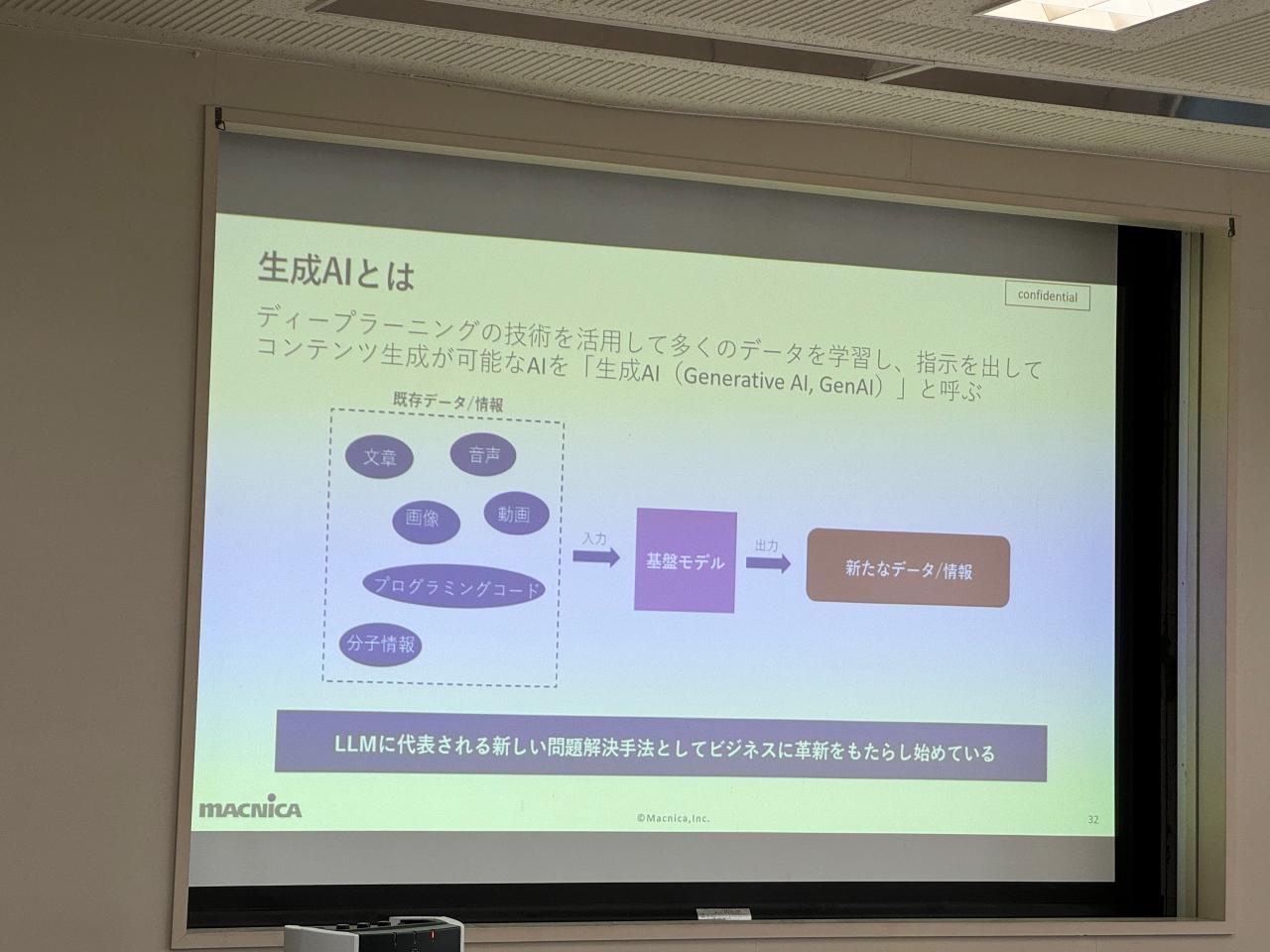
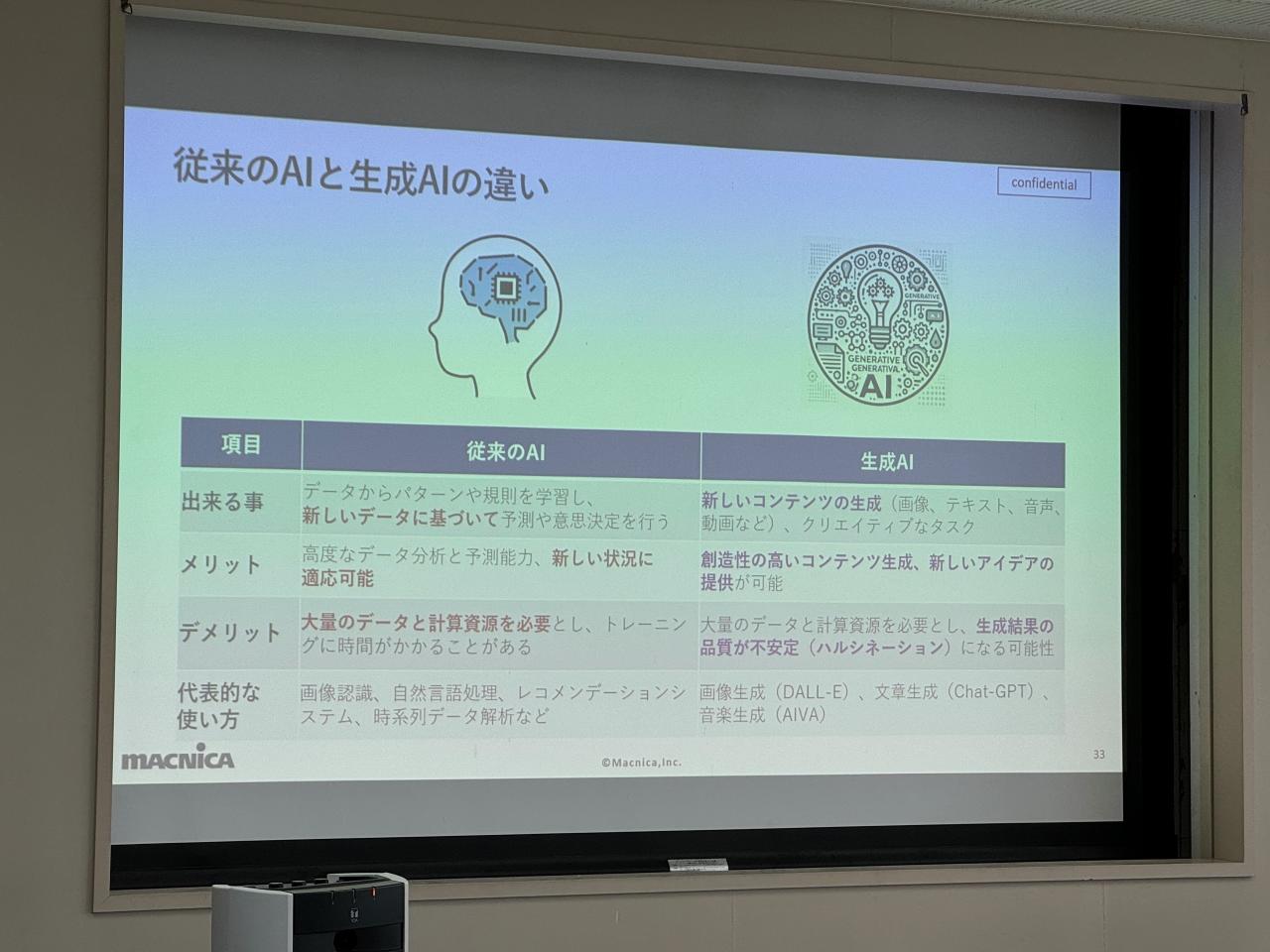
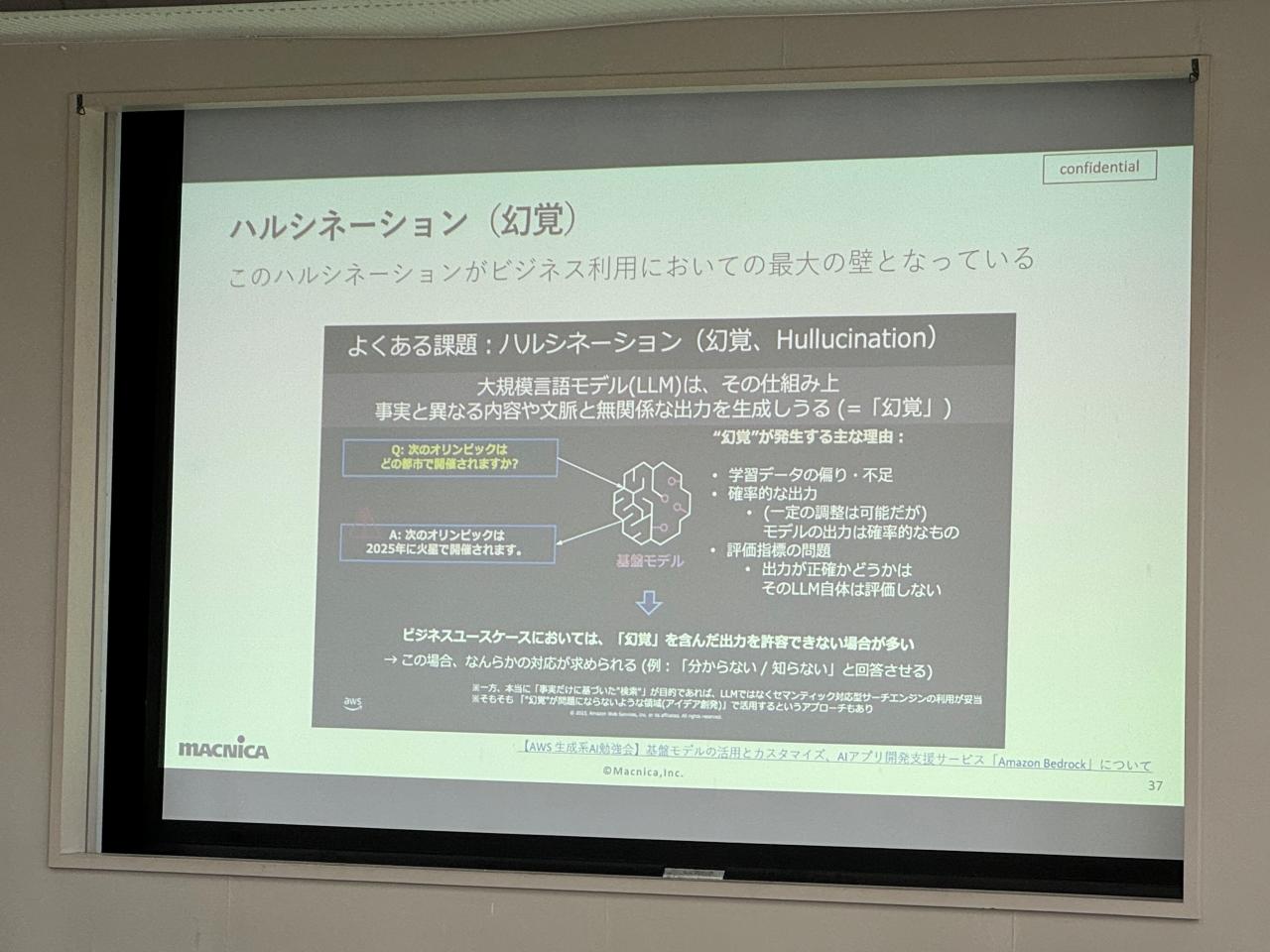
▲Generative AI is not omnipotent and can give incorrect answers. This phenomenon, called hallucination, is one of the challenges in using it for business purposes.
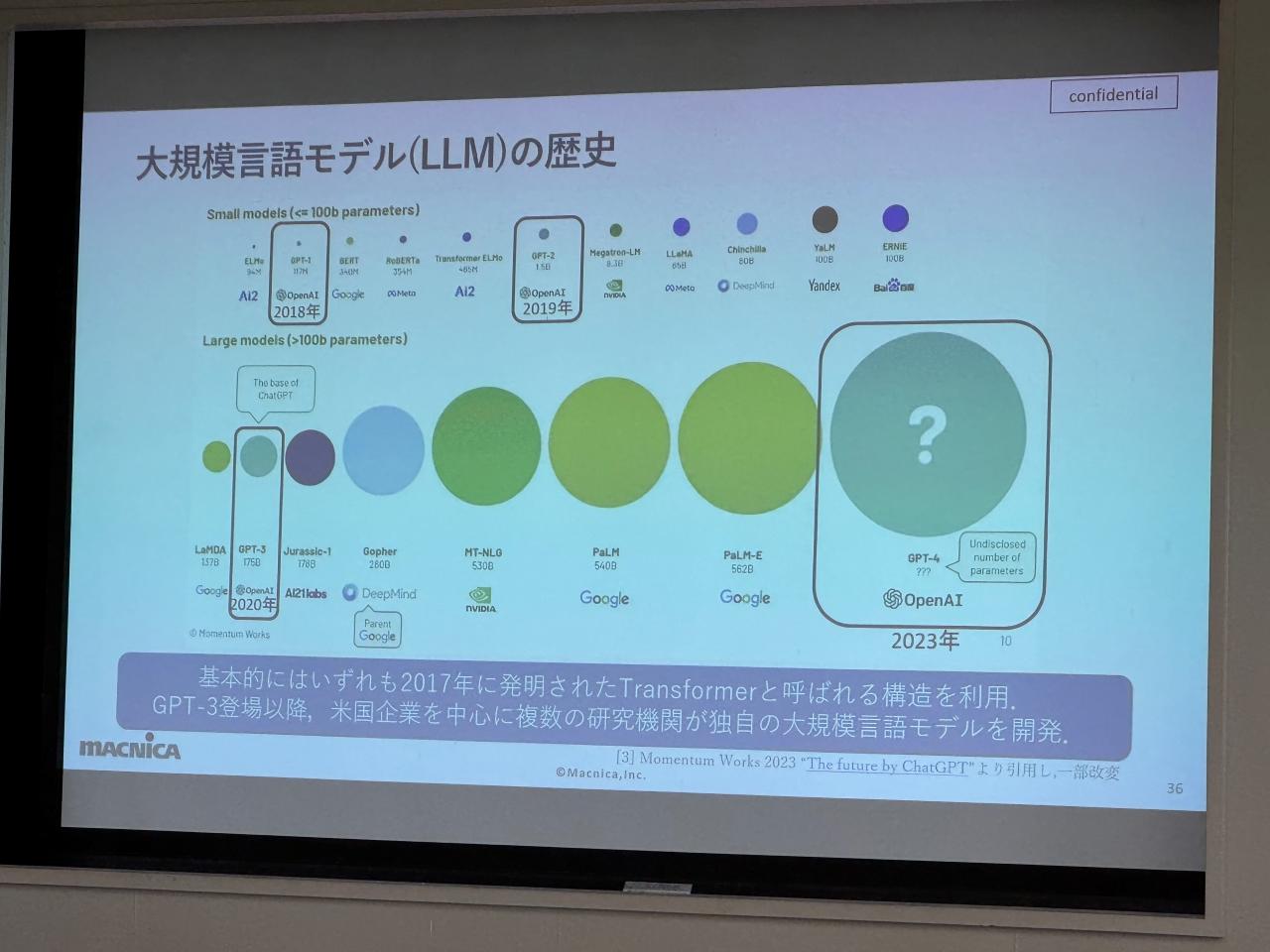
The following image shows the history of large language models (LLMs), with increasing circles from left to right representing increasing amounts of data the model has been trained on.
"Generative AI started to become a hot topic around 2023, and we can see that the amount of data has increased dramatically compared to 2018. OpenAI made the parameters of their model private in 2023, so it is no longer possible to gauge how much data has been trained on it at this point," says Senba.
As the lecture drew to a close, Senba concluded with a general review of the use of generative AI.
"The quickest way to get in touch with generative AI is to use existing services such as ChatGPT and Copilot. It's not easy to use it every day, but it's necessary to learn how to use it, and I feel it's difficult to keep up with the rapid evolution.
For example, I once read an article that said Panasonic Connect was able to reduce 186,000 hours per year by using its own generative AI to support document creation and information search. It should be noted that the company has over 10,000 employees, but when you consider how many people's work was reduced, the achievement is clear. However, on the other hand, data was later released showing that although an environment was created where everyone could use generative AI, less than 10 % of people continued to use it for a year.
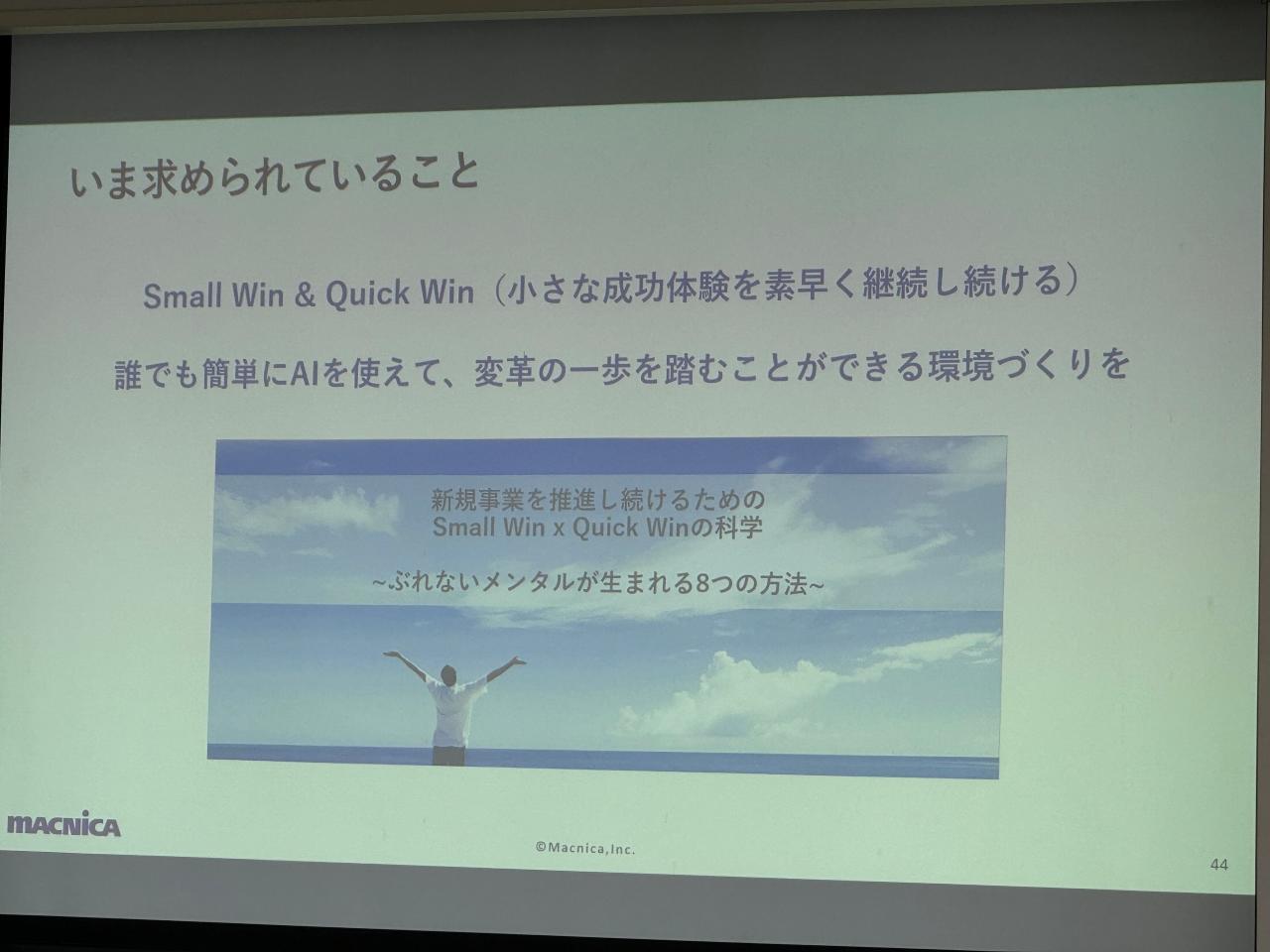
In the end, it is people who use generative AI and encourage others to use it. We believe that accumulating small successes every day will lead to big steps in the medium to long term. Based on the spirit of 'Small Win & Quick Win,' we hope to continue supporting our customers so that they can continue to use generative AI appropriately."
Generative AI experience workshop
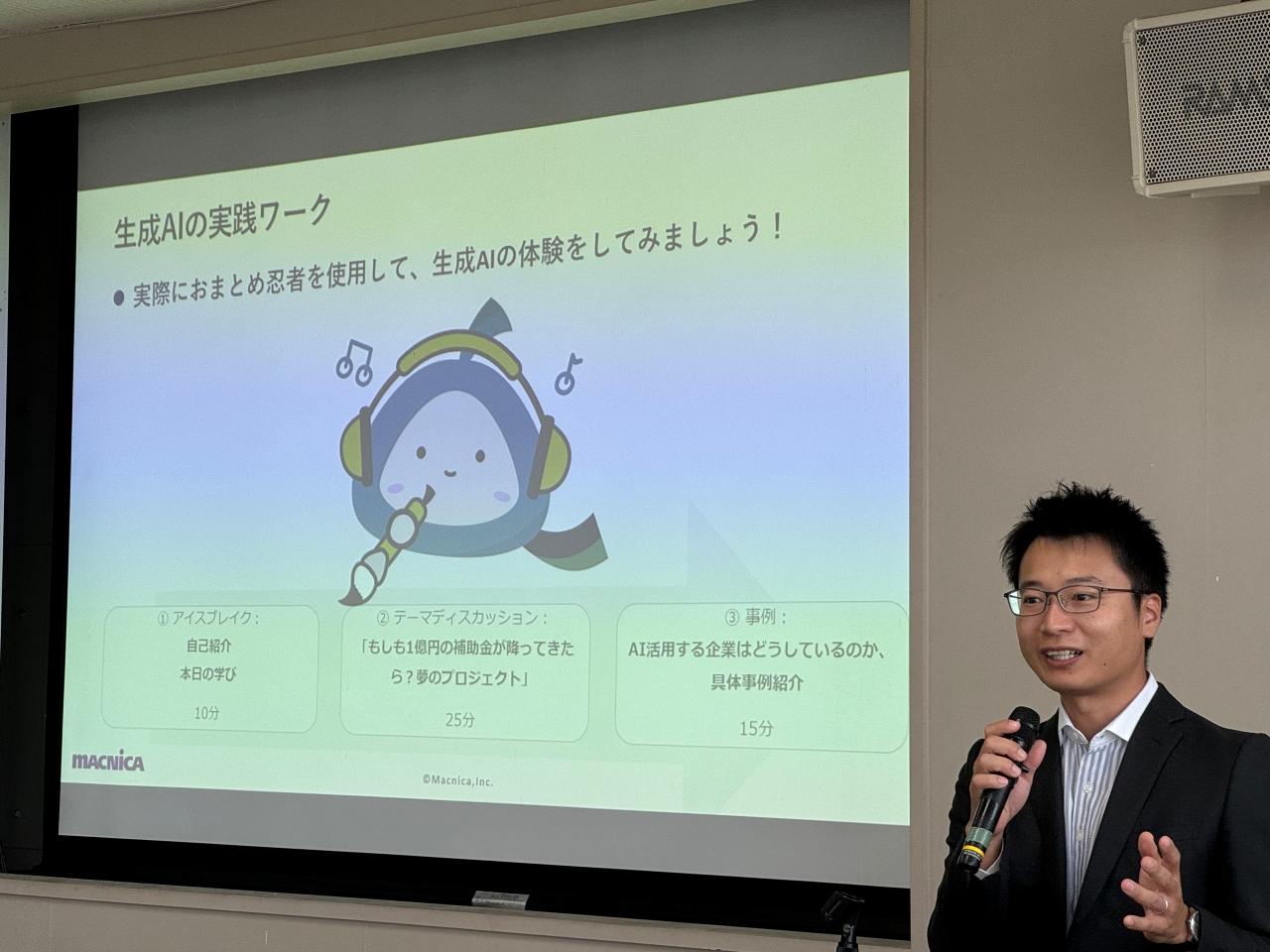
After the lecture, a workshop was held to demonstrate the use of generative AI. The tool used this time was "Omatome Ninja," a tool that uses generative AI to organize voice and text input, suggest next actions, proofread, etc. The workshop was led by Mori, who is the flagship for the tool's development.
The workshop was conducted along three agendas. The first and second were discussions among group members. The first was about self-introductions and what they learned that day, and the second was about "If you were given a 100 million yen subsidy, what kind of project would you like to try?" The third was a case study of a company that uses AI.
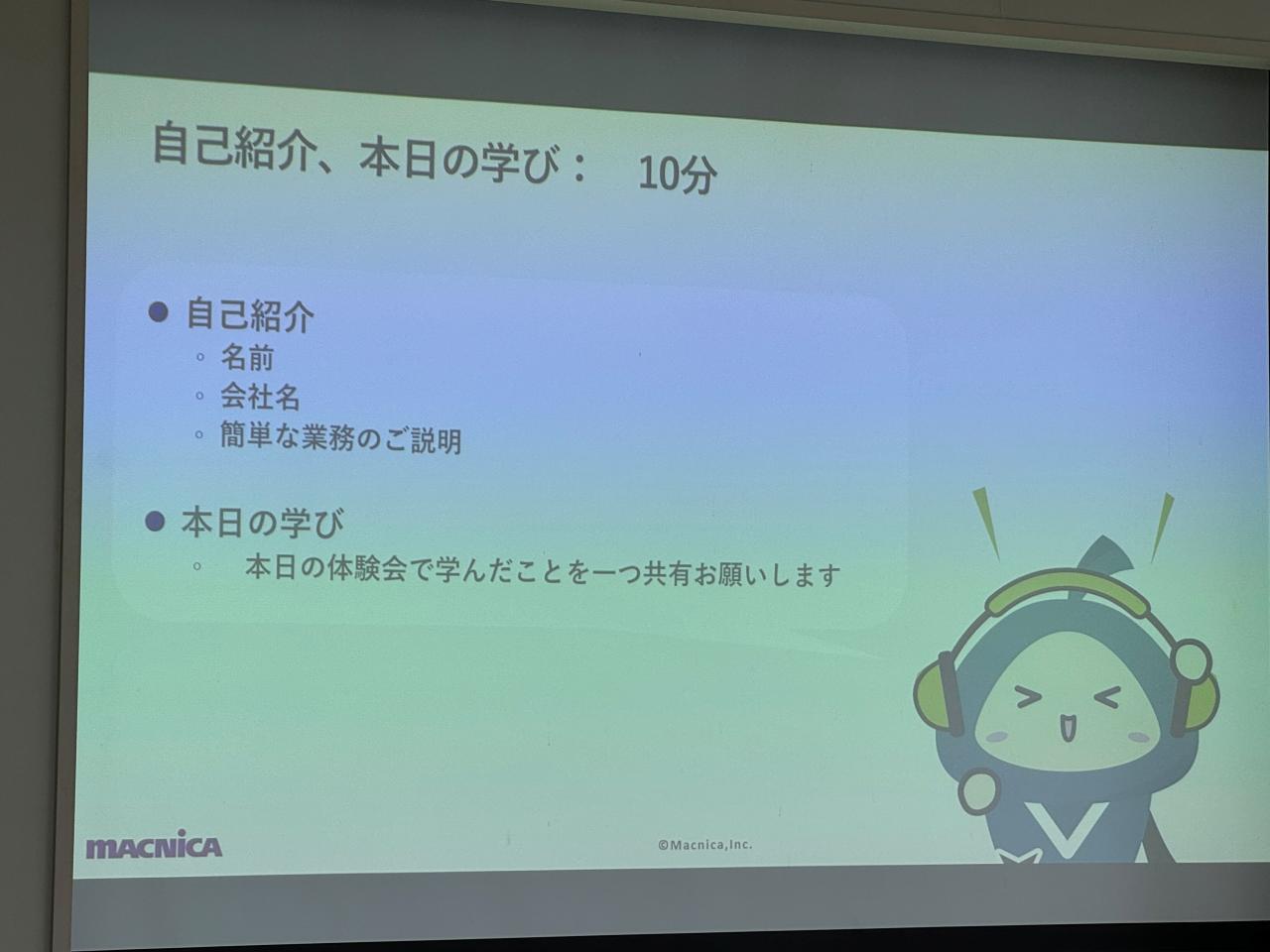
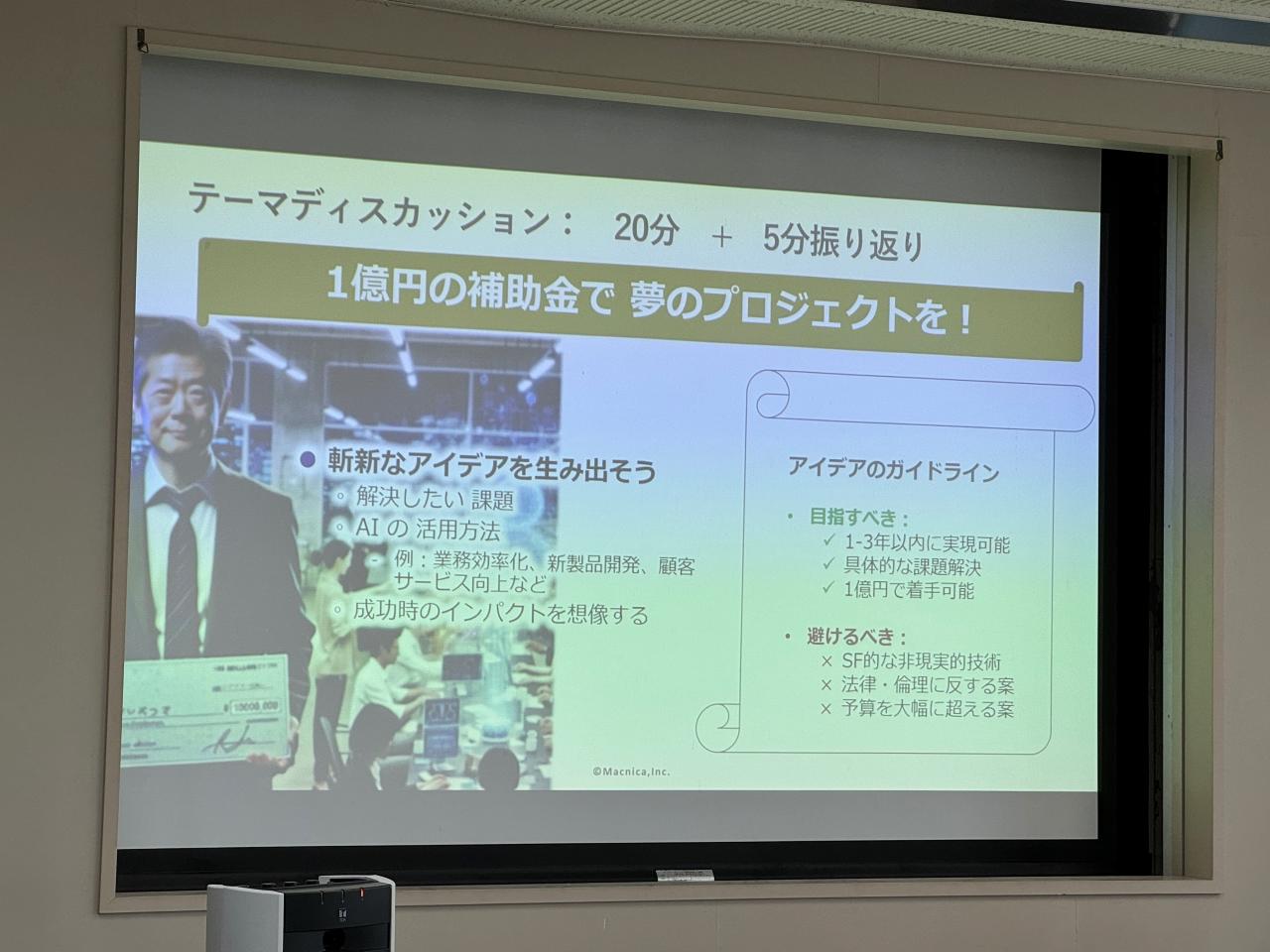
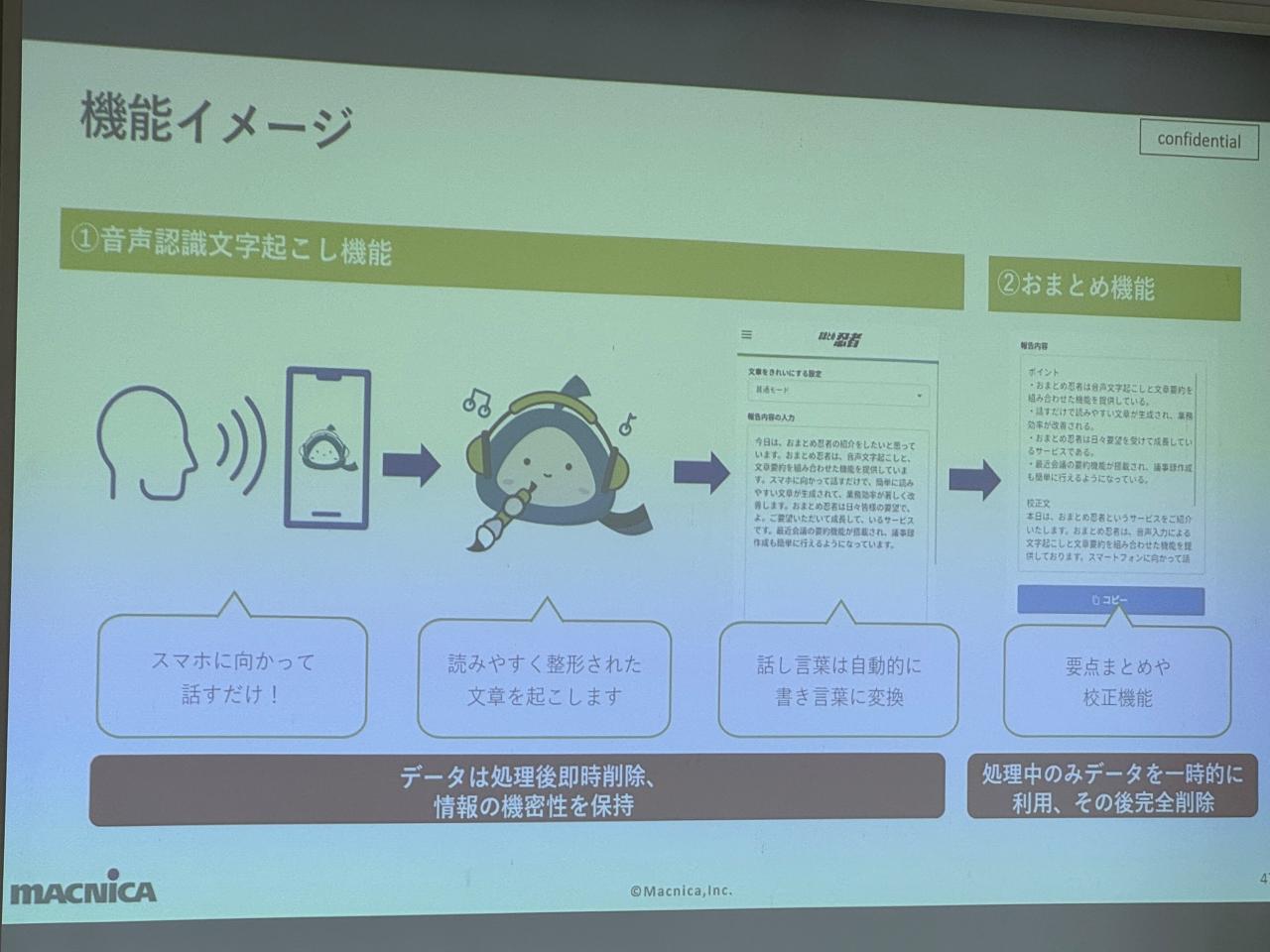
At the beginning, Mori introduced the Omatome Ninjas and explained how the workshop would proceed.
"Omatome Ninja has two functions: one that recognizes voice and transcribes it, and one that compiles text information, and these use generative AI. For example, when taking minutes at a meeting, the person in charge is usually busy taking notes, but with Omatome Ninja, that effort is eliminated.
Normally, you need to issue a command called a prompt to a generation AI, but with Omatome Ninja, you can use it just by starting it, so it's very simple. This time, we'll have a group of 4 to 5 people discuss a theme, and we'll share with you the content that Omatome Ninja organizes."
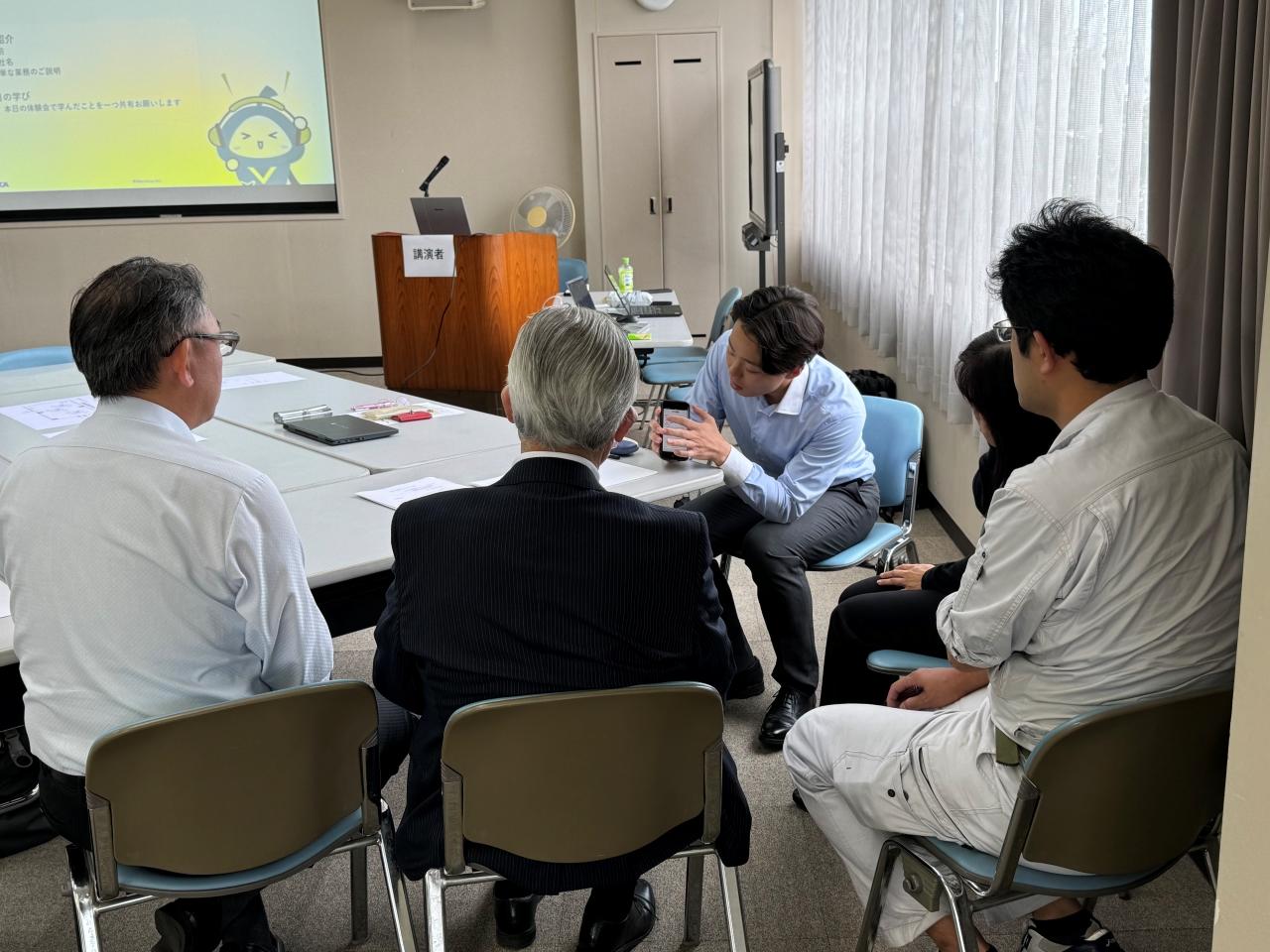
▲Explaining how to use Omote Ninja to the participants. Several people at the venue said how convenient it was.
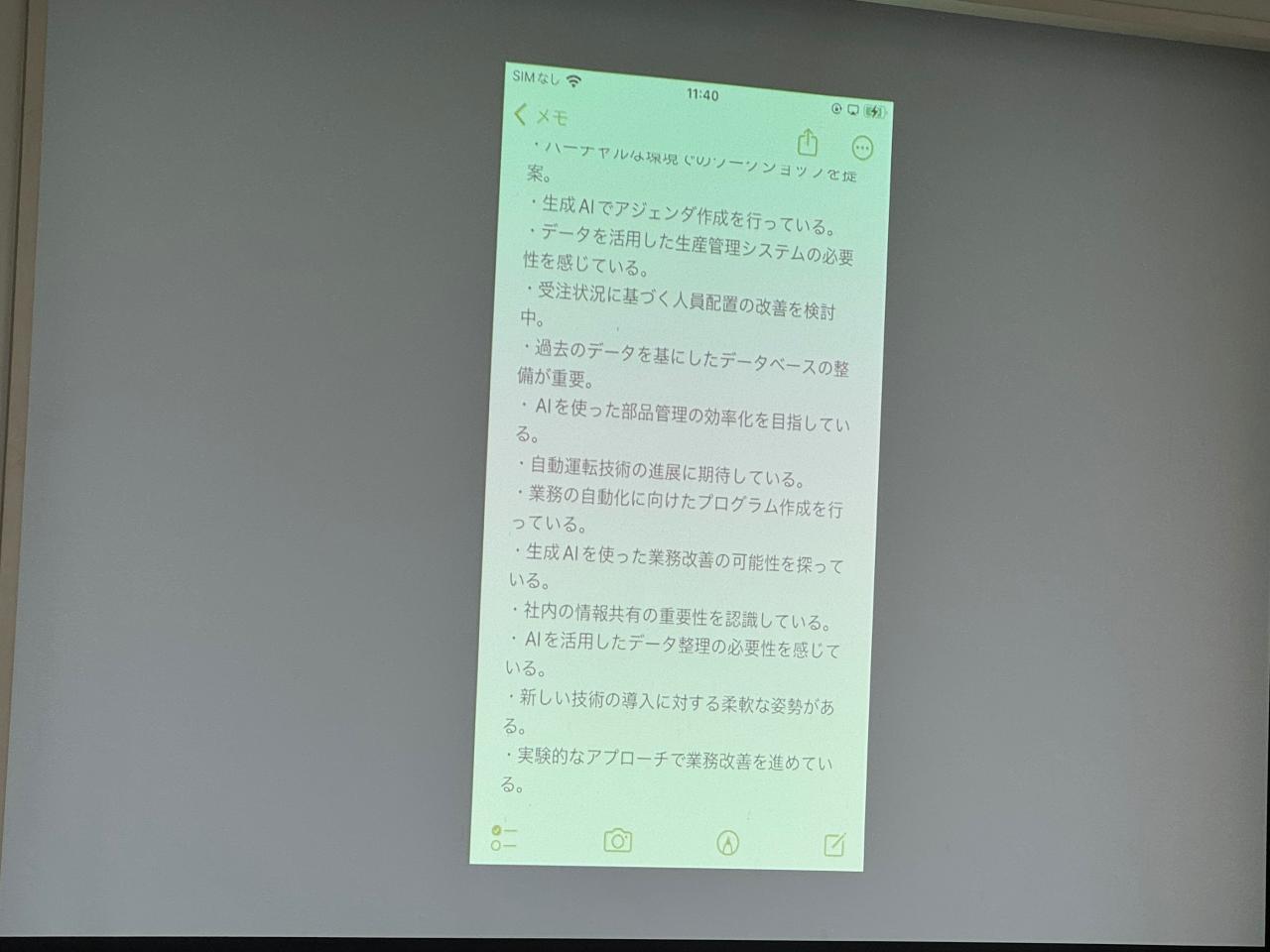
▲Part of the discussion content summarized by Omatome Ninja. Comments such as "We are aiming to improve the efficiency of parts management using AI" revealed the participants' expectations for AI.
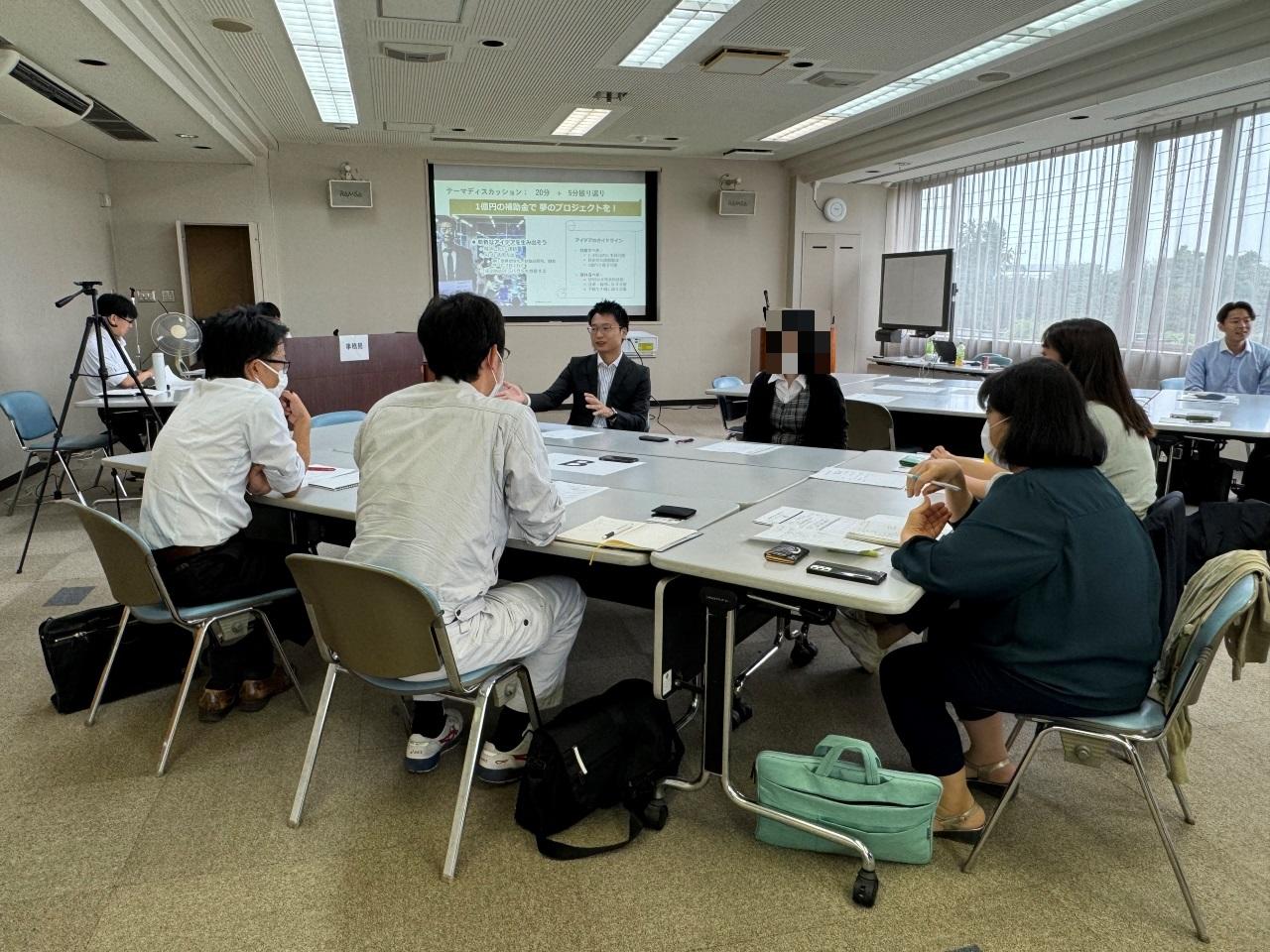
▲The discussion.
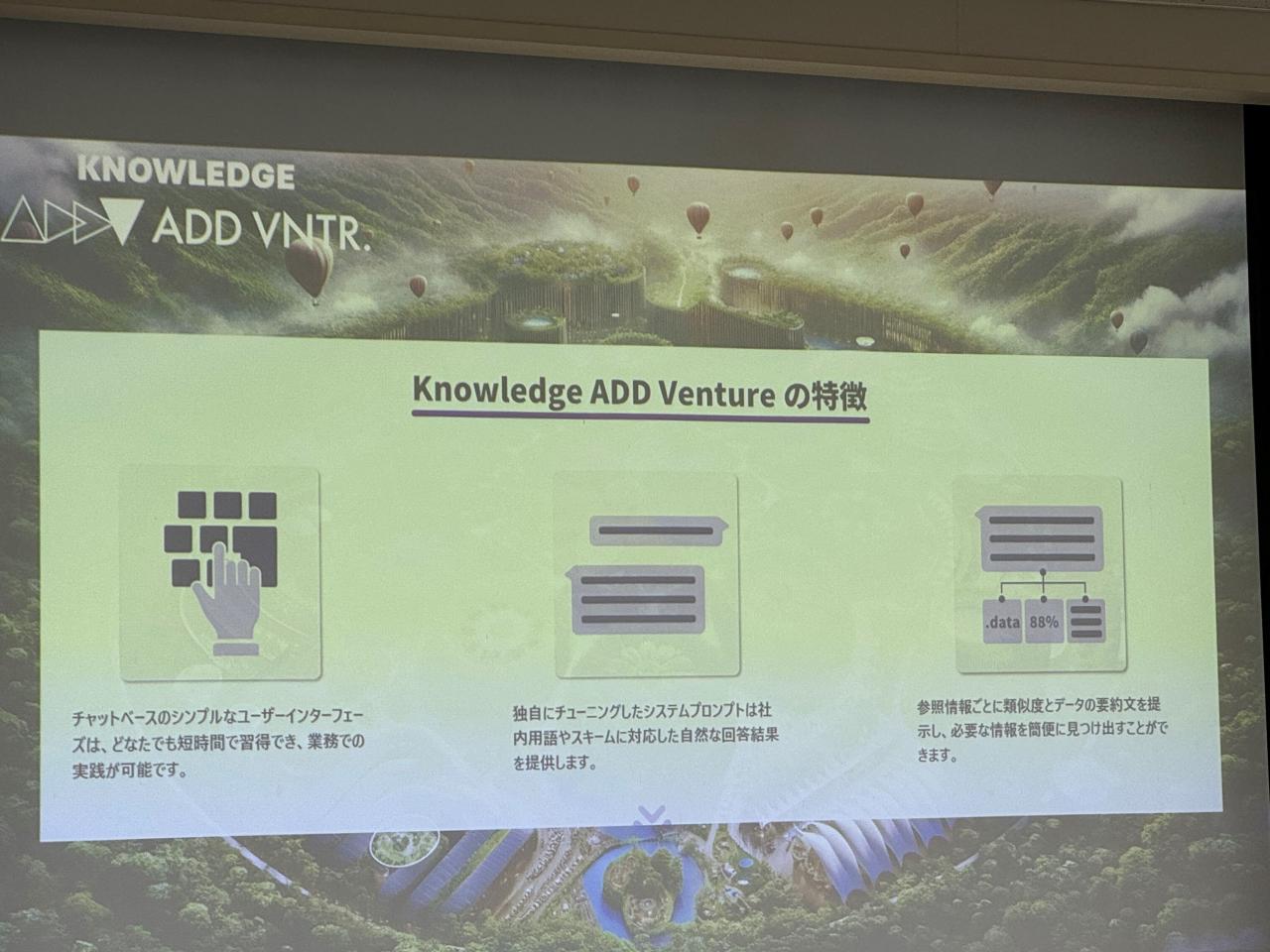
▲After the discussion, there was an explanation of how generative AI is being used within Macnica, and the workshop concluded successfully.
in conclusion
This time, we bring you a report on the Generative AI Workshop held at the Ibaraki Prefectural Industrial Technology Innovation Center. The participants' enthusiasm for AI was apparent as they earnestly took notes and nodded along while listening to the talk.
Macnica will continue to support our customers in further developing their businesses through the use of generative AI. The content introduced in this report is only a small part of what is available, so if you are interested in workshops or initiatives related to generative AI, please feel free to contact us, regardless of whether you are a company or local government.
\Click here for details on Re:Alize/
 Latest Information
 Case Study
 Blog
Blog Document List