Many companies have begun to promote DX, but are faced with challenges such as a lack of progress and projects not progressing as expected.
Kyoto Research Park Co., Ltd. (KRP) and Macnica jointly hosted a seminar to find a ray of hope for these issues. In this article, we will introduce the "specific approaches to solving the problems faced by DX promoters" and "DX success stories and processes at KRP" that were discussed at the seminar.

▲ There are over 500 companies (as of September 2024) located in the KRP district, all of which are working to create innovation every day. KRP is the company at the helm.
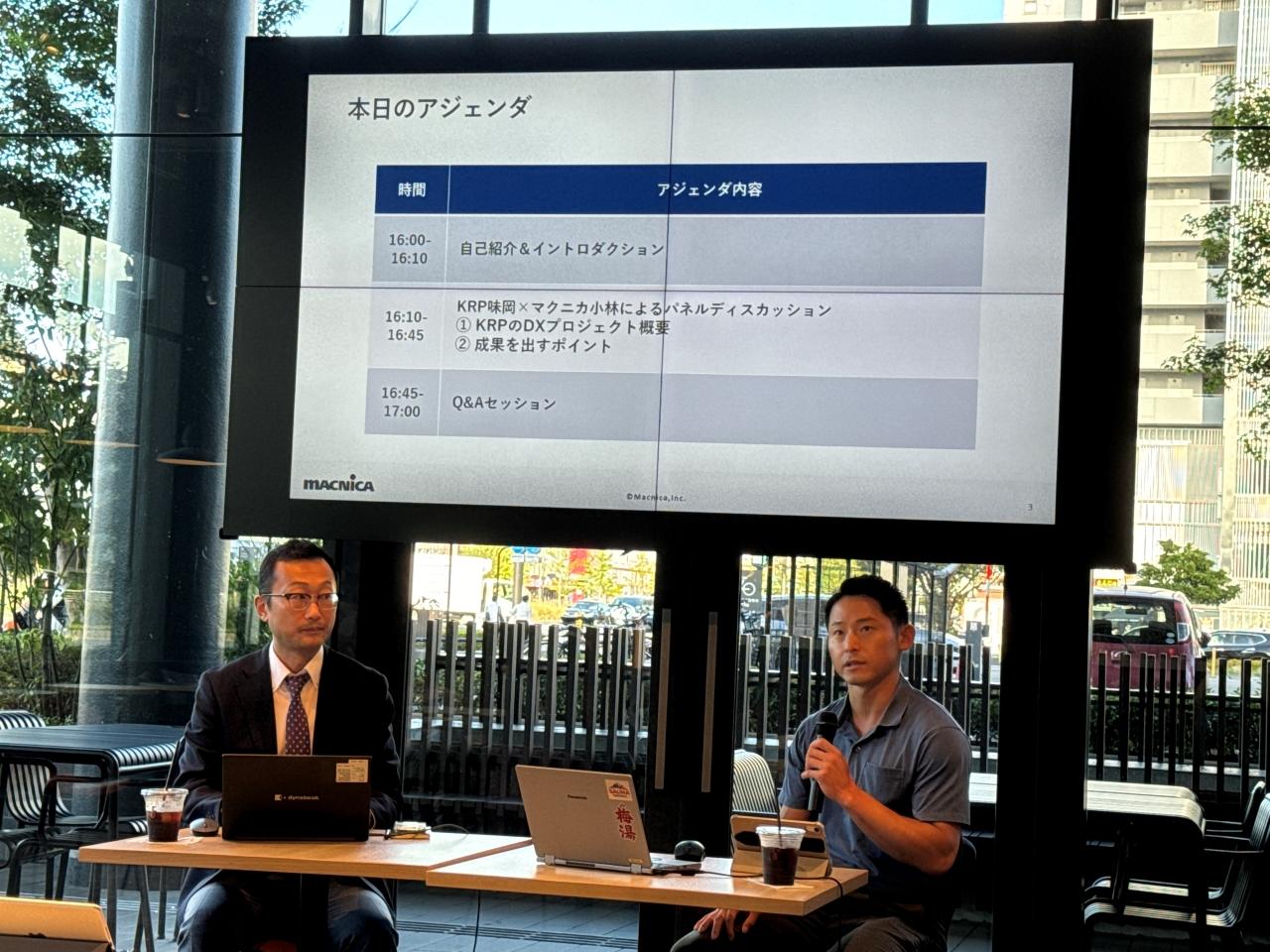
▲ A panel discussion was held in a section of the KRP district, and the event was streamed online. The speakers were Michihiro Ajioka (left) of the DX Promotion PJ Department of Kyoto Research Park Co., Ltd., and Shunsuke Kobayashi (right) of the Digital Business Development Department of Macnica
Archive Video
Challenges for DX promoters and KRP's initiatives
Kobayashi: According to a survey, only 30 % of companies are seriously working on DX and achieving results. Managers have high expectations of DX staff, but the DX staff often have to work on their main duties, or at the start of the project, they tend to have a small team and no one to consult with. Even if they try to get help from external partners such as consultants, the advice they receive is often difficult to put into practice. We have seen these challenges with our customers.

Amidst all this, KRP has been achieving various results with the DX project that it began working on in 2023. Mr. Ajioka, please start by telling us about the corporate challenges KRP faced and an overview of the project.
Ajioka: At that time, our company was lagging far behind in IT adoption, which caused many concerns, such as the fact that the worksites were extremely busy. In the midst of this, we implemented measures such as changing the mindset of our personnel to promote autonomous digital transformation.

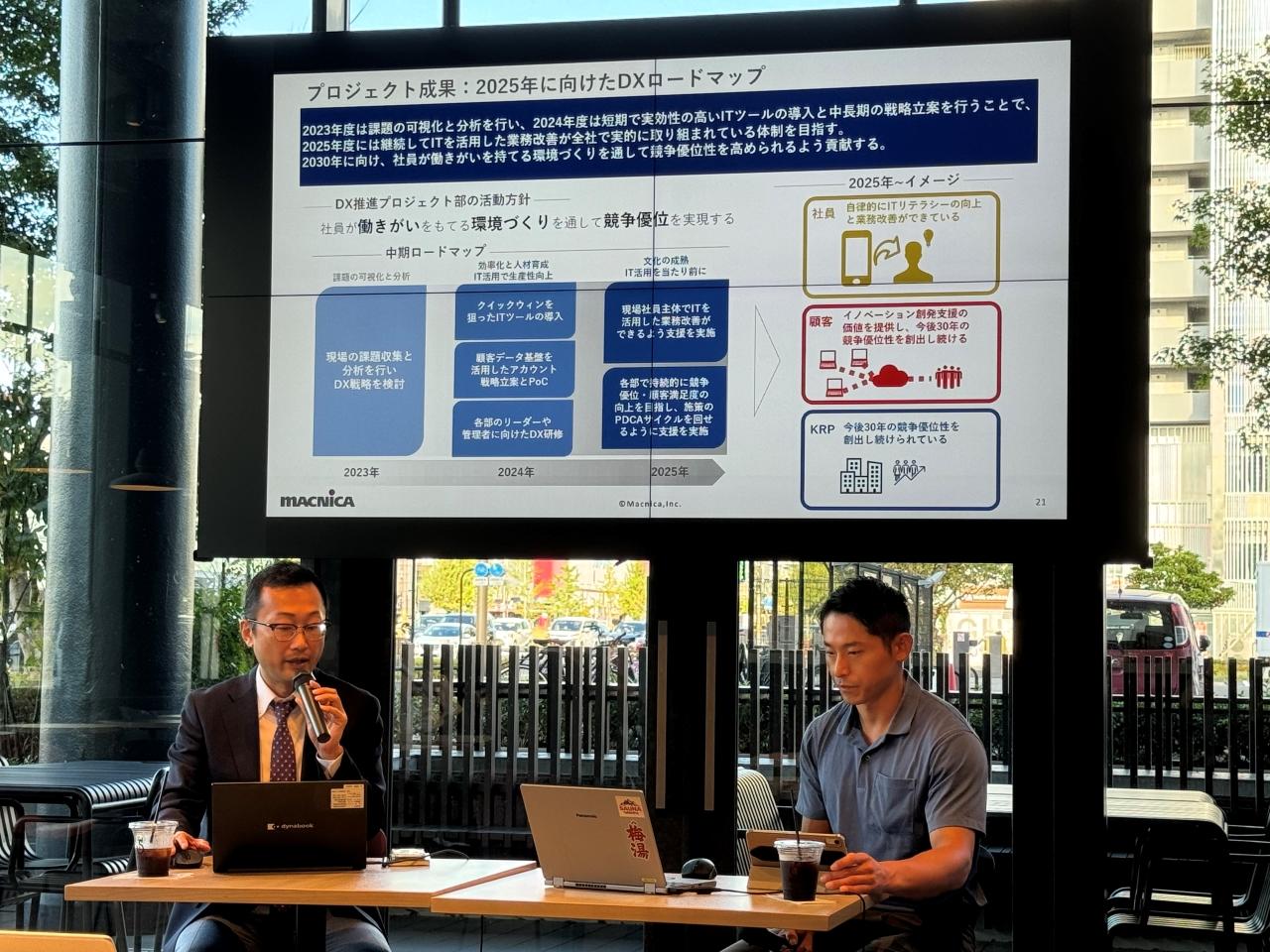
Specifically, with the cooperation of Macnica, we integrated and prioritized 128 issues to create a DX roadmap with the aim of improving operations and achieving a medium- to long-term competitive advantage.


In the roadmap we created, we set out the action policy of "achieving competitive advantage by creating an environment where employees feel motivated to work." Ideally, by 2025, employees will be able to autonomously improve their IT literacy and improve their work, and both clients and KRP will be in a position to continue creating competitive advantage for the next 30 years.
To achieve this, in 2024, we will implement measures such as "introducing IT tools aimed at quick wins," "planning account strategies and conducting PoCs using a customer data platform," and "DX training for leaders and managers in each department." In 2025, we are also considering support for on-site employee-led business improvement using IT and for implementing the PDCA cycle for measures required by each department.

Kobayashi: As many companies feel, you were worried about your existing business. What do you think is the most important aspect of the initiatives you introduced?
Ajioka: We were able to show our employees a specific direction in the form of a roadmap, get the management team's agreement, and create an environment in which the entire company could come together and work on the project.
Kobayashi: Rather than just communicating with words, visualizing and gaining a common understanding between the field and management was an important outcome for an ongoing project. What were the key points in proceeding with the project?
Ajioka: I think it was because we were able to create a system that involved the entire company. When the project was launched, members were selected from each department, but rather than placing the burden on them, we listened to their opinions and communicated them within the project. As a result, I think we were able to increase the number of people who supported us.
Kobayashi: You mentioned "anxiety" at the beginning. Could you tell us more about it and how you resolve it?
Ajioka: I joined this project in September 2023, but in fact, it was just before the kickoff and I was the last member to join. My main job is in the marketing field, so I like using IT and I'm not completely uninterested, but I was already feeling anxious about what DX is (laughs).
To resolve this issue, I read books and spoke to DX managers at other companies. There is value in hearing from people who have actually struggled. For example, I still actively participate in user meetings hosted by companies that sell SaaS, and ask for advice from people who I think might be able to be my seniors. I can't take everything I learned at face value, but it was very helpful.
Kobayashi: When you're worrying alone, one solution is to pick up a book or to communicate with people who have the same worries.
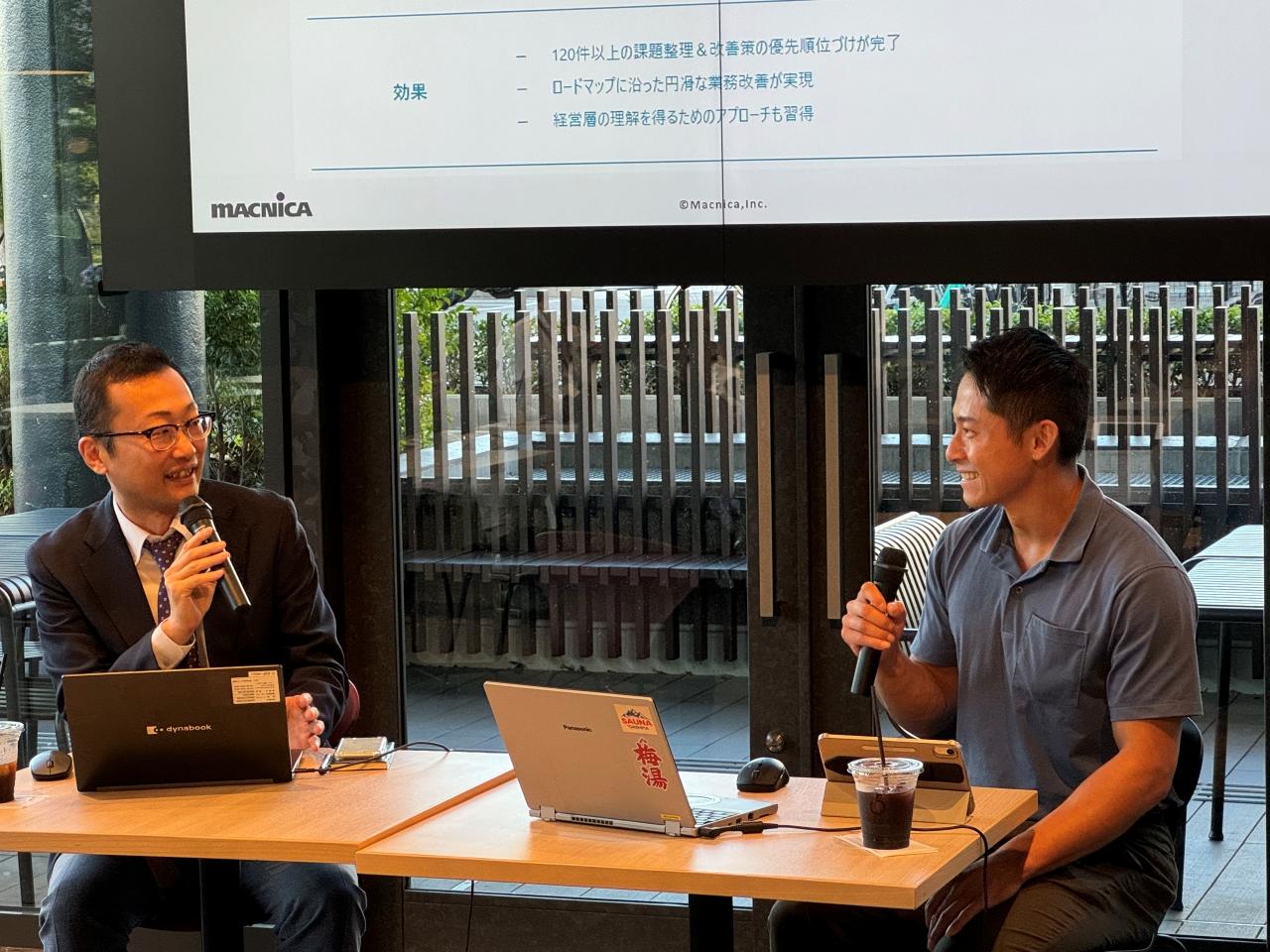
KRP’s DX success factors
Kobayashi: So far, I have given you an overview of the project as a whole. Next, I would like to dig deeper into the specific points that led to the results.
Ajioka: I've summarized three points that went well this time. The most important thing was that we gained the understanding of the management, and we were able to take measures that were well suited to the field. Our company is a group company of Osaka Gas, and the group is also working hard on DX. By piggybacking on the group's measures, we were fortunate to be able to go with the flow without having to put in too much effort.

Kobayashi: I think these three points are key points when looking at other DX projects. What makes this project unique is that it seems that structure and communication are more important than logical methods and know-how that utilize techniques.
Ajioka: When I take on any kind of initiative, I always think about whether it will improve the company, and I believe that if the project is not promoted smoothly, it will be difficult to achieve results. As a result, I think that creating a system was often mentioned as a key point.
Kobayashi:KRP is in a favorable environment, with the management's understanding of DX and IT being extremely advanced. How can we create this kind of environment?
Ajioka: In the past, I was involved in some projects where it was difficult to gain the understanding of the management, who thought, "Aren't there too many risks?" The management, after all, places importance on whether or not they can get a return and the certainty. It may be difficult depending on the project, but if you can show evidence, such as "You will get XX% results," it should be easier to get them on your side.
Kobayashi: Next, regarding "taking measures that were in line with the field," the DX project we're introducing this time was company-wide. What kind of ingenuity did you use to promote a project that involves everyone while being in line with stakeholders?
Ajioka: When we interviewed the people on the ground to pick out over 120 issues, many of them said they couldn't find the time to make improvements. When we responded by saying, "You can improve work efficiency by introducing RPA and other technologies," they said, "If I have to pay the time cost for learning, I'd rather go home as soon as possible and spend time with my family." So I thought it was necessary to first implement measures that would free up time for improvements and have the people on the ground feel the effects.

Kobayashi: You used the phrase "quick win" in your common language with us. Did you feel strongly about its importance?
Ajioka: That's right. About half of our measures are simply the introduction and improvement of digital tools that will lead to improved work efficiency, but this is just the beginning. As I mentioned earlier, our goal is not to improve work, but to have each employee independently carry out reforms and build a competitive advantage by 2025. For this reason, we would like to take the first step in introducing tools that are low in introduction cost and have a high improvement effect on the front lines.
Kobayashi: So, in the three-year plan, you are introducing IT tools aimed at quick wins and maturing understanding in the field. In KRP 's case, it seems that you are not just introducing the tools, but also being conscious of making the field able to use them. What are the key points?
Ajioka: This applies to any subject, but I think people are divided into a 2-6-2 hierarchy. For example, when digital transformation education is implemented or an IT tool is introduced, 20 % of people will learn and improve on their own, 60 % will follow it, and about 20 % will find it difficult or troublesome. We are concentrating our wisdom and strategies on how to get the 20 % who find it difficult or troublesome to follow or utilize the tool.
After hearing from senior employees at other companies, I don't think there are many effective measures (laughs). However, we are conducting hands-on training sessions for all employees to explain the tools and experience what is convenient about them. We introduced generative AI in April 2024, but this month we only explained security precautions and basic usage, and in June we conducted beginner to intermediate prompt training. In September, we held a hackathon-style meeting where everyone brought their issues and thought about how to solve them company-wide. In addition, I introduced RAG to reduce your workload.
In addition, many of the people we spoke to said they had trouble creating documents to submit requests for approval, so we strengthened the logic in the requests to help them express rationality, and created four types of prompt templates that create Q&A.
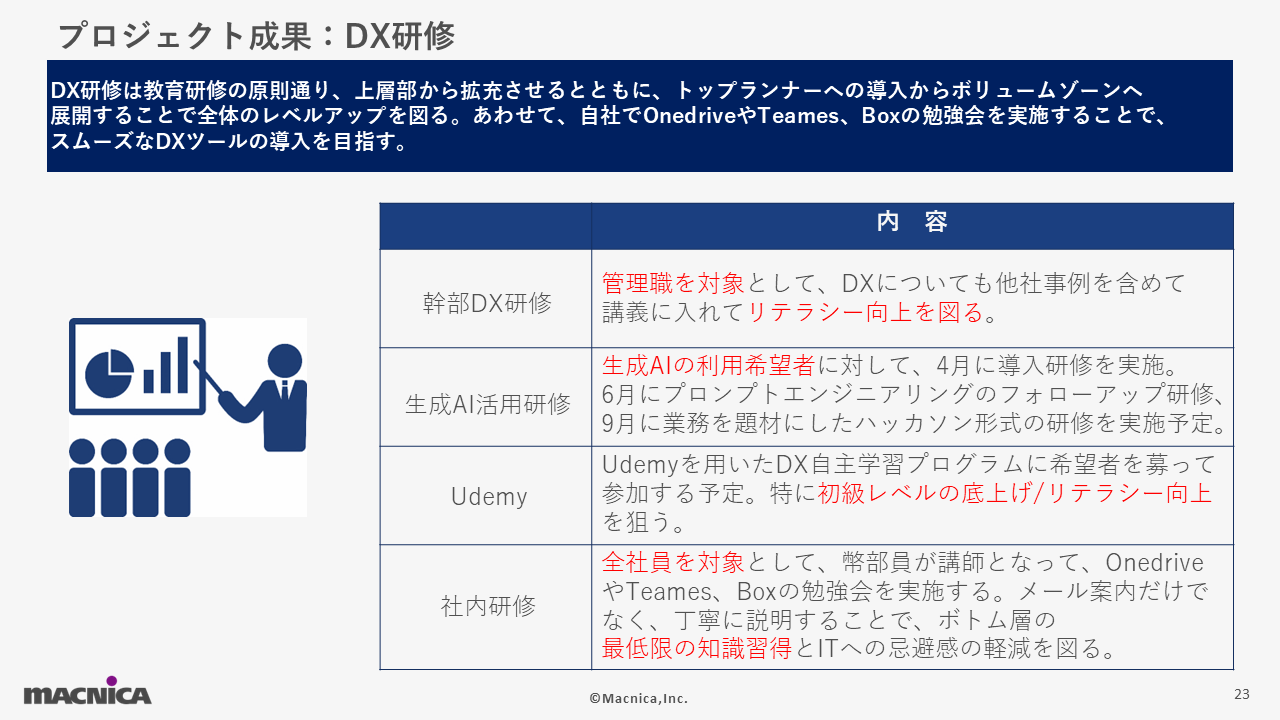
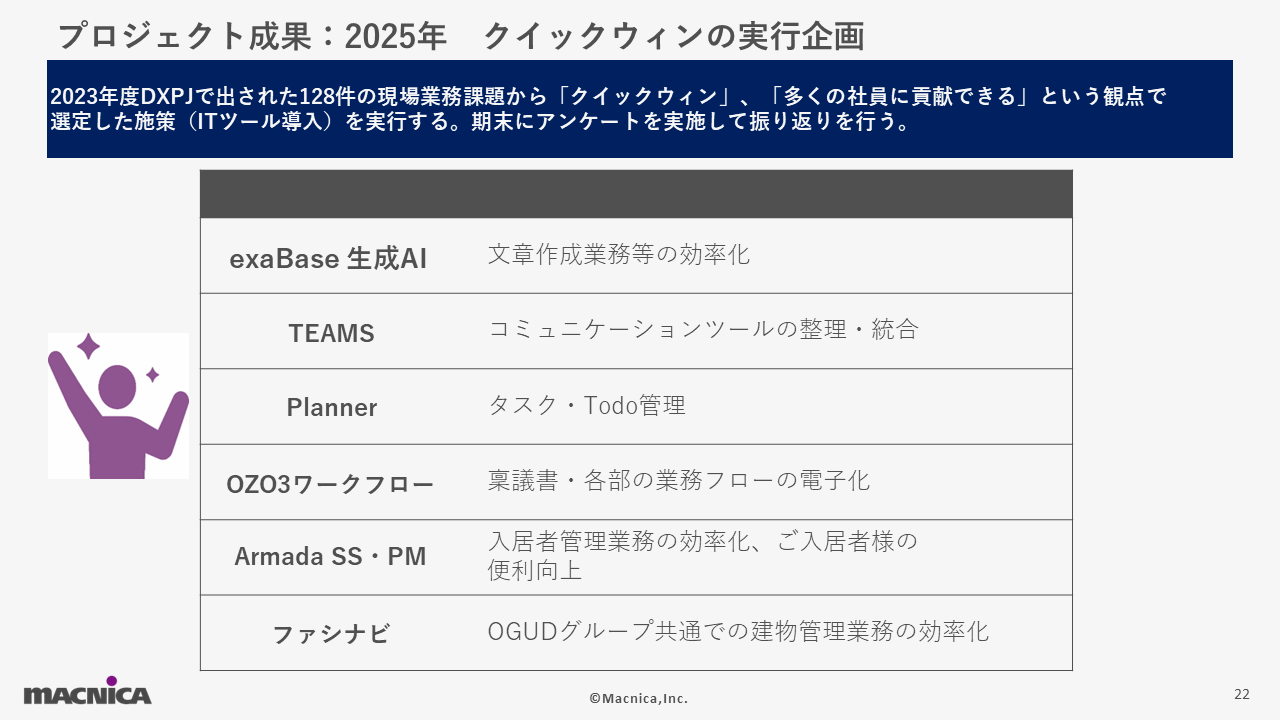
Kobayashi: I'm sure there are some people in charge of DX who heard this story and thought, "Wow, they've come this far." In the case of KRP, I felt that the success of the project was due to Ajioka's thorough understanding of everything from the big picture of creating a three-year plan to the details of which on-site use cases generative AI would be applied to, and the fact that he was able to plan with an appropriate sense of distance. In addition to generative AI, you also use various other tools. Do you have a schedule for each of the learning plans?
Ajioka: I don't think it's enough (laughs), but we've finally introduced Teams and Box. From now on, we plan to unify our internal communication with Teams and our file server with Box. There are many issues to be resolved, but we are planning to hold about three information sessions and have created a schedule that will allow everyone to gradually use them.
Kobayashi:KRP has three core members who are promoting DX, but they use each tool in completely different ways. In that situation, do you ask the vendor to decide how to proceed and schedule? Or do you think about it on your own?
Ajioka: The implementation schedule may be decided by the group, but we can take the lead on things like generative AI, so we can move forward while bouncing ideas off the vendor, including training. However, I think it's best to consult with external experts for tools that you don't have the know-how for.
Kobayashi: First, we collected as many on-site issues as possible, and then set mid- to long-term goals from there. We then chose tools that would lead to quick wins with as low implementation and learning costs as possible, and enriched the training menu, which I understand were the specific factors that led to the success of the project. There is a strong image that DX and the promotion of new businesses involve paving the way for yourself, but was Mr. Ajioka aware of this point?
Ajioka: Yes. Since it was something that required the entire company to come together and work as a team, I was very conscious of "what the hurdles were" and "what was required."
Q&A Corner
Kobayashi: From here on, we will answer the questions we received in the pre-event survey and from viewers of the seminar.
First, I received a comment asking, "Please tell me how companies that have given up on promoting DX can get back on track." I have seen many of my customers give up, and I have also had the experience of giving up with them. It may seem like a blunt thing to say, but the element of luck is extremely important when promoting DX.
The reason is that the more you struggle to pave the way on your own, the more likely you are to get bogged down and give up. That's why, as Ajioka-san mentioned, it's essential to create a system where you can work hard together with understanding management and people on the front lines. On the other hand, I've heard of cases where people have actively participated in open innovation events like this seminar, recruited colleagues, and made progress when the time was right, so I recommend taking advantage of these events.
Ajioka: The other thing is to have an unyielding spirit. There are always things that lead to success, but on the other hand, I think there are also reasons to be discouraged. When that happens, it might be a good idea to look back again, find something new that will bring results, and work on it.
Kobayashi: The next comment: "Please tell us about the division of roles between the relevant departments and the position of the information officer."
Ajioka: When there are DX promoters and on-site promoters, IT can be introduced if the department takes the lead, but with DX, the most important thing is each individual's sense of independence. Therefore, rather than being a flag-bearer, I think it would be better for the DX promoter to take a position like a coordinator or conductor, who can effectively control the company and employees.
Kobayashi: It is certainly important to be a facilitator, and in fact, there are cases where DX promoters have studied facilitation and the project has been successful. If you are having trouble with system construction or communication, why not try studying it?
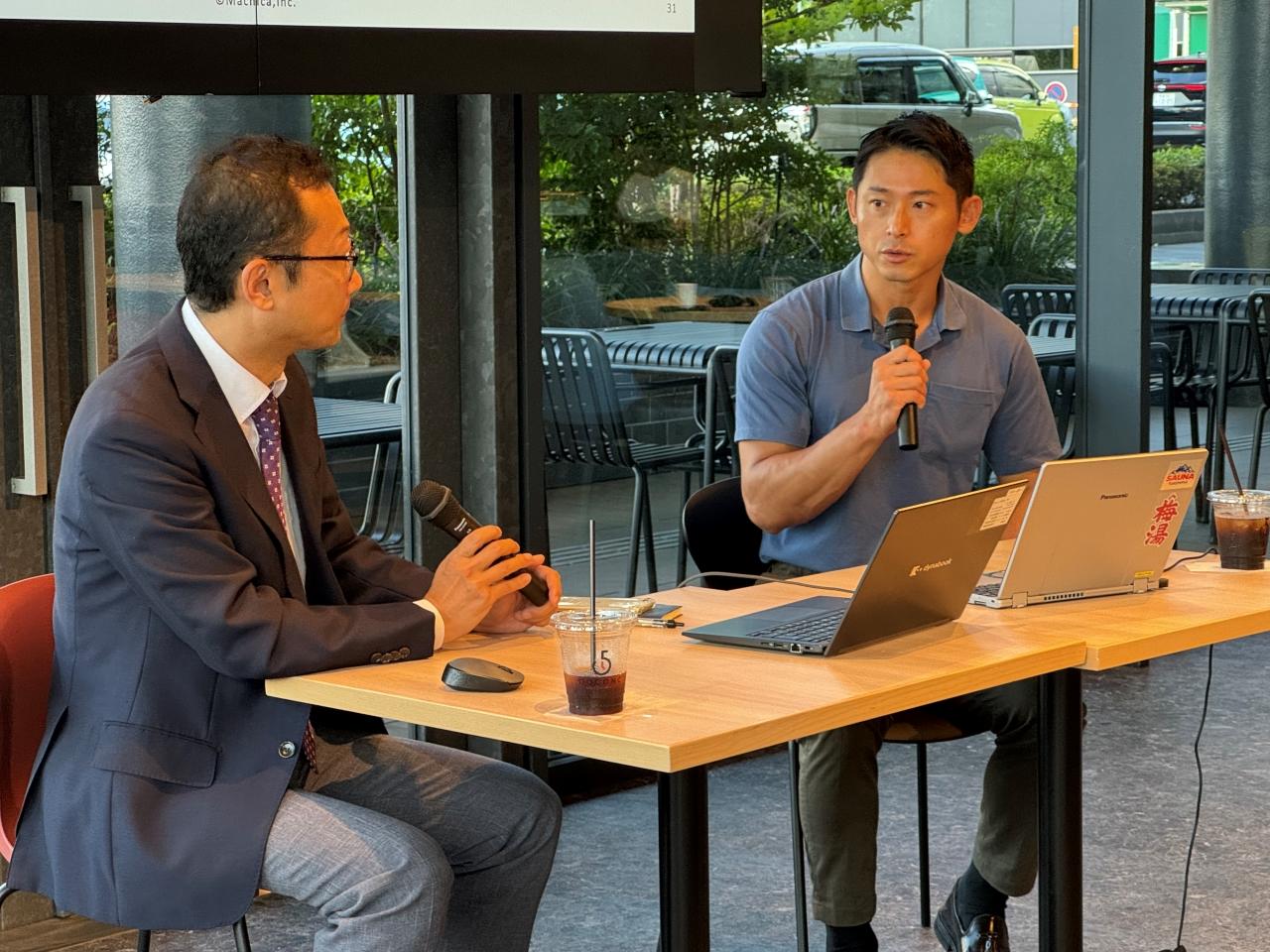
Ajioka: I've been asked the question, "How can we overcome the resistance from people who don't have the literacy to get DX on track?" I think this is something that everyone is really struggling with, and I've asked my seniors at other companies about it, but I don't think there's a single, easy answer.
Kobayashi: As we worked on the project with KRP, I thought it was great that they never gave up. KRP had planned to proceed with DX training and other activities in parallel with quick wins, but many companies end up with just the implementation and don't get that far. After preparing the menu we introduced here, it's important to have the ability to involve vendors and partners, rather than just making the schedule by yourself.
Ajioka: Indeed, education and training may be the key to making DX a success. When you hear about companies that have shifted to data-driven management, the ideal person to aim for is shared throughout the company, and the curriculum and role bases aimed at that are organized and then continuously worked on.
Kobayashi: We talked about 2-6-2 earlier, but if DX education and training were conducted as a matter of course, even if you are one of the people who are not good at DX, you may be able to reach a level of literacy that is considered high by the average company. There was also a question about human resource development. What is your view at KRP?
Ajioka: We have four goals for 2024, and we are thinking of starting with training for managers. We are also holding hands-on study sessions for the purchased tools so that the whole company can get involved, including those who are not good at tools. We are also holding hand-raising training sessions for generative AI, which we hope will become a symbolic initiative.
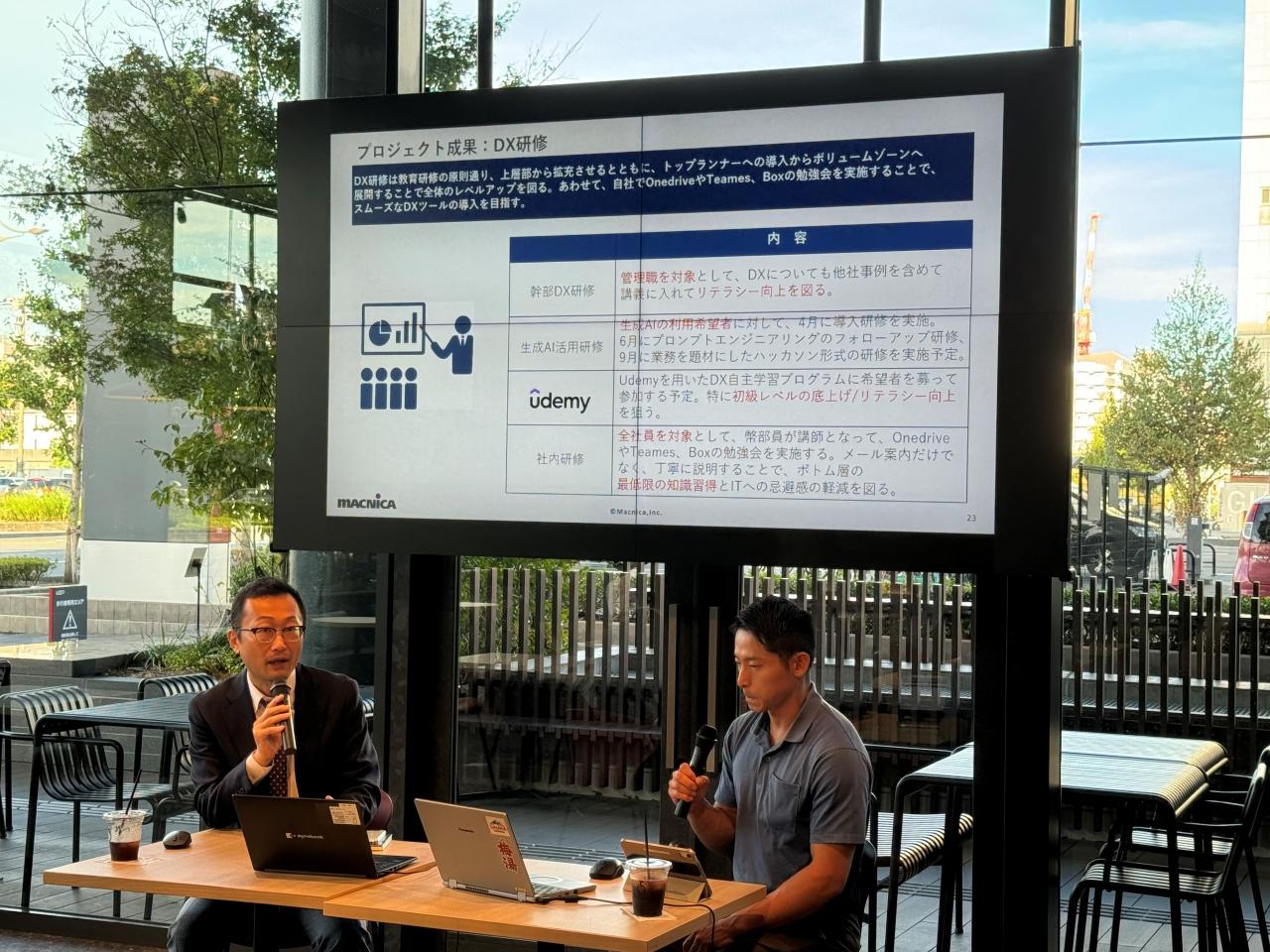
Kobayashi: At Macnica, generative AI has become a buzzword recently as we conduct DX training and AI education. It may be a case of reversing the means and the purpose, but I think it would be a good idea to start with a training session of about an hour and a half, where everyone can experience it and think, "This is interesting," by saying something like, "I'll teach you how to use generative AI such as ChatGPT. If you're interested, please raise your hand." The next question is the last one, and it says, "I'd like to know how you create an atmosphere when the entire company is working on promoting DX." What do you think about this?
Ajioka: I think if you get the understanding of management and get the field involved, it will surely work. However, rather than trying to do it all at once, I think it's best to quickly test a small plan, such as "this year, next year," to achieve that state in the future, and then withdraw if you think it doesn't work. In other words, it's like horizontally expanding what was successful the first time.

Kobayashi: I think that the promoters of companies that have been successful in DX are good at getting the cooperation of those around them through small win experiences. So it's important to avoid isolation.
The KRP area where the seminar was held is a very open place, where many companies can come together to create various innovations and communicate with each other. If you have concerns about promoting digital transformation or developing new businesses and would like to consult with us, or if you would like to learn about use cases, please feel free to contact KRP or us at Macnica.
 Latest Information
 Case Study
 Blog
Blog Document List