- Semiconductor BusinessHOME
- Products and Services of Macnica,Inc.
-
technical information

-
Events and Seminars
- Handling Manufacturer
- Support
- Inquiry
- Click here to purchase products
- Semiconductor business e-mail magazine registration


 Narrow down by specifying conditions
現在2247件がヒットしています。check

How to improve efficiency with SiC semiconductors
Industry is finding that server farms will account for 1% of the world's energy demand, and efficiency gains translate into significant cost savings and environmental impacts by a few percentage points. Efficiency gains may reach a "tipping point" where the benefits begin to multiply. For example, in electric vehicles, improvements will make power converters smaller and lighter, reducing energy demand and increasing range.
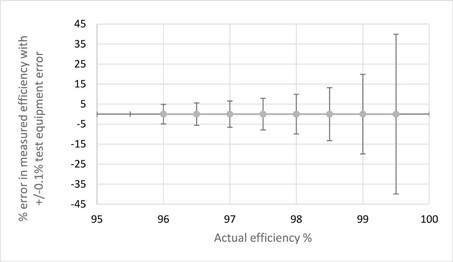
So engineers are obsessed with improving efficiency beyond the decimal point. Determine if the risk of designing in a new and unfamiliar topology with the promise of often marginal improvements results in a lower total cost on any given timescale. The more efficient you are, the harder it is to convince yourself that there is an improvement. Even if there is a ±0.1% error in the input and output power measurements, the calculated losses can be 40% more or less than the actual value if the efficiency is already around 99.5%. I have. Worse if the input is AC with a distorted low power factor and the output is DC with a residual noise component that confuses the DVM. It is now common to rely on calorimetry, which actually measures heat output, rather than inferring it from electrical measurements.
One relatively low-risk option for increasing the efficiency of power converters is to improve on semiconductors that have already been designed. MOSFET-based converters can be upgraded to newer devices that have lower on-resistance and require less switching energy, and changes in EMI emissions must also be considered. However, to take advantage of the latest wide bandgap devices such as SiC MOSFETs and GaN HEMTs, changes in the circuitry, especially the gate drive, will be required. If the existing circuitry is IGBT-based, a ground-up redesign will be required to use wide bandgap devices.
The gate drive issue has to do with the voltage level. To fully function, SiC MOSFETs require a much higher on-voltage drive than Si-MOSFETs, which is very close to the absolute maximum rating of the device and must be carefully limited. Also, the voltage swing between the on and off states is large, so the gate capacitance is charged and discharged with each cycle, requiring some drive force. Also, the threshold voltage changes and has hysteresis, making optimal drive difficult. Conversely, GaN HEMTs have very low gate threshold voltages and absolute maximum values, so the drive circuitry must be carefully controlled to avoid overload and failure.
The body diode characteristics of SiC MOSFETs are important when power conversion circuits require reverse or third quadrant conduction, and their large recovery energy and forward voltage drop can lead to excessive losses. GaN devices do not have a body diode and will conduct reverse through the channel, but they will experience a high voltage drop during the dead time before the channel is actively enhanced by the gate drive. If the gate is driven negative in the off state, the drop during "rectification" will be even larger.
In order to overcome this situation, a SiC cascode device is developed that uses a cascode-connected Si-MOSFET and a SiC JFET. JFET This device is effective like a Si-MOSFET. Gate drive is easy and not critical has a better figure of merit than SiC MOSFET and GaN HEMT cells RDS(on) x A and RDS(on) x EOSS They have robust inherent avalanche capability and self-limiting short circuit current, with a body diode effect similar to low voltage Si MOSFETs, low forward drop and fast recovery. This means that SiC FETs can simply be dropped into any Si MOSFET or IGBT socket to instantly improve efficiency. The speed of SiC FETs means that EMI and stress cannot be suppressed by simply adjusting gate drive resistance as with other technologies, but these ultra-fast devices can suppress overshoot and ringing with a tiny RC snubber. This effectively suppresses noise and makes it easier to operate devices in parallel. In addition, when replacing IGBTs, the switching frequency can be increased without generating switching loss, making it possible to reduce the size, weight, and cost of magnetic circuits.
SiC FETs are a promising way to improve the efficiency of popular conversion topologies, with all the benefits that come with it.
Inquiry
If you have any questions regarding this article, please contact us below.
On Semiconductor Manufacturer Information Top Page
If you would like to return to the ON Semiconductor manufacturer information top page, please click below.